
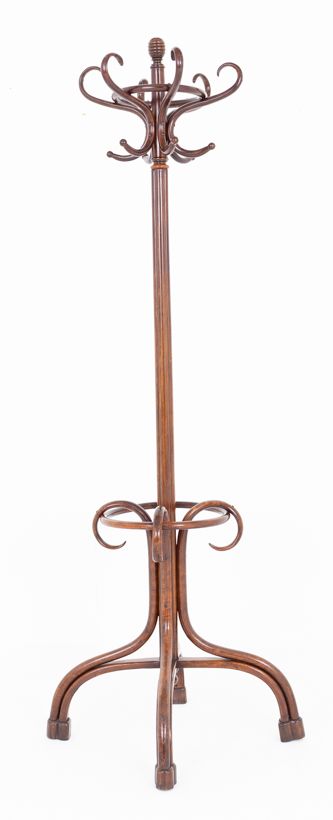
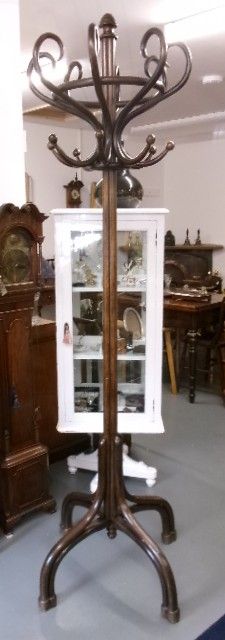
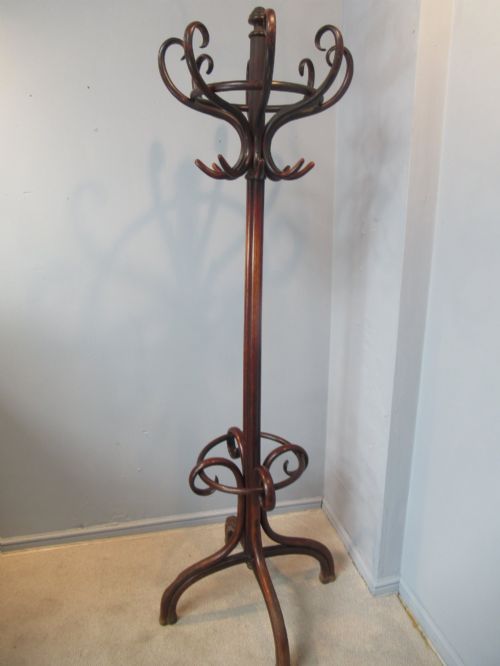
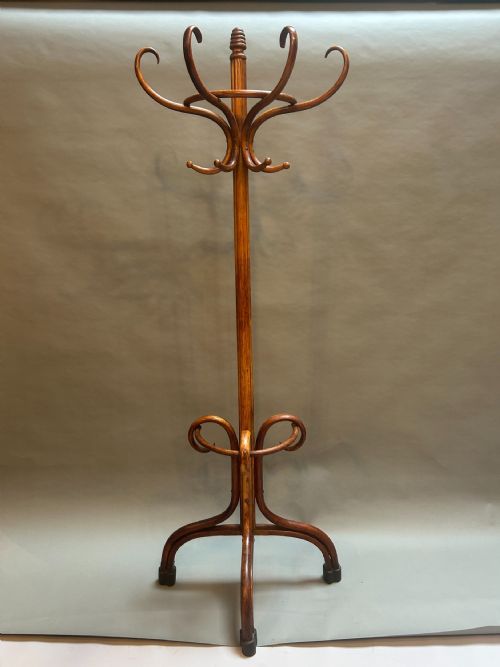
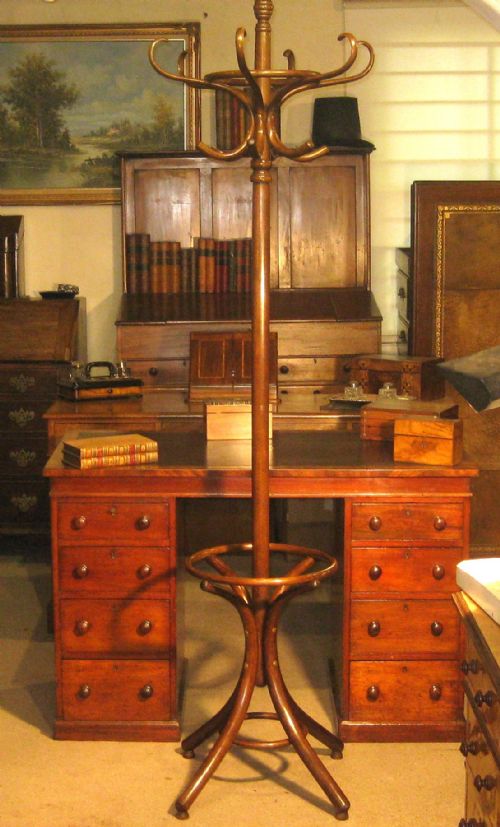


Traditional Bentwood Hat Stand
A traditional bentwood hat stand offers slender curves and practical hallway storage, shaped from steamed timber during the Victorian and Edwardian eras.
Traditional Bentwood Hat Stand
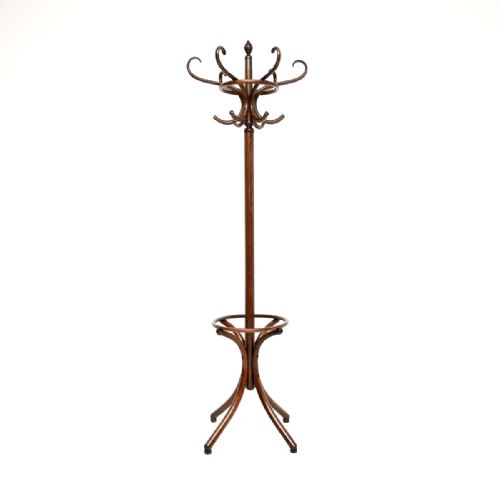
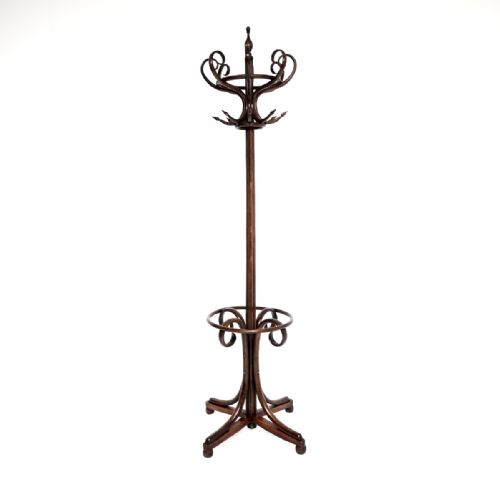
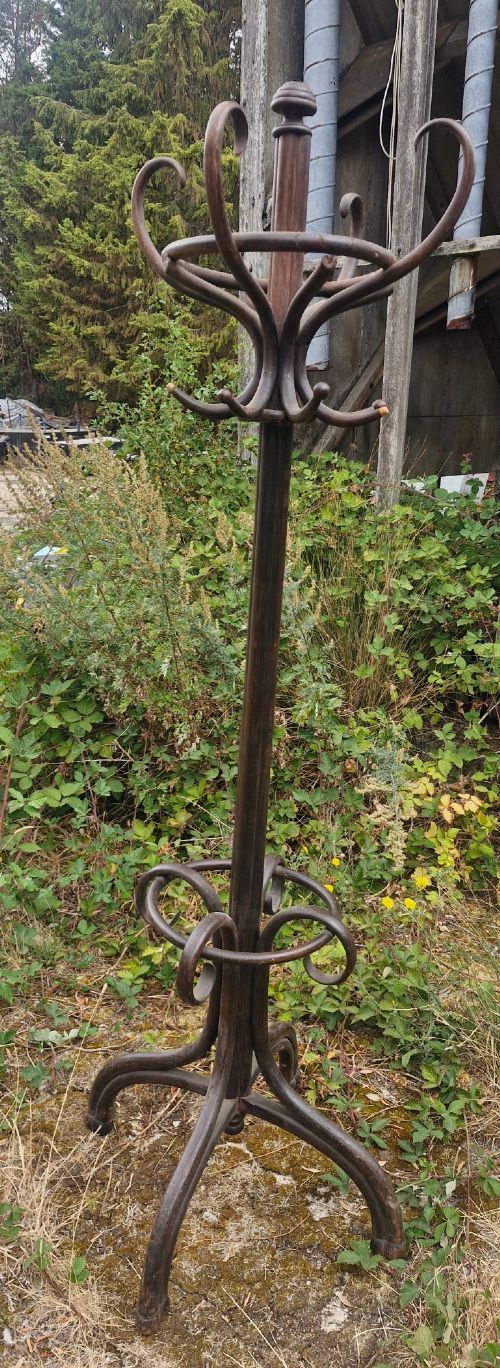
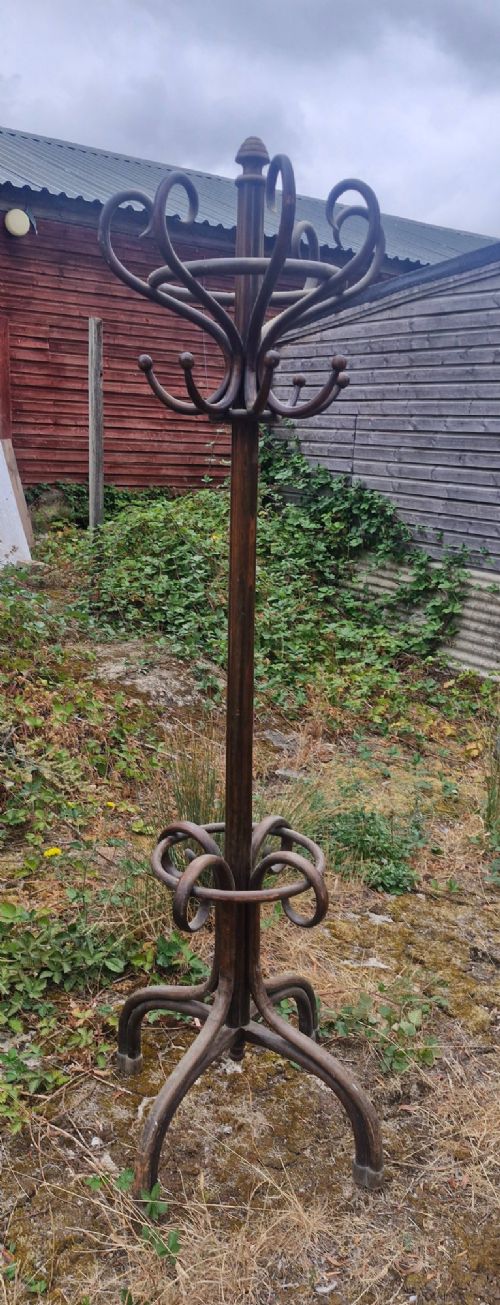
A traditional bentwood hat stand is a vertical piece of hallway furniture designed to hold coats, hats and umbrellas without taking up excessive floor space. These pieces rely on steam-bent timber to create scrolling hooks and arched upper rings, maintaining a light visual profile.
Most examples found here date from the Victorian and Edwardian periods, stretching into the early twentieth century and the nineteen-thirties. You will encounter floor-standing designs, wall-standing configurations and revolving versions that make efficient use of narrow entrances.
The core form is built around a central wooden pole supported by splayed legs or a demi-lune base. Makers utilised the flexibility of beech and beechwood to form loops and rails that combine structural strength with curved grace.
How they were made
These items are constructed primarily from beech and beechwood, which respond particularly well to steam-bending techniques. Workers placed solid timber rods into steam chambers until the wood became pliable enough to be pulled against metal straps and shaped into curves.
Once bent into loops, scrolls and circular hat rings, the timber was dried and held in position before being assembled with screws, metal brackets or internal threaded joints. Many pieces received a dark stain to resemble walnut or mahogany, highlighting the smooth grain of the wood.
Listings feature items spanning from the nineteenth century through the nineteen-thirties, with Edwardian and nineteen-ten periods appearing frequently.
What varies in quality
Quality in a traditional bentwood hat stand rests on the heft of the timber and the complexity of the bent elements. Heavier examples display thicker poles and more substantial base legs that prevent tipping when heavy winter coats hang from the upper hooks.
Refinements such as revolving top sections, double tier ring arrangements and demi-lune profiles demand greater joinery skill. The crispness of the steam-curved scrolls and the integrity of the original stained finish separate standard hallway furniture from finer workshop productions.
The Traditional Bentwood Hat Stand Glossary
- Bentwood
- Wood that has been rendered pliable by steam and then bent into curved shapes. This technique allows for continuous loops and rounded frameworks without traditional mortise and tenon joints.
- Demi-lune
- A half-moon or semicircular shape. In hat stands, this describes a flat-backed profile designed to sit flush against a hallway wall.
- Beech
- A hard, fine-grained timber commonly used in nineteenth-century furniture production. It accepts steam-bending and staining exceptionally well.
Traditional Bentwood Hat Stand: Frequently Asked Questions
How do I care for my stand?
Keep the wood conditioned with a mild furniture wax and avoid placing the stand in direct sunlight or beside intense heat sources. Excessive temperature changes can dry out the steamed timber and loosen the joints over time.
Check the stability of the base feet periodically and tighten any internal connections gently. Distributing the weight of heavier coats evenly across the upper hooks helps maintain the vertical balance of the pole.
Are these stands sturdy enough for daily use?
Most pieces were built for busy domestic hallways and handle everyday coats and hats without difficulty. Heavier antique examples provide better stability under a full load of winter garments.
Positioning the stand on a flat, even floor surface prevents unnecessary strain on the curved legs. Placing heavier coats on lower or opposing hooks maintains proper balance.
How can I tell the period?
Victorian and early twentieth-century pieces typically feature darker wood stains, robust metal fixing brackets, and deep scrolling bends. Edwardian and later variations often introduce lighter finishes and simpler rotating mechanisms.
Examining the underside of the base and the type of screws or bolts used provides further clues to the manufacturing decade. Thonet style influences remained consistent across several decades, making construction details crucial for dating.