


Beechwood Hat Rack
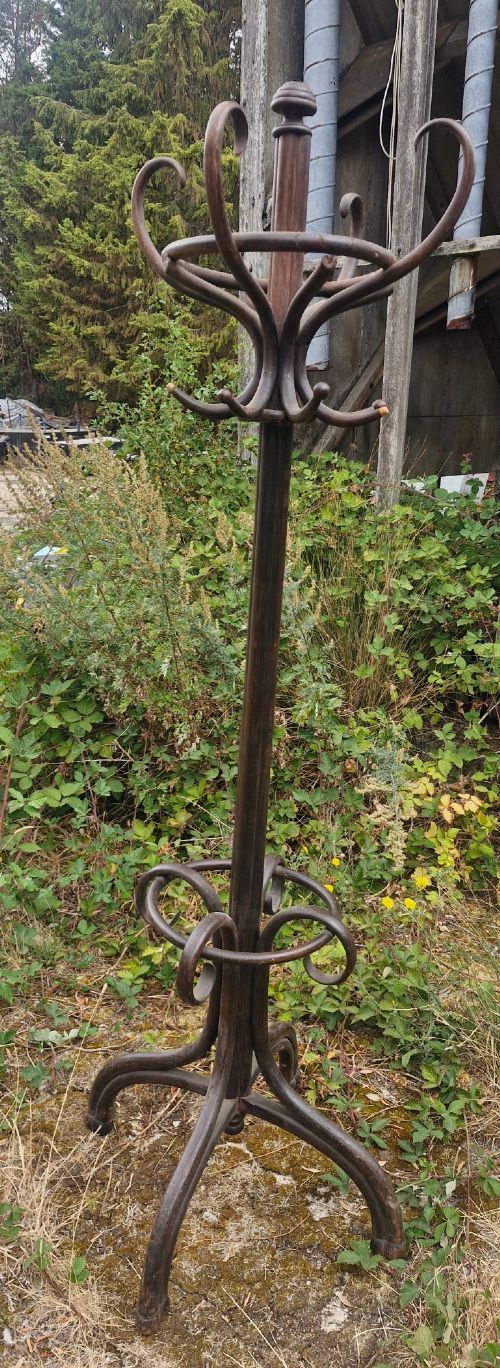
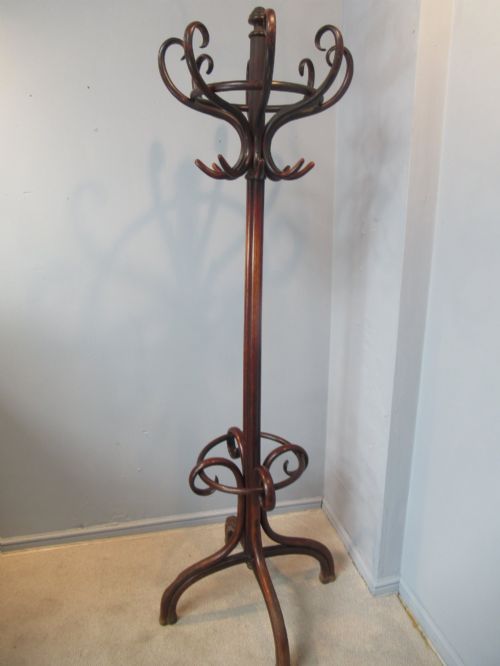
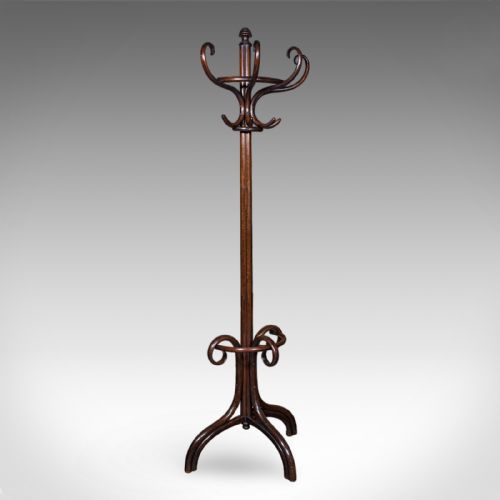
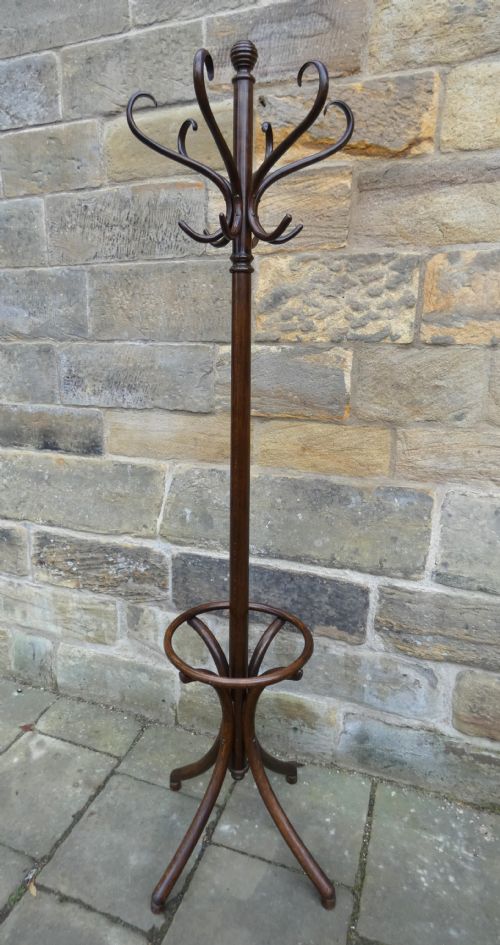
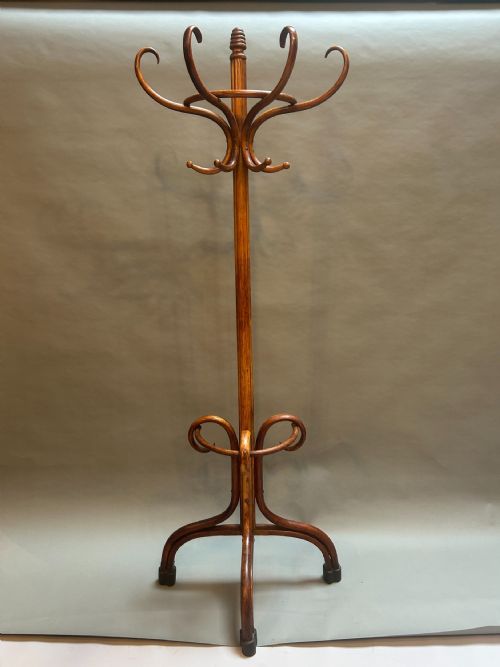
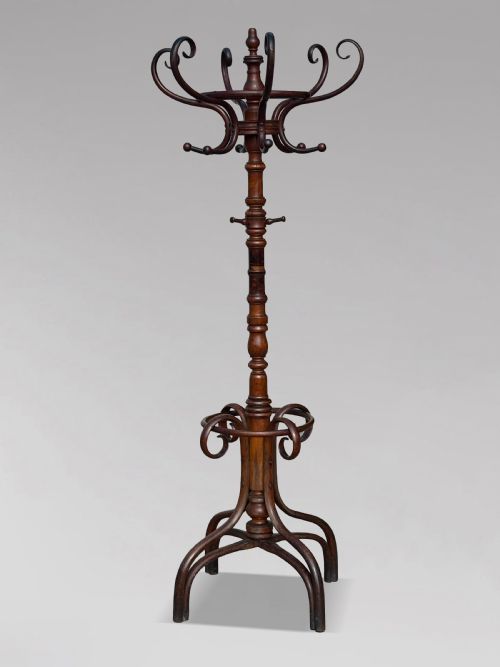
A beechwood hat rack brings organic warmth and practical utility to an entryway, built from steam-bent timber designed to hold everyday garments.
Beechwood Hat Rack
A beechwood hat rack represents a practical category of hallway furniture designed for domestic garments, primarily seen here as tall freestanding coat stands and wall-mounted racks. The items belong predominantly to the Victorian, Edwardian, and early twentieth-century periods, spanning from the late nineteenth century into the nineteen-thirties.
Most examples you encounter adopt the distinctive bentwood technique associated with Austrian manufacturing and the Thonet style. These forms range from half hall stands and demi-lune designs to revolving coat trees equipped with dedicated hooks for hats and coats.
The objects originate from European workshops and makers operating around nineteen hundred, offering functional storage with curved wooden silhouettes. They serve traditional hallway duties while displaying the characteristic fluidity of steam-bent beech.
How they were made
The construction relies heavily on steam-bent beechwood, a process where solid wood is exposed to moisture and heat to achieve smooth, sweeping curves without structural joints. This technique allows manufacturers to form looping crown pieces and arched hooks integral to the frame.
Makers finished the beech material using stains and traditional wood finishes to enhance the grain while protecting the surface from daily wear. Selected pieces incorporate additional elements such as glass components within their structural design.
Revolving hall stands let visitors spin the entire wardrobe just to select a walking cane.
What varies in quality
Quality in these items is determined by the refinement of the steam-bending and the crispness of the designated maker's stamp or label. Pieces bearing attribution to prominent workshops like Thonet or Fischel generally exhibit superior execution in their curved joints and overall proportions.
Construction integrity distinguishes standard production pieces from finer examples, particularly in how the rotating mechanisms or wall mountings are integrated into the beech framework. The depth of the wood finish and the retention of original labels further delineate the range.
Thonet·Fischel
The Beechwood Hat Rack Glossary
- Bentwood
- Wood that has been shaped by heating it with steam and bending it into curved forms. This technique creates lightweight yet strong frames for furniture.
- Thonet Style
- A design tradition pioneered by Michael Thonet, characterised by rounded steam-bent wooden components and minimalist structural elegance. It defines much of the bentwood furniture produced across Europe.
- Demi Lune
- A half-moon shape used for hall stands designed to sit flush against a wall. This profile maximises floor space in narrow entryways.
- Hall Stand
- A piece of furniture placed in an entrance hall to hold outdoor wear such as hats, coats, and umbrellas. They often combine hooks with mirrors or umbrella wells.
Beechwood Hat Rack: Frequently Asked Questions
How do I identify a bentwood hall stand?
Look for smooth, continuous curves formed from steam-bent beechwood rather than straight timber joined with heavy brackets. These pieces typically feature looped hooks and circular umbrella rings.
Many examples from this era also carry maker stamps or paper labels from workshops like Thonet or Fischel on the underside of the base or along the main stem.
Where should I place a hat and coat stand?
These tall stands suit entrance halls, boot rooms, and corridors where vertical storage is required without occupying excessive floor space. Freestanding revolving models allow access from multiple angles.
Wall-hanging versions fit well in smaller hallways where floor space is limited, providing accessible hanging points for daily garments.
How do I care for beechwood furniture?
Maintain the wood finish by dusting regularly with a soft, dry cloth and avoiding placement near direct heat sources that can dry out the timber. Periodic application of appropriate wax preserves the sheen of the stained beech.
Check the stability of the central joints and screws periodically, as daily hanging loads can cause minor loosening over decades of use.
What is the difference between Victorian and Edwardian bentwood?
Victorian examples tend to feature heavier ornamentation and more complex arrangements of curved arches, occasionally incorporating decorative glass or turning. Edwardian designs often lean towards cleaner lines and lighter proportions.
Both periods utilise the same fundamental steam-bending techniques pioneered in Austria during the nineteenth century.