
Hallway Coat Tree Stand
A hallway coat tree stand organises entranceways, holding hats, coats and sticks while setting a welcoming tone.
Hallway Coat Tree Stand
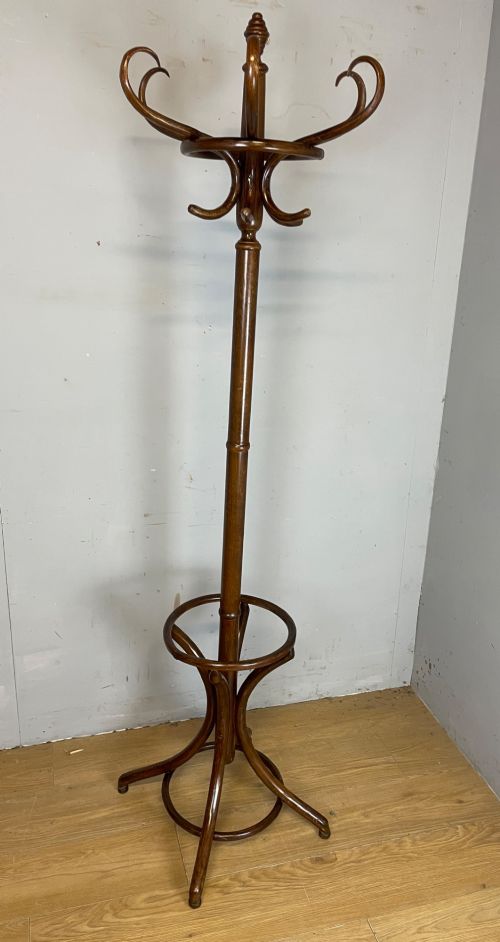
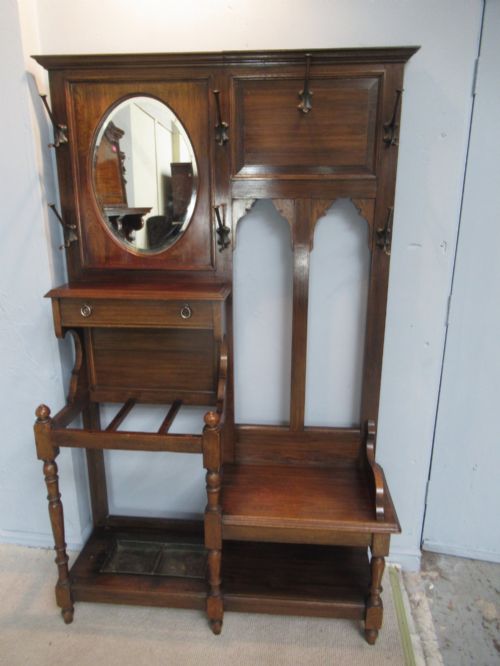
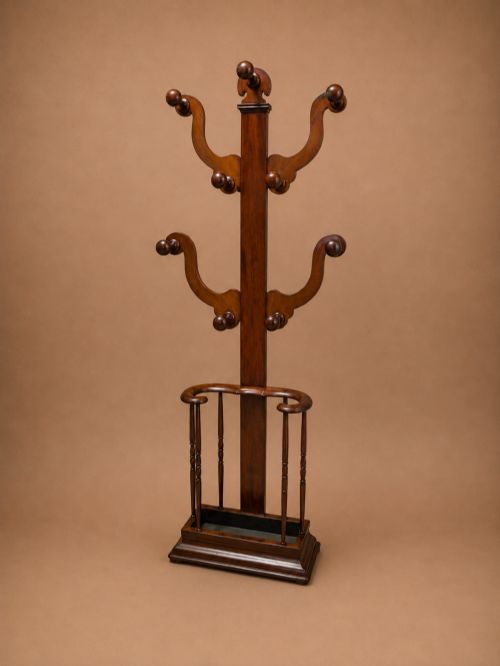
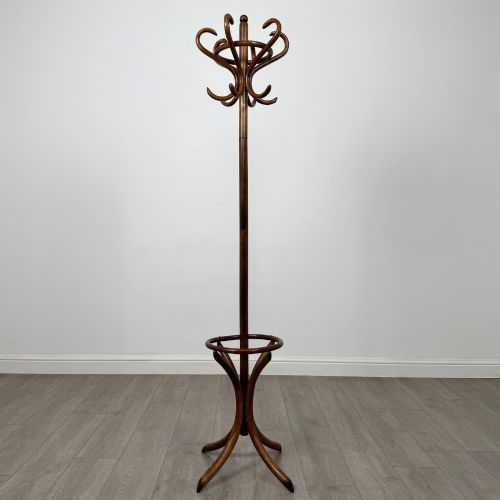
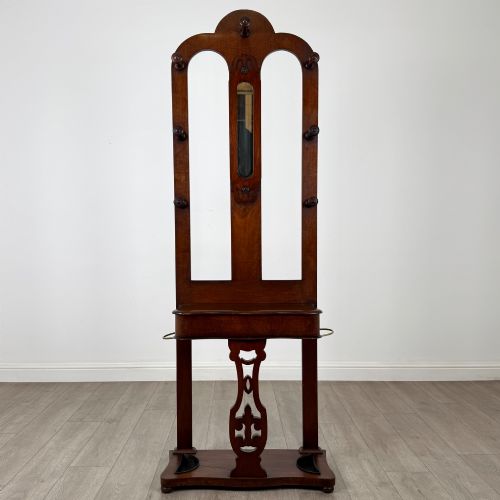
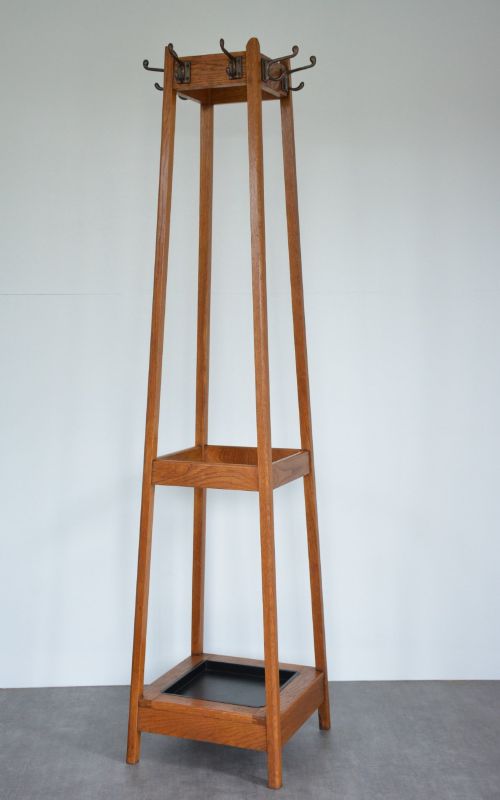
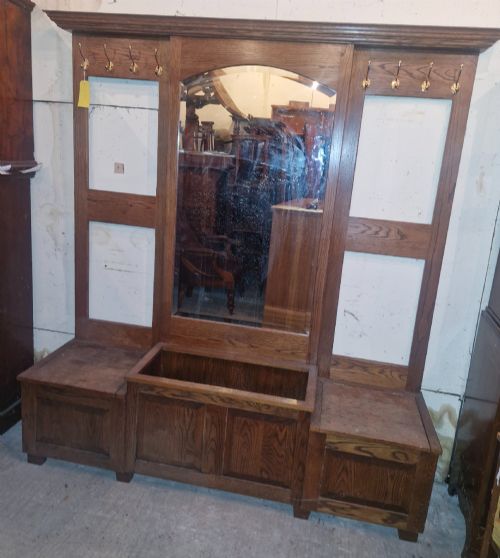
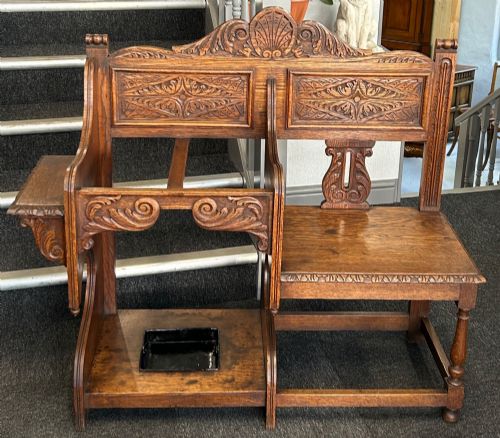
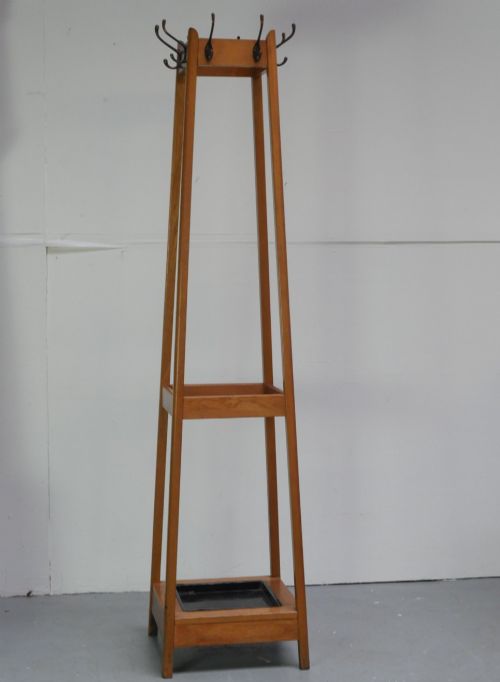
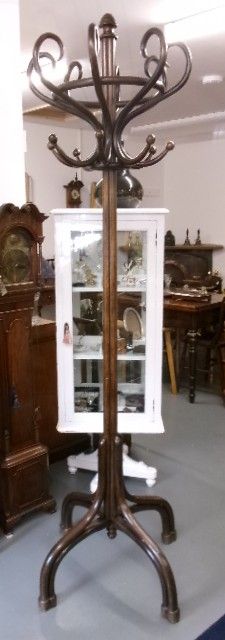
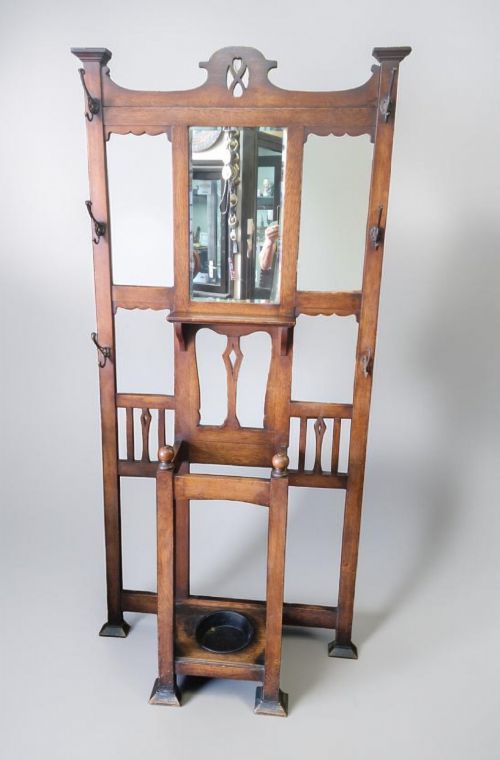
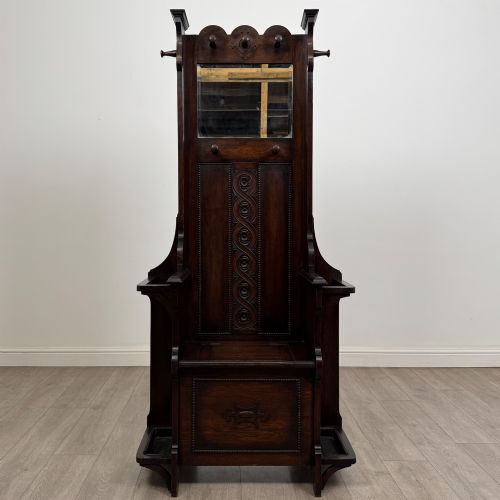
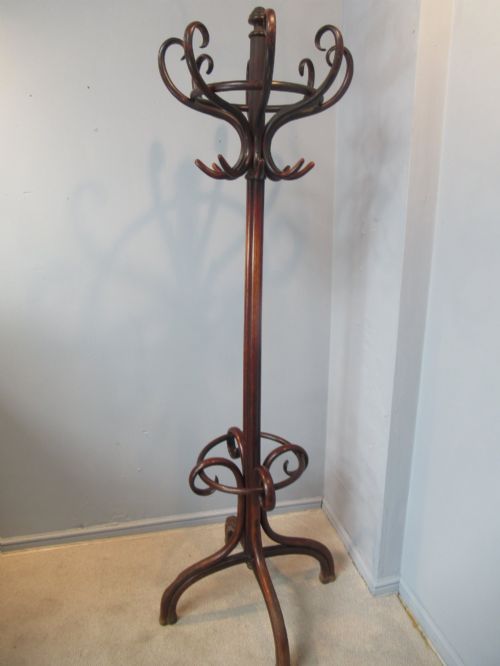
When you examine a hallway coat tree stand, you find practical furniture designed to manage entranceway clutter from the nineteenth and twentieth centuries. These pieces appear as tall freestanding coat stands or substantial hall stands incorporating umbrella holders, drip trays and sometimes integrated seats.
The versions you meet most frequently on this page span the Victorian and Edwardian eras through to the 1930s. Solid oak and beech bentwood dominate the selections, alongside mahogany, walnut and bamboo forms.
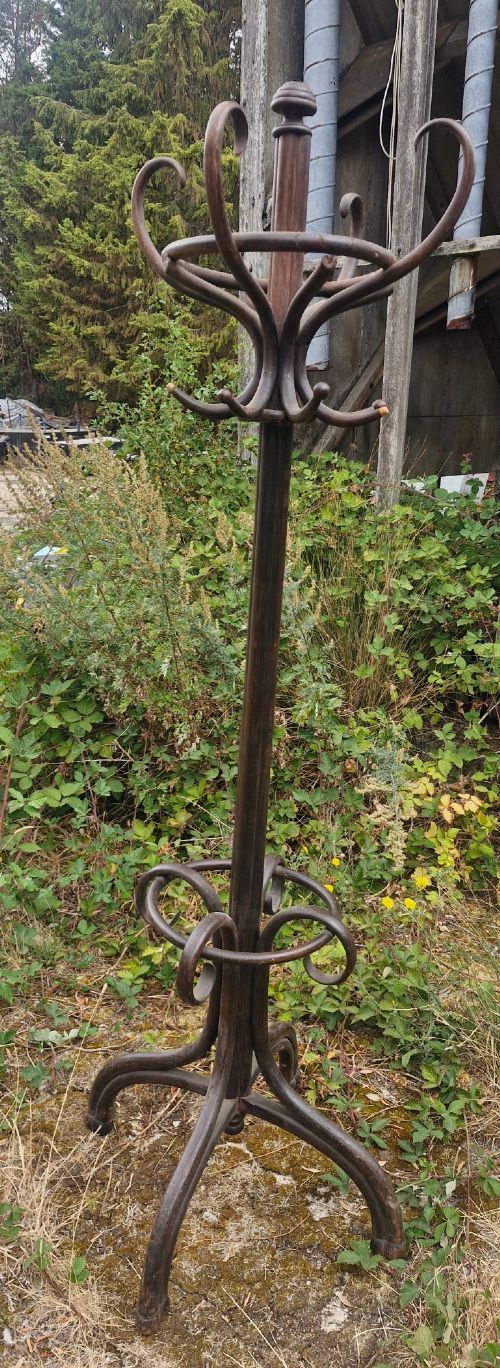
Styles range from utilitarian industrial pieces to decorative Arts and Crafts, Art Nouveau and Aesthetic Movement designs. You encounter everything from revolving bentwood hatstands to large multi-functional hall seat stands carved with traditional motifs.
Materials and construction methods
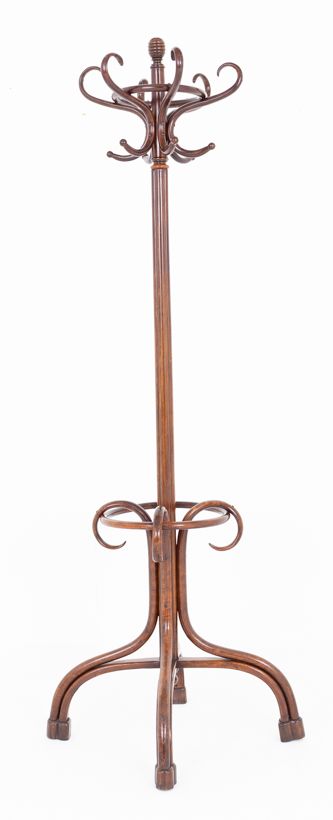
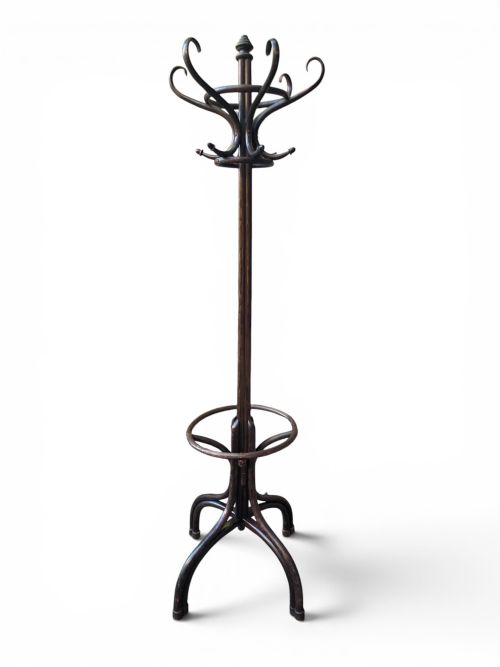
Makers utilised timber bending techniques for beech bentwood stands, heating the wood to create flowing curves for hat and coat hooks. Solid oak and mahogany provided the structural rigidity needed for heavy hall stands that accommodated mirrors, hooks and umbrella storage.
Cast iron and brass components appear in drip trays, hooks and umbrella holders, offering durable utility against wet weather. Carved details on oak and walnut pieces reflect manual craftsmanship, utilising traditional joinery such as mortise and tenon frames.
Specialised materials like bamboo and cow horn introduced alternative textures during the late nineteenth century, expanding the repertoire of entranceway furniture.
Listings feature hallway coat tree stands spanning the Victorian and Edwardian eras, utilising oak, beech, mahogany and bamboo.
Distinctions in construction and finish
The standard of a hallway coat tree stand rests on the integrity of its timber selection and the execution of its joints. Superior examples exhibit tightly fitted bentwood components or crisp, deep hand-carved ornamentation rather than shallow machine stamping.
Hardware quality separates standard utility pieces from finer productions, seen in heavy brass hooks, substantial cast iron drip trays and securely mounted mirrors. Structural stability under load determines durability, as lesser items loosen at the joints over decades of daily use.
Thonet·Astrola·Jas. Shoolbred
The Hallway Coat Tree Stand Glossary
- Bentwood
- Wood softened by steam and bent into curved shapes. This technique defines lightweight yet sturdy coat stands produced from beech.
- Hall stand
- A piece of entranceway furniture combining coat hooks, a mirror, glove drawers and umbrella compartments. Many examples incorporate a small bench seat.
- Drip tray
- A metal container placed at the base of a stand to catch rainwater from wet umbrellas. These trays protect wooden floors from moisture damage.
- Demi lune
- A half-moon or semicircular shape. Hall stands with this profile sit flat against a wall to conserve hallway floor space.
- Aesthetic Movement
- A late nineteenth-century design style emphasising visual beauty over narrative meaning. Pieces from this period often utilise bamboo or slender structural elements.
Hallway Coat Tree Stand: Frequently Asked Questions
How do I choose the right hallway coat tree stand for a small space?
Select a half-round or demi-lune bentwood design that sits flush against the wall without protruding too far into narrow corridors. Slender upright coat trees occupy minimal floor area while still providing multiple tiers for hats and garments.
Ensure the base remains heavy enough to maintain stability when coats hang from one side only. Revolving models also assist in tight areas by allowing access to garments without shifting the entire frame.
What is the difference between a coat stand and a hall stand?
A coat stand primarily consists of a central upright post with radiating hooks at the top for hanging garments and hats. It focuses strictly on vertical storage for outerwear.
A hall stand is a larger, multi-functional piece of furniture that typically incorporates a back panel with a mirror, multiple rows of hooks, umbrella wells with drip trays, and often a seat with hidden storage beneath.
How do I care for antique bentwood and oak stands?
Maintain wooden surfaces by applying appropriate beeswax or furniture polish periodically to nourish the grain and prevent drying. Avoid placing damp items directly onto untreated wood by utilising the designated metal drip trays.
Check screw fixings and joints regularly to ensure structural stability remains firm under daily weight loads. Keep the furniture away from direct heat sources to prevent timber splitting.
How do I identify a Victorian hall stand?
Victorian hall stands frequently display heavier proportions, dark oak or mahogany timbers, and elaborate hand-carved details such as foliage or animal motifs. They often integrate bevelled mirror plates and cast iron umbrella brackets into the back panel.
Earlier nineteenth-century examples lean towards formal classical lines, whereas later Victorian items embrace ornate Arts and Crafts or Aesthetic Movement influences.