



Traditional Banjo Barometer
A traditional banjo barometer brings the measured rhythm of the nineteenth century into a hallway with curved wood and silvered dials.
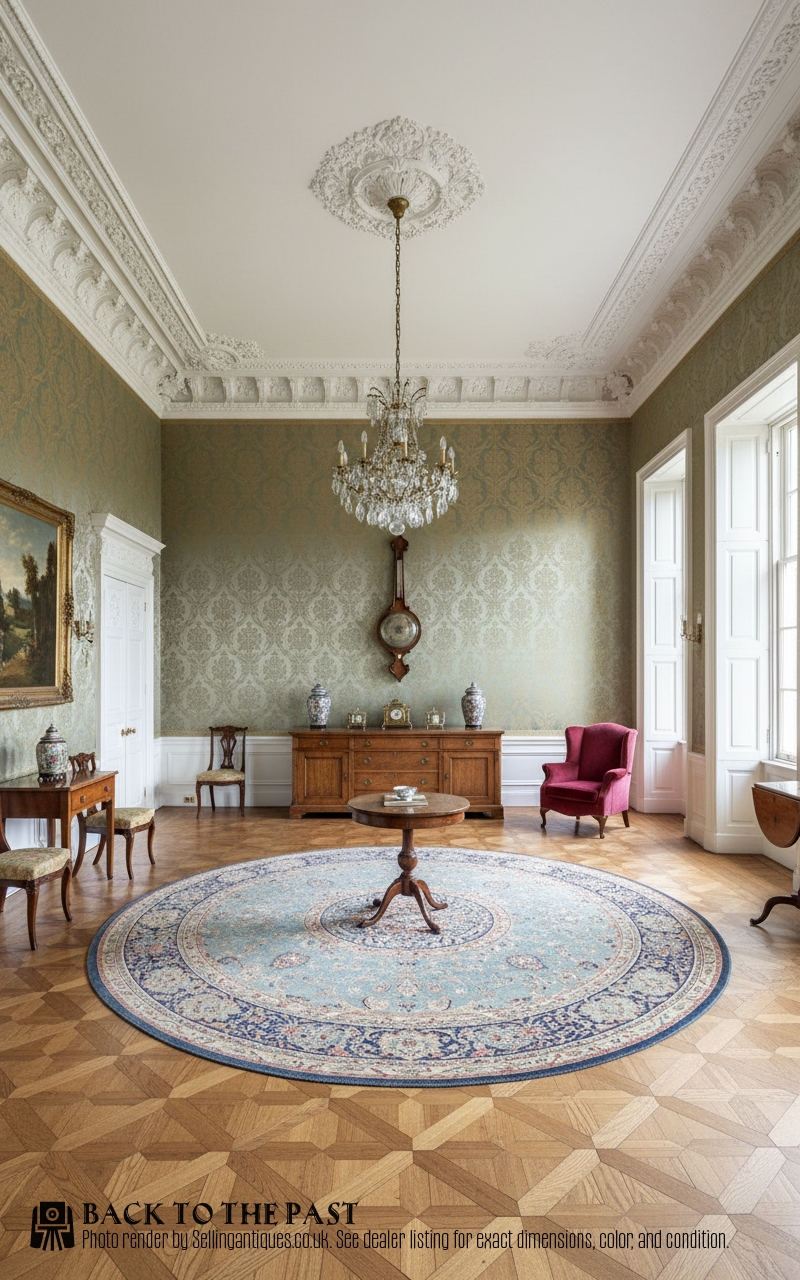
Traditional Banjo Barometer
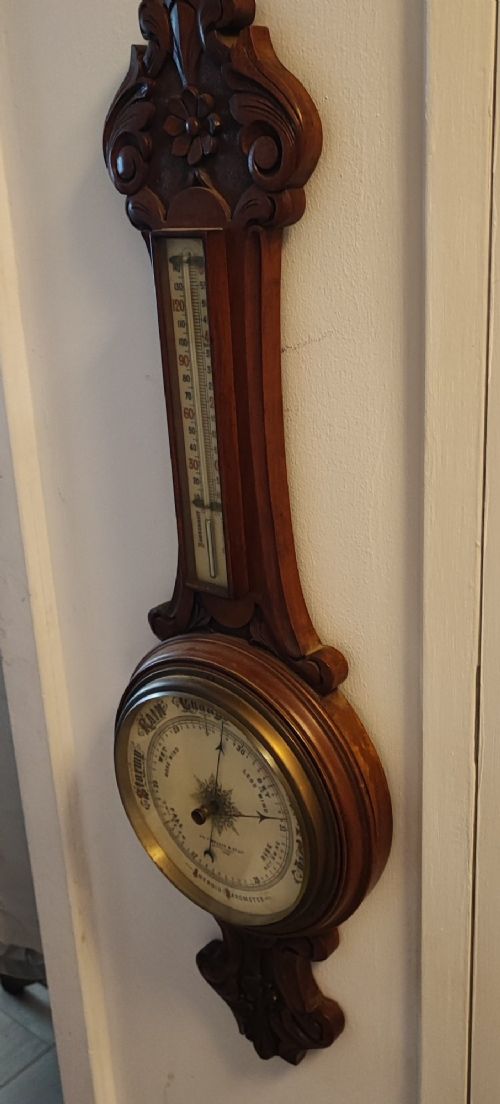
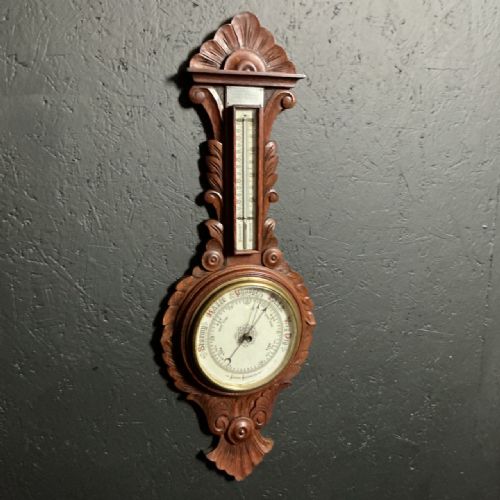
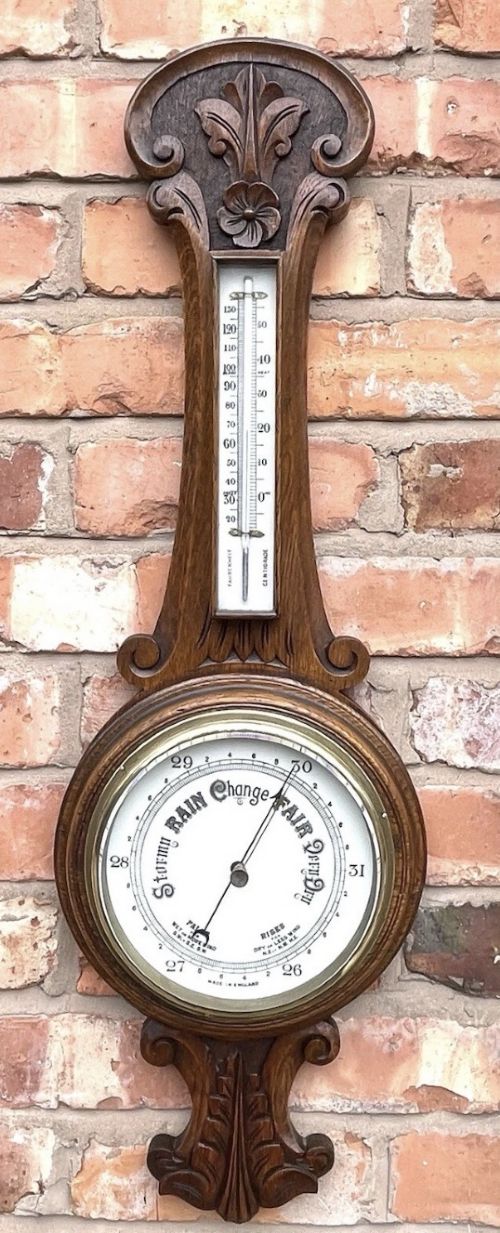
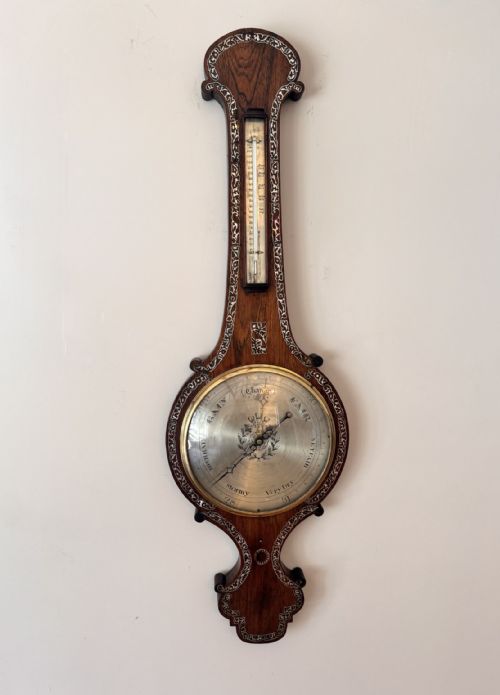
A traditional banjo barometer takes its name from the distinctive bulbous shape that houses the dial and the long trunk below. These wall-hung weather glasses appear most frequently in Victorian and Georgian incarnations across this selection, fashioned from dense timber veneers.
The layout typically pairs a circular dial at the top with a hygrometer, thermometer, or spirit level mounted along the central stem. Mahogany and oak dominate the forms, supplemented by walnut and rosewood depending on the period of manufacture.
Makers adapted the classic silhouette throughout the nineteenth century, sometimes combining the weather instruments with clock faces or mounting them in heavily carved cases. Buyers encounter everything from austere Georgian examples to inlaid Edwardian interpretations.

Gradations of quality
Quality rests upon the crispness of the timber carving, the depth of the wood grain, and the legibility of the engraved silvered dial. Superior examples retain their original mercury tubes or refined aneroid movements alongside unblemished veneers.
The presence of secondary instruments like thermometers or hygrometers, executed with matching brass work and signed dials, separates standard production from workshop pieces of distinction.
Signed examples on this page feature makers from London, Glasgow, Ipswich, and Shrewsbury alongside provincial workshops.
Maple & Co·James H Kelly of Glasgow·Vecchio & Co of Shaftsbury·BIANCHI IPSWICH·A RIVOLTA·Bassi·George Dollond of London·Negretti & Zambra
The Traditional Banjo Barometer Glossary
- Banjo barometer
- A wall barometer featuring a rounded head and an elongated vertical body resembling the musical instrument. This shape became the dominant domestic weather glass style throughout the nineteenth century.
- Aneroid barometer
- A weather instrument that measures atmospheric pressure using a flexible metal box rather than liquid mercury. These movements became widely utilised from the mid-Victorian period onwards.
- Silvered metal
- A brass or copper dial treated to achieve a bright, silvery finish before being engraved with weather inscriptions. The numerals and graduations are then typically filled with black wax for clarity.
- Mother of pearl
- An iridescent inner shell layer used by makers to inlay decorative motifs into rosewood or mahogany cases. It catches the light across the darker timber backgrounds.
- Hygrometer
- An instrument measuring relative humidity, frequently incorporated into the trunk of a banjo barometer alongside the thermometer. It provides a secondary atmospheric reading beneath the main dial.
Traditional Banjo Barometer: Frequently Asked Questions
How do I read a banjo barometer?
Read the main upper dial by noting the position of the pointer against pressure markings ranging from stormy to very dry. Many instruments include a manual setting hand that you align over the current needle to track daily atmospheric changes.
Secondary dials or thermometer scales along the trunk provide additional context regarding temperature and humidity levels within the room.
Where should I hang a barometer?
Hang your barometer on an interior wall away from direct sunlight, central heating radiators, and damp exterior stone. Stable indoor temperatures ensure the delicate internal mechanics respond accurately to barometric pressure rather than thermal expansion.
Ensure the wall fixing is secure, as traditional wood and glass instruments carry considerable weight and require firm support.
How do I tell if it is mercury or aneroid?
Look closely at the base of the dial and the visible portions of the trunk to identify the pressure medium. Mercury instruments often feature an exposed bulb or a long glass tube visible through a small glazed aperture.
Aneroid versions rely entirely on internal spring-loaded chambers and lack the fluid reservoirs required by mercurial barometers.
How do I care for the timber case?
Maintain the polished mahogany, oak, or walnut case by dusting gently with a dry, soft cloth. Avoid aerosol polishes and silicone sprays, which can build up on the wood and discolour delicate mother of pearl inlay.
Apply a microcrystalline wax sparingly once a year if the timber appears dry, buffing it gently to preserve the natural sheen of the grain.