


Traditional Asian Side Table
A traditional asian side table brings low, clean lines and rich timber into a room, offering practical surface space with distinct cultural character.
Traditional Asian Side Table
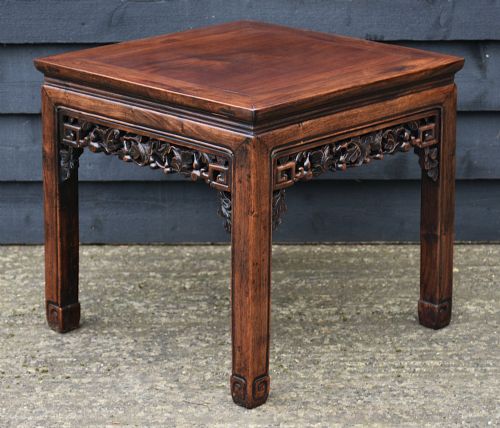
A traditional asian side table encompasses low tables, altars, nests, and console forms originating primarily from Chinese and Japanese workshops. These pieces frequently date from the nineteenth century, including Qing Dynasty examples alongside provincial items.
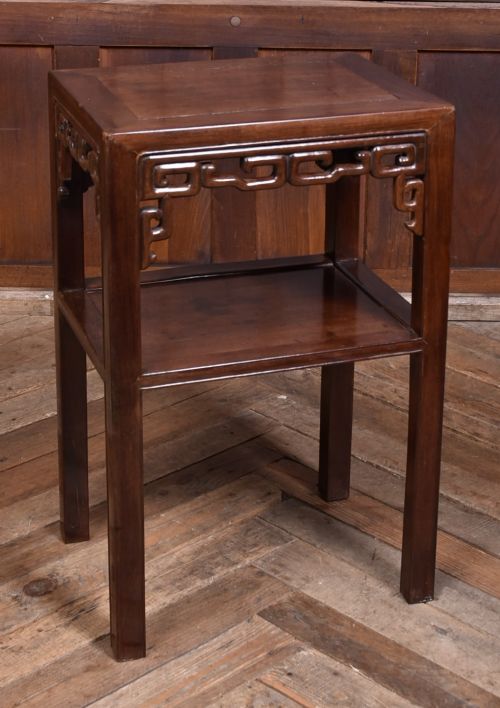
The version most commonly met on this page is the low hardwood or elm side table, often utilised as a lamp stand or occasional surface. Such pieces range from rustic provincial elm designs to highly finished rosewood and hongmu constructions.
Materials and construction
Construction relies heavily on dense hardwoods such as rosewood, hongmu, huanghuali, and local elm, selected for strength and grain pattern. Cabinetmakers employed traditional joinery techniques that allowed timber to expand and contract without metal fixings.
Surfaces receive varied finishes, from clear polish highlighting natural wood figures to deep red lacquer applications. Brass accents occasionally appear on hardware, while structural elements lean on time-tested mortise and tenon joints.
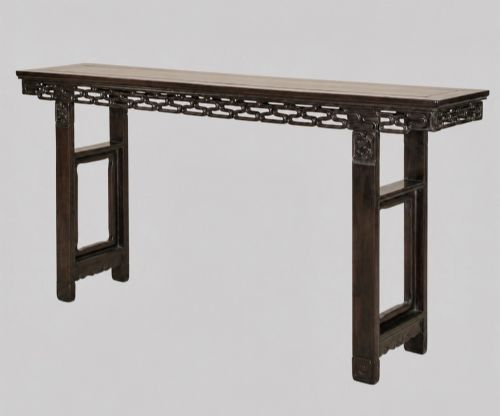
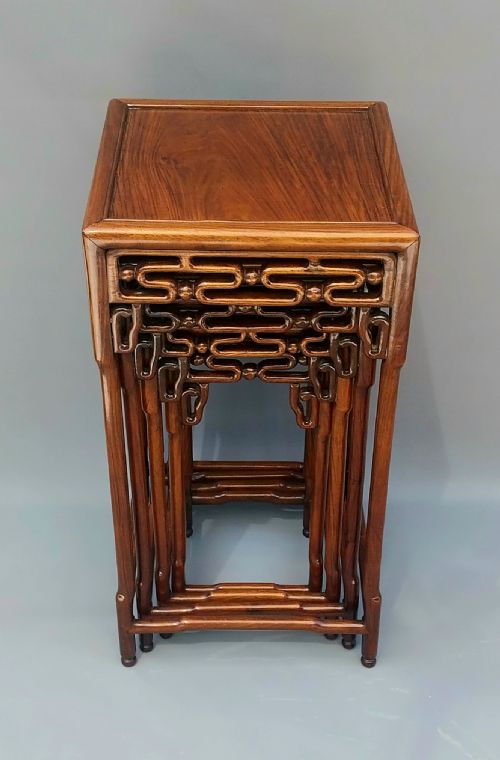
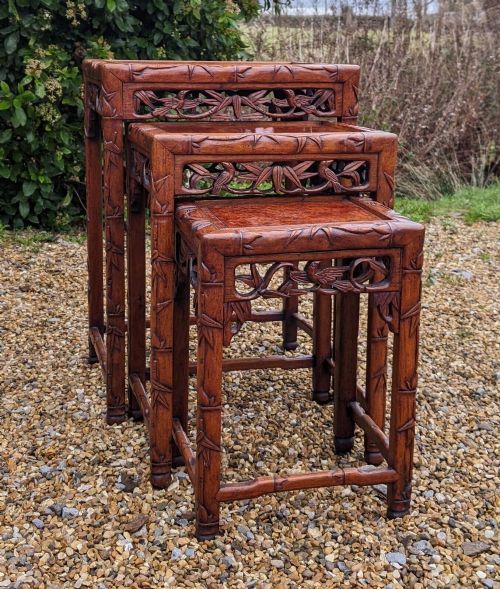
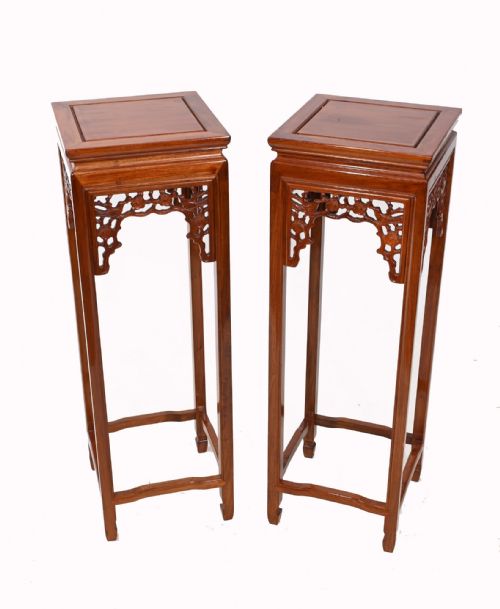
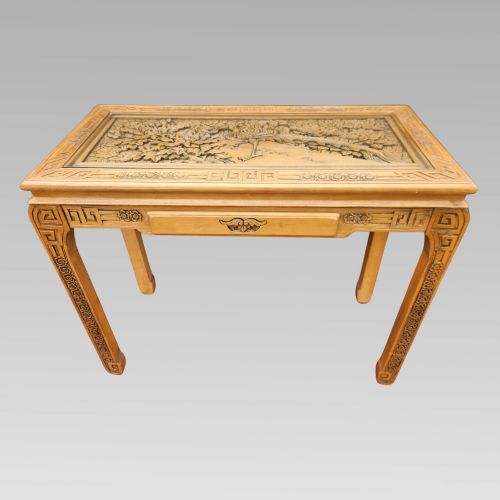
Form variations on this page include nest of tables, altar tables, console tables, coffee tables, and occasional stands.
Distinctions in craftsmanship
Quality separates along the lines of timber selection and the crispness of carved detail. Dense rosewood and finely figured elm command attention for their natural grain, whereas lesser pieces utilise simpler secondary timbers.
Proportion and joinery integrity dictate the standing of a table. Refined altar tables and nested sets demonstrate precise architectural balance, distinguishing them from basic utilitarian surfaces.
The Traditional Asian Side Table Glossary
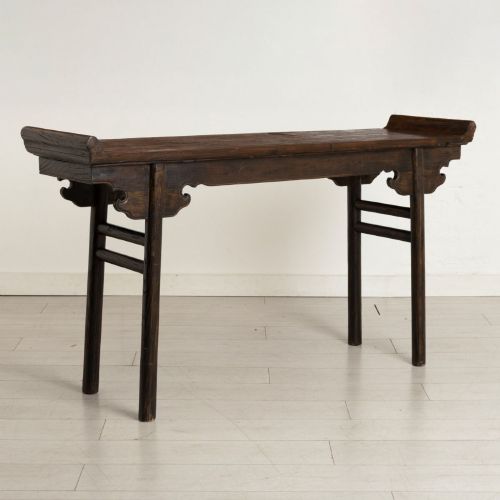
- Altar table
- A long, narrow table traditionally placed against a wall for ceremonial use, characterised by upturned flange ends or recessed legs. These pieces provide significant surface area and architectural presence.
- Hongmu
- A categorical term in Chinese furniture-making denoting dense red hardwoods, including various species of rosewood. It is prized for its weight, dark tone, and durability.
- Nest of tables
- A set of graduated tables designed to slide one beneath another to save floor space when not in use. They appear frequently in hardwood configurations.
Traditional Asian Side Table: Frequently Asked Questions
What defines a traditional asian side table?
These tables are low, functional surfaces originating from China and Japan, fashioned from dense hardwoods like rosewood, hongmu, or elm.
They reflect historical periods such as the Qing Dynasty and the Meiji era, employing traditional joinery rather than modern hardware.
How were these tables used originally?
Many served specific domestic or ceremonial purposes, such as holding altar vessels, displaying porcelain vases, or supporting tea ceremonies.
Lower forms functioned as writing desks or occasional surfaces for daily household tasks.
Where do these tables fit in modern interiors?
Their low profile and clean silhouettes suit placement beside low seating, as lamp stands, or as accent consoles in hallways.
Natural timber tones and red lacquer finishes pair well with both contemporary and traditional room schemes.
How do I identify the wood type?
Examine the weight, colour, and grain patterns visible on the surface, keeping in mind that rosewood and hongmu feel notably heavy and dense.
Elm typically displays a prominent, sweeping grain, while lacquer finishes conceal the underlying timber entirely.