


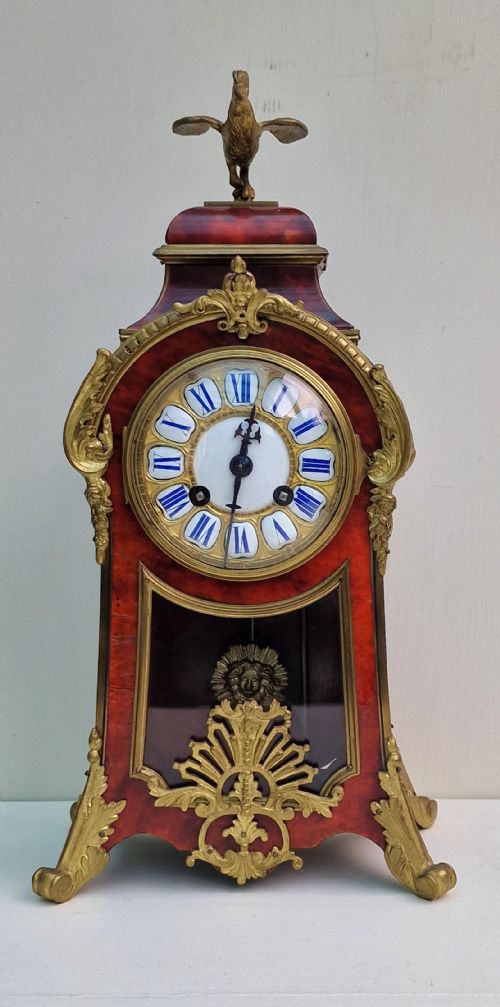
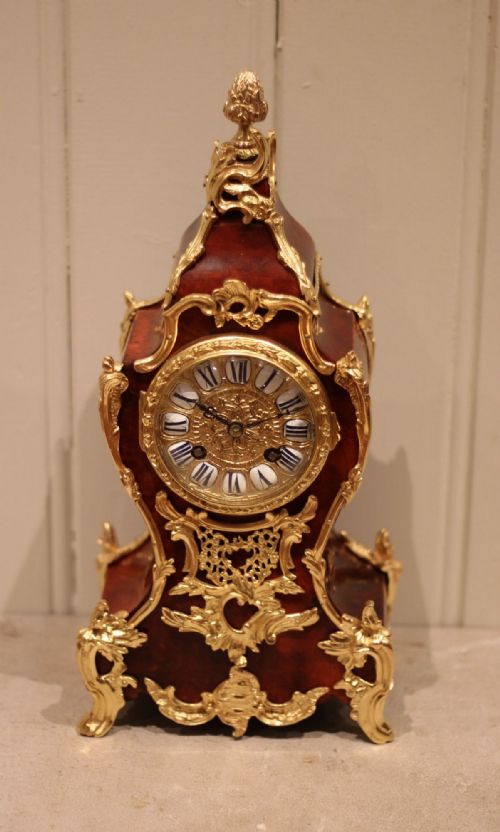


Tortoiseshell French Clock
A tortoiseshell French clock brings warmth and intricate brass marquetry to a room, combining practical timekeeping with decorative opulence.

Tortoiseshell French Clock
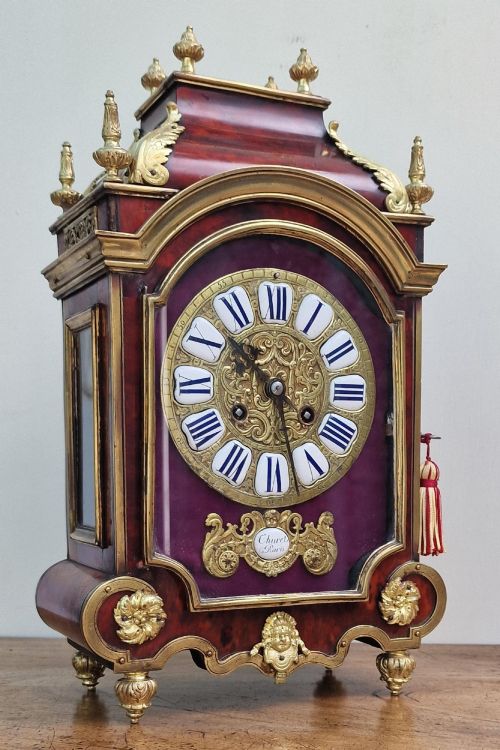
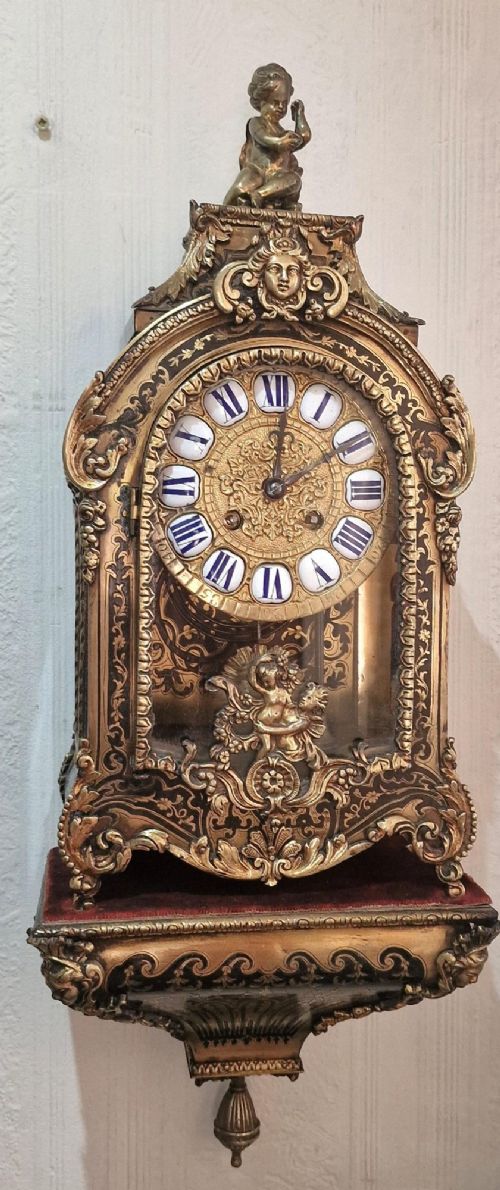
When searching for a tortoiseshell French clock, buyers encounter pieces primarily dating from the nineteenth century, including Victorian examples and styles drawing on earlier periods. These timepieces take many forms, ranging from mantel and wall clocks to bracket clocks with matching pedestals or wall brackets.
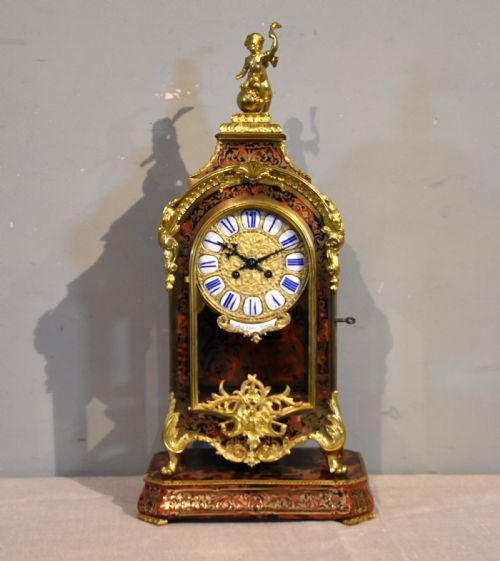
The most common variations on this page are mantel clocks featuring traditional wooden carcasses veneered in tortoiseshell or faux tortoiseshell. Many examples display the ornate stylistic influences of Louis XIV, Louis XV Revival, and Napoleon III designs.
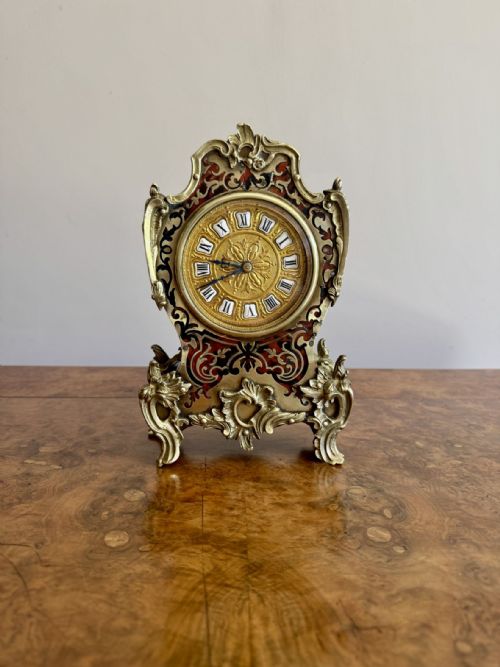
Originating predominantly from Parisian workshops, these clocks served both a functional domestic role and a statement of status in grand nineteenth-century interiors. Collectors find them in various scales, from petite boudoir clocks to substantial longcase pieces.
Materials and construction techniques
Makers constructed these clocks using a timber base layered with genuine tortoiseshell veneer or faux tortoiseshell finishes. Craftsmen then inlaid sheets of brass and pewter into the shell material, creating elaborate floral and geometric scrollwork patterns.
Gilt bronze and ormolu mounts were cast and applied to corners, feet, and dials to accentuate the rich brown and amber tones of the shell. Enamel chapters and delicate glass panels completed the visible structure of the movement housing.
Listings feature nineteenth-century French mantel clocks incorporating brass, ormolu, and glass alongside genuine and faux tortoiseshell.
Assessing quality and craftsmanship
The distinction between standard and exceptional pieces lies in the precision of the brass inlay and the crispness of the cast ormolu mounts. Finer examples display meticulous alignment in the Boulle marquetry, where the brass and shell fit together seamlessly without excessive filler.
The quality of the clock movement itself, often an eight-day mechanism signed by established Parisian makers, elevates the piece. Original matching brackets, pedestals, and intact mercury gilding further separate superior specimens from ordinary workshop productions.
Thuret·Henri Marc·Samuel Marti·A.D. Mougin·Payne London·Vincenti and Cie
The Tortoiseshell French Clock Glossary
- Boullework
- A method of marquetry using brass and tortoiseshell inlaid together, named after the cabinetmaker André-Charles Boulle. This technique creates contrasting metallic and organic patterns across the clock case.
- Ormolu
- Gilded bronze applied to furniture and clock mounts for decorative effect. The metal is treated with an acid solution before gold amalgam is applied and heated.
- Bracket clock
- A portable clock designed to sit on a matching wall bracket or furniture surface. These pieces frequently include subsidiary wall supports recorded in historical listings.
- Fusee
- A conical pulley used in clock movements to maintain even driving power as the mainspring unwinds. This mechanism improves timekeeping accuracy across the duration of the wind.
- Garniture
- A set of matching decorative objects, such as a clock accompanied by side vases or candelabra. These sets were designed to sit harmoniously on a mantelpiece.
Tortoiseshell French Clock: Frequently Asked Questions
How do I wind a tortoiseshell French clock?
Use the appropriate winding key gently in the dial holes, turning until you feel resistance. Avoid over-winding to protect the historical spring mechanism inside.
Ensure you keep the key stored safely away from the clock case to prevent accidental scratching of the delicate tortoiseshell veneer during maintenance.
Where should I place a bracket clock?
Mount bracket clocks securely onto a solid wall using their designated wooden support, ensuring the weight is properly distributed. Alternatively, position them safely on a heavy mantelpiece.
Keep the clock away from direct sunlight and sudden temperature changes, which can cause the tortoiseshell veneer and brass inlay to warp or lift.
How can I tell a Louis XIV style clock apart?
Louis XIV style clocks generally exhibit symmetrical, formal classical motifs with heavier architectural proportions and restrained brass marquetry. They reflect an earlier seventeenth-century aesthetic revived during the nineteenth century.
By contrast, later Louis XV Revival pieces feature asymmetrical Rococo curves, flowing scrollwork, and organic shell shapes without rigid geometric symmetry.
What is faux tortoiseshell?
Faux tortoiseshell is a simulated finish created on horn, glass, or painted wood to mimic the mottled amber and dark brown patterns of genuine shell. Makers used this alternative when genuine materials were scarce or costly.
Under close examination, faux surfaces lack the natural depth and organic layering found in genuine marine turtle shell veneers.