
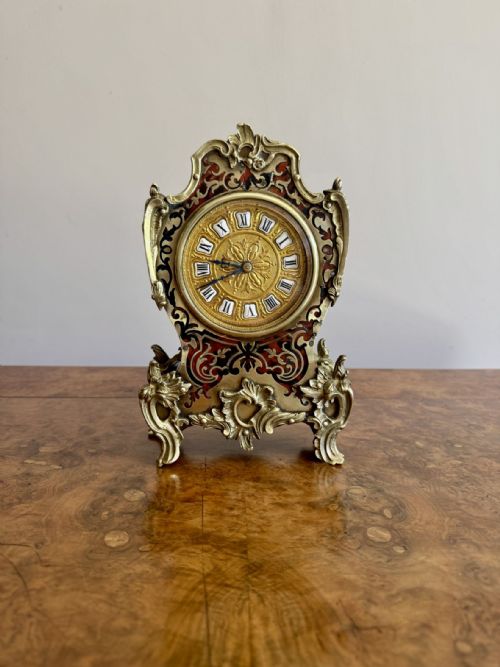
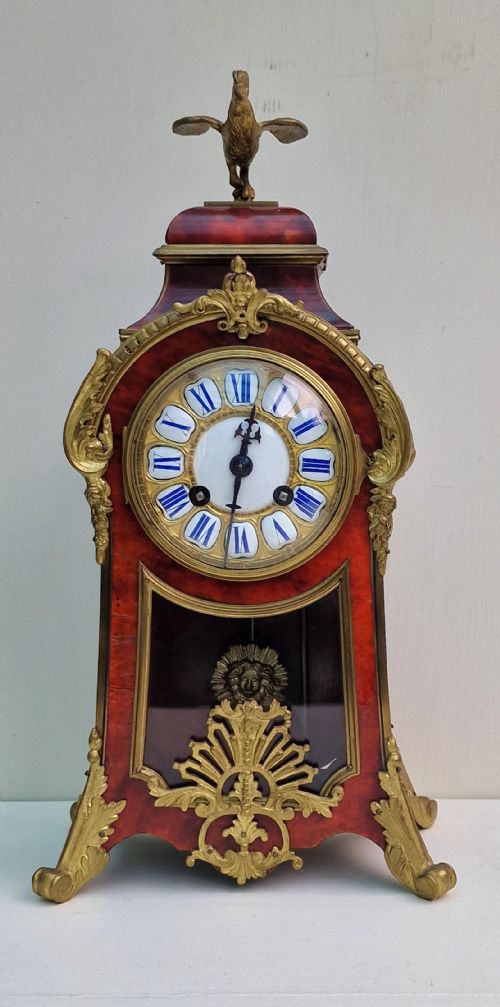


Tortoiseshell Desk Clock
A tortoiseshell desk clock brings rich organic warmth to a study, combining precision timekeeping with the deep amber tones of shell and fine metal mounts.

Tortoiseshell Desk Clock
The objects frequently originate from French workshops adhering to revival styles like Louis XV and French Rococo, alongside British iterations. They range from substantial mantel pieces to petite boudoir timepieces designed for intimate spaces.
What varies in quality
Quality rests in the crispness of the ormolu casting and the precision of the silver inlay within the tortoiseshell veneer. Finer examples display meticulous hand-chasing on the gilt bronze mounts and seamless application of the shell across complex curved surfaces.
Listings feature periods spanning the Regency era through the 1930s, utilising materials including silver, enamel, and gilt bronze.
William Comyns·J Batson And Son·William Hardy London
The Tortoiseshell Desk Clock Glossary
- Tortoiseshell
- A decorative material derived from the shell of certain turtle species, valued for its translucent amber and brown mottled patterns. It is frequently applied as a thin veneer over wooden carcases.
- Ormolu
- Gilded bronze used extensively for decorative mounts, feet, and bezels on nineteenth-century clocks. The technique involves applying a finely ground mercury and gold amalgam to bronze.
- Boulle
- A style of marquetry developed in France, combining tortoiseshell and brass inlay. It creates a striking contrast between the dark shell and the gleaming metallic motifs.
- Fusee
- A conical pulley used in spring-driven clocks to ensure uniform tension as the mainspring unwinds. This mechanism improves the timekeeping accuracy of the clock.
Tortoiseshell Desk Clock: Frequently Asked Questions
Where were tortoiseshell desk clocks typically placed?
These clocks were designed for private studies, boudoirs, and drawing rooms where their decorative materials could be appreciated close at hand. Their compact sizes suited writing desks, mantelpieces, and small tables.
Owners placed them in prominent domestic spaces to display both social standing and an appreciation for fine craftsmanship and imported materials.
How do I identify a Victorian tortoiseshell clock?
Victorian examples often incorporate revival aesthetics such as Louis XV motifs, featuring elaborate ormolu mounts and curved silhouettes. Look for nineteenth-century hallmarks on silver mounts where applicable.
The integration of Boulle marquetry and rich amber shell veneer provides further chronological context for pieces originating from this era.
What is the difference between a boudoir clock and a mantel clock?
Boudoir clocks are typically smaller, more intimate timepieces intended for personal chambers and dressing rooms. They often feature delicate gilt or silver mounts designed for delicate settings.
Mantel clocks are generally larger and heavier, constructed to sit firmly upon fireplace surrounds and command a more dominant visual presence in a room.
How should I care for a tortoiseshell clock?
Keep the clock away from direct sunlight and extreme temperature fluctuations to prevent the tortoiseshell veneer from warping or drying out. Gentle dusting with a dry, soft cloth is sufficient for maintenance.
Avoid using modern chemical polishes on the shell or the ormolu mounts, as abrasive substances can permanently damage the delicate antique surfaces.