


Art Nouveau Silver Clock
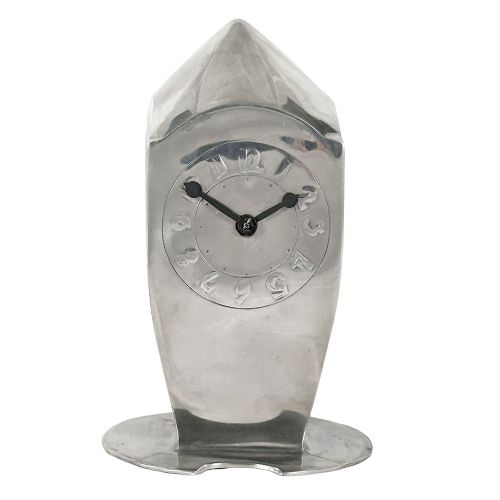
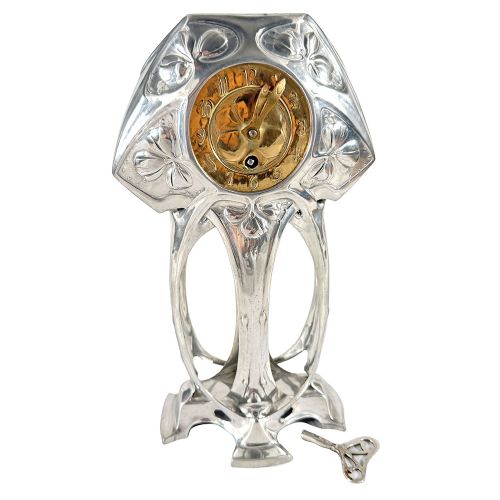
These art nouveau silver clock examples combine organic styling with precious metal, offering a striking centrepiece for any desk or mantel.

Art Nouveau Silver Clock
The objects available on this page appear in forms including mantel clocks, desk clocks, carriage clocks, and miniature portico or boudoir timepieces.
Makers and designers working in this aesthetic utilised silver alongside glass, enamel, copper, wood, and onyx to create distinctive timekeepers.
Materials and construction
Metalwork forms the primary structure of these timepieces, utilising silver, silver plating, pewter, and brass shaped into flowing, organic forms.
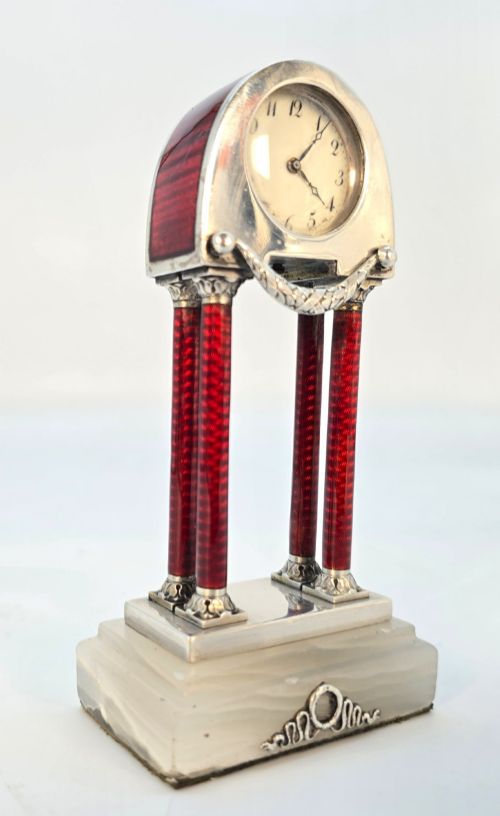
Decorative elements often incorporate vibrant enamel work, abalone shell inlays, and glass panels to complement the metallic surfaces.
Wooden and onyx bodies provide sturdy housing for the clock mechanisms, while tortoiseshell occasionally appears on specialised cased pieces.
Some timepieces even manage to combine tiny portico columns with vibrant beetle-wing abalone inlay.
Judging quality in period timepieces
Quality rests in the crispness of the chased or cast metallic ornament and the harmonious integration of auxiliary materials like enamel and abalone.
Pieces bearing distinct attribution to known designers or prominent firms demonstrate superior artistic execution compared to unmarked or generic equivalents.
The preservation of delicate surface details on the silver cladding or pewter body distinguishes finer specimens from heavily worn examples.
Archibald Knox·Liberty and Company·Friedrich Adler·Osiris·David Veasey·Georg Adam Scheid·WMF
The Art Nouveau Silver Clock Glossary
- Jugendstil
- The continental European counterpart to the British movement, named after a Munich art magazine. This aesthetic heavily influences German and Austrian metalwork.
- Portico clock
- A architectural clock design featuring supporting columns or pillars. Miniature versions in silver appear in Viennese workshops.
- Tudric
- A trade name used by Liberty and Company for pewter wares. Many iconic designs under this brand were created by Archibald Knox.
- Enamel
- A glassy substance fused to metal through firing to add colour and decoration. It provides vibrant focal points on clock dials and cases.
Art Nouveau Silver Clock: Frequently Asked Questions
Where were these clocks typically placed?
These timepieces served as functional art on domestic desks, dressing tables, and mantelpieces. Their compact sizes suited intimate boudoirs and public receiving rooms alike.
Larger mantel variations anchored room displays, while miniature desk versions kept time close at hand during letter writing or daily administration.
How do I identify the period?
Dating relies on stylistic markers characteristic of the 1900 era, such as whiplash curves, floral motifs, and stylized natural forms. Hallmarks on silver components provide official confirmation of the assay year.
Comparing the object to known designs by contemporaries like Archibald Knox or output from firms like WMF helps narrow down the exact decade of manufacture.
What is Tudric pewter?
Tudric is a brand of pewter alloy introduced by Liberty and Company to support Arts and Crafts design principles. It allowed for sculptural casting of complex, organic forms without relying on precious metals.
Many of these pewter items incorporate additional materials like enamel panels or abalone shell to create striking visual contrast.
Are these clocks suitable for daily use?
While these timepieces were originally designed to tell time in a domestic setting, antique clock mechanisms require gentle handling and regular professional maintenance.
Many collectors choose to run them occasionally or simply display them as sculptural examples of period metalwork.