
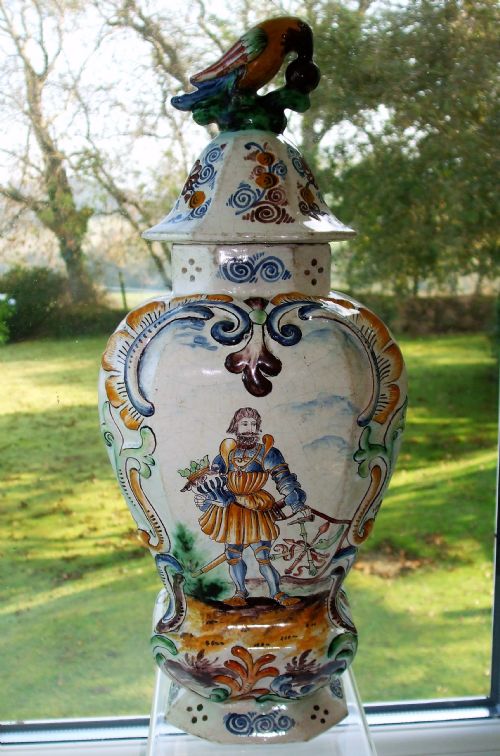
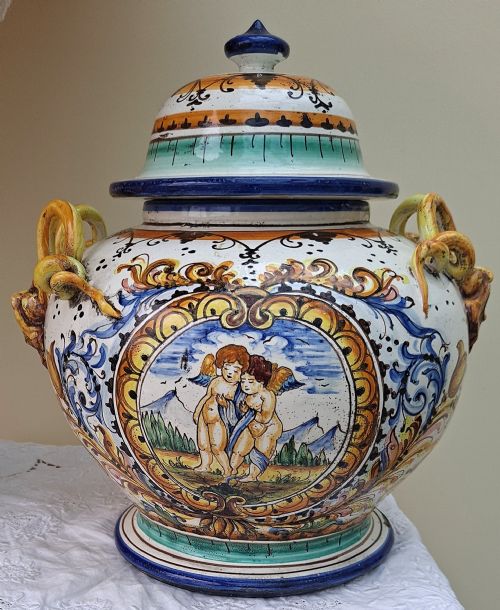


Tin Glazed Faience Vase
These tin glazed faience vase examples bring together historic earthenware forms and cobalt pigment painting for collectors seeking period character.
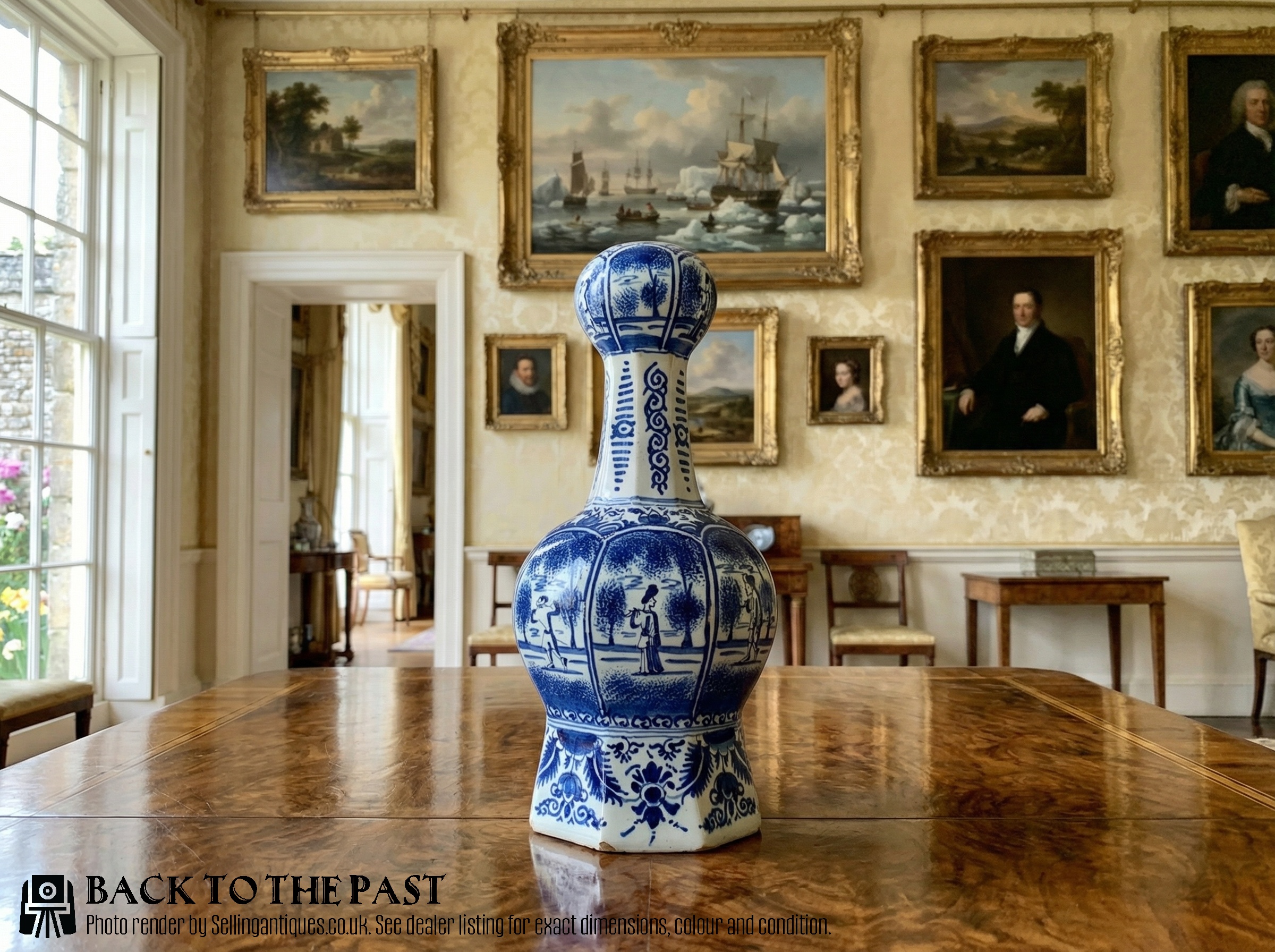
Tin Glazed Faience Vase
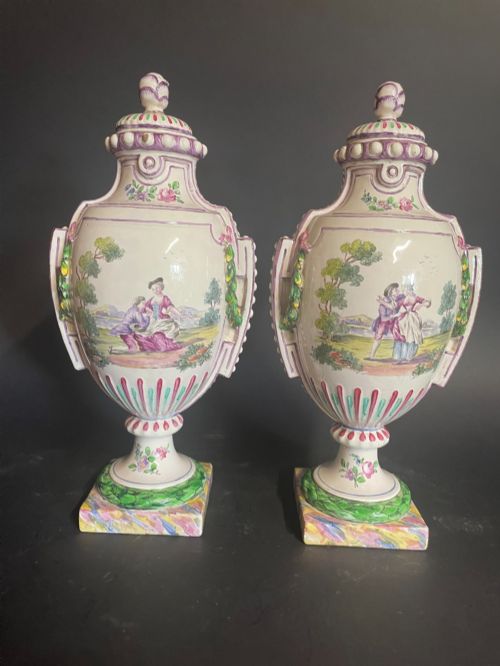
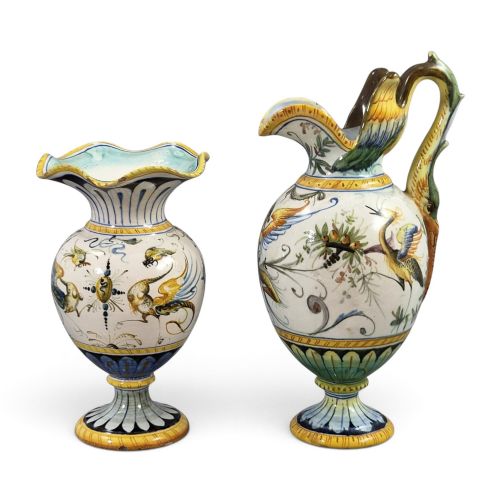
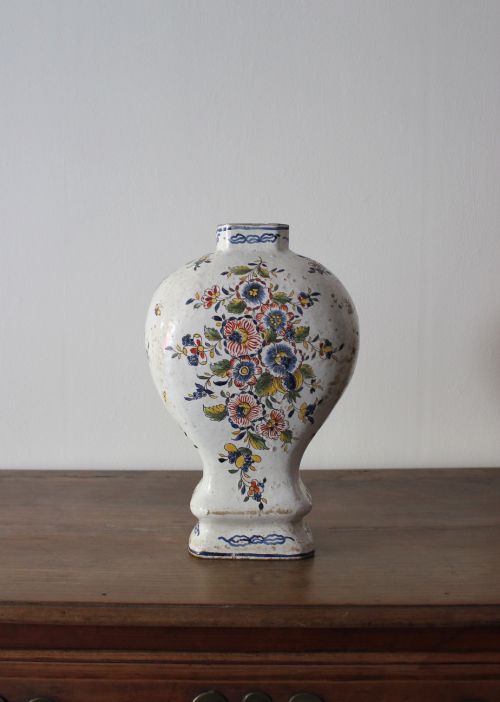
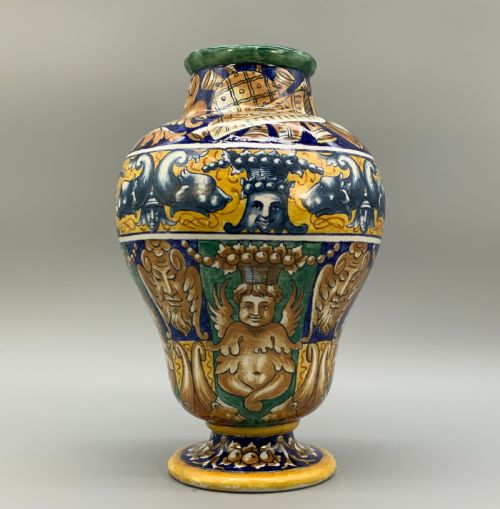
A tin glazed faience vase encompasses earthenware vessels shaped as urns, flasks, ewers, and covered jars originating across several centuries. Buyers searching for a tin glazed faience vase frequently encounter Dutch Delftware, French Desvres pieces, and Italian majolica ranging from the seventeenth to the nineteenth century.
The selection includes both genuine period vessels and later revivals inspired by earlier aesthetics. Forms vary from simple baluster bodies to elaborate handled urns and pilgrim flasks.
Materials and construction
Potters shaped these pieces from clay and earthenware, applying a tin glaze that created an opaque white surface for painting. Cobalt pigment and polychrome colours were applied directly to the unfired or lightly fired glaze.
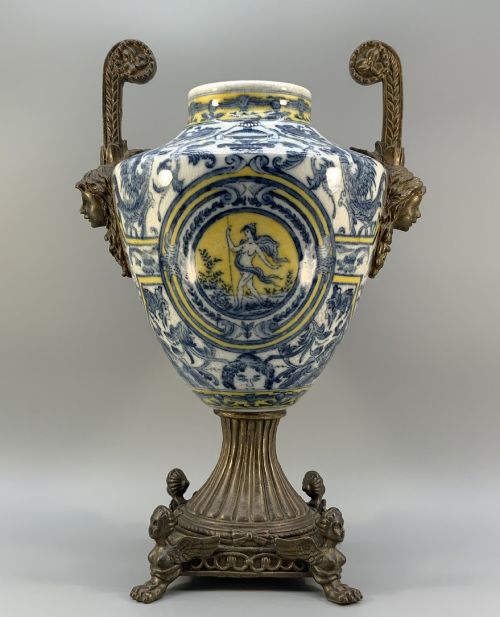
Many nineteenth-century revival pieces incorporate additional elements such as bronze mounts to enhance their decorative impact. Lids, covers, and handles were formed separately and integrated into the final ceramic structure.
Listings feature earthenware vessels spanning the seventeenth, eighteenth, and nineteenth centuries, alongside revival pieces from eighteen-fifty to nineteen-hundred.
Distinguishing quality
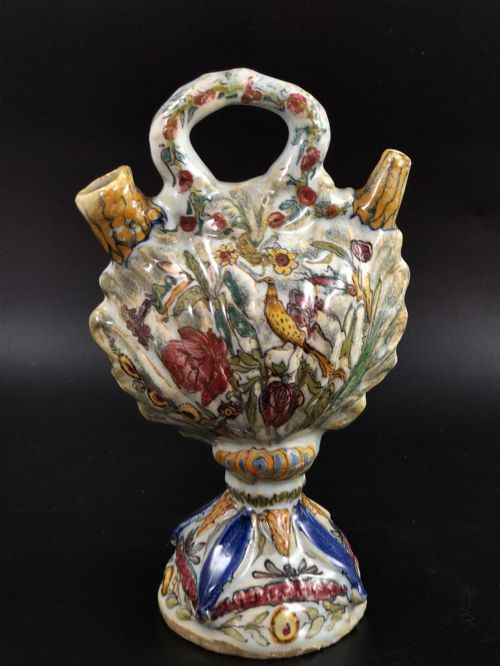
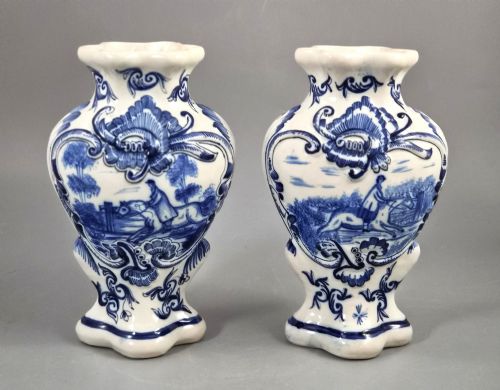
Quality rests in the crispness of the cobalt pigment painting and the smoothness of the tin glaze application. Finely rendered botanical motifs, birds, and Chinoiserie scenes separate superior works from simpler production pieces.
The handling of the clay body and the precision of the form define the division between standard domestic wares and ambitious display items. Revival pieces depend on the fidelity of their historical styling and the quality of any metal mounts.
Fourmaintraux-Courquin·Cantagalli
The Tin Glazed Faience Vase Glossary
- Maiolica
- Italian tin-glazed earthenware decorated with metal oxides. The technique developed during the Renaissance and inspired later revival pieces.
- Delftware
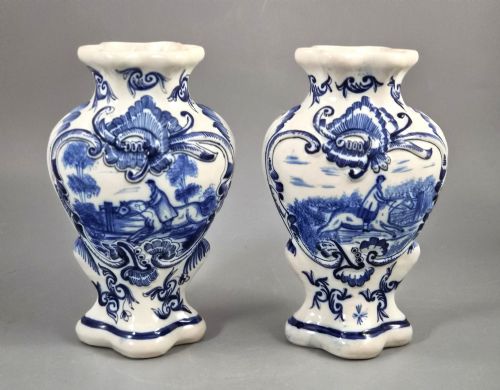
- Tin-glazed earthenware made in the Netherlands. It often employs blue and white painting influenced by imported Chinese porcelain.
- Pilgrim flask
- A flat-sided vessel with lug handles designed for travel or hanging. Scallop shell forms appear frequently among Italian examples.
- Chinoiserie
- European artistic style reflecting Chinese motifs. Painters rendered landscapes, birds, and figures in cobalt pigment on earthenware vessels.
Tin Glazed Faience Vase: Frequently Asked Questions
How do I identify a tin glazed faience vase?
Examine the body for a white opaque tin glaze beneath painted cobalt pigment or polychrome designs. Earthenware construction and historical painting styles provide further guidance.
Compare the form and decoration against known Dutch, French, and Italian examples from the seventeenth to the nineteenth century.
What is the difference between faience and majolica?
Faience generally refers to tin-glazed earthenware made in France or northern Europe, while majolica denotes the Italian tradition of tin-glazed ceramics.
Both employ similar glaze and pigment techniques but reflect distinct regional styles and historical periods.
How were these vases used historically?
These vessels served as ornamental display pieces in domestic interiors rather than for holding cut flowers. Large urns and covered jars occupied prominent positions on mantelpieces and furniture.
Some specialised forms like pilgrim flasks and ewers functioned as decorative showpieces mirroring earlier functional items.
Can I use a historic vase for water?
Historic earthenware and tin glaze can be porous and sensitive to moisture over extended periods. Using them for dry display or with a concealed inner container protects the ceramic.
Converted vessels, such as those adapted into table lamps, require professional electrical assessment before use.