
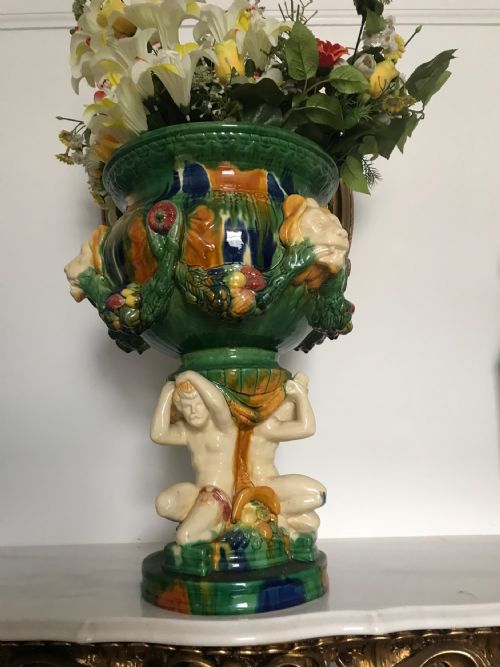


Tin Glaze Earthenware Urn
A tin glaze earthenware urn brings continental ceramic history into a room, offering sculptural form and hand-painted blue-and-white or polychrome decoration.
Tin Glaze Earthenware Urn
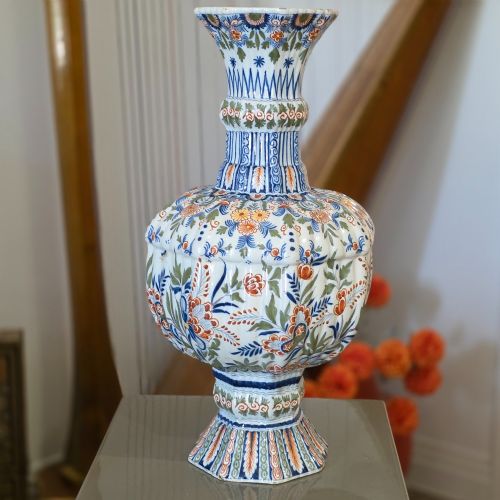
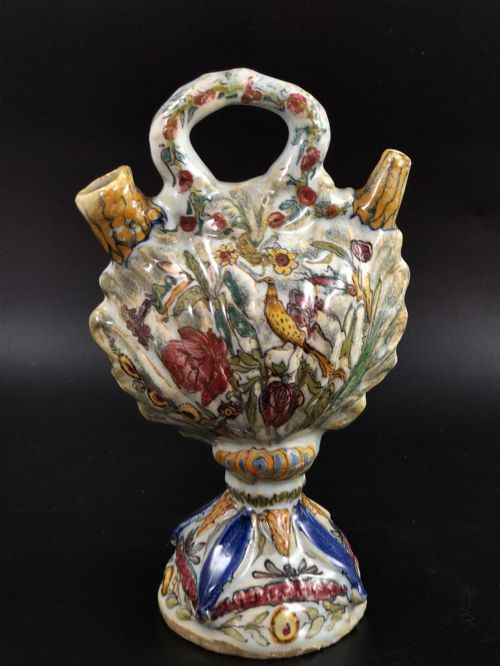
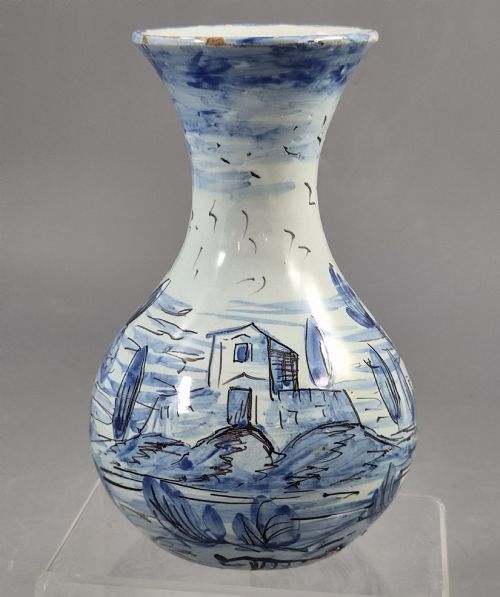
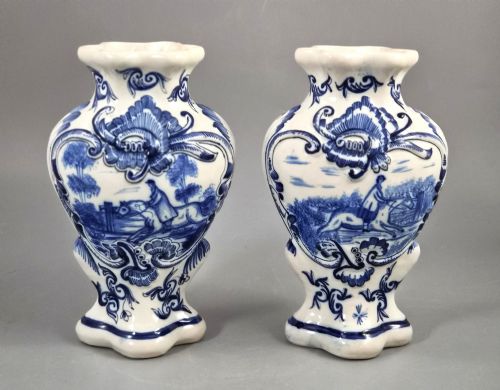
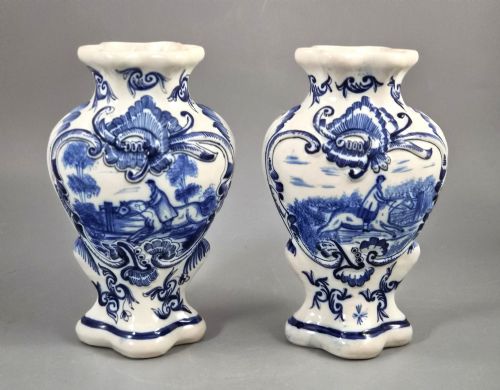
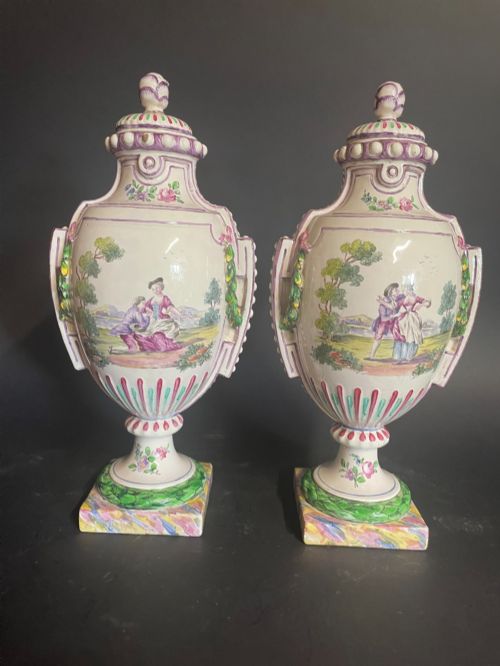
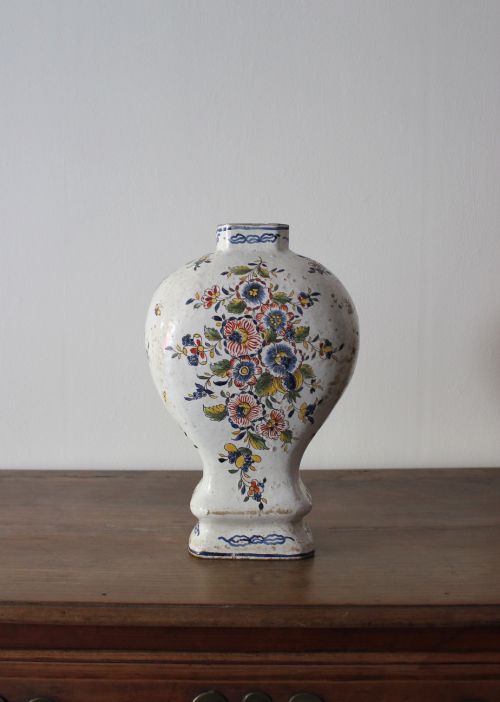
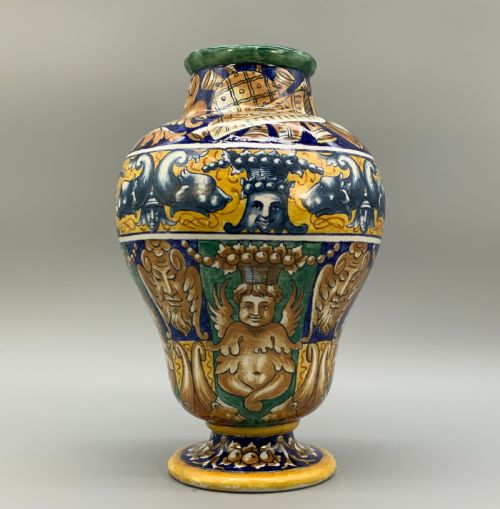
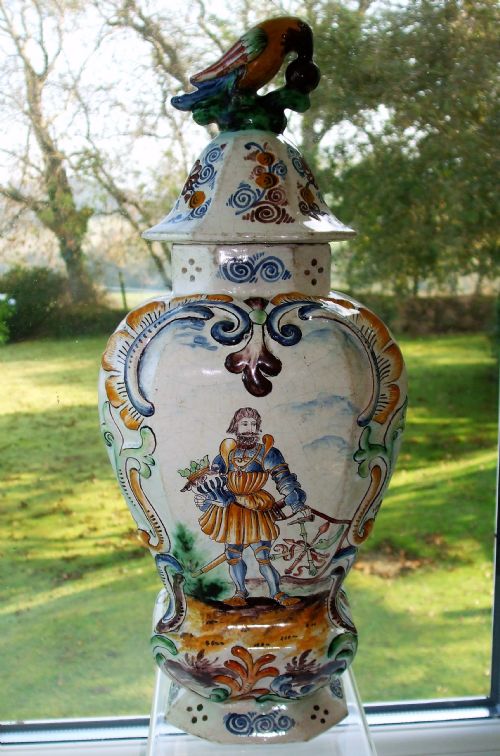
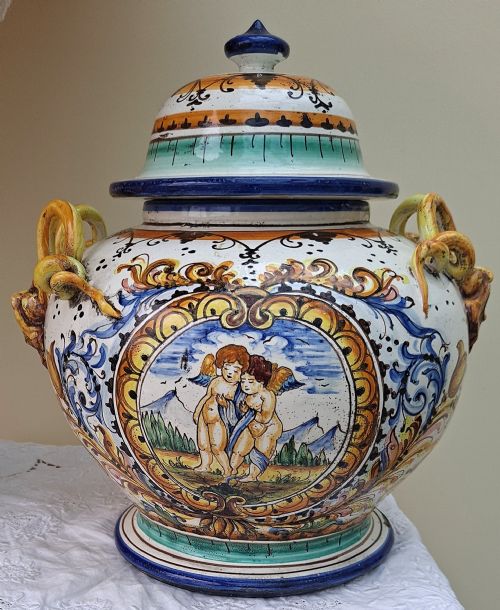
When you search for tin glaze earthenware urn examples, you encounter vessels produced across several centuries in workshops ranging from Dutch Delftware potteries to Italian majolica kilns and French faience centres. These objects take the form of baluster vases, lidded jars, garden urns, and decorative vessels with handles or figural bases.
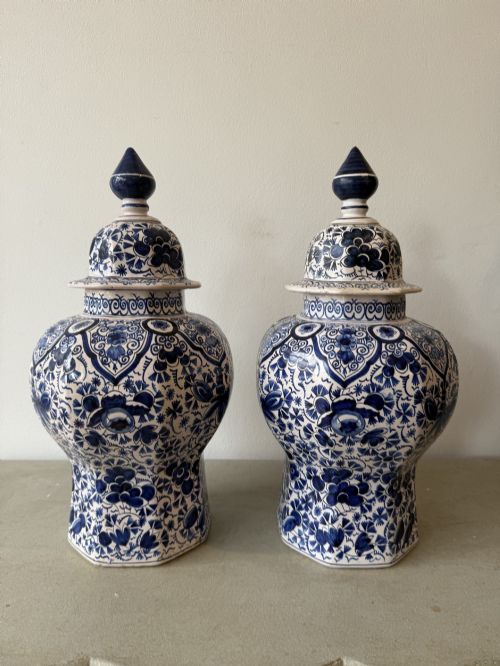
The pieces on this page lean heavily towards eighteenth-century Dutch delftware and nineteenth-century revivals from France and Italy. You will frequently find covered vases, beaker vases, and matching pairs designed for prominent display on mantelpieces or pedestals.
Originating as European responses to imported oriental porcelain and native earthenware traditions, these urns and vases combine utility with narrative or floral painting. Their presence bridges centuries of ceramic design, showing shifts from simple cobalt blue schemes to rich polychrome and manganese palettes.
How they were made
Potters shaped the base body from earthenware clay before firing it to form a porous biscuit substrate. This body received an opaque white glaze containing tin oxide, which provided a smooth, uniform background for subsequent painting.
Artists painted directly onto the unfired tin glaze using metal oxide pigments such as cobalt for blue, manganese for purple-brown, and various mineral mixtures for polychrome effects. The piece then underwent a high-temperature kiln firing that fused the pigments into the molten glaze layer.
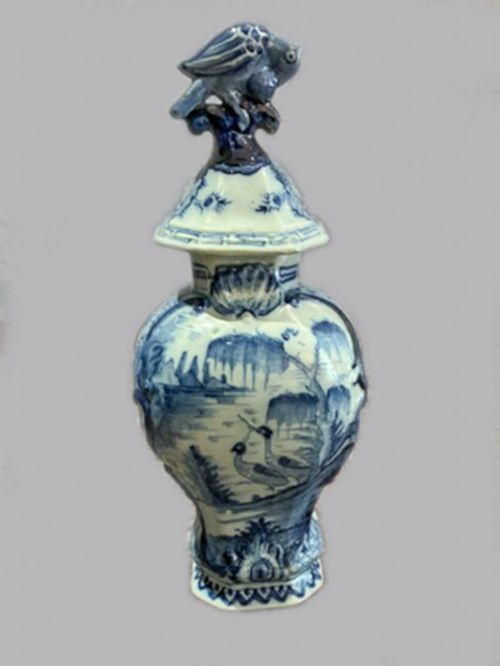
Certain antique jars proudly bear lids topped with whimsical creatures, ensuring ceramic birds keep watch over your mantelpiece.
What varies in quality
Quality rests primarily on the crispness and control of the hand-painted decoration, where confident brushwork separates master production from simpler output. The purity of the white tin glaze and the depth of the cobalt or polychrome pigments also define the visual impact of a piece.
Proportion and potting skill dictate whether an urn maintains architectural balance, particularly in larger forms with handles, lids, or pedestals. Finer examples display harmonious throwing lines and well-fitted covers that sit flush with the body.
Cantagalli·Fourmaintraux-Courquin·Sceaux
The Tin Glaze Earthenware Urn Glossary
- Delftware
- Tin-glazed earthenware produced in the Netherlands, traditionally characterised by white glazes and blue painting influenced by Chinese porcelain. It encompasses domestic items and large decorative urns.
- Majolica
- Italian tin-glazed earthenware decorated with colourful metal oxide pigments on an opaque white glaze. The term also covers nineteenth-century revival pieces modelled with sculptural relief.
- Faience
- French tin-glazed earthenware developed during the Renaissance and continued through various revival periods in factories like Desvres and Sceaux. It mirrors Italian and Dutch decorative techniques.
- Baluster
- A vase form characterised by a swelling lower body that tapers upward toward a narrower neck and flared rim. This silhouette appears frequently among larger eighteenth-century jars and urns.
- Polychrome
- Decoration employing multiple colours rather than a single hue like blue and white. In these ceramics, it typically includes greens, yellows, oranges, and manganese purple.
Tin Glaze Earthenware Urn: Frequently Asked Questions
What is tin glaze earthenware?
Tin glaze earthenware is ceramic pottery covered in a glaze made opaque by the addition of tin oxide. This creates a white, glossy surface that serves as a canvas for painted decoration.
Potters developed this technique in the Middle East before it spread through Italy, the Netherlands, and France. The resulting vessels combine porous red or buff clay bodies with durable, decorative surfaces.
How do I care for an antique urn?
Keep antique ceramic urns away from direct sunlight and areas subject to sudden temperature changes. Dust them gently with a dry, soft cloth without using water or cleaning agents.
Avoid lifting heavy lidded vases by their covers, as the lids often rest loosely on the rim. Support the main body of the vessel securely whenever you move it.
How do I distinguish Dutch delft from Italian majolica?
Dutch delft typically relies on cobalt blue and white painting influenced by Chinese export porcelain, often featuring botanical or maritime themes. The glaze tends toward a bright, cool white.
Italian majolica more frequently employs rich polychrome palettes with narrative scenes, grotesques, or Renaissance revival motifs. The underlying clay and glaze textures also reflect different regional workshop practices.
Were these urns meant for outdoor use?
Most antique tin-glazed earthenware urns were designed for indoor display in grand rooms, entrance halls, and formal reception spaces. Their porous bodies and delicate glazes make them vulnerable to frost and garden damp.
Examples described specifically as garden urns were intended for sheltered garden rooms, oratories, or interior orangeries rather than exposed outdoor planting. Using them indoors preserves the glaze from moisture-driven flaking.