





Timuri Wool Rug
A timuri wool rug brings the tactile warmth of the borderlands of north-east Persia and north-west Afghanistan into a modern interior.
Timuri Wool Rug
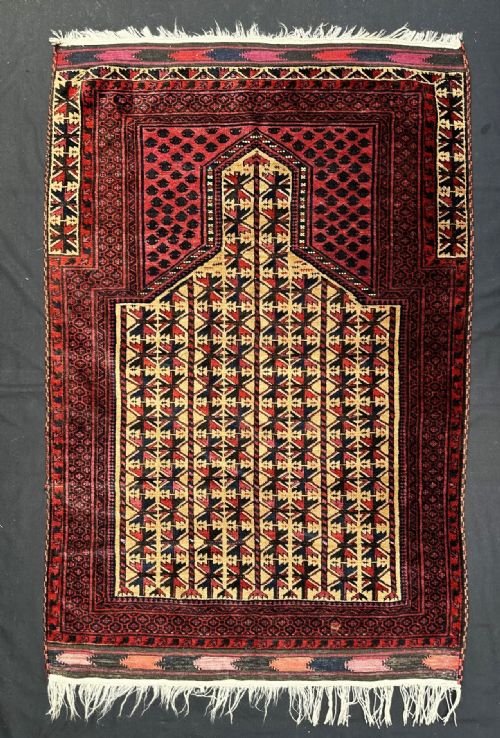
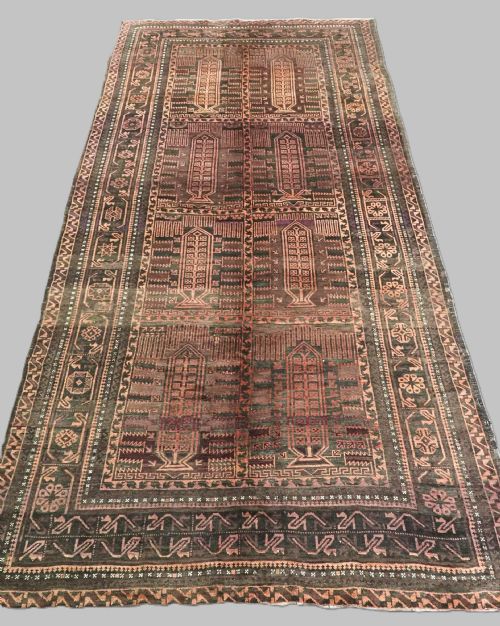
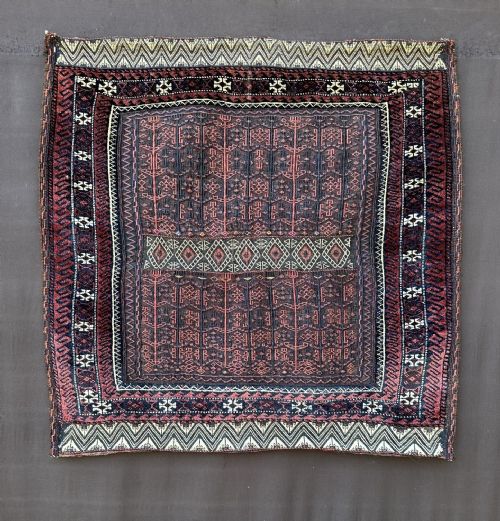
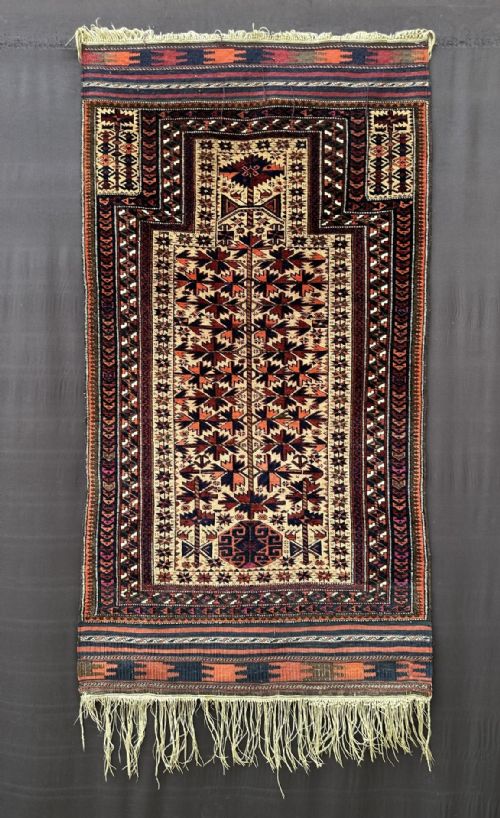
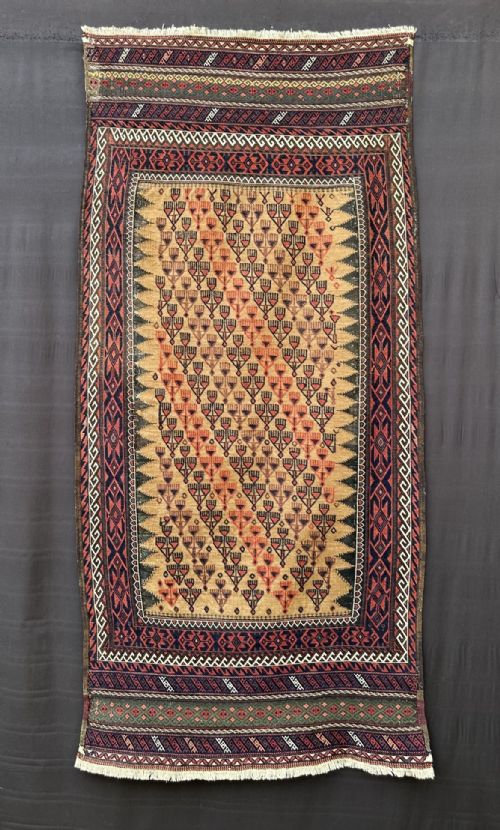
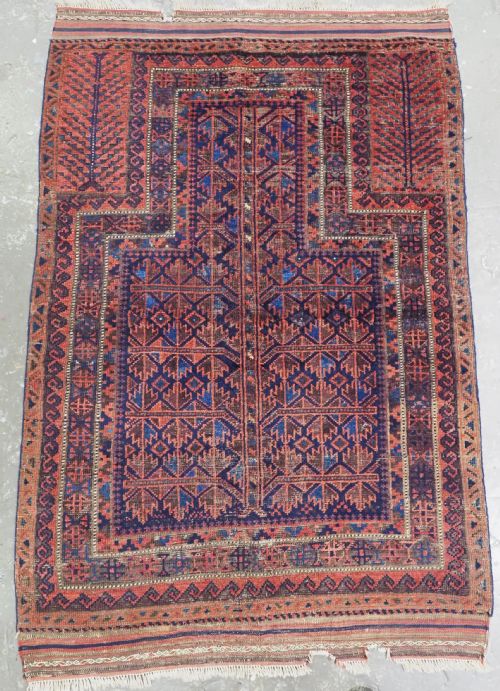
These textiles originate from the tribal groups inhabiting the borderlands of north-east Persia and north-west Afghanistan, often linked with Baluch traditions. The selections on this page encompass various formats including prayer rugs, main carpets, and functional domestic objects such as sophres and salt bags.
The aesthetic is rooted in tribal expression, frequently displaying classic patterns like the pencil box design, small shrub motifs, and repeat leaf layouts. Dating primarily from the late nineteenth century through to the early decades of the twentieth century, these pieces reflect nomadic weaving heritage.
Materials and Construction
Weavers utilised hand-spun wool, often combined with camel hair, goat hair, and cotton foundations to build durable and textured floor coverings. Natural dyes provide the deep, rich colour palettes seen across the ground fields and intricate border details.
The construction relies on traditional tribal knotting techniques executed by nomadic and village makers in western Afghanistan and the surrounding border regions. These organic materials and traditional methods contribute to the enduring physical character of each textile.
Timuri Wool Rug Retail Price Guide 2026
Typical asking prices for timuri wool rug among the pieces listed under this phrase on Sellingantiques today, from the lower quarter to the upper quarter. They describe what is for sale here now, not the wider market.
The documented periods span from eighteen-seventy through to nineteen-ten, capturing late nineteenth-century nomadic artistry.
Evaluating the Weave
The distinction between standard examples and the finest pieces lies in the precision of the tribal design execution and the depth of the natural dyes. Superior wool quality and tight, even knotting distinguish the more accomplished nomadic works.
Format and regional rarity also influence the standing of a textile, with unusual prayer formats or specific sub-tribe attributions such as Dokhtar-e-Qazi holding particular interest. The clarity of the pattern and the preservation of the original borders complete the assessment.
The Timuri Wool Rug Glossary
- Prayer-rug
- A devotional textile featuring a mihrab or arch design used traditionally for daily prayers. These rugs are typically smaller in format.
- Sofreh
- A flatwoven or piled spread used for dining, kneading bread, or domestic storage within nomadic households.
- Mihrab
- The arched niche design depicted on prayer rugs, symbolising a doorway or directional point towards Mecca.
- Main carpet
- A larger floor covering intended for principal tent or dwelling spaces, as opposed to smaller mats or bags.
- Natural dyes
- Colourants derived from organic sources such as plants and minerals, providing the varied tones found in older tribal weaving.
Timuri Wool Rug: Frequently Asked Questions
What is a timuri wool rug?
A timuri wool rug is a tribal textile woven by nomadic or village groups in the borderlands between Persia and Afghanistan. These pieces date predominantly to the late nineteenth and early twentieth centuries.
They utilise hand-spun wool and natural dyes to create distinctive geometric and floral patterns, including prayer niches and pencil box motifs.
How were these rugs used originally?
Nomadic families used these textiles for daily domestic life inside tents and dwellings, functioning as floor coverings, sleeping mats, or wall hangings. Specific variants like sophres served practical roles during meal preparation and dining.
Smaller formats such as prayer rugs were designated for personal devotional use, while salt bags accommodated storage needs within the camp.
Where were these pieces made?
The production centres lie in the border regions of north-east Persia and north-west Afghanistan, particularly encompassing western Afghanistan and the Khaf region. Various sub-tribes and groups, including the Sangtshuli and Yaqoub Khani, contributed to the regional weaving tradition.
Interchange and movement along these borders mean designs often share characteristics with broader Baluch tribal outputs.
How do I style a tribal rug at home?
These rugs suit placement in living spaces, studies, or hallways where their rich colour palettes and textured wool can be appreciated. Their distinct tribal patterns function well as focal points against neutral flooring.
Care should be taken to use appropriate underlays to protect the wool pile and prevent slipping on smooth surfaces.