


Timuri Afghan Carpet
A timuri afghan carpet is a hand-knotted nomadic textile woven across the borderlands of Persia and Afghanistan, prized for rich wool and tribal patterns.
Timuri Afghan Carpet
When you search for a timuri afghan carpet, you encounter traditional tribal rugs and larger main carpets originating from the nineteenth and early twentieth centuries. These woven pieces typically hail from the borderlands of north-east Persia and western Afghanistan, reflecting the heritage of nomadic makers.
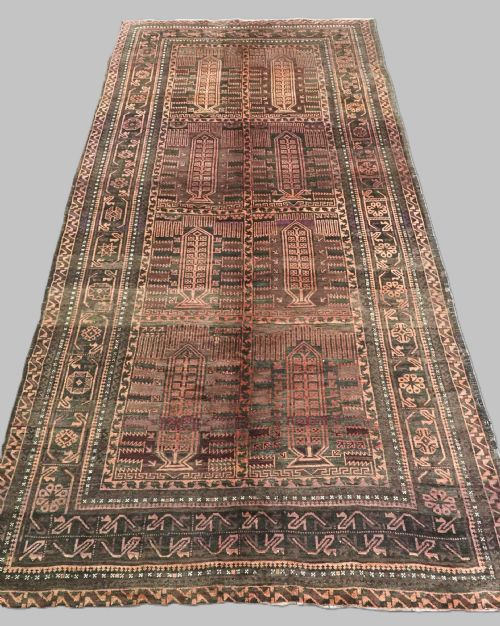
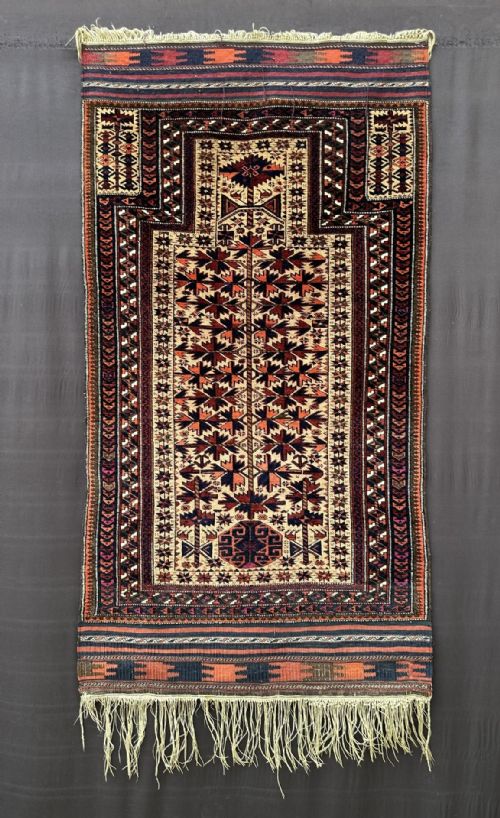
The most common formats met here include main carpets, smaller rugs, and prayer rugs featuring distinctive motifs like the pencil box design or tree of life. Salt bags and specialised regional formats also appear among the tribal textiles associated with these groups.
Tribal weaving traditions link these pieces closely to Baluch groups, with many items catalogued under overlapping tribal attributions. They serve as durable floor coverings and portable furnishings born from nomadic life.
How they were made
Weavers utilised hand-spun wool for the pile, often combining cotton foundations with structural elements of goat hair and camel hair for durability. Natural dyes provide the deep, rich colour palettes seen across the grounds and borders of these textiles.
Nomadic workshops employed vertical or horizontal looms to tie symmetrical and asymmetrical knots by hand. The resulting dense fabric withstands heavy foot traffic while retaining the flexibility inherent in tribal craftsmanship.
Listings feature periods spanning from eighteen-seventy to nineteen-ten, highlighting nineteenth-century tribal craftsmanship.
What varies in quality
The fineness of the knotting and the crispness of the tribal geometry distinguish superior examples from standard ones. Tighter construction yields a firmer handle and sharper definition in intricate motifs like the kalam donneh pattern.
The vibrancy and depth of the natural dyes play a major role in the visual impact of each rug. Uniformity in wool preparation and dye saturation indicate greater care by the original weaver.
The Timuri Afghan Carpet Glossary
- Prayer rug
- A small rug featuring a mihrab or arch design used for daily devotions. These pieces often incorporate tree of life motifs.
- Main carpet
- A large floor rug intended for central placement in a dwelling. They display repeating field patterns and elaborate borders.
- Kalam donneh
- A traditional motif resembling a pencil box or stylized shrub. It forms the primary design structure on specific main carpets.
- Dokhtar-e-qazi
- A distinctive geometric prayer rug pattern associated with specific tribal groups. The name translates to the judge's daughter.
- Ru korssi
- A square rug utilised to cover a low wooden warming table in traditional homes. These specialised textiles feature compact dimensions suited for domestic warmth.
Timuri Afghan Carpet: Frequently Asked Questions
Where were timuri carpets made?
These carpets were woven by nomadic and semi-nomadic tribes inhabiting the border regions between north-east Persia and western Afghanistan. The makers moved across these territories following seasonal migration routes.
Such geographic flexibility influenced the exchange of designs and dyeing techniques between different tribal groups in the region.
What materials make up the pile?
The pile consists predominantly of hand-spun wool, sometimes supplemented with camel hair in specific field areas. This natural fibre provides resilience and a soft tactile quality.
Foundations often incorporate cotton or wool, while selvedges frequently use goat hair for extra strength.
How should I care for an antique rug?
Vacuum these textiles gently using suction only, avoiding rotating brush bars that can pull at the wool pile. Professional cleaning by specialists in antique oriental textiles ensures safe maintenance.
Keep them out of direct sunlight to protect the natural dyes from fading over time.