

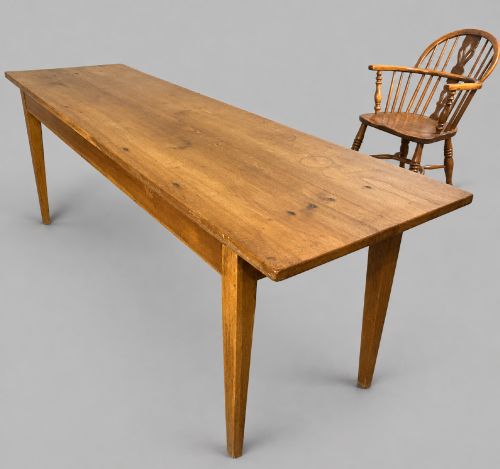
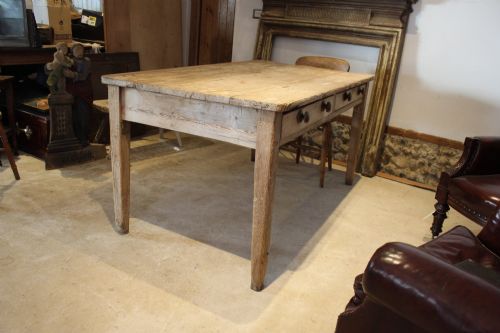
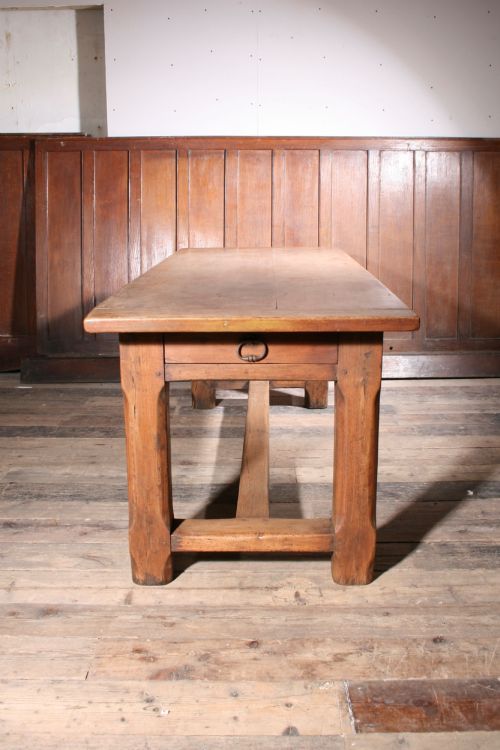
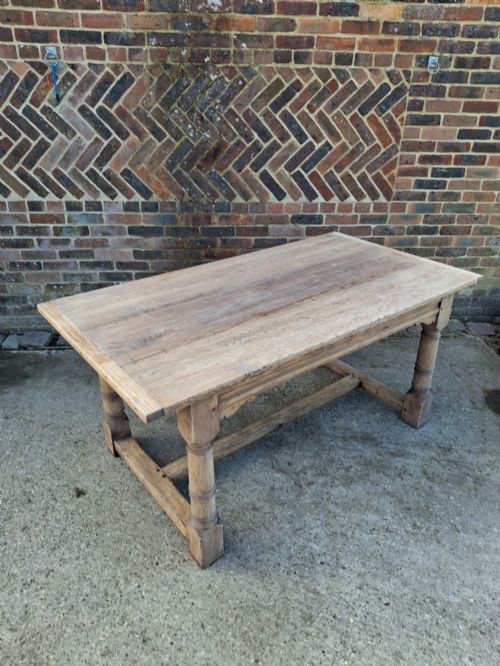
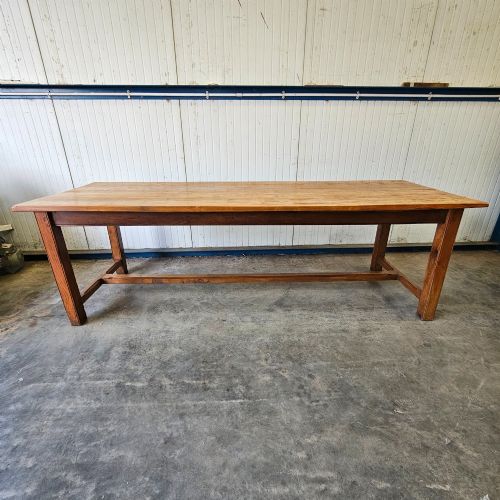
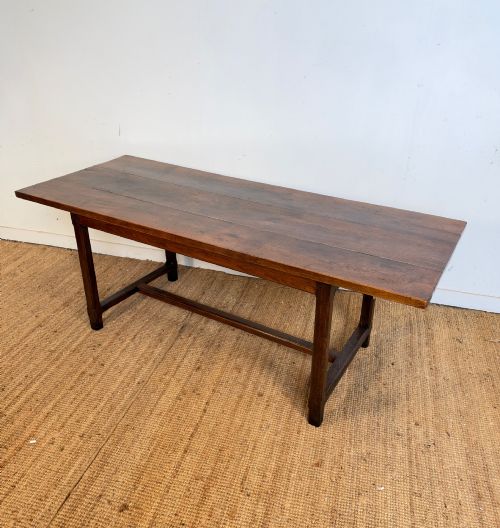
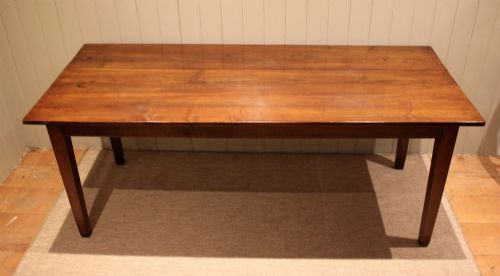
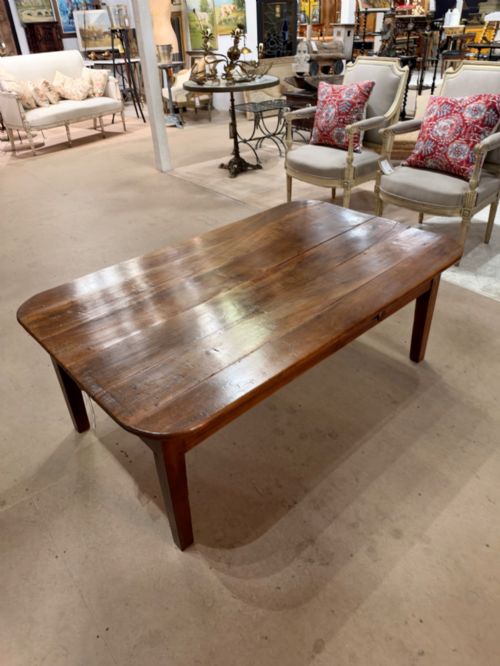
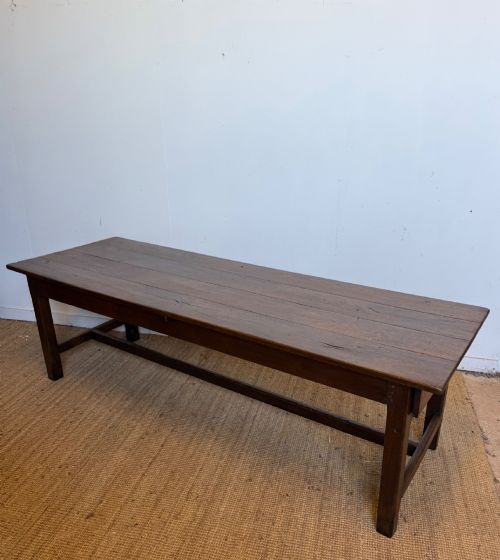
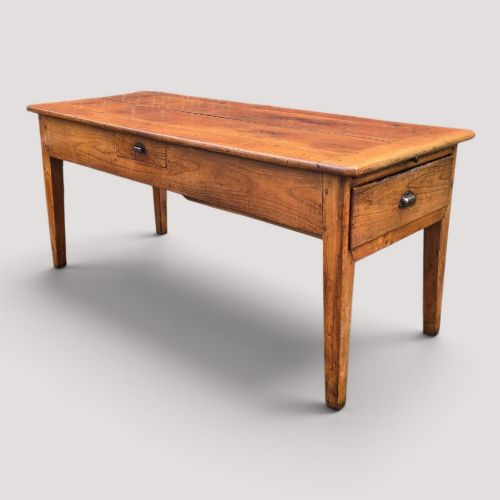
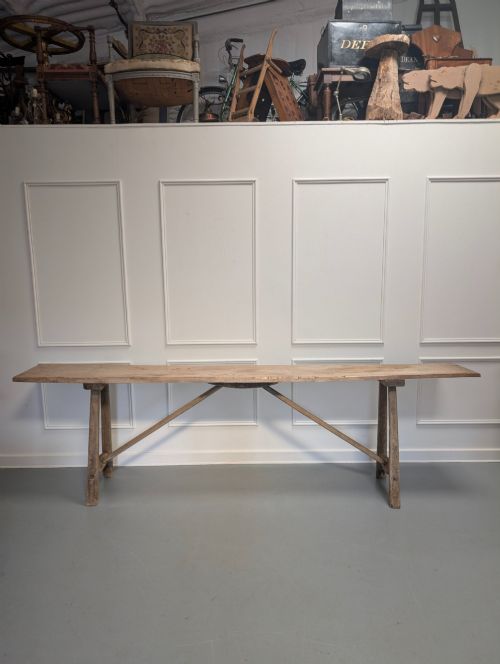
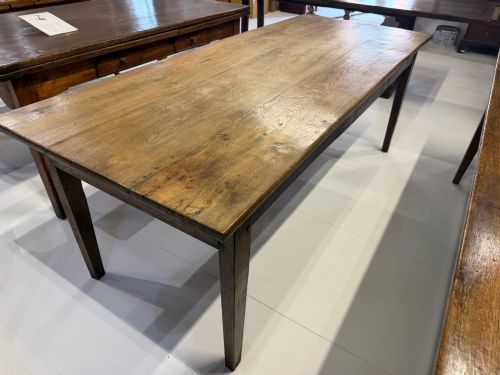
Timber Farmhouse Table
A timber farmhouse table anchors the room with honest weight and years of gathered life.
Timber Farmhouse Table
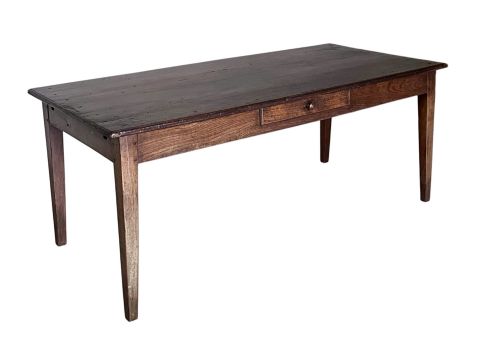
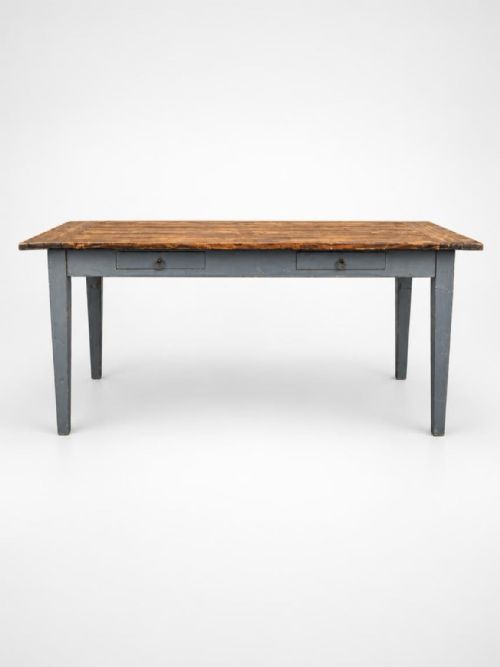
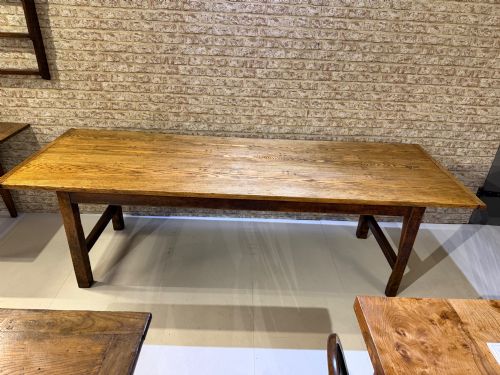
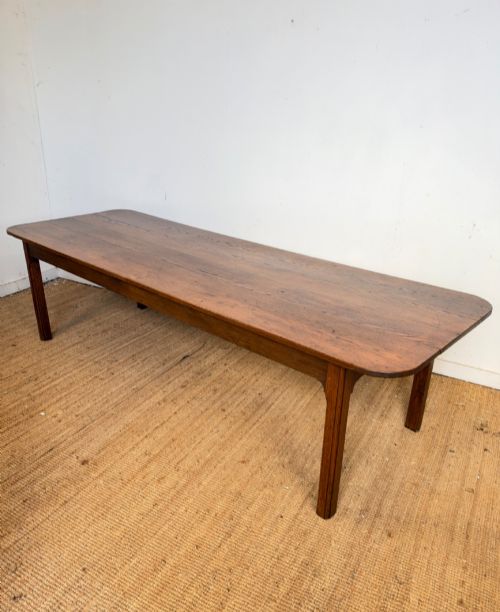
A timber farmhouse table serves as the traditional centre of domestic life, designed for heavy daily use in kitchens, dining rooms and communal halls. When you search for a timber farmhouse table, you encounter robust domestic furniture intended to seat many people for meals and work.
The pieces listed here span the eighteenth, nineteenth and early twentieth centuries, drawing on English, French, Austrian and Swedish traditions. You will frequently find long refectory formats, twin plank surfaces and scrubbed kitchen tables shaped by regional workshops.
Forms range from grand walnut and oak dining boards down to smaller cherrywood coffee tables, ash work tables and pine kitchen pieces. Their origins reveal a history of utility, whether built as simple primitive tables or large French laundry and refectory surfaces.
Materials and construction
Carpenters built these tables using dense domestic hardwoods and softwoods such as oak, elm, pine, fruitwood, cherrywood, chestnut and ash. Planks were selected for thickness and durability, often joined as twin plank tops or heavy scrubbed surfaces capable of withstanding constant scrubbing and preparation.
Framing utilised sturdy mortise and tenon joints, sometimes incorporating practical additions like drawers or iron braces. Surfaces show the marks of hand tools, adzes and centuries of wear rather than industrial machinery.
Timber Farmhouse Table Retail Price Guide 2026
Typical asking prices for timber farmhouse table among the pieces listed under this phrase on Sellingantiques today, from the lower quarter to the upper quarter. They describe what is for sale here now, not the wider market.
Listings feature timbers including oak, pine, elm, cherrywood, fruitwood, chestnut, ash and poplar across the eighteenth and nineteenth centuries.
Evaluating quality and character
Quality in these tables rests upon the integrity of the timber selection and the honesty of the construction. Superior examples utilise thick, stable planks of oak, elm or cherrywood that have seasoned naturally over generations, retaining their structural strength without excessive modern intervention.
The distinction between ordinary and exceptional lies in proportion, originality of surface and the depth of patina earned through decades of domestic service. Tables retaining their original scrubbed finish or untouched timber grain command greater appreciation than those stripped bare by later hands.
The Timber Farmhouse Table Glossary
- Scrub top
- A wooden table top designed to be scrubbed clean with water and sand, common on nineteenth century kitchen pieces. This process leaves the grain raised and pale.
- Twin plank
- A table top constructed from just two wide boards of timber joined together. This method requires mature trees yielding exceptionally wide boards.
- Refectory table
- A long narrow dining table originally built for monastic dining halls and later adopted in large country houses and farmhouses. They provide substantial seating capacity.
- Patina
- The surface sheen and colour developed by timber over decades of handling, polishing and exposure to light. It is an indicator of age and genuine use.
- Primitive
- A descriptive term for furniture made without sophisticated stylistic pretension, focusing entirely on utility and direct construction. These pieces often feature simple lines and honest joinery.
Timber Farmhouse Table: Frequently Asked Questions
How do I choose the right size timber farmhouse table?
Consider the daily seating requirements of your household and the physical dimensions of your room. Allow adequate clearance around the edges for chairs and movement.
Larger refectory and twin plank formats suit spacious kitchens or dining halls, while smaller cherrywood or pine variants fit compact spaces without dominating the floor.
Can I use an antique farmhouse table every day?
These tables were originally engineered for rigorous daily domestic labour, making them exceptionally durable for modern family life. Their robust timber construction absorbs daily dining and food preparation with ease.
Routine use only adds to their established patina and character, provided you protect the surface from extreme moisture and heat.
How do I clean and care for an old timber top?
Wipe surfaces gently with a damp cloth and mild soap, avoiding harsh chemical cleaners that strip natural oils. Dry the wood thoroughly immediately after cleaning.
Occasional applications of beeswax nourish the timber and help repel spills without creating an artificial gloss.
How do I distinguish eighteenth century tables from later pieces?
Examine the underside and joints for hand-cut joinery marks, peg construction and the natural ageing of the wood. Eighteenth century examples often feature broader single or twin planks and deeper, unforced wear.
Later nineteenth and twentieth century pieces typically display more uniform machine sawing and standardised framing methods.