

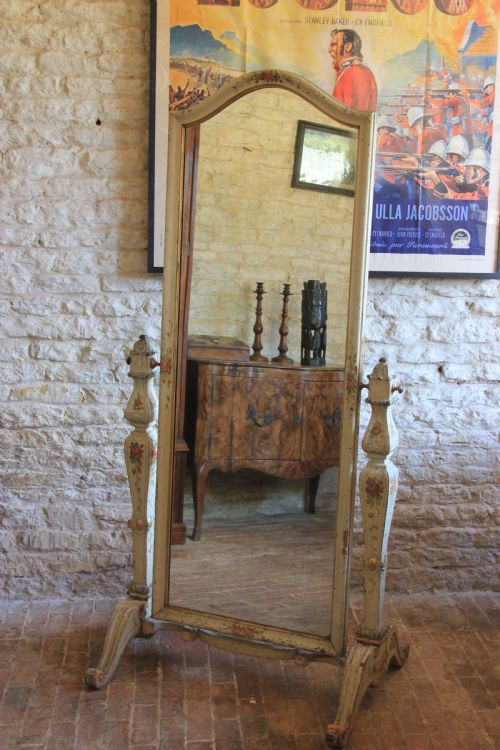


Tilt Mirror Wood
A tilt mirror wood selection offers freestanding and tabletop swinging glasses, bringing period proportion and practical reflection to any room.
Tilt Mirror Wood
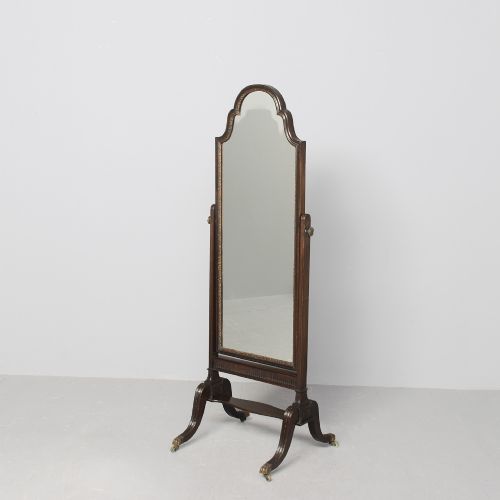
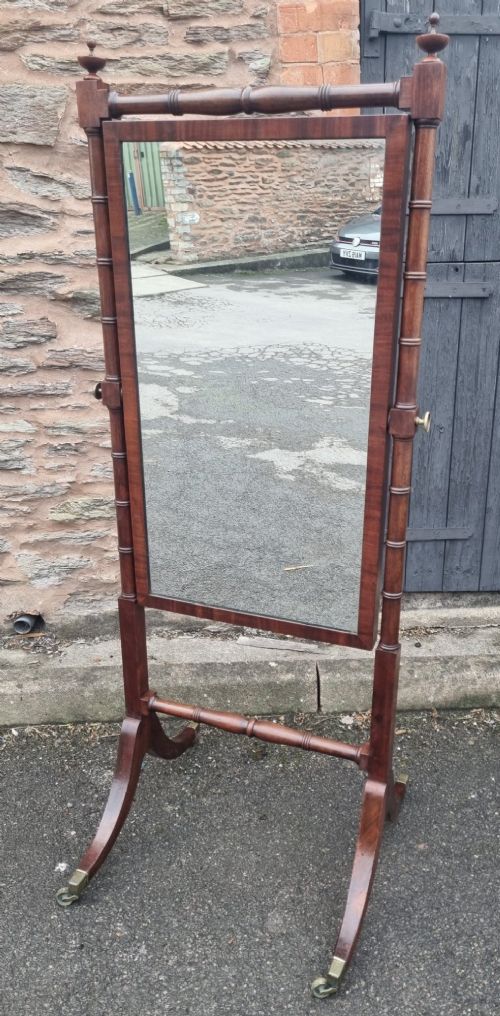
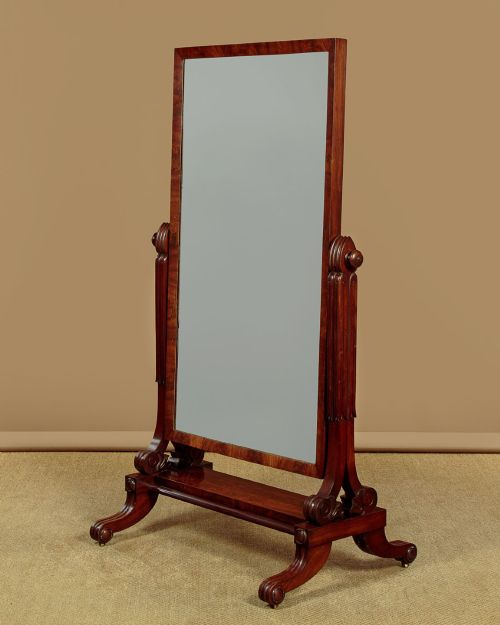
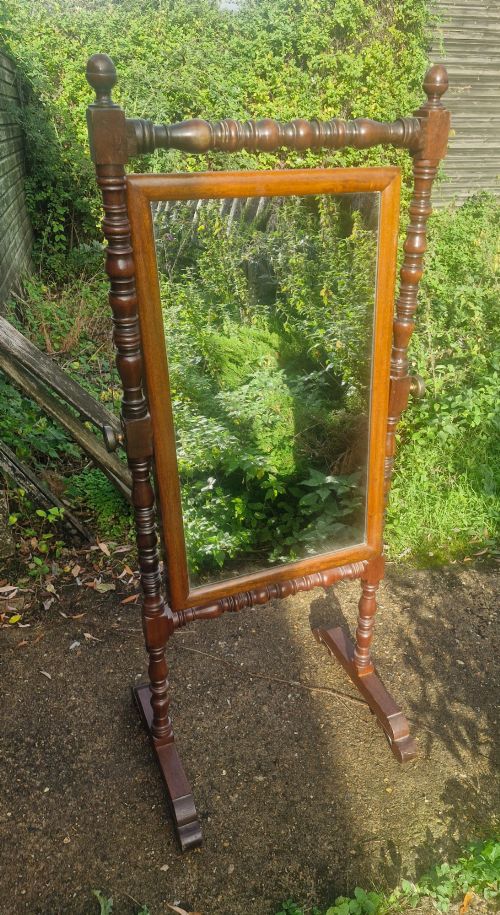
A tilt mirror wood selection centres on freestanding cheval mirrors and compact tabletop dressing glasses designed for bedrooms and dressing rooms. Most examples encountered here are substantial mahogany floor-standing pieces dating from the nineteenth century, including Regency and Victorian periods.
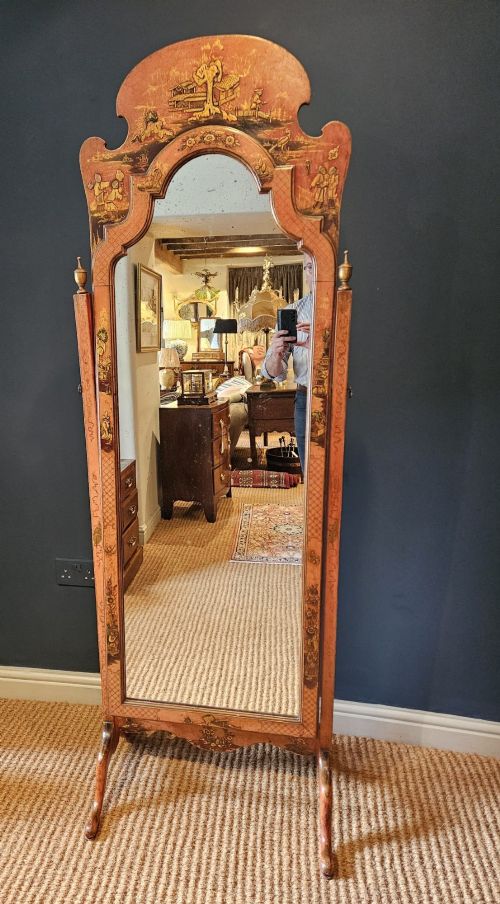
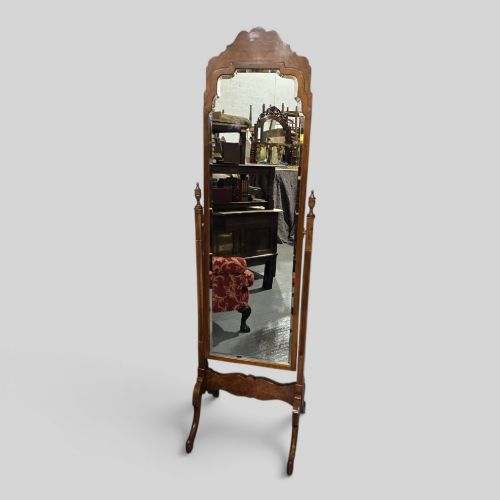
The inventory ranges from full-length cheval frames pivoting between upright pillars to smaller box-base toilet mirrors meant for tabletops. Walnut, burr walnut, and lacquered wood also appear alongside the dominant mahogany, with occasional decorative expressions like Chinoiserie.
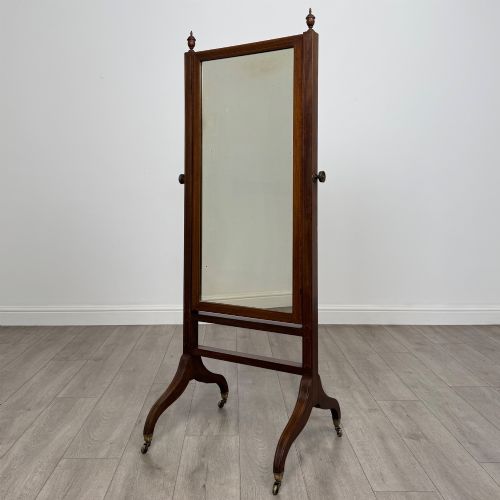
Makers and designers from the Regency, Victorian, and Edwardian eras favoured timber frames supported by robust side pivots, allowing the glass to tilt at the user's preferred angle. These pivot mechanisms sit atop steady floor trestles, often fitted with brass castors for ease of movement.
Assessing quality
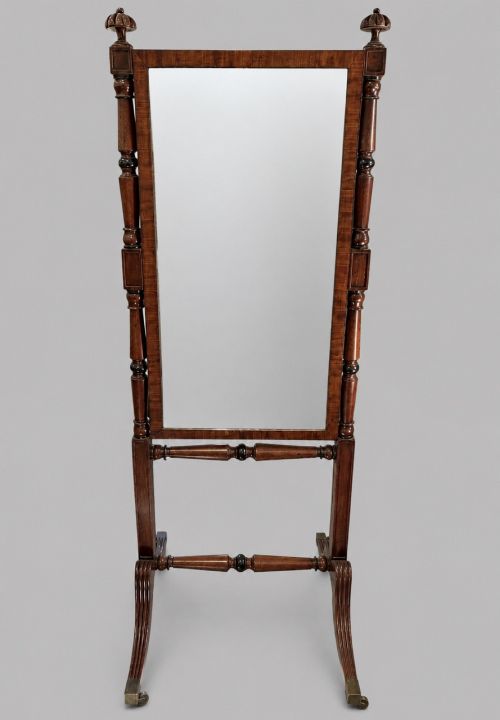
Quality rests in the selection of timber grain, particularly where figured mahogany or burr walnut veneers are matched across the frame. Superior examples demonstrate refined proportions and crisp carving on the upright supports and feet.
The engineering of the pivot mechanism indicates standard of manufacture, where smooth movement without excessive play shows careful original assembly. Heavier brass hardware and sturdy leg assemblies further separate workshop standards.
Tilt Mirror Wood Retail Price Guide 2026
Typical asking prices for tilt mirror wood among the pieces listed under this phrase on Sellingantiques today, from the lower quarter to the upper quarter. They describe what is for sale here now, not the wider market.
Listings span the nineteenth century, Regency, Victorian, and Edwardian periods, constructed mainly in mahogany, walnut, and brass.
The Tilt Mirror Wood Glossary
- Cheval mirror
- A large freestanding floor mirror supported on a frame with vertical pivots allowing it to swing. This form became popular in the late eighteenth century for full-length dressing.
- Toilet mirror
- A smaller dressing glass designed to sit upon a table or chest of drawers. These often incorporate small drawers within their wooden box bases.
- Pivot
- The metal screw or pin set into the sides of the mirror frame that connects it to the upright supports. It allows the glass plate to tilt back and forth.
- Serpentine
- A curved shape reminiscent of a snake's movement, seen on the front edges of certain mirror bases. This profile adds visual movement to the wooden chassis.
- Castor
- A small wheel fitted to the base of furniture legs to allow easy rolling across carpets and floors. Many nineteenth-century cheval mirrors utilise brass castors.
Tilt Mirror Wood: Frequently Asked Questions
What is a cheval mirror?
A cheval mirror is a tall, freestanding dressing glass mounted on vertical pillars that allow the frame to tilt. The French word cheval refers to a horse, alluding to the four-legged frame design.
These pieces were essential bedroom furnishings in the nineteenth century, offering a full-length reflection before the widespread use of fitted wardrobe doors.
How do I adjust the tilt?
Side pivots screwed into the frame and upright pillars control the resistance of the swinging mirror plate. Tightening or loosening these metal thumbscrews holds the glass at the desired angle.
Over time, brass washers wear down, so regular maintenance ensures the mirror stays positioned without slipping forward.
Where should I place a tilt mirror?
Bedrooms and dressing rooms remain the traditional locations for these freestanding glasses, providing practical utility for daily attire. They also function well in hallways to reflect light and create a sense of space.
Position the piece away from direct, harsh sunlight to protect antique mahogany and walnut timbers from fading.
How do I date a wooden mirror?
Dating relies on observing stylistic details such as the turning of the support pillars, the shape of the base, and the type of wood used. Regency and Victorian examples often feature distinct foot designs and brass hardware.
Construction methods, including the type of screws and backboards, provide further clues to the manufacturing era.