






Tiered Walnut Whatnot
A tiered walnut whatnot brings open display shelving and polished timber to a room, offering multiple levels for books and ornaments.
Tiered Walnut Whatnot
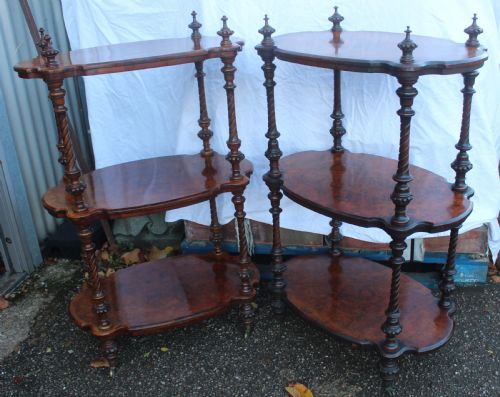
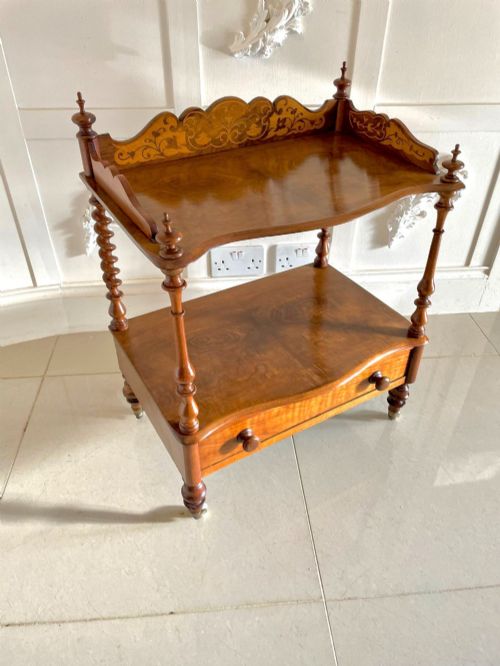
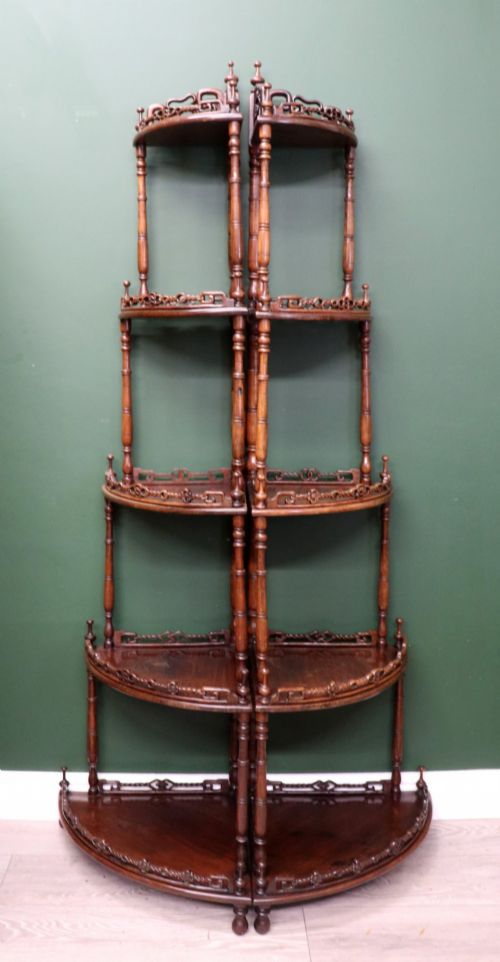
A tiered walnut whatnot is an open display stand featuring multiple horizontal shelves supported by columns or spindles, designed for holding books, ceramics, and ornaments. When you search for a tiered walnut whatnot, you encounter pieces originating primarily from the Victorian period, spanning the mid to late nineteenth century.
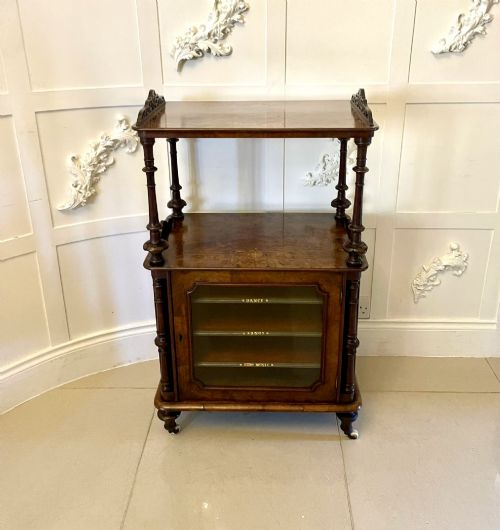
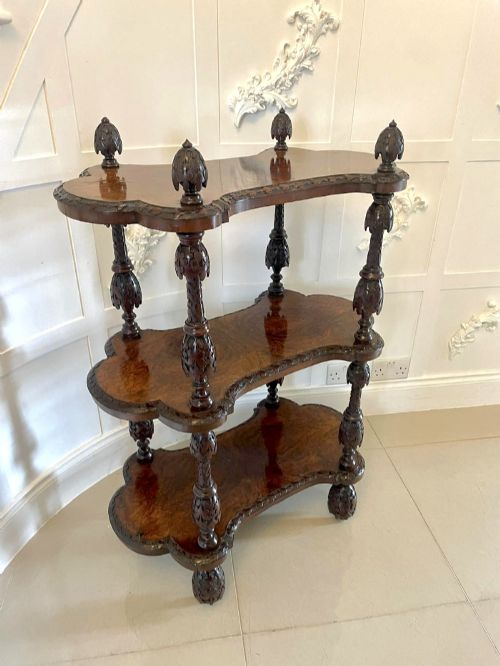
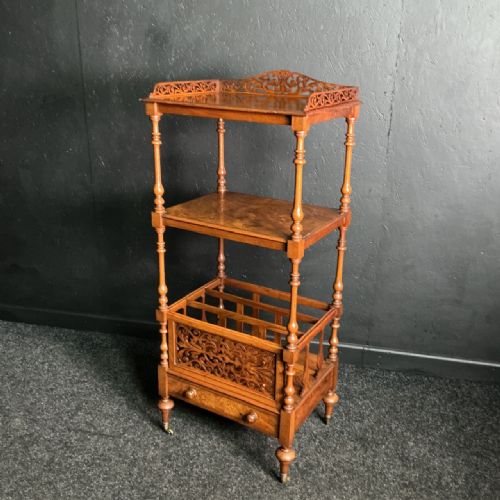
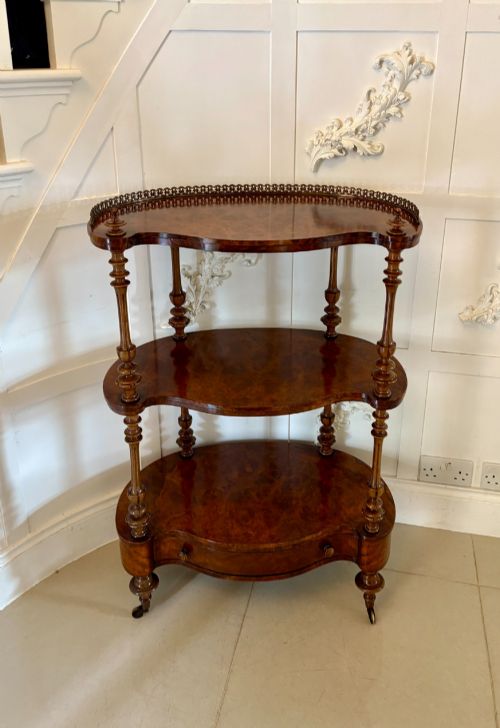
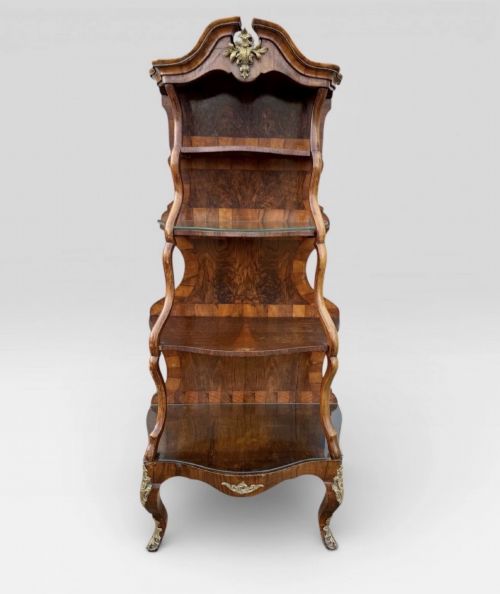
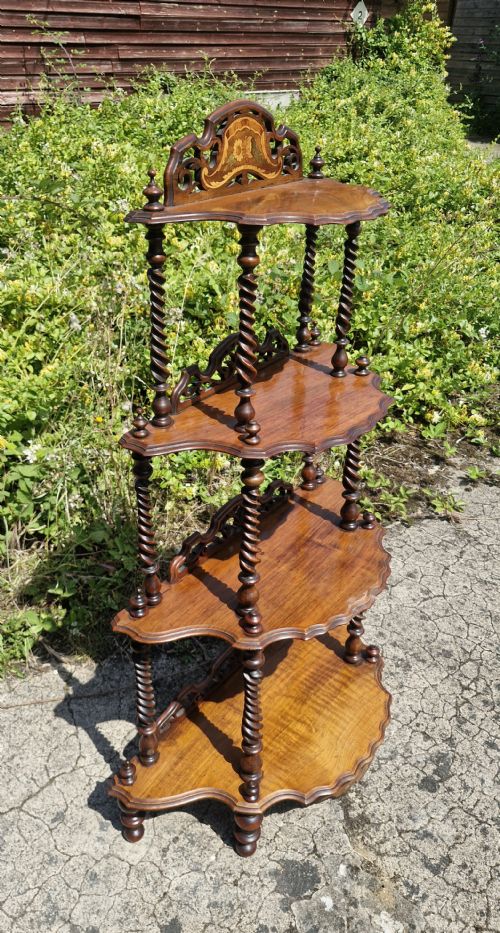
The format ranges from freestanding rectangular designs and serpentine shapes to corner units and demi-lune console tables. Many examples incorporate burr walnut veneers, inlaid marquetry, or combined functions such as integrated music cabinets and lower drawers.
Most specimens adhere to Victorian aesthetic idioms, occasionally referencing French Louis XV styles, Rococo Revival, or Regency proportions. The primary materials combine solid walnut frameworks with decorative burr walnut surfaces and occasional brass or ormolu mounts.
Distinctions in quality
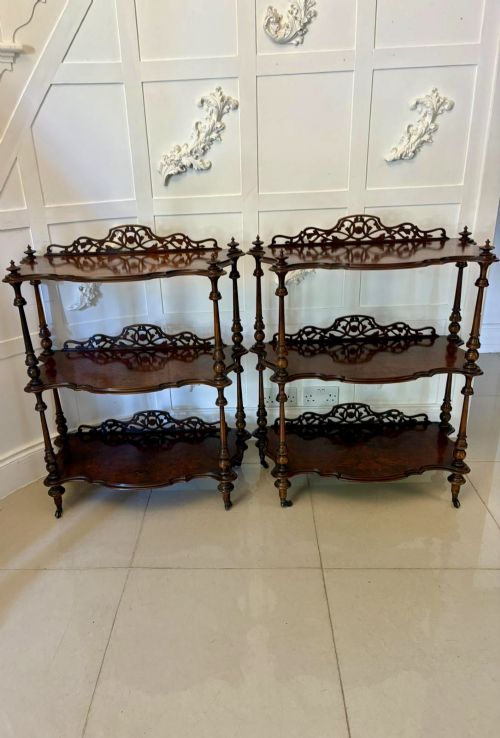
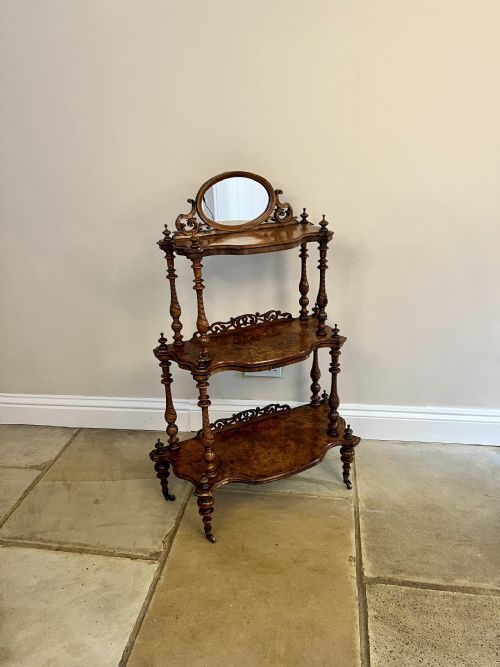
Quality rests heavily on the selection of the timber veneers, with dense, highly figured burr walnut commanding attention over plain planks. The intricacy of the turning on the columns and the precision of any marquetry inlay or pierced fretwork distinguish standard items from exceptional examples.
Tiered Walnut Whatnot Retail Price Guide 2026
Typical asking prices for tiered walnut whatnot among the pieces listed under this phrase on Sellingantiques today, from the lower quarter to the upper quarter. They describe what is for sale here now, not the wider market.
Some Victorian households required six separate tiers just to display their excessive collection of small ceramic dogs and Staffordshire figures.
The Tiered Walnut Whatnot Glossary
- Burr walnut
- A veneer sliced from the knotty growth of a walnut tree, yielding swirling, highly decorative grain patterns. It forms the primary decorative surface on superior Victorian case furniture.
- Étagère
- A French term for a piece of furniture consisting of a set of open shelves for displaying small objects or ornaments. It is often used interchangeably with the word whatnot.
- Marquetry inlay
- The art of applying pieces of veneer to a structure to form decorative patterns and pictures. Craftsmen used contrasting timbers to create floral or geometric motifs on the shelves.
- Barley twist
- A spiral turning resembling a twisted rope, used to shape the vertical supports between shelves. This technique added visual texture to nineteenth-century display stands.
- Canterbury
- A low stand featuring partitions for holding sheet music, books, or portfolios, occasionally incorporated into the lower section of a multi-tiered display unit.
Tiered Walnut Whatnot: Frequently Asked Questions
What is a tiered walnut whatnot used for?
These open shelving units served historically for displaying ornaments, holding books, and organising small household items in nineteenth-century drawing rooms.
Today, they function well in modern interiors as display stands for collections, plants, or bedside storage where vertical space is valued.
How do I identify a Victorian walnut whatnot?
Victorian examples typically date between eighteen fifty and nineteen hundred, utilising walnut timbers, turned columns, and multi-tiered open shelving.
Look for characteristics like pierced fretwork galleries, marquetry inlay, and characteristic nineteenth-century proportions that distinguish them from later reproductions.
Where should I place a corner whatnot?
Corner whatnots fit directly into ninety-degree room angles, making efficient use of overlooked spaces while providing accessible display tiers.
They anchor empty corners in living rooms or hallways without blocking pathways or dominating the floor area.
Are all these pieces from the nineteenth century?
The recorded selection consists primarily of nineteenth-century Victorian pieces, alongside a small number of Edwardian items dating into the early twentieth century.
Construction styles span from mid-Victorian burr walnut models to later French-influenced designs.