
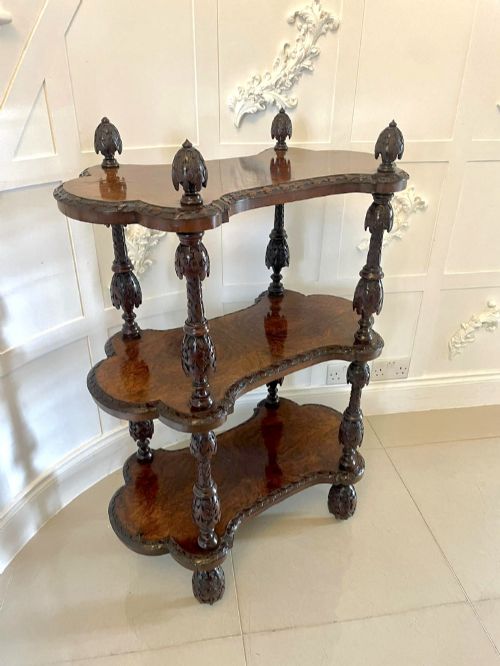
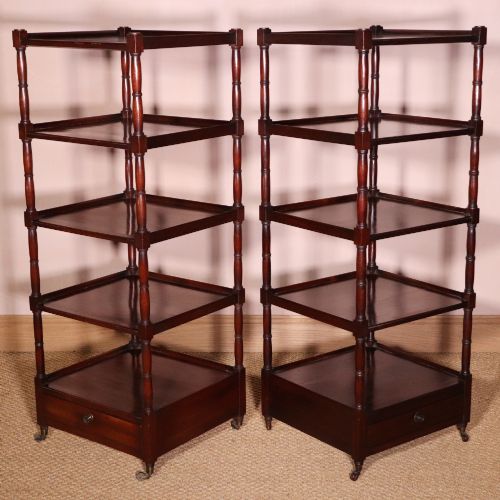
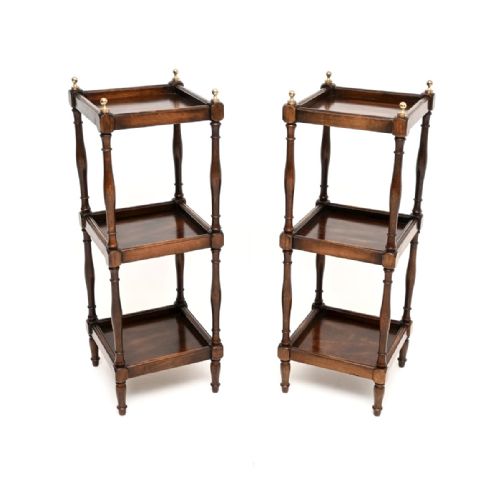
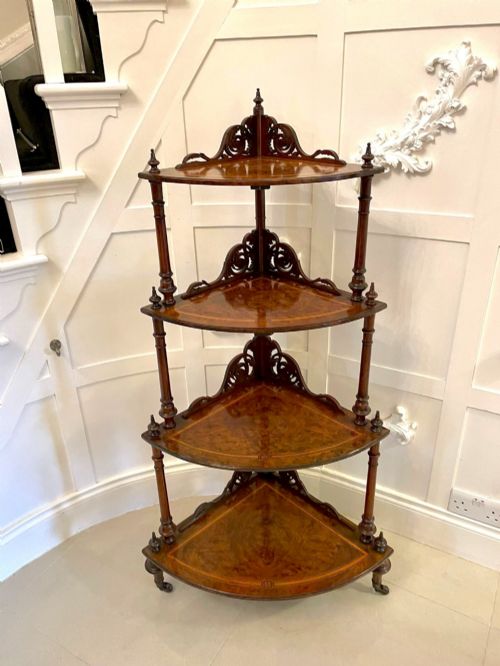
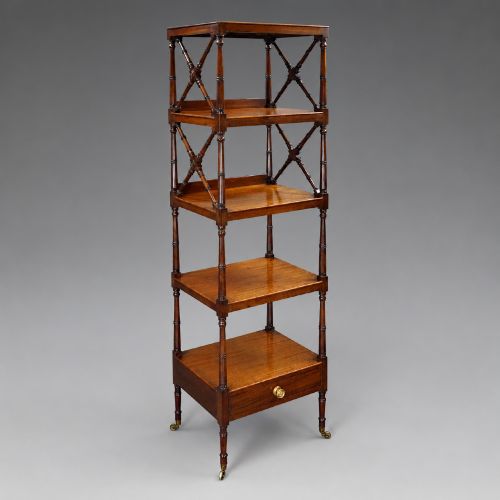


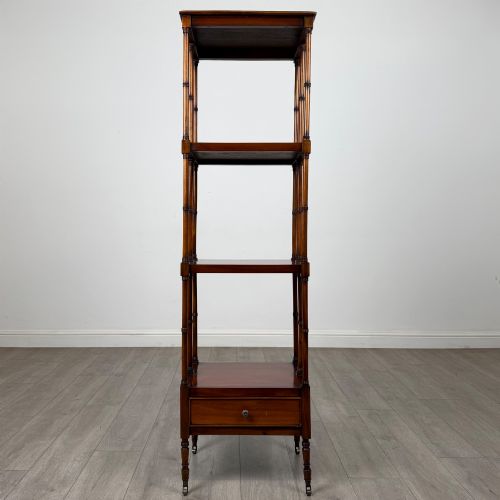
Tiered Shelf Display Stand
These tiered shelf display stand examples provide vertical surface space for books and ornaments, bringing character to corners and walls.
Tiered Shelf Display Stand
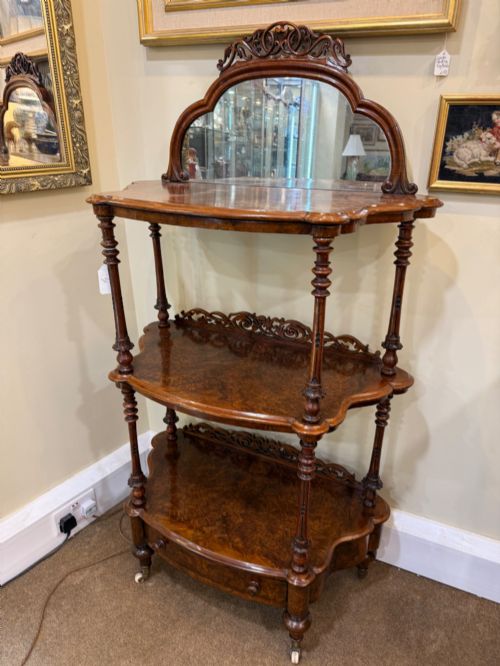
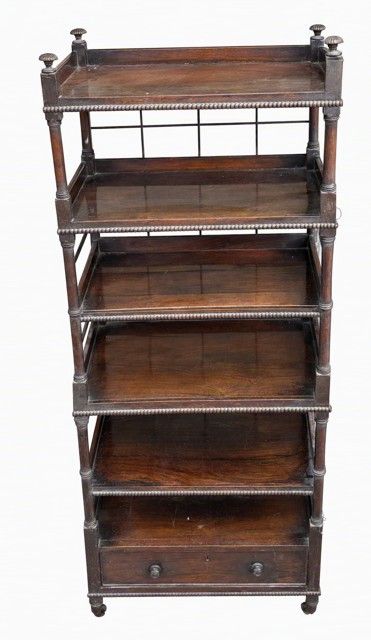
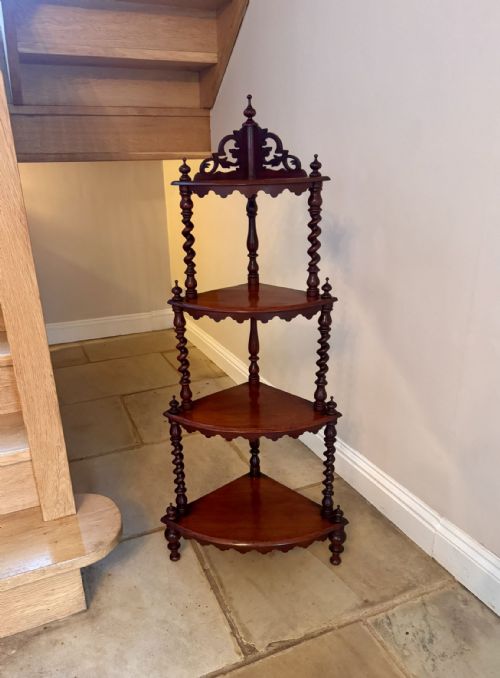
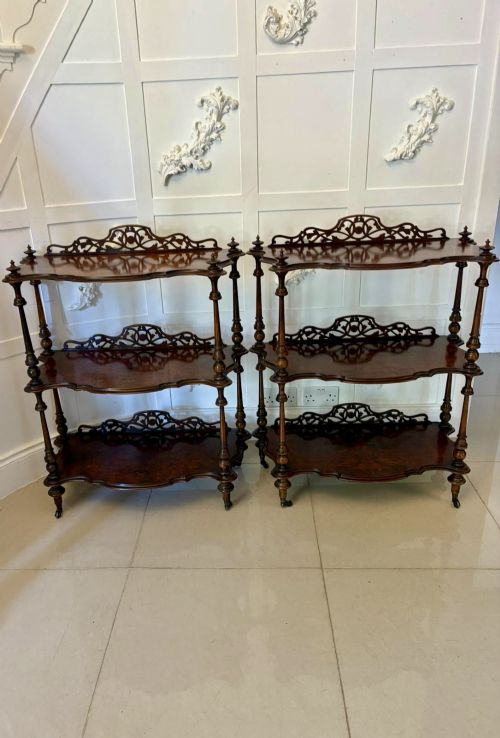
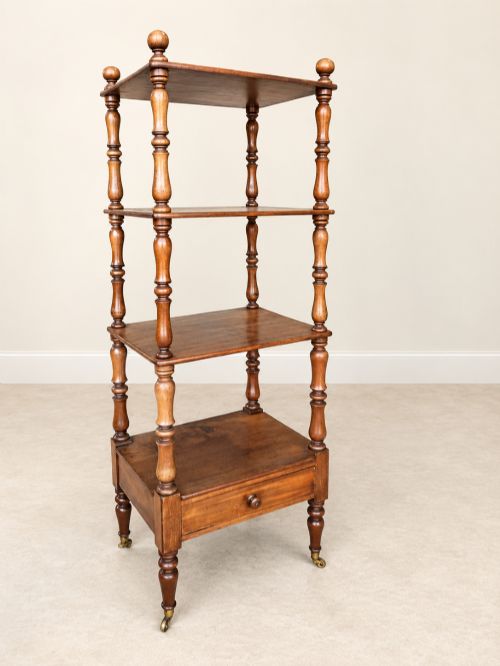
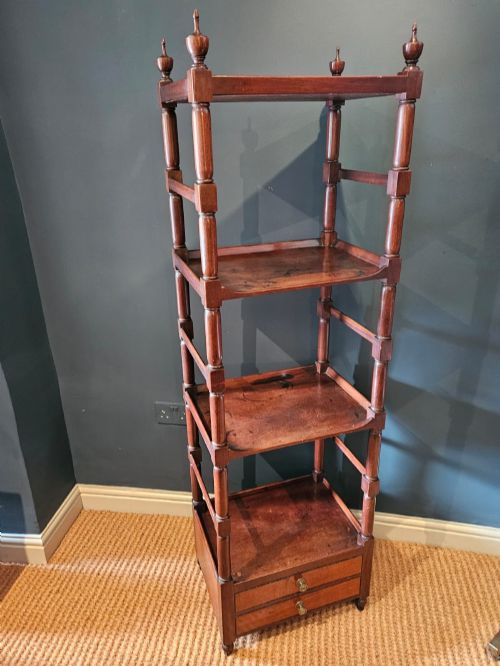
A tiered shelf display stand typically takes the form of a whatnot, etagere, or waterfall bookcase. These pieces offer multiple levels of open shelving supported by vertical columns or uprights.
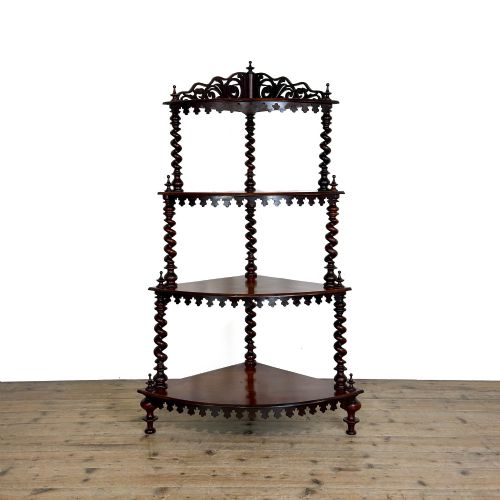
Most examples originate from the 19th Century, Victorian, and Edwardian periods, with earlier Georgian and Regency pieces also appearing. Forms range from corner units designed to fit tight angles to freestanding rectangular bookcases and side tables.
Makers constructed these tiered structures primarily to hold books, sheet music, and ornamental objects in domestic rooms. Their multi-level design allows maximum storage within a minimal floor footprint.
Materials and construction methods
Cabinetmakers utilised dense timbers such as mahogany, walnut, burr walnut, rosewood, and oak for the main framework and shelves. Finer pieces incorporate ebonised wood, bamboo, and intricate wood inlay or parquetry.
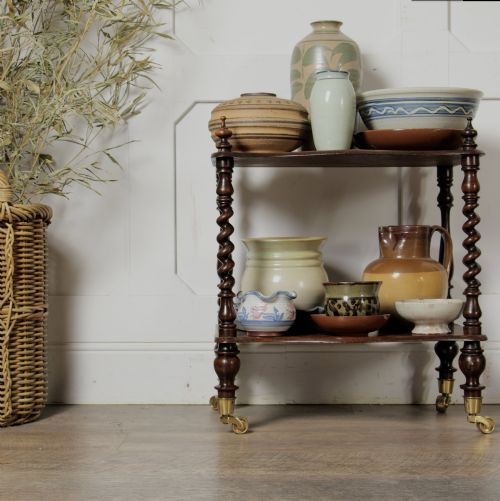
Structural supports often involve turned wooden columns, barley twist legs, or brass fittings to connect the individual tiers. Joinery methods reflect traditional cabinetmaking practices suited to weight distribution across multiple levels.
Listings for a tiered shelf display stand span the 18th, 19th, and 20th centuries, featuring forms in mahogany, burr walnut, rosewood, oak, and bamboo.
What separates standard pieces from finer examples
The selection of timber grain largely dictates the visual appeal of a tiered shelf display stand, particularly when burr walnut or figured mahogany is employed. Highly figured veneers and rich natural patination elevate the visual weight of the furniture.
The precision of the turned supports, the crispness of any carving, and the integration of details like brass mounts or inlaid patterns distinguish standard utility items from superior cabinetwork.
The Tiered Shelf Display Stand Glossary
- Whatnot
- An open set of tiered shelves designed for displaying ornaments or holding books. They gained popularity during the 18th and 19th centuries as domestic display furniture.
- Etagere
- A piece of furniture consisting of a set of open shelves for displaying small objects or ornaments. The term derives from French and often applies to lighter, decorative tiered stands.
- Waterfall bookcase
- A set of open shelves where each upper tier is shallower than the one below, creating a stepped profile resembling a cascading waterfall. This form was common in Regency and later periods.
- Barley twist
- A type of turned wooden column resembling a spiral or rope twist. This decorative technique appears frequently on the vertical supports of Victorian stands.
- Parquetry
- Geometric mosaic woodwork used for decorative surface patterns on tabletops and shelves. Artisans form these designs by fitting small pieces of contrasting timber together.
Tiered Shelf Display Stand: Frequently Asked Questions
What is a tiered shelf display stand?
A tiered shelf display stand is an open multi-level piece of furniture designed to hold books, ornaments, and display items. Common historic forms include whatnots, etageres, and waterfall bookcases.
These pieces use vertical tiers supported by columns or side panels to maximise display space while maintaining a compact footprint on the floor.
Where were they used in the home?
Historic tiered stands served primarily in drawing rooms, parlours, and libraries to hold small decorative objects, porcelain, and current reading material. Corner models made use of awkward angles in smaller rooms.
Today, buyers place them in living rooms, hallways, and bedrooms where vertical shelving adds storage without overwhelming the floor area.
How do I tell Victorian from Georgian pieces?
Georgian and Regency stands often feature lighter mahogany construction with restrained lines, sometimes associated with workshops like Gillows. They tend to date from the late 18th to early 19th century.
Victorian and later 19th-century examples frequently employ burr walnut, rosewood, or ebonised finishes, occasionally incorporating heavier turned supports such as barley twists or intricate inlay.
Can these stands support heavy books?
Most tiered stands accommodate standard books and decorative objects on their upper and lower shelves. However, their open column construction is primarily suited to display rather than heavy library storage.
Checking the stability of the vertical supports and the thickness of the shelf timber helps determine what weight a particular standalone unit can safely hold.
How do I care for wood display stands?
Maintaining these pieces involves dusting regularly with a soft, dry cloth and avoiding placement near direct heat sources or strong sunlight. These precautions protect polished wood surfaces and delicate veneers from drying out.
Applying occasional appropriate wood wax helps preserve the natural sheen of historic mahogany, walnut, and rosewood finishes.