
Tiered Open Bookshelf
A tiered open bookshelf gives instant vertical display to rooms, bringing accessible charm through stepped shelves in mahogany, oak, and rosewood.
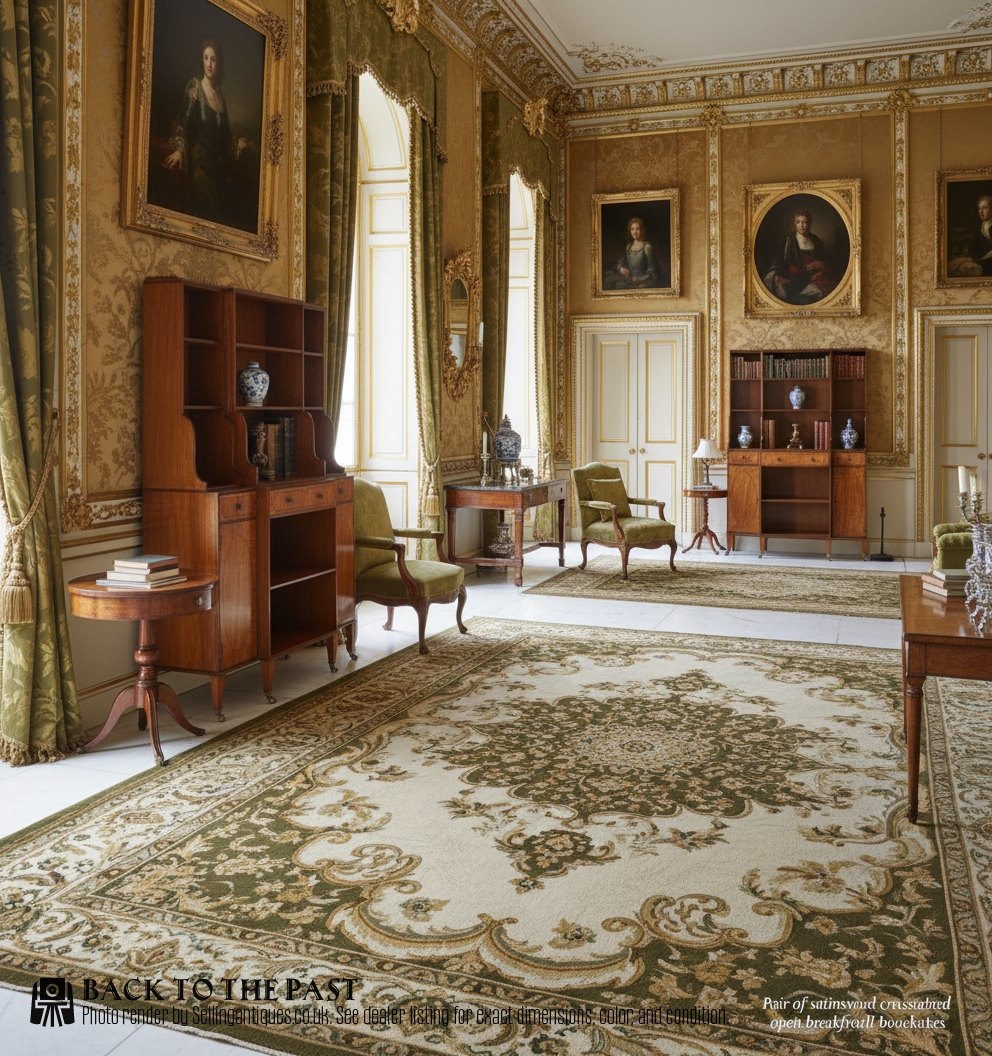
Tiered Open Bookshelf
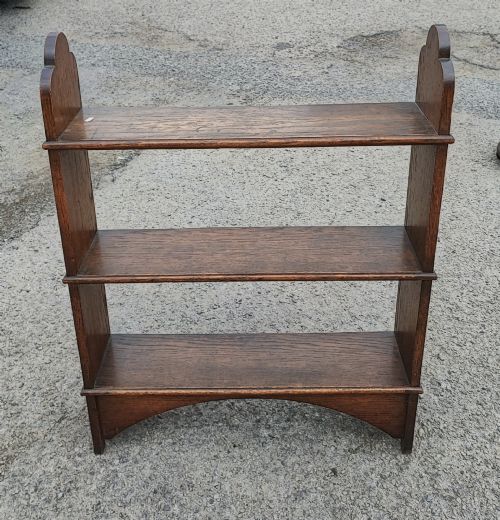
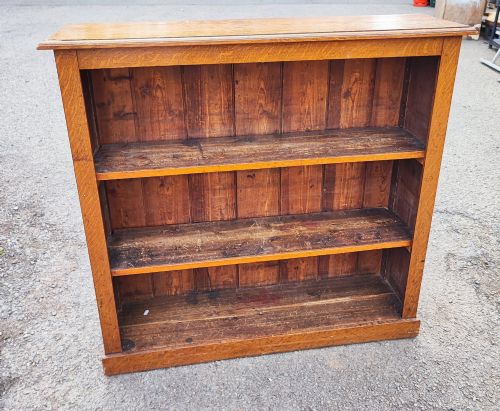
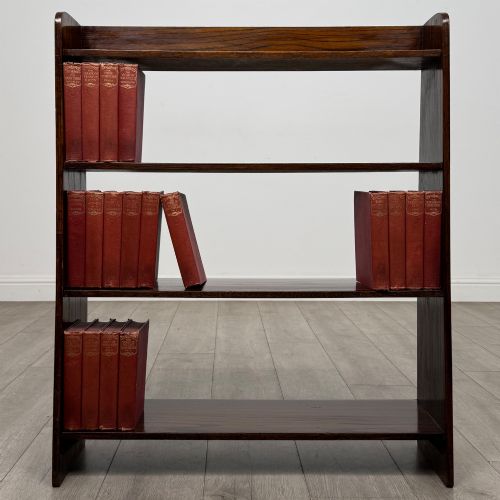
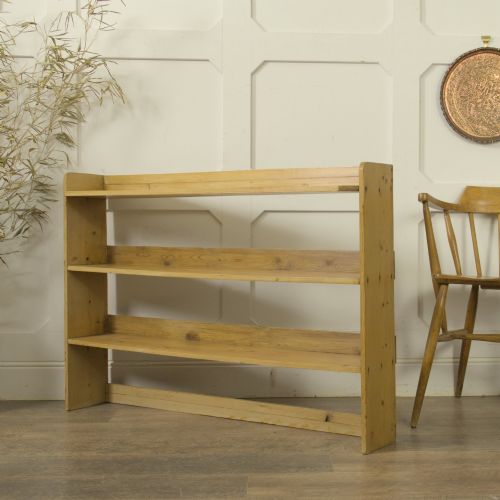
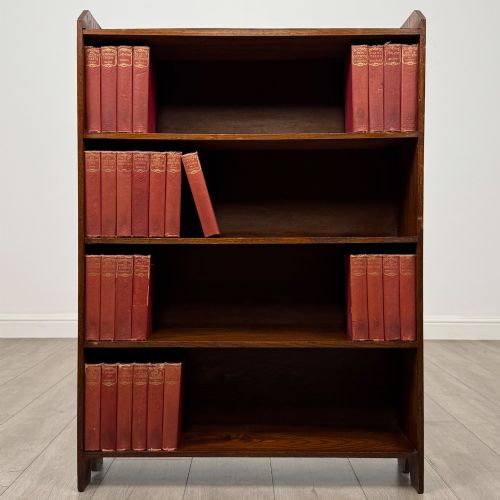
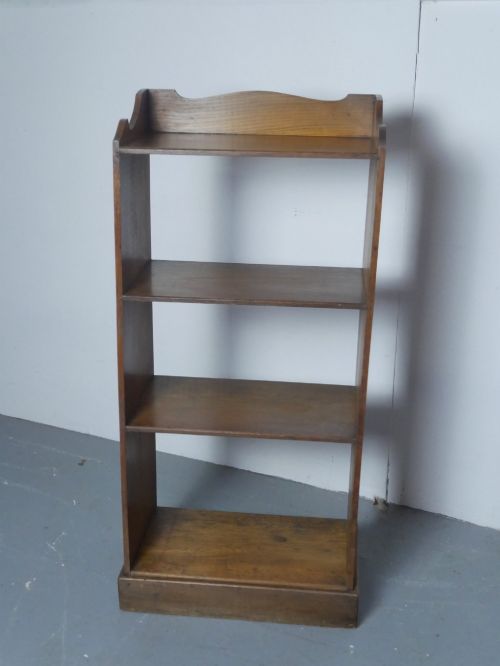
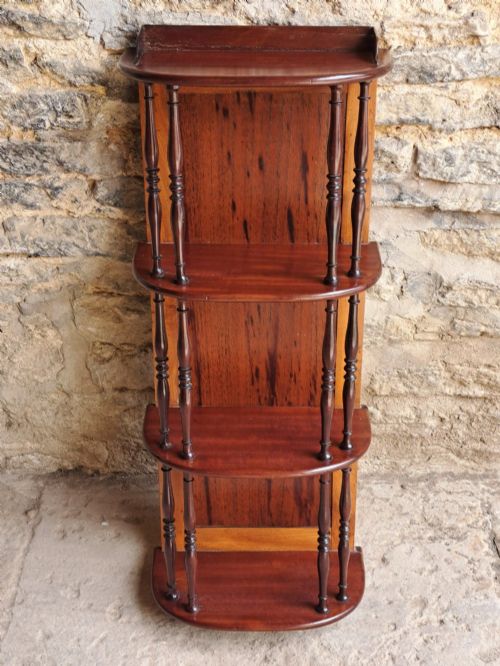
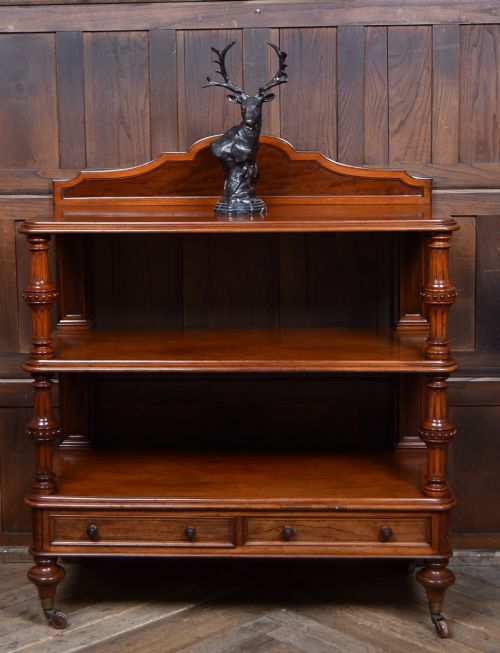
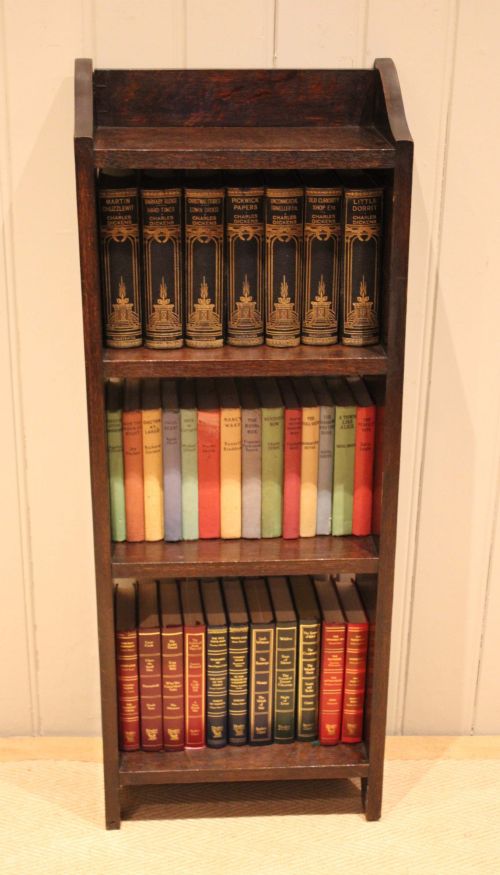
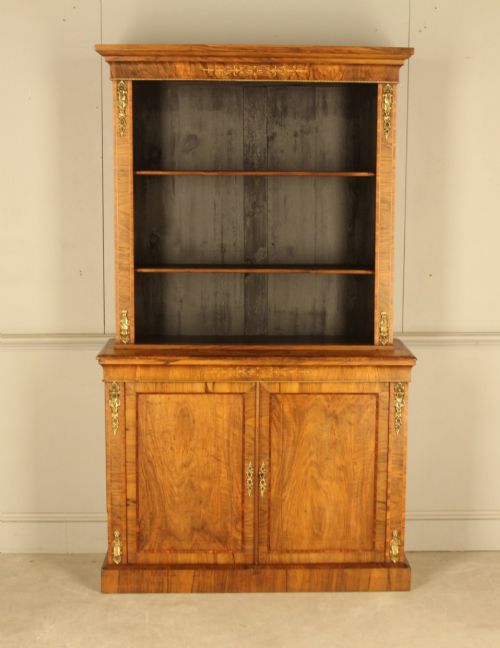
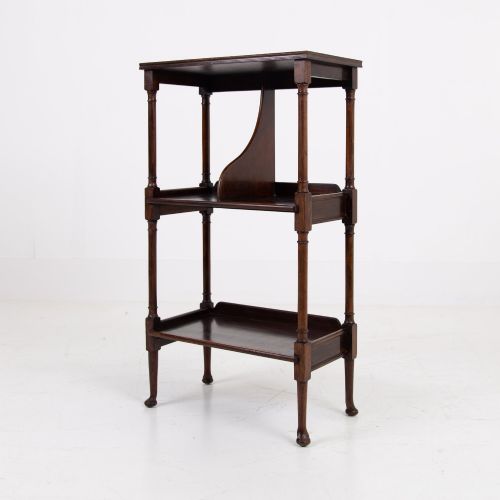
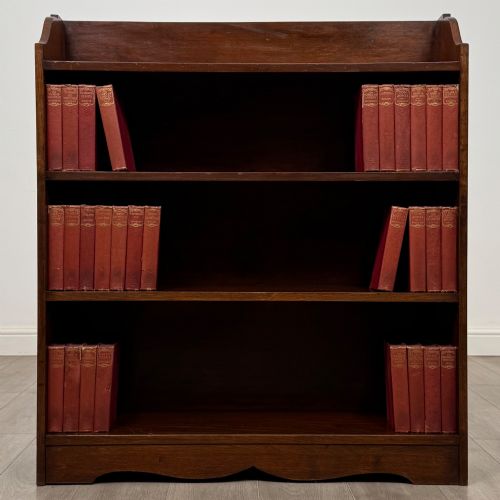
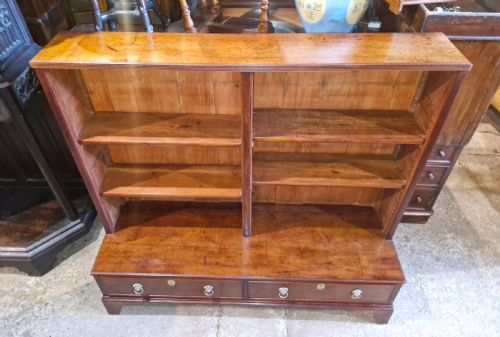
A tiered open bookshelf offers visible storage for books and display objects across multiple stepped levels. These pieces range from compact wall-hanging shelves to large freestanding furniture items.
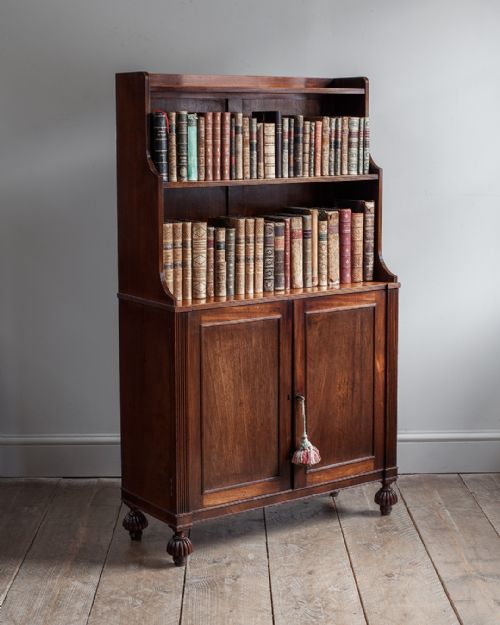
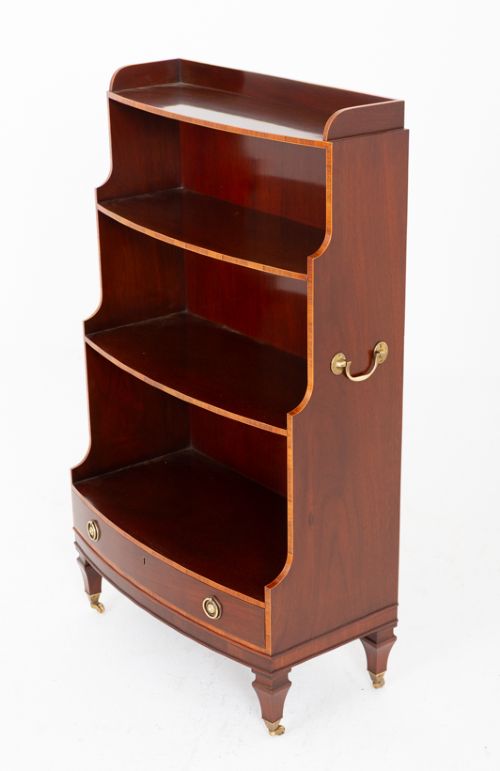
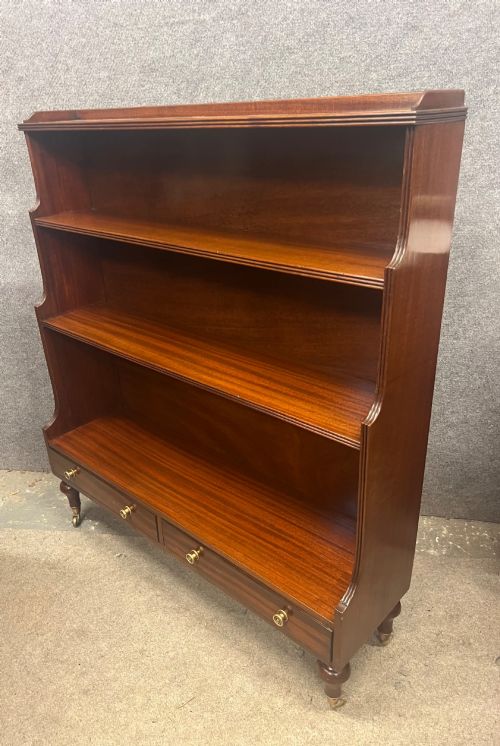
The most common forms appearing here are mahogany waterfall bookcases and multi-tiered whatnots originating from the nineteenth and early twentieth centuries. Pieces frequently emerge in Victorian, Edwardian, and Regency styles.
Makers utilised these versatile items in parlours, studies, and drawing rooms to display prized volumes and decorative ornaments. Each tier steps back progressively, creating a distinctive profile that maximises wall visibility.
Materials and Construction
Cabinetmakers built these shelves using dense hardwoods such as mahogany, rosewood, and oak, often incorporating burr walnut or satinwood veneers for decorative contrast. Structural stability relied on precise joinery to support stepped tiers without heavy side panels.
Finer examples integrated brass castors, gilt mounts, or fret-cut woodwork to elevate the visual appeal of the shelves. Wall-hanging variants required sturdy brackets, whilst freestanding versions depended on solid plinths or slender turned supports.
Tiered Open Bookshelf Retail Price Guide 2026
Typical asking prices for tiered open bookshelf among the pieces listed under this phrase on Sellingantiques today, from the lower quarter to the upper quarter. They describe what is for sale here now, not the wider market.
Several antique whatnots include tiny drawers hidden beneath the shelves for stashing secret love letters or stray bookplates.
Judging Quality and Execution
Quality rests primarily in timber selection and the crispness of the carpentry rather than sheer scale. Pieces featuring figured rosewood, crossbanded satinwood, or intricate fret-cutting demonstrate superior workshop attention.
Proportion and stability separate standard utility pieces from exhibition-grade furniture. Finer tiered open bookcases show careful graduation of shelf depths and clean lines across every level.
Heals
The Tiered Open Bookshelf Glossary
- Waterfall bookcase
- A tiered open bookshelf where each successive shelf is shallower than the one below, resembling cascading water. This design became popular during the Regency and Victorian periods.
- Whatnot
- A multi-tiered piece of freestanding furniture designed for displaying ornaments, books, or curiosities. These typically feature open shelves supported by slender columns.
- Crossbanding
- A strip of veneer applied to the border of a shelf or top surface so the grain runs perpendicular to the main panel. This technique frames the timber effectively.
- Ormolu
- Gilt bronze mounted onto furniture as a decorative accent. It appears frequently on higher-end Victorian and Regency examples.
- Fret-cut
- Woodwork pierced or perforated with decorative patterns using a fine saw. This technique adds lightness and visual intricacy to shelf galleries.
Tiered Open Bookshelf: Frequently Asked Questions
How do I style a tiered open bookshelf?
Arrange books horizontally and vertically alongside small framed pictures or ceramic objects to balance the stepped shelves. Keep heavier volumes on the deeper lower tiers.
Leave some space empty around decorative items so the open framework remains visible and the room maintains an airy feel.
Can these shelves hold heavy books?
Most solid hardwood pieces easily support standard reading collections, but verify the depth and mounting strength before loading large volumes.
Freestanding models distribute weight evenly across the base, whereas wall-hanging shelves rely entirely on secure wall fixings.
Are these pieces freestanding or wall-mounted?
The selection includes both freestanding floor units and dedicated wall-hanging shelves. Freestanding versions often feature castors for easy repositioning.
Wall-mounted variants save floor space and suit smaller rooms or hallways where depth is limited.
How do I tell a Regency bookcase from a Victorian one?
Regency pieces often display clean classical lines in mahogany or rosewood, whilst Victorian examples frequently incorporate richer carving, mirrors, or Burr walnut veneers.
Construction details and secondary timbers also help differentiate the eras of manufacture.