


Tiered Marble Top Table
A tiered marble top table brings a cool stone surface and multiple levels of display into a room.
Tiered Marble Top Table
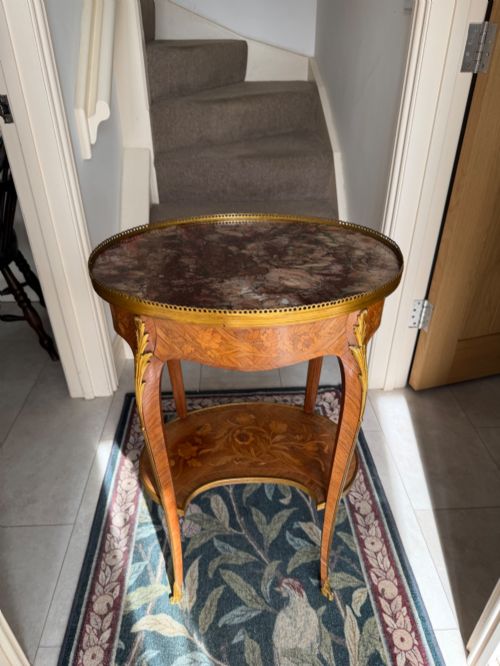
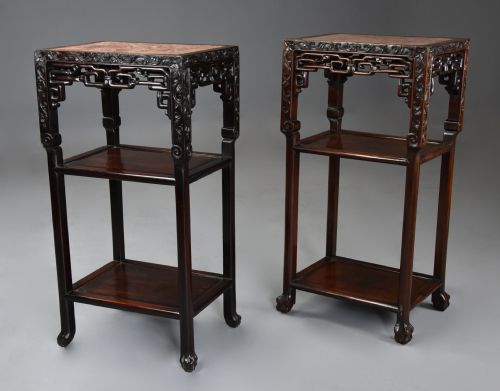
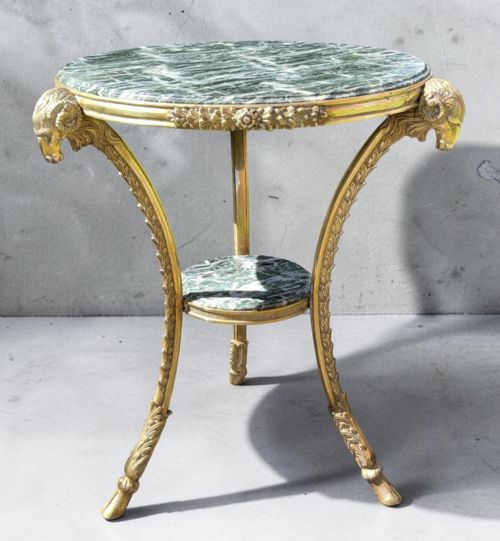
A tiered marble top table combines stone surfaces with multiple display levels, appearing in forms such as gueridons, plant stands, occasional tables, and etageres. These pieces emerge from the nineteenth century into the early twentieth century across Victorian, French revival, and Chinese Qing Dynasty styles.
The selection on this page centres on multi-level designs where marble slabs pair with supporting frames of mahogany, walnut, kingwood, brass, or carved hardwood. Buyers encounter round tea tables, kidney shapes, rectangular pot stands, and tall plant supports that serve functional display roles in domestic spaces.
Materials and Construction
Cabinet makers and metalworkers utilised dense timbers like mahogany, walnut, and kingwood alongside exotic Chinese hardwoods and rosewood to construct the frames. Cast brass, bronze ormolu, and cast iron provide structural mounts, gallery rails, and decorative feet.
Slabs of smooth marble and variegated onyx form the primary tabletops, sometimes enhanced by intricate pietra dura specimen work or hand-carved wooden details. Canework panels and inlaid marquetry further complement the stone surfaces on tiered etageres and tea tables.
Listings span from the mid-nineteenth century through the Edwardian period, featuring French, English, and Chinese aesthetic traditions in wood and stone.
Evaluating Quality
Quality rests in the precision of the joinery and the weight of the mounts, where heavy cast bronze ormolu and crisply carved hardwood distinguish superior workshops from standard production. The selection and polish of the marble slab, particularly when dealing with pietra dura or specimen stone, set the finer examples apart.
The integration of secondary tiers, whether through balanced brass galleries, fitted canework, or harmonious wood veneers, dictates the overall elegance of the piece. Proportion and structural rigidity across multiple tiers determine the success of the design.
Henry Dasson
The Tiered Marble Top Table Glossary
- Gueridon
- A small circular table on a pillar and claw base, often used as a stand for lamps or plants. These French tables frequently incorporate marble tops and bronze mounts.
- Etagere
- A piece of furniture with a set of open shelves or tiers for displaying small objects. They appear in wood and metal combinations with stone inserts.
- Ormolu
- Gilded bronze mounts applied to furniture for decorative effect. High quality pieces display sharp chiselling after casting.
- Pietra dura
- An inlay technique using cut and fitted polished coloured stones to create pictorial designs. It appears on significant nineteenth-century table tops.
- Jardiniere
- A decorative stand or container designed to hold plants or flowers. Chinese hardwood examples frequently feature inset marble tops.
Tiered Marble Top Table: Frequently Asked Questions
What rooms suit a tiered marble top table?
These tables find natural placement in drawing rooms, hallways, and studies where multiple levels allow for lamps, books, or decorative objects without dominating the floor plan.
The cool stone surface provides a practical landing place for drinks or plants while the lower tiers offer extra display space.
How do I care for the marble top?
Marble requires simple wiping with a damp cloth and mild soap, avoiding acidic cleaners that etch the polished stone surface.
Using coasters and mats prevents staining, preserving the natural figure and polish of the stone over decades of daily use.
How are French and Chinese styles different?
French examples from the nineteenth century often feature gilt bronze ormolu mounts, mahogany or kingwood veneers, and classical revival styling.
Chinese pieces rely on dense carved hardwoods like rosewood, incorporating inset marble panels within rectangular or tall plant stand forms.
What is the purpose of multiple tiers?
Additional shelves provide structural stability and expand the surface area for display without increasing the footprint of the furniture in smaller rooms.
On tea tables and etageres, the tiers accommodated specific domestic rituals and decorative arrangements popular in the nineteenth century.