

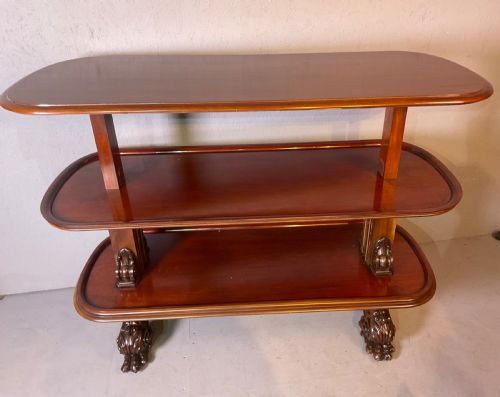


Tiered Mahogany Sideboard
A tiered mahogany sideboard brings architectural presence and practical surface space into a room, spanning forms from the Regency era through to late Victorian production.
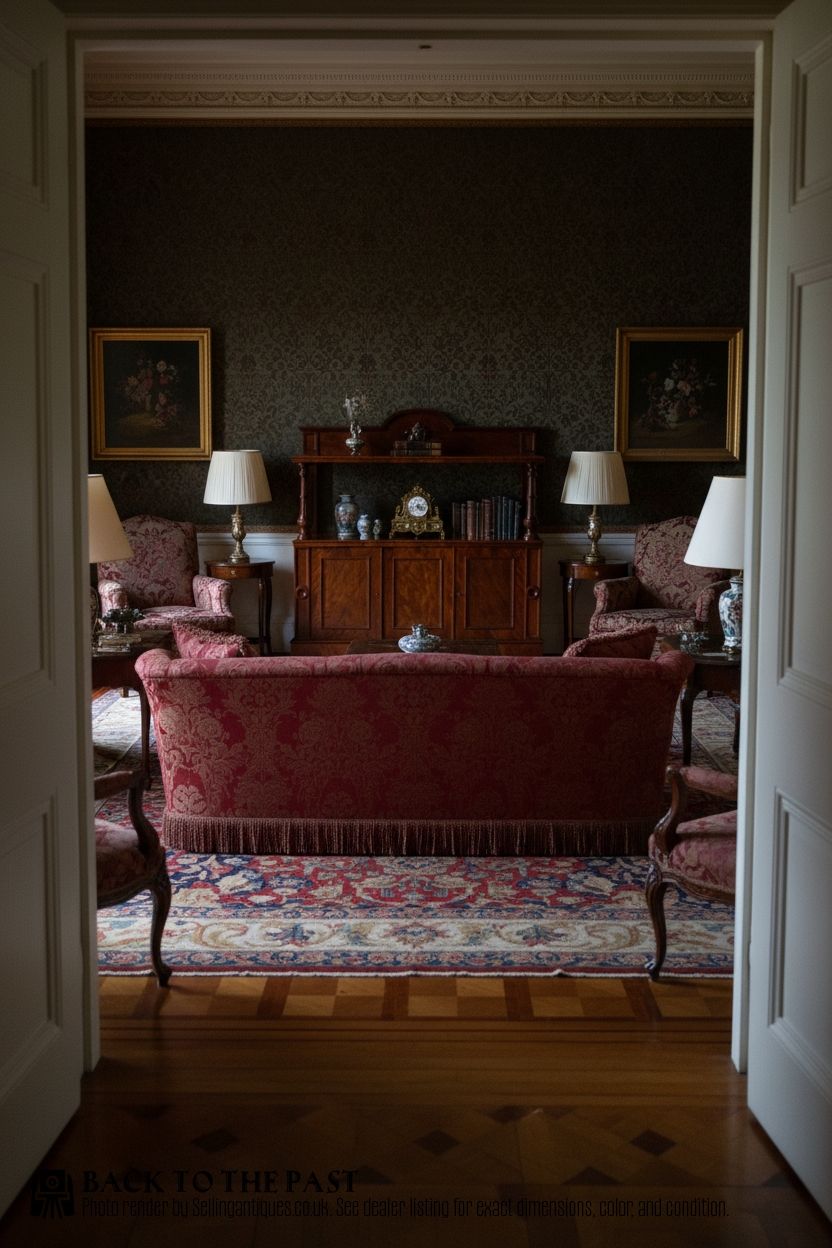
Tiered Mahogany Sideboard
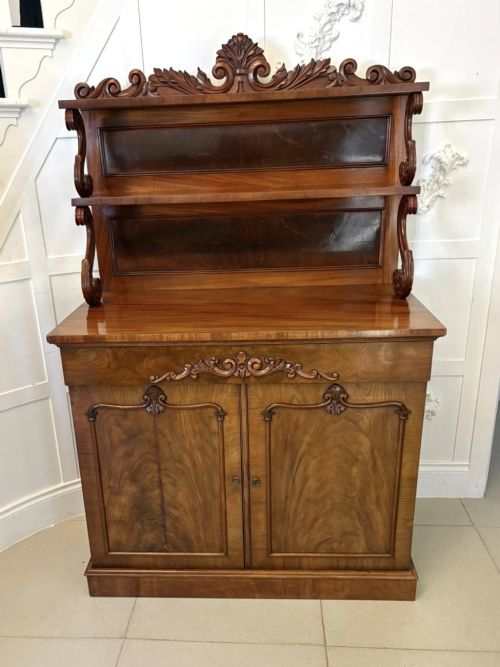
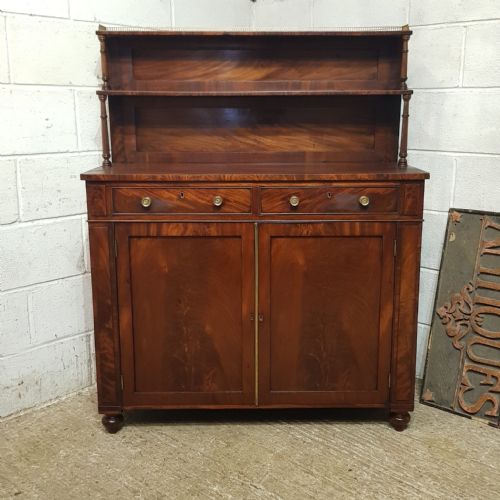
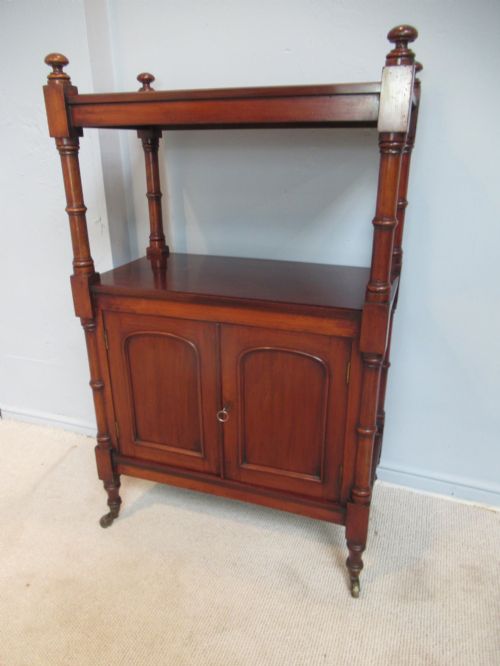
A tiered mahogany sideboard encompasses multifarious serving furniture, including buffets, dumb waiters, chiffoniers, and etageres produced across the nineteenth century. These pieces combine lower storage cabinets or serving surfaces with graduated upper shelves supported on turned columns or brass mounts.
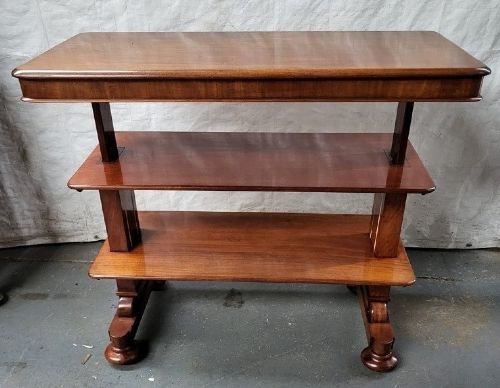
The most prevalent examples on this page date from the Victorian period, featuring heavily figured timber veneers, multi-tiered shelving, and occasionally original castors. Earlier Regency and George IV iterations appear alongside these, displaying clean architectural lines, carved details, and collapsible mechanisms.
Makers such as Gillows, Maple and Co, and James Shoolbred occasionally stamped or attributed these items, though many robust examples remain unmarked country house pieces. Functioning variously as dry bars, serving tables, and display stands, they bridge the gap between dining room utility and formal reception room display.
Materials and Construction
Mahogany serves as the primary structural and visual timber, frequently utilised in highly figured grains, flame veneers, and dense Cuban varieties that provide rich depth to the surfaces. Secondary materials include brass for castors, gallery rails, and structural supports, alongside occasional ceramic or glass components.
Cabinet makers employed traditional joinery combined with structural turning for upright columns, tier supports, and adjustable mechanisms found on telescopic dumb waiters and metamorphic tables. Parcel gilt accents, ebonised wood details, and applied carved decoration finish the architectural forms.
Some nineteenth-century dumb waiters feature tiers small enough to hold a single decanter of port close at hand.
Execution and Detail
Quality rests primarily in the selection of the timber, where heavily figured flame mahogany veneer and dense solid stock elevate a piece above plain utility boards. The crispness of the turned supports, the integration of original brass castors, and the fluidity of any mechanical or adjustable tiers distinguish superior workshops.
Proportion and structural integrity define the higher tier of production, where weighty tiered shelves remain steady without excessive reinforcement. Maker attribution or stamps from established London firms correlate with refined secondary framing and superior carving detail.
Gillows of Lancaster and London·Maple and Co·James Shoolbred and Co
The Tiered Mahogany Sideboard Glossary
- Buffet
- A side table or low cabinet designed for holding food and tableware during dining. These frequently incorporate multiple tiers for display.
- Dumb Waiter
- A tiered stand featuring rotating or fixed shelves, historically used to serve courses without domestic servants present in the room.
- Chiffonier
- A compact sideboard featuring a lower enclosed cupboard beneath a tiered shelf back, common in nineteenth-century interiors.
- Etagere
- A piece of furniture consisting of a set of open shelves for displaying small objects, often integrated into sideboard designs.
- Flame Mahogany
- A wood veneer cut from the fork of the mahogany tree, creating a distinctive flamed or feathered pattern highly prized by cabinet makers.
Tiered Mahogany Sideboard: Frequently Asked Questions
What is a tiered mahogany sideboard used for?
These pieces function as serving tables, display stands, and storage cabinets for dining rooms and morning rooms. Their multiple tiers accommodate glassware, ceramics, and bottles while providing a sturdy surface for serving food.
Historically, dining rooms relied on these sideboards to keep courses and drinks accessible without crowding the main dining table. Today, collectors frequently repurpose them as serving stations or prominent display furniture in living spaces.
How do I tell a Regency piece from a Victorian one?
Regency and George IV examples generally display cleaner classical lines, restraint in carved decoration, and architectural proportions influenced by ancient design. Woods are often dense Cuban mahogany with minimal applied ornamentation.
Victorian pieces tend to be heavier, featuring more robust turned supports, elaborate carved details, figured flame veneers, and functional additions like castors or adjustable tiers. The presence of gallery rails and multi-tiered shelving is especially characteristic of the mid to late nineteenth century.
Are original castors important?
Original brass castors indicate that a piece retains its intended height and mobility, which matters greatly for proportion and authenticity. Many of these sideboards were designed to be moved easily around a large country house dining room.
Replacements do not ruin a piece of furniture, but matching period hardware preserves the original stance and historical accuracy. Inspecting the fixing points beneath the legs reveals whether the castors have been altered over time.