
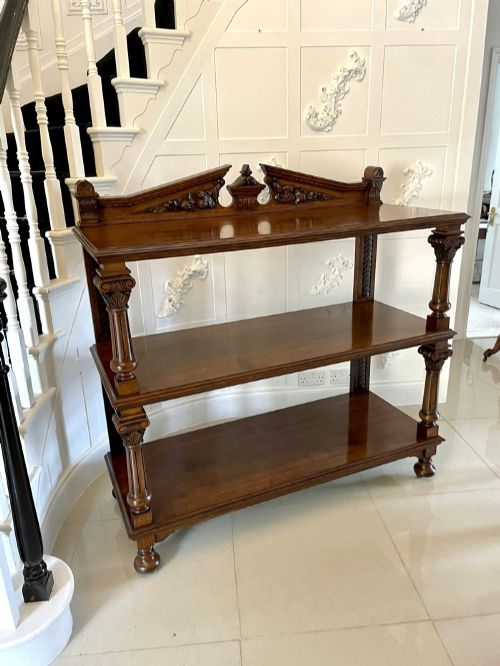
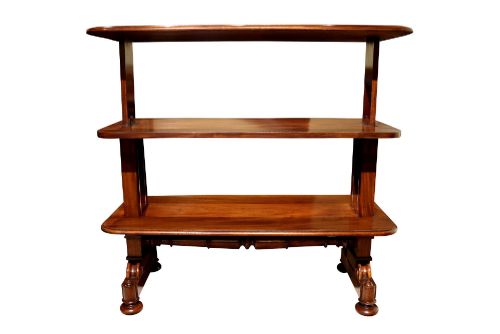
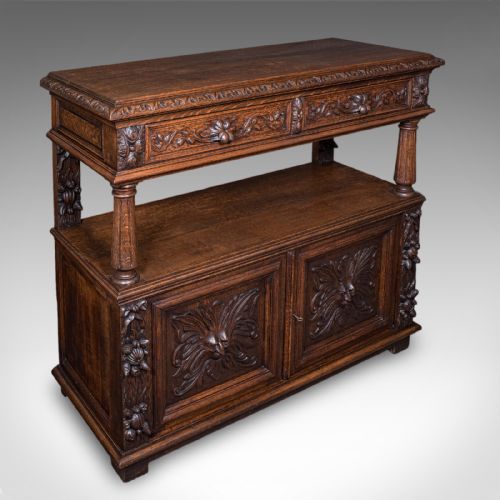
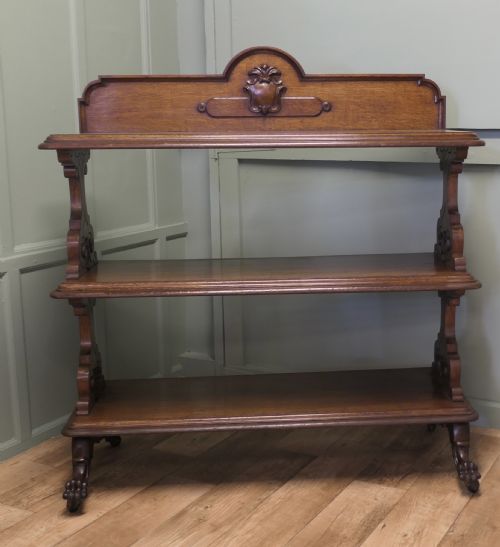


Tiered Dining Room Server
A tiered dining room server is a practical multi-level piece designed to hold dishes and drinks during meals.
Tiered Dining Room Server
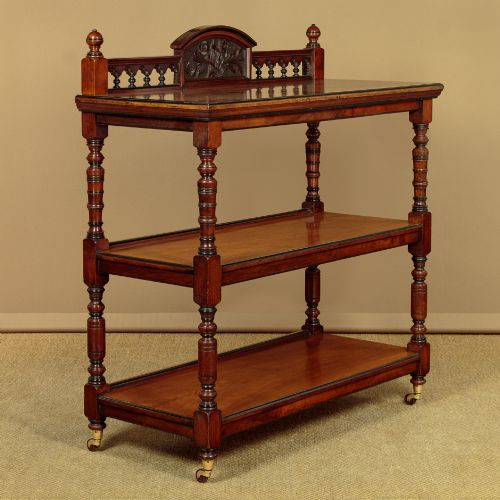
A tiered dining room server provides multiple stacked surfaces to hold dishes, glassware, and bottles close to the table during formal meals. When you examine a tiered dining room server in this collection, you encounter sturdy multi-level furniture designed to keep serving space efficient and organised.
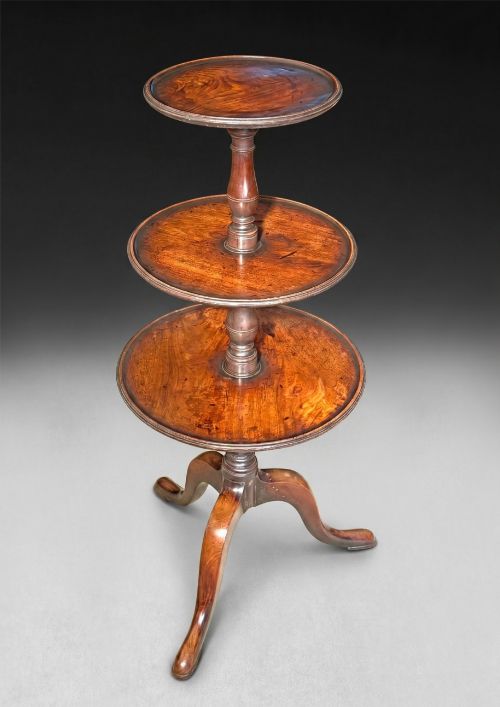
The pieces available span from George III and Regency designs through to heavy Victorian oak and walnut models. Many take the form of dumb waiters or sideboards featuring graduated circular trays or rectangular shelves.
You are most likely to meet three-tier mahogany and oak examples dating from the nineteenth century. These range from simple rotating dumb waiters to large serving tables with integrated cabinets and display sections.
Judging Quality and Craftsmanship
The standard of a server rests in the selection of figured timber, such as fiddleback mahogany or pollard oak, and the crispness of the hand-carved ornamentation. Superior pieces demonstrate balanced proportions between the tiers and robust central pillars that maintain absolute rigidity when loaded.
Finer examples often integrate sophisticated mechanical elements, like smooth-operating rise and fall ratchets or original brass castors that move cleanly. Lesser pieces rely on simpler construction with plain secondary woods and minimal decorative detailing.
Some Victorian dumb waiters hide ingenious mechanical actions that let heavy serving tiers rise and fall like musical instruments.
The Tiered Dining Room Server Glossary
- Dumb waiter
- A freestanding tiered stand with revolving or fixed shelves used for holding plates and glassware without servant intervention.
- Rise and fall
- A mechanical mechanism allowing specific tiers to be adjusted vertically for height using a central ratchet or screw.
- Metamorphic
- Describing a piece of furniture designed to transform into another form or configuration, such as a tiered stand collapsing into a compact table.
- Fiddleback mahogany
- A highly figured variety of mahogany showing wavy cross-grain patterns resembling the back of a violin.
- Pollard oak
- Timber taken from trees that were cut back to the trunk, producing a dense, highly decorative knotted grain pattern.
Tiered Dining Room Server: Frequently Asked Questions
What is a tiered dining room server used for?
These servers provide extra surface area around the dining table for holding dishes, cutlery, and bottles during large meals. They keep items within reach when space on the main table is limited.
Historically, they allowed diners to help themselves without constant attendance from household staff. Today, they function equally well as display stands or occasional side tables in living spaces.
How do I identify a Georgian tiered server?
Georgian pieces typically feature graceful proportions, restrained classical carving, and rich mahogany surfaces with slender turned supports. They often take the form of graduated circular trays on a tripod base.
Cabinet makers in this era focused on elegant joinery and subtle decorative details rather than the heavier ornamentation seen in later Victorian designs.
What is a metamorphic dumb waiter?
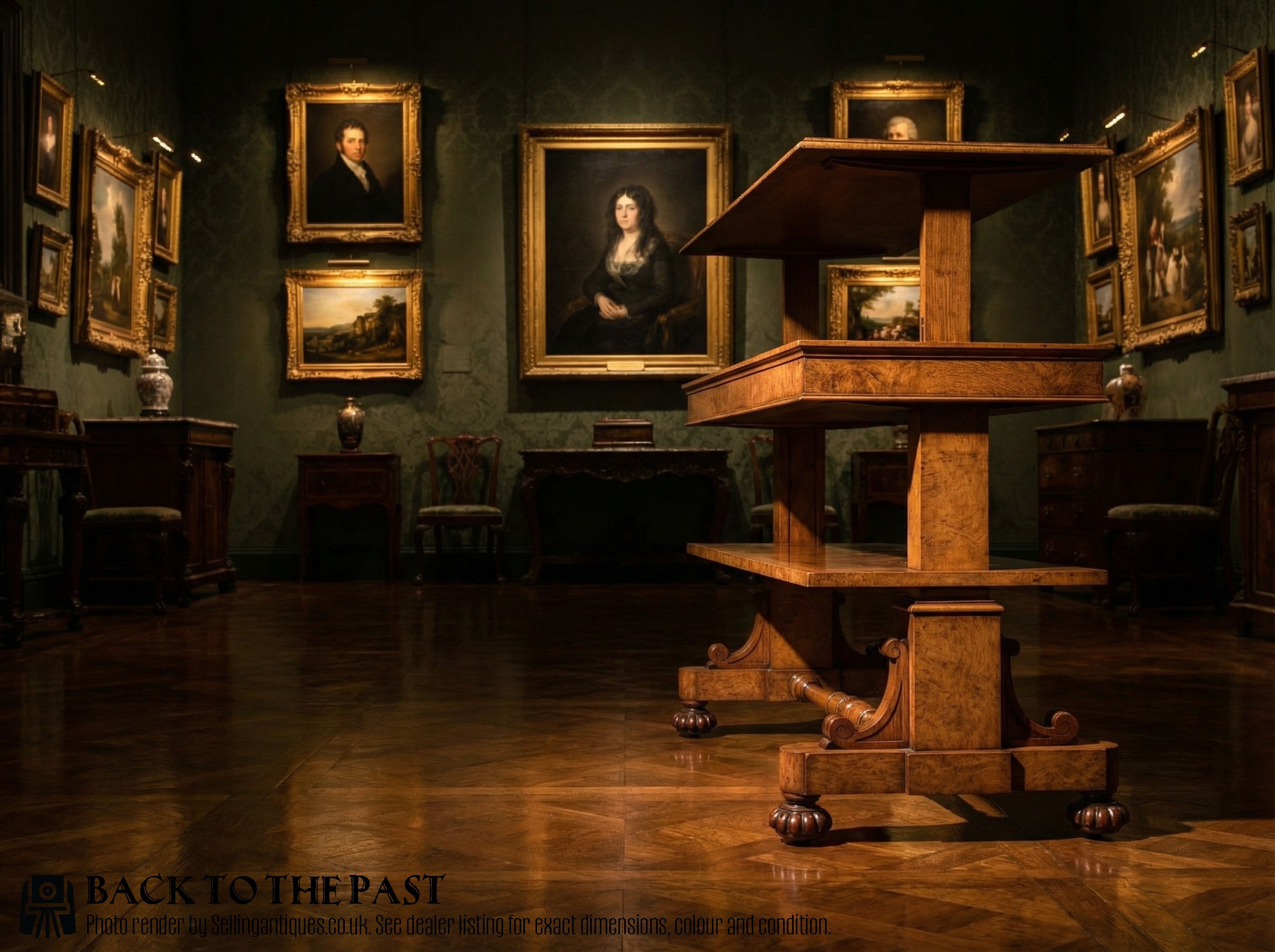
A metamorphic piece includes clever hidden mechanisms that allow the furniture to change shape or height. In tiered servers, this usually means shelves can be raised, lowered, or folded away.
These versatile designs demonstrate nineteenth-century ingenuity and provide adjustable storage options for different hosting needs.