
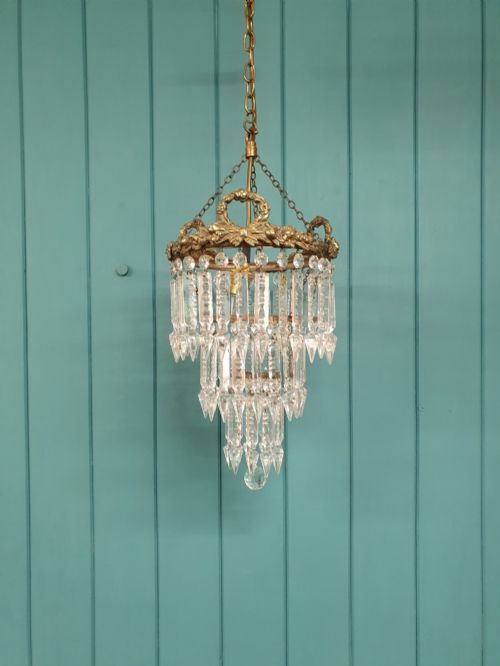
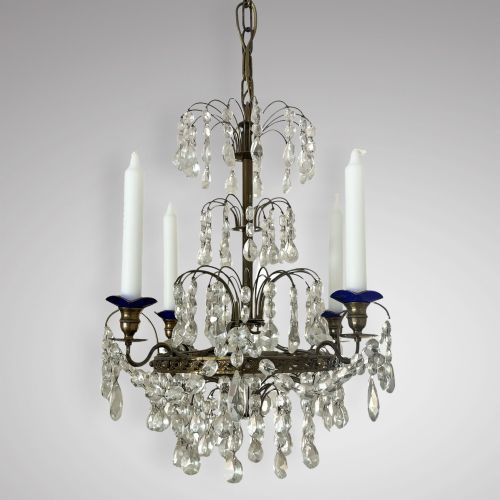
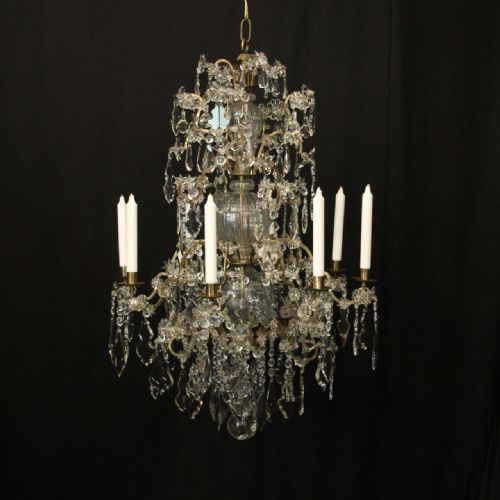

Tiered Crystal Light
These tiered crystal light fixtures bring dramatic illumination and cascading glass drops from French and Italian workshops into historic interiors.
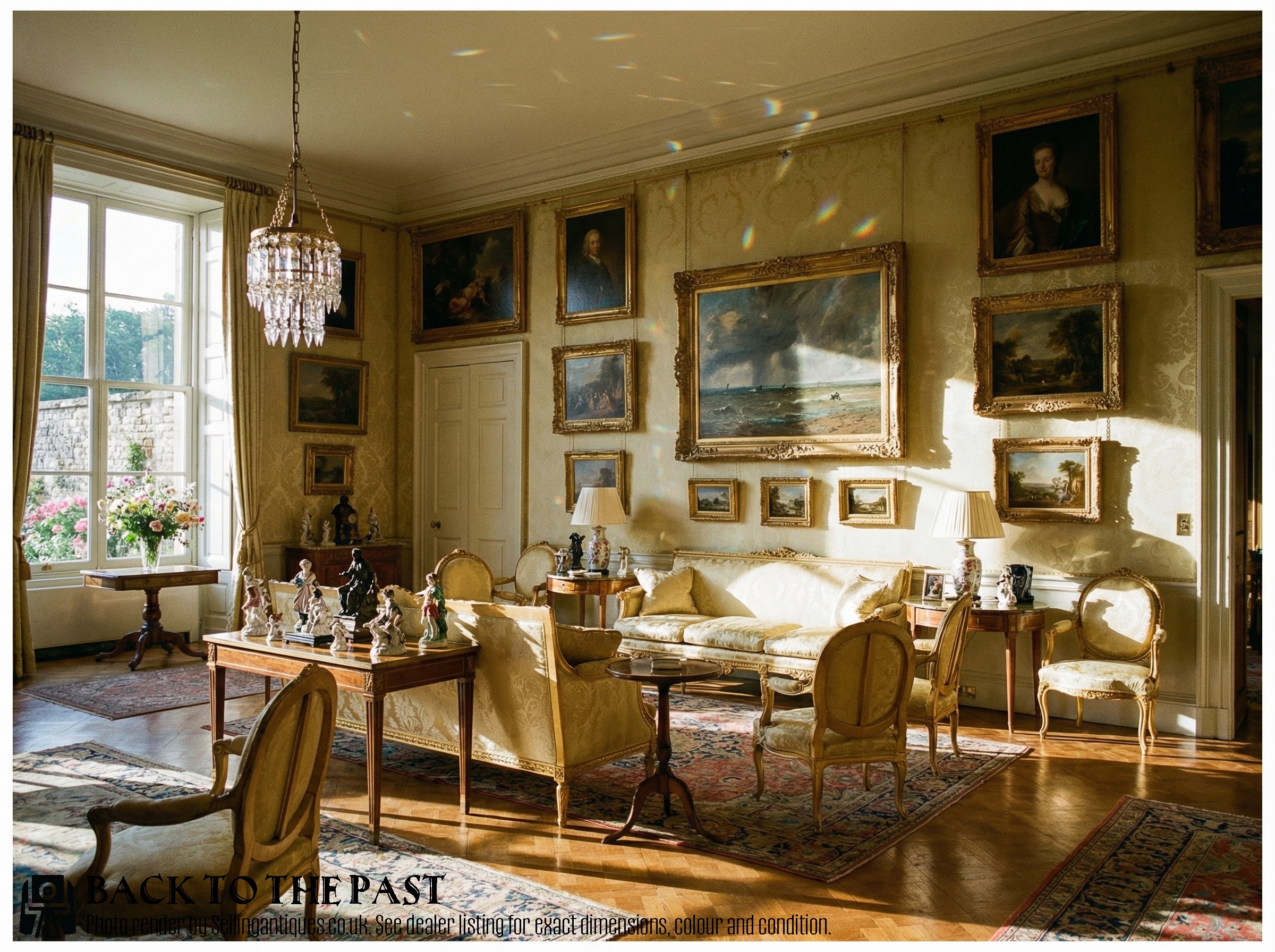
Tiered Crystal Light
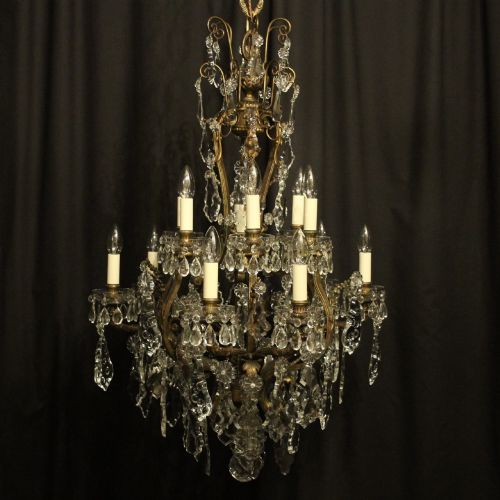
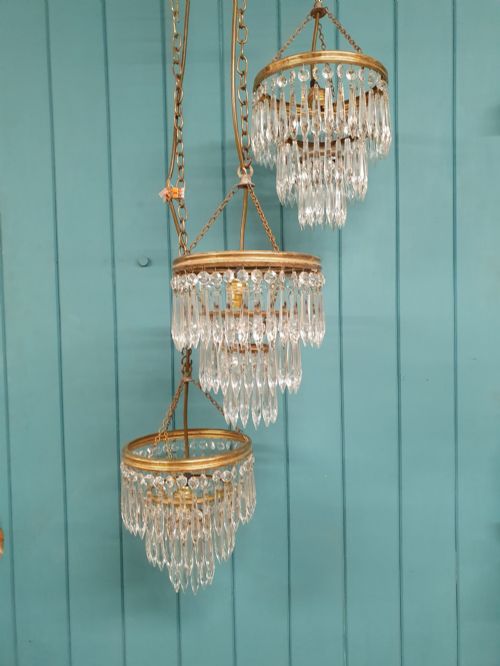
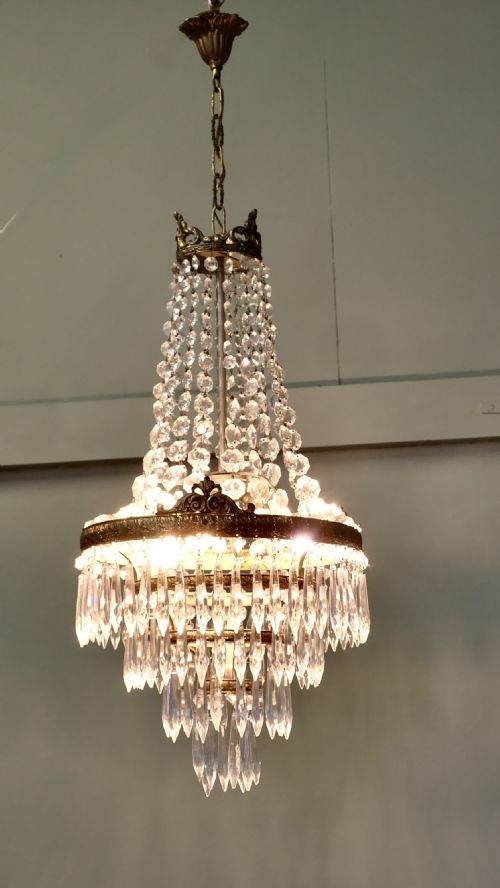
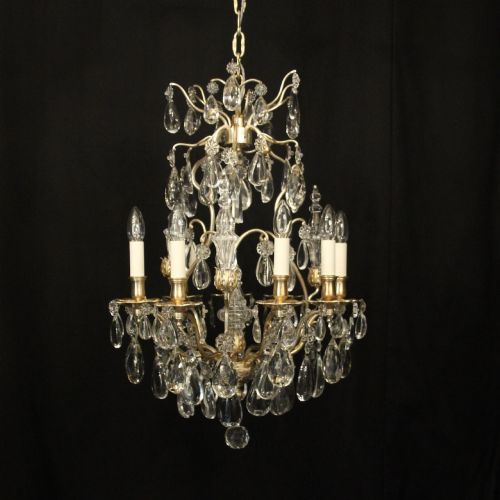
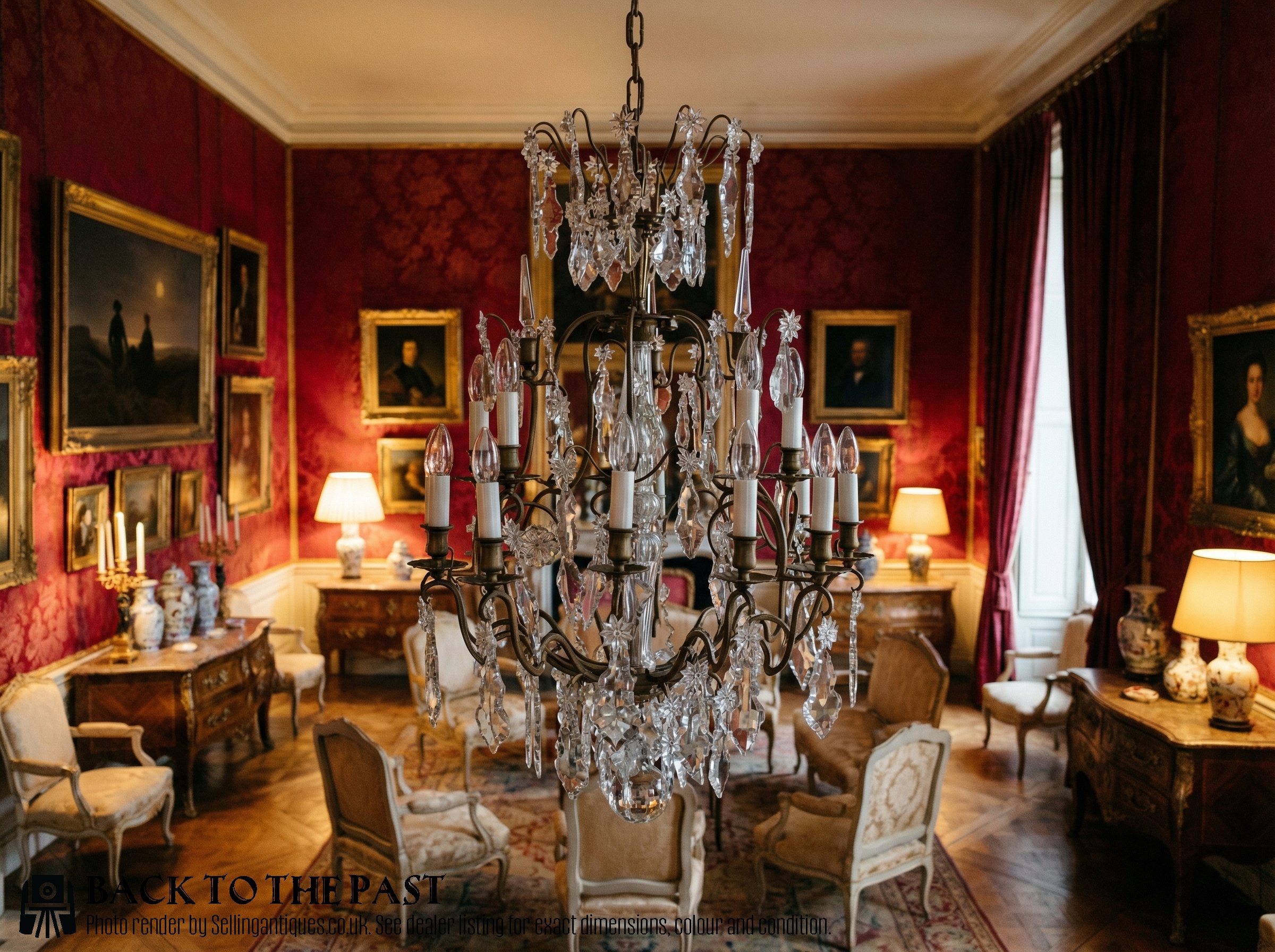
A tiered crystal light combines multiple levels of metal frames with glass drops to fill large rooms with reflected illumination. The phrase encompasses grand chandeliers, smaller wall lights, and multi-tiered focal points spanning several decades.
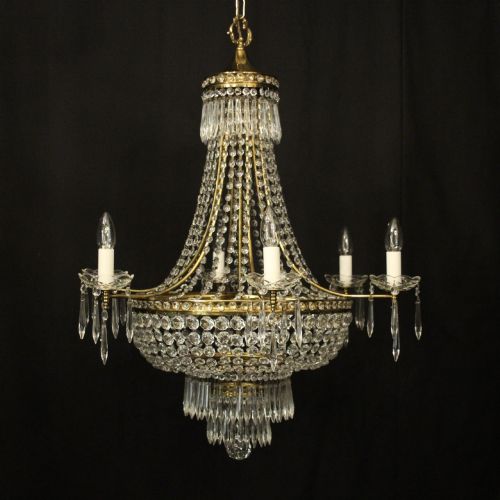
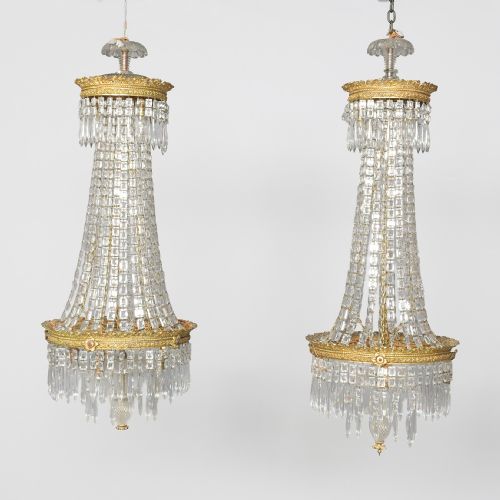
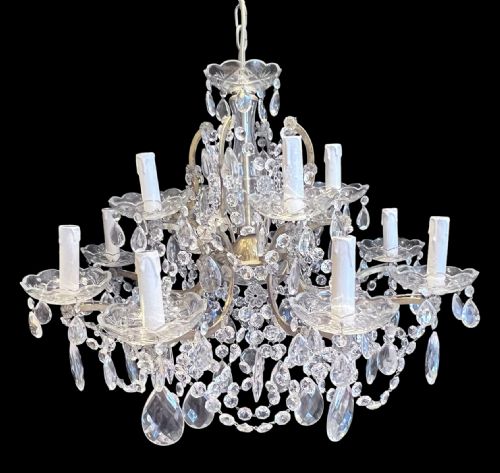
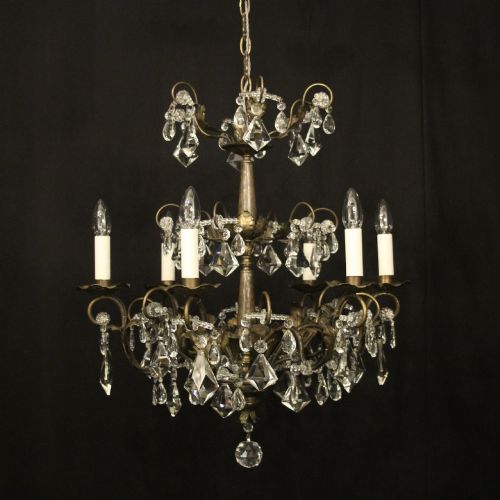
Buyers meet examples shaped by French Empire, Rococo Revival, and Art Deco aesthetics originating from 19th-century designs through to 1930s productions. Double-tiered and multi-tiered Italian models dominate the larger formats seen on this page.
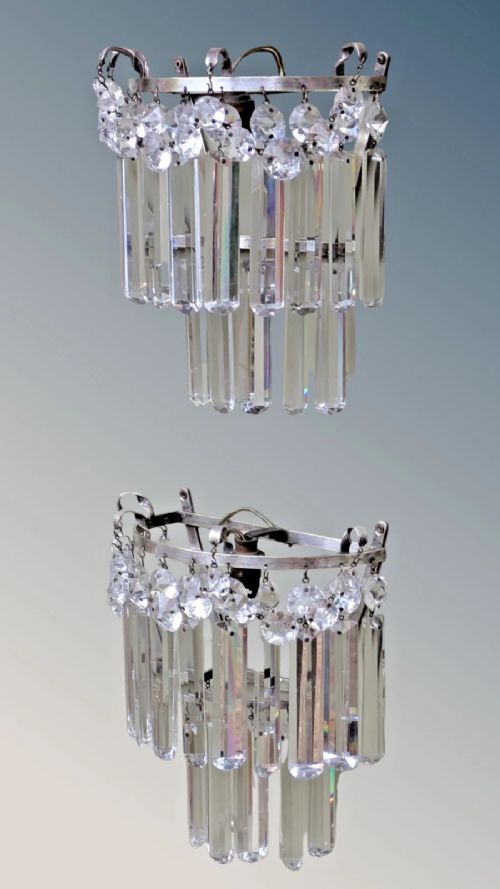
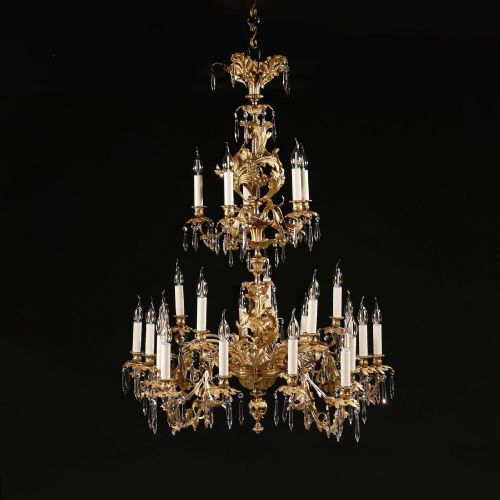
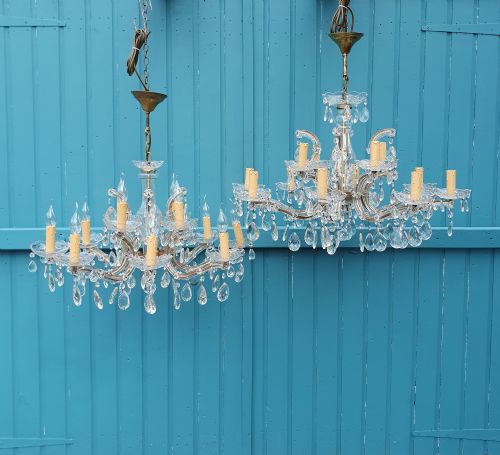
The format ranges from compact single-tier wall fixtures to massive twenty-four light structures designed for high ceilings. Glass beads, pendants, and faceted drops define the visual weight of each tier.
Materials and construction methods
Workshops utilised brass, gilt bronze, and silvered metals to form the skeletal tiers that hold the glass elements. These structural frames support arms, candle cups, and central spires.
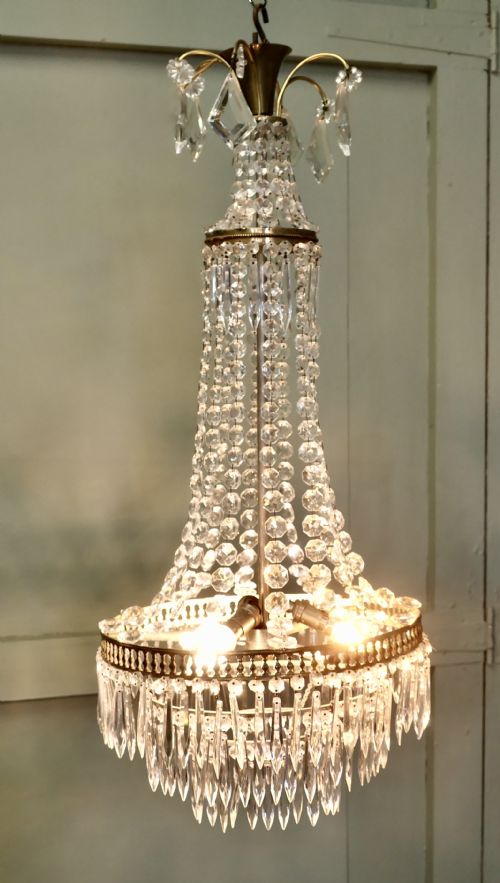
Cut glass and crystal components are wired or pinned to the metal armature using small metal rings. The combination of faceted drops and beaded strands creates the cascading waterfall and tent profiles characteristic of the style.
Tiered Crystal Light Retail Price Guide 2026
Typical asking prices for tiered crystal light among the pieces listed under this phrase on Sellingantiques today, from the lower quarter to the upper quarter. They describe what is for sale here now, not the wider market.
Several petite wall lights include carved cherubs holding the crystal drops.
Distinctions in quality
The precision of glass cutting and the clarity of the crystal determine how light refracts across the tiers. Higher quality pieces utilise hand-cut lead glass drops that produce sharp prismatic flashes.
Metalwork execution separates standard production from finer pieces, visible in the chasing of gilt bronze or the rigidity of the multi-tiered brass frames. Original matching drops across all tiers indicate superior preservation.
The Tiered Crystal Light Glossary
- Tier
- A single level or row of lights and glass within a multi-level fixture. Multiple tiers create vertical volume and increased illumination.
- Waterfall
- An arrangement of crystal drops that flows outward from a central crown over the frame tiers. This profile softens the metal structure beneath.
- Tent and waterfall
- A specific configuration featuring an upper tent of strung beads above cascading vertical drops. It defines many classic French chandeliers.
- Lustre
- A hanging glass pendant or drop designed to catch and reflect light. These elements adorn arms, bobeches, and central stems.
- Plafoniere
- A ceiling light fitted close to the surface rather than suspended on a chain. They offer tiered crystal illumination for rooms with lower ceiling heights.
Tiered Crystal Light: Frequently Asked Questions
How do I hang a heavy tiered crystal light?
Suspension requires fixing directly into ceiling joists or using a substantial metal hook rated for the combined weight of metal and glass. Professional installation is essential for multi-armed fixtures.
Electrical wiring must be checked to ensure it supports the number of candle arms and bulb holders housed within the tiers.
How should I clean a tiered crystal light?
Cleaning involves wiping individual drops and glass arms with a mild solution using a soft cloth while the pieces remain on the frame. Many owners clean intricate fixtures in place to avoid disturbing the wire pins.
Removing all the crystal drops for washing requires careful cataloguing of their positions on each specific tier.
What ceiling height do these fixtures need?
Larger multi-tiered chandeliers require high ceilings to allow sufficient clearance beneath the lowest pendant drops. Compact flush mounts or smaller wall lights suit rooms with standard heights.
Proportion guides the choice between single-tier wall fixtures and massive double-tiered hanging centerpieces.
How do I identify French and Italian pieces?
French pieces often display Empire or Rococo styling with gilt bronze frames and refined tent and waterfall configurations. Italian examples frequently feature polychrome finishes or grand double-tiered gilt structures.
Arm counts and drop shapes help distinguish regional workshops from early 20th-century production lines.