

Tier Lamp Tables
Tier lamp tables bring stacked surfaces and compact footprints to sitting rooms, holding lamps and books across multiple generations of design.
Tier Lamp Tables
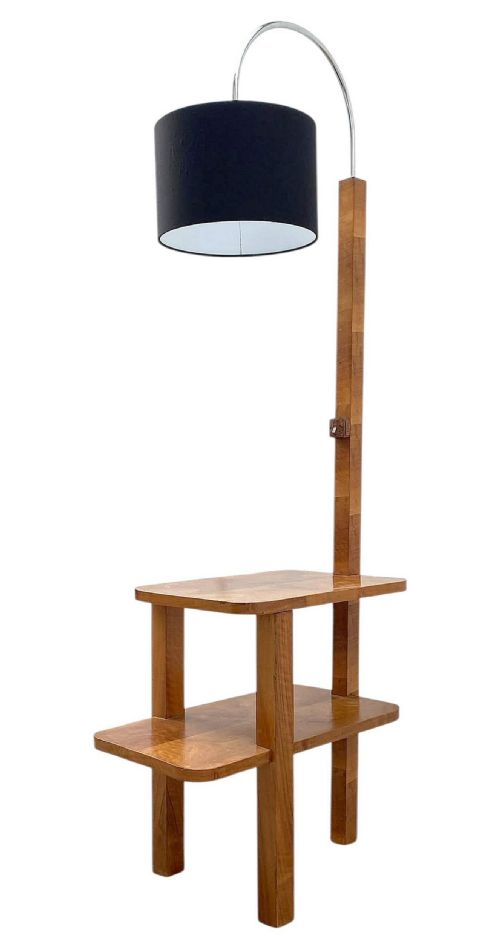
Tier lamp tables provide additional display and storage through stacked surfaces, functioning as compact items designed to sit beside seating. When searching for tier lamp tables, buyers encounter practical domestic furniture spanning from the Victorian and Edwardian eras into the Art Deco period.
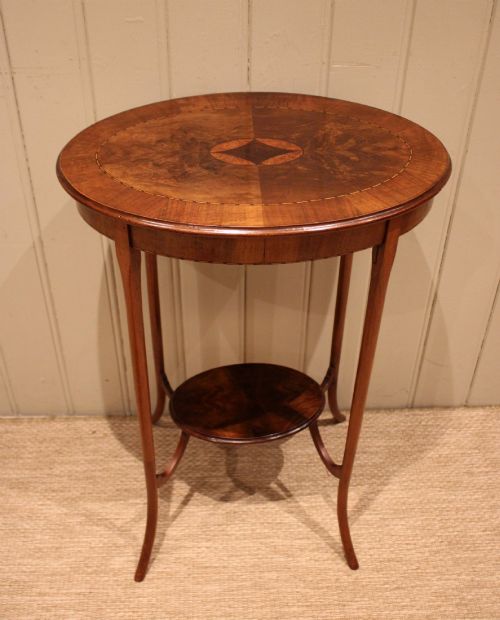
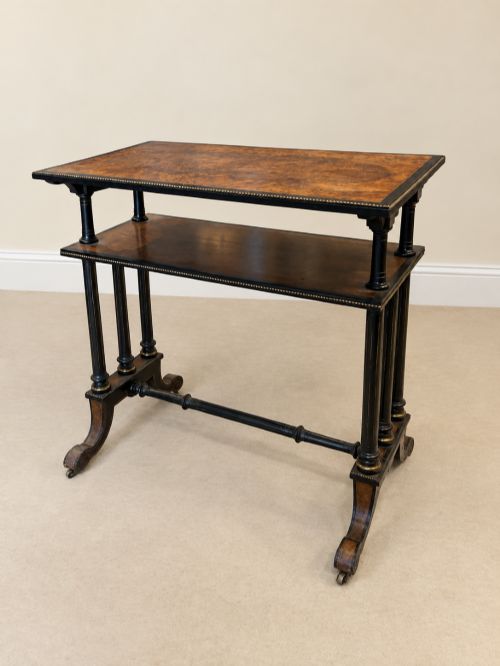
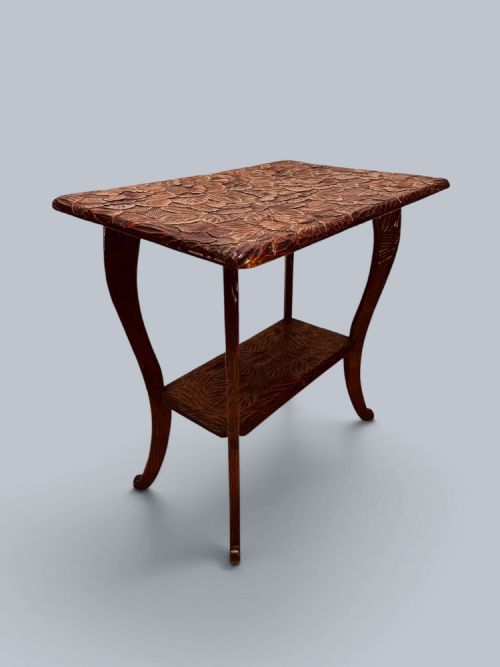
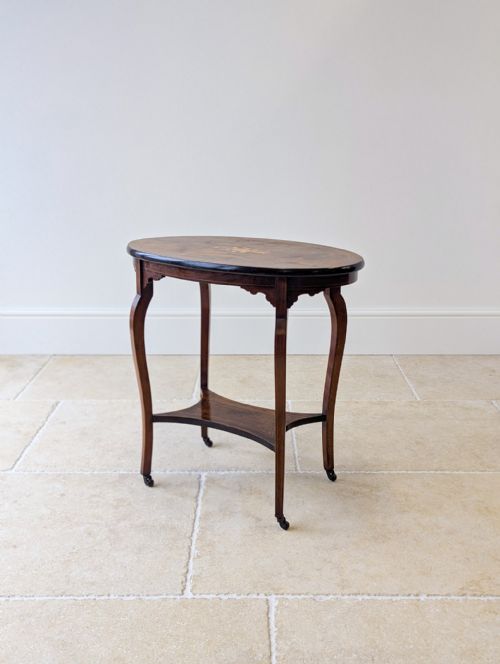
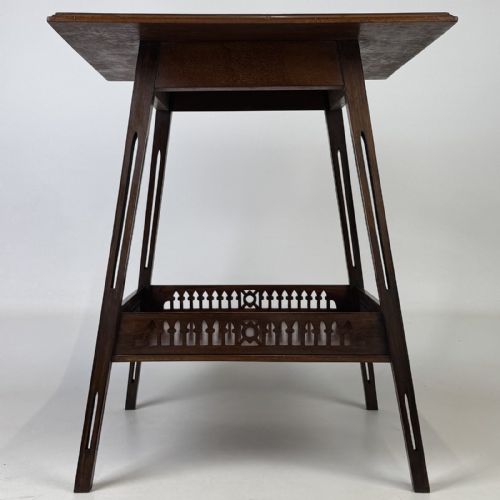
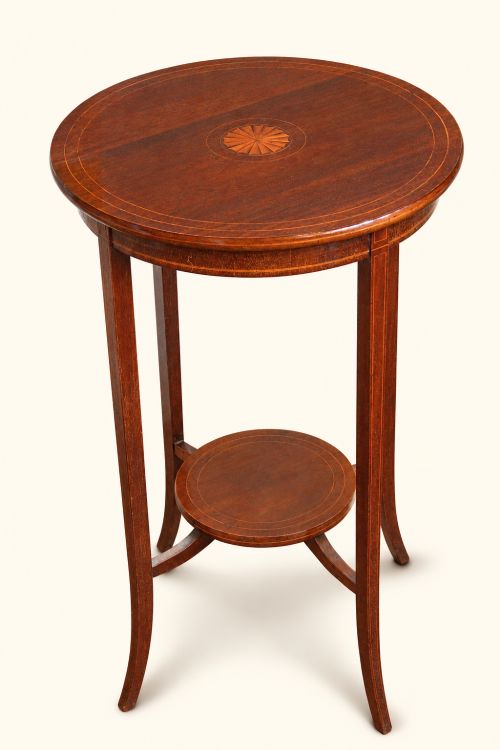
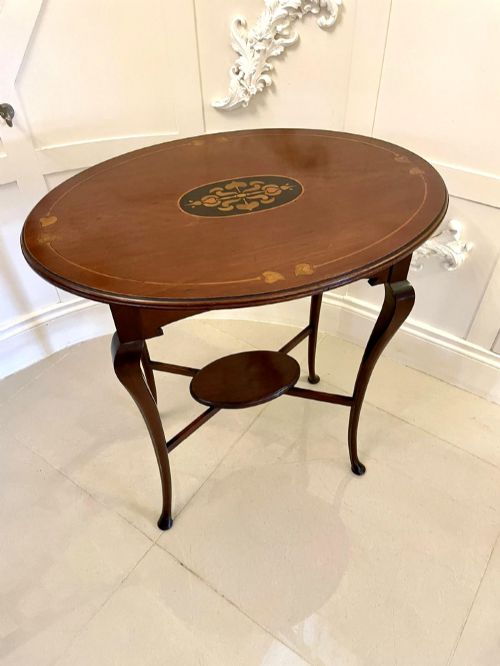
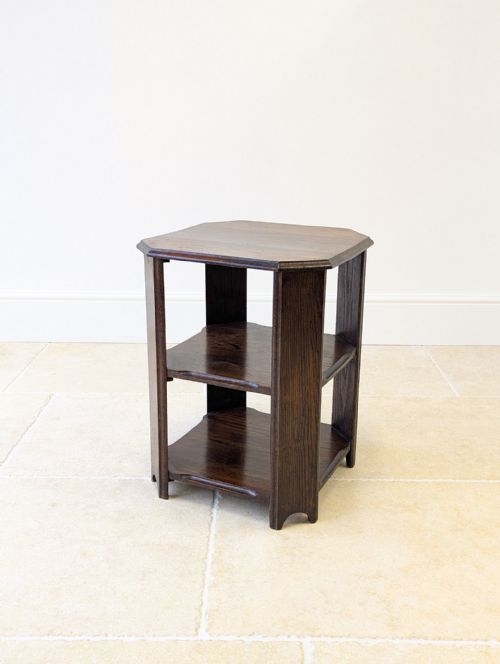
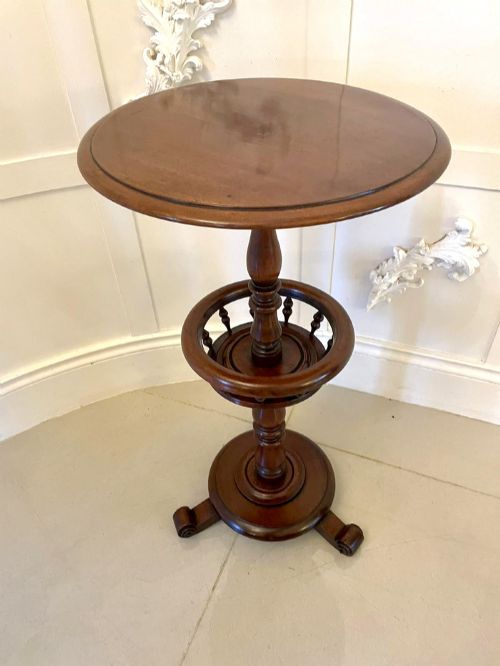
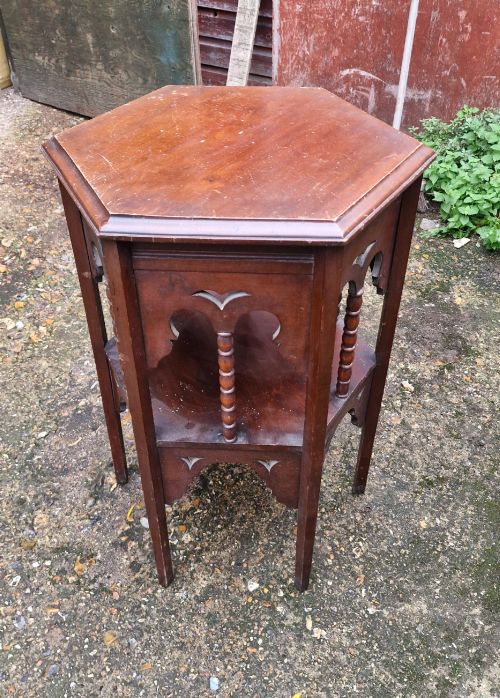
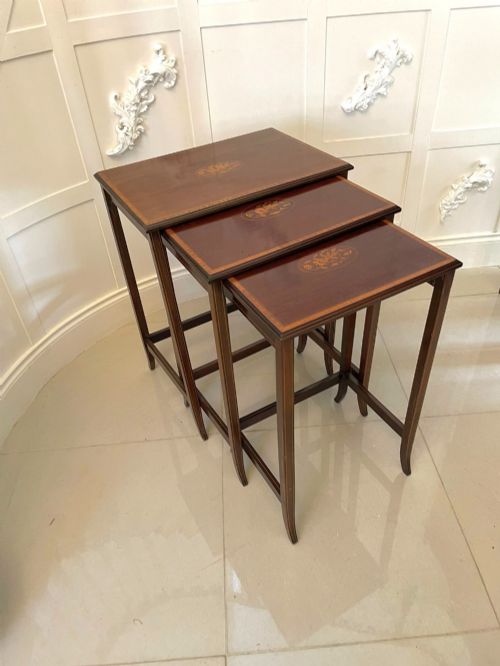
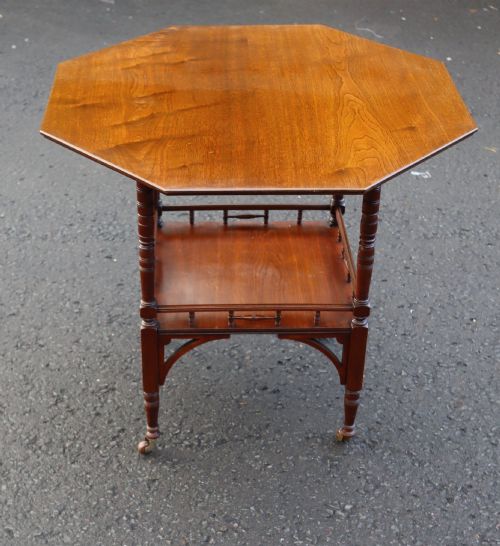
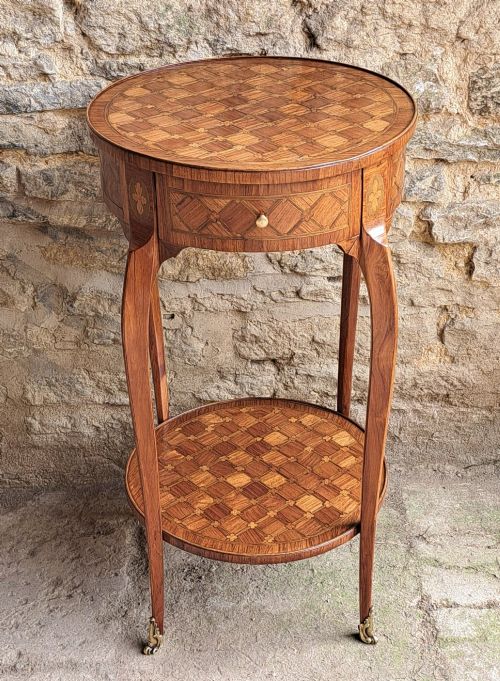
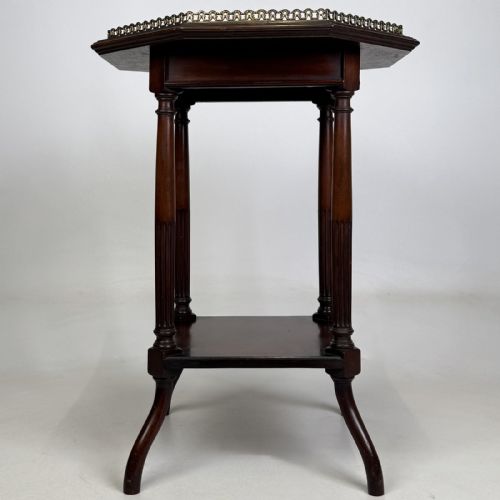
The selections on this page range from oval and circular occasional pieces to rectangular formats with lower shelves or galleried tiers. Woods such as mahogany, walnut, and oak dominate the forms, frequently accompanied by brass details or inlaid motifs.
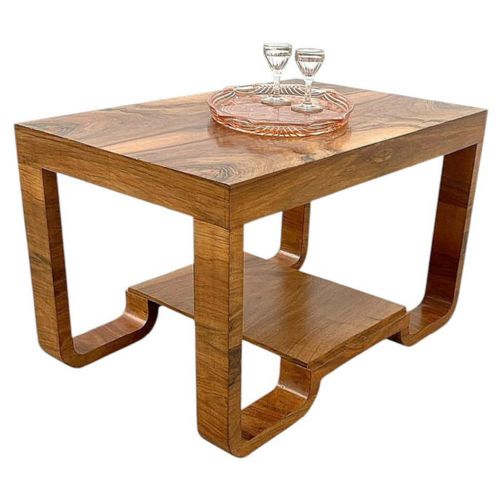
Edwardian and Art Deco examples appear most frequently, bridging the gap between traditional craftsmanship and early twentieth-century geometric forms. These tables accommodate modern lighting while retaining proportions suited to smaller spaces.
How they were made
Construction relies heavily on traditional cabinet-making timbers, principally mahogany, walnut, and oak, supplemented by exotic veneers like burr walnut and kingwood. Surfaces often showcase detailed inlay work, while structural elements incorporate brass galleries and mounts.
Joinery techniques reflect the period of origin, from Victorian turned legs and cabriole supports to the cleaner lines seen in Arts and Crafts and Art Deco pieces. Ebonised finishes and lacquer provide contrasting textures across specific styles.
Tier Lamp Tables Retail Price Guide 2026
Typical asking prices for tier lamp tables among the pieces listed under this phrase on Sellingantiques today, from the lower quarter to the upper quarter. They describe what is for sale here now, not the wider market.
Listings feature oak, mahogany, and walnut timbers spanning the Victorian, Edwardian, and Art Deco periods.
What varies in quality
Quality rests in the selection of timber veneers and the crispness of inlaid details, where superior pieces use choice cuts of burr walnut or figured mahogany. The structural integration of secondary tiers and galleries reveals the underlying standard of joinery.
Proportion and stability separate standard production items from finer workshop pieces, particularly in tables featuring slender cabriole legs or brass gallery rails. The execution of finishing details, such as ebonising or brass mounts, dictates the overall refinement of the piece.
LIBERTY & CO·Leonard Wyburd
The Tier Lamp Tables Glossary
- Tier
- A stacked level or shelf positioned below the main surface of a table. It increases utility by providing extra space for books or small objects.
- Gallery
- A raised miniature rail or border fitted to the edge of a table top or shelf. It prevents items from sliding off the surface.
- Inlay
- A decorative technique where contrasting materials are inserted into recessed cavities in the wood. This often creates floral or geometric patterns.
- Cabriole leg
- A furniture leg that curves outward and then tapers inward with an arched profile. It derives from animal limb forms popular in various antique periods.
- Ebonised
- Wood treated with a dark finish to imitate ebony. This technique appears frequently in nineteenth-century and aesthetic movement pieces.
Tier Lamp Tables: Frequently Asked Questions
What is a tier lamp table?
A tier lamp table is a small occasional table featuring more than one surface, designed specifically to hold a reading lamp alongside other items. The lower shelves or tiers provide practical space without increasing the overall footprint.
These pieces emerged in various forms across the Victorian, Edwardian, and Art Deco periods, adapting to changing domestic lighting needs. Their compact design makes them versatile additions to sitting rooms and libraries.
How were tier lamp tables used?
Historically, these tables sat beside armchairs or sofas to support oil lamps, and later electric table lamps. The lower tiers held books, periodicals, or decorative objects within easy reach.
Today, they serve a similar function in modern interiors, offering accessible surface area for lighting and small belongings. Their multi-level construction maximises utility in restricted spaces.
Where should I place a tier lamp table?
These tables fit naturally beside seating areas where extra surface space is required for lamps or drinks. Their multi-tier design allows for decorative arrangement on the lower shelves.
Due to their modest scale, they also function effectively in hallways or corners as display stands. The varied wood tones complement both traditional and contemporary room schemes.