
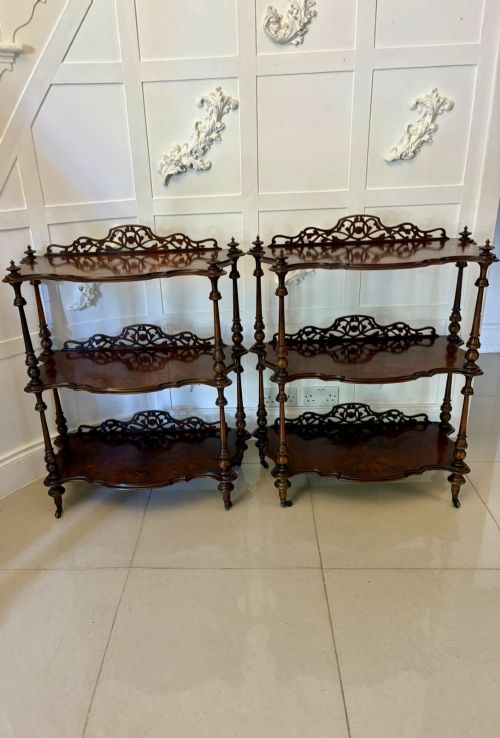
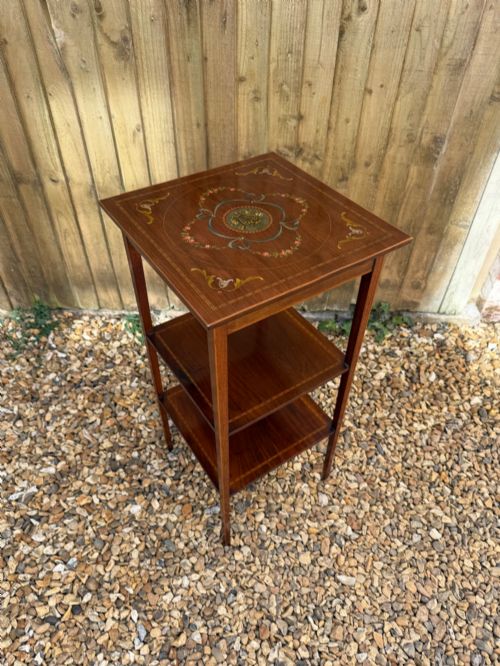

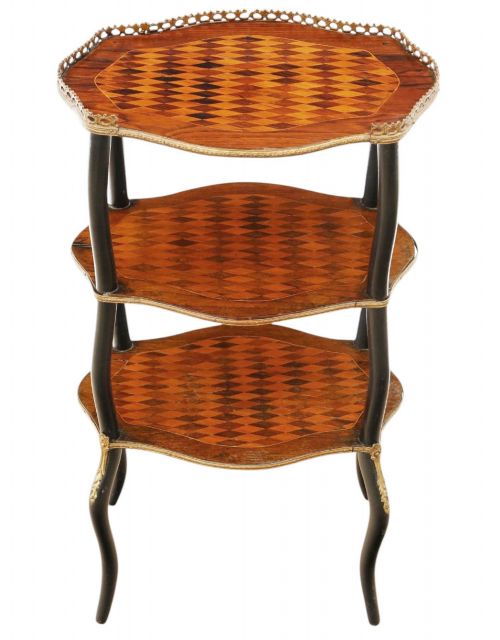
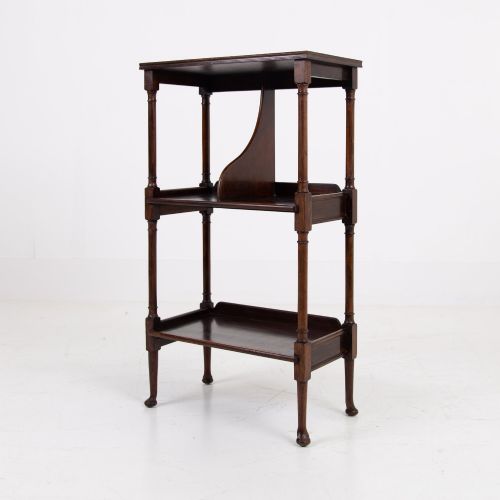
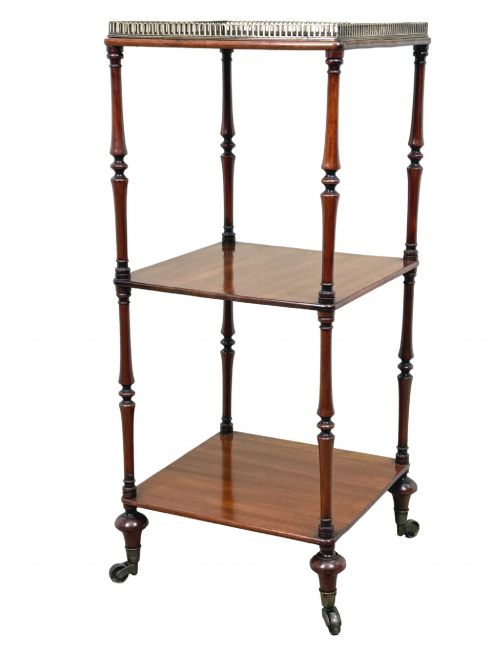
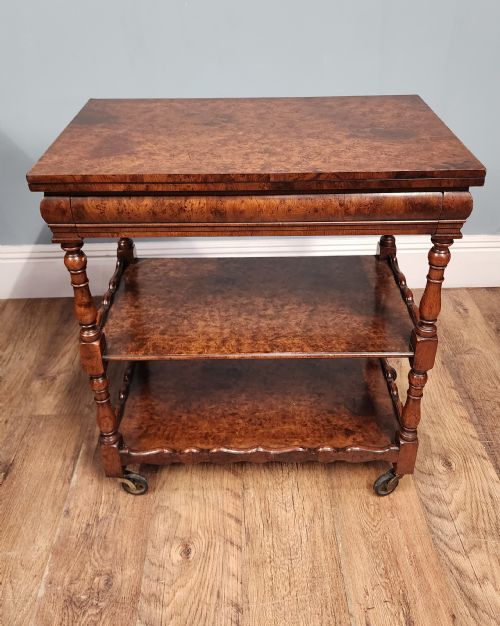


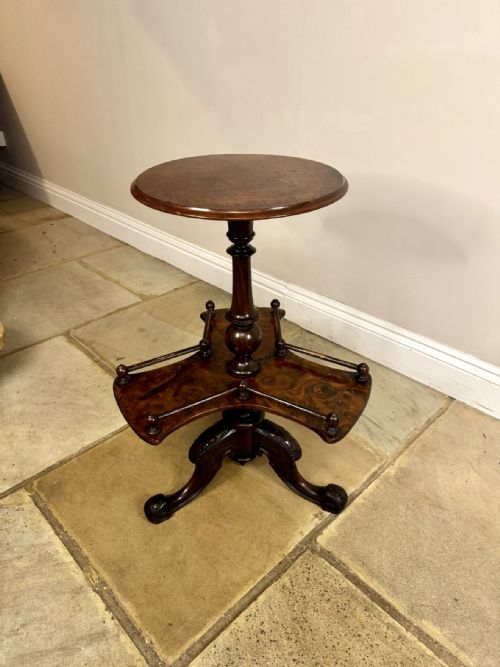


Three Tier Whatnot Table
A three tier whatnot table offers tiered open display shelving that brings practical storage and display space to period rooms.
Three Tier Whatnot Table
A three tier whatnot table provides stacked open surfaces designed for holding books, ornaments or small objects within living spaces and bedrooms. These tiered items appear across Georgian, Regency, and Victorian periods, often taking the form of freestanding open stands or corner furniture.
Makers produced these pieces in forms ranging from simple mahogany bedside stands to elaborate burr walnut and rosewood display shelves featuring marquetry, ormolu mounts, or integrated drawers. Surviving examples on this page date primarily from the nineteenth century into the early twentieth century.
The buyer meets various formats here, including rectangular shelves, oval tops, demi-lune console designs, and occasional pieces that double as dumb waiters or small bookcases.
Materials and construction
Cabinetmakers constructed these frames using dense timbers like mahogany, walnut, rosewood, and oak, frequently selecting figured veneers such as burr walnut, amboyna, or birdseye maple for visible surfaces. Ebonised wood and painted finishes also appear on pieces from the later nineteenth and early twentieth centuries.
Support columns take the form of turned wooden spindles or classical corner uprights connecting the horizontal tiers. Finer examples incorporate brass castors, marquetry inlay, parquetry, and ormolu mounts to decorate the shelves and edge mouldings.
Indicators of quality
The grade of timber selected for the shelves and the complexity of the figure in veneers set apart finer examples from standard production pieces. Figured burr walnut, amboyna, and rich rosewood demand greater skill in preparation and application.
Joinery detail and decorative enrichments distinguish superior work, seen in crisp turned uprights, precisely fitted inlay work, and integrated drawer construction. Attribution to known workshops like Gillows indicates higher execution standards in the framing and finish.
Gillows
The Three Tier Whatnot Table Glossary
- Whatnot
- A piece of furniture consisting of several open shelves for displaying small objects or books. They became popular in the eighteenth century and remained in production through the Victorian era.
- Etagere
- A French term for a piece of furniture with a set of open shelves for displaying ornaments. The form closely parallels the English whatnot.
- Dumb waiter
- A tiered stand traditionally used for holding food, tableware, or books beside dining or seating areas. Some period items share this multi-tiered format.
- Marquetry
- Decorative veneer work forming pictures or geometric patterns using various woods and other materials. Craftsmen applied these patterns to top shelves of display tables.
- Ormolu
- Gilded bronze mounts applied to furniture edges and legs. This decorative technique appears on French-influenced pieces from the nineteenth century.
Three Tier Whatnot Table: Frequently Asked Questions
What is a three tier whatnot table used for?
These tables provide multiple open tiers for displaying decorative objects, holding books, or serving as bedside and side tables in reception rooms.
Their stacked shelf design maximises surface area without taking up excessive floor space in smaller interior layouts.
How do I date a three tier whatnot table?
Dating relies on identifying timber choices, construction methods, and stylistic cues associated with periods like the Regency or Victorian eras. Georgian and Regency pieces typically show simpler rectilinear lines or classical columns, while Victorian versions often use burr walnut and heavier turned supports.
Later Edwardian examples introduce marquetry, satinwood, or ebonised finishes influenced by French revival designs.
Where should I place a three tier whatnot table?
They suit empty corners, hallway spaces, or alongside seating where the open shelves remain easily accessible. Freestanding versions work well away from walls when finished on all sides.
Bedside settings also accommodate smaller scale tiers used for night lamps and reading material.
Are these tables sturdy enough for heavy books?
Most pieces handle moderate loads of books or ceramics, though stability depends on the construction of the upright supports and feet. Period examples with original brass castors and solid timber uprights offer reliable daily utility.
Heavier items sit best on the lower fixed shelf to maintain overall balance.