

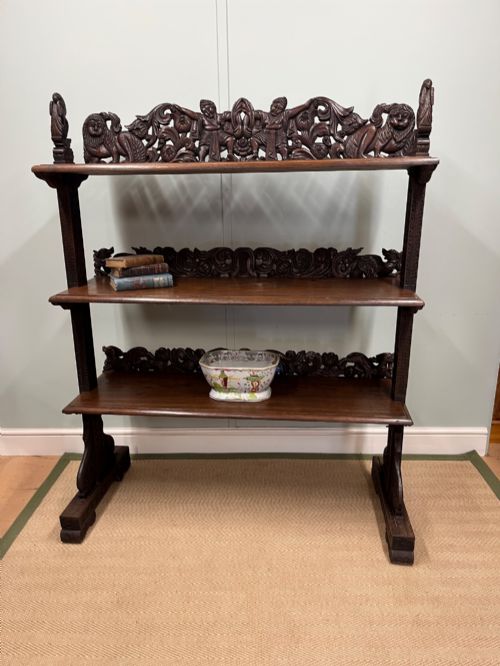
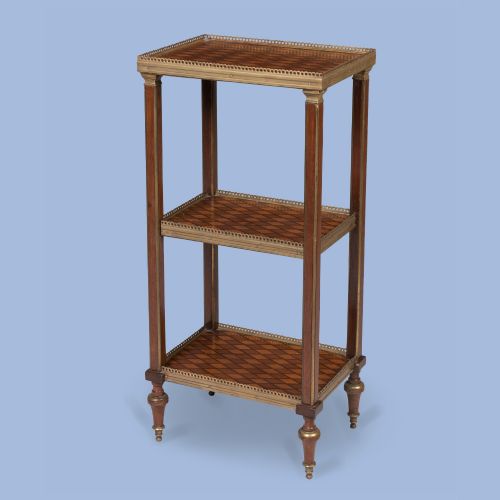
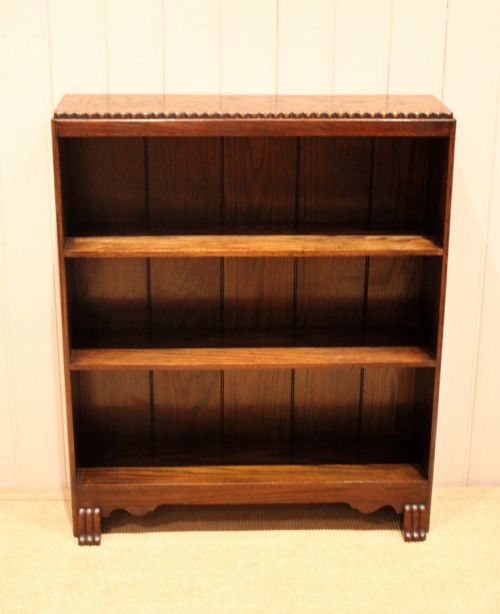
Three Tier Open Shelf
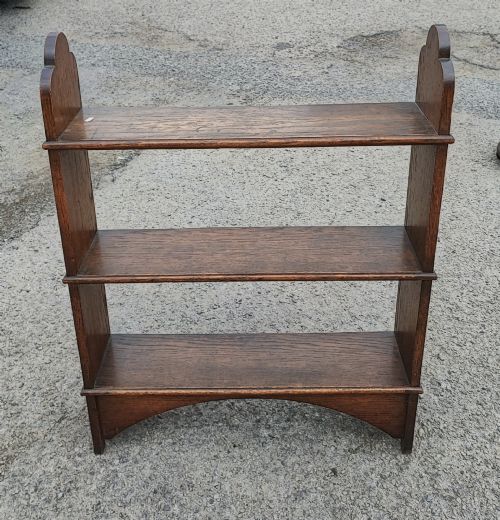
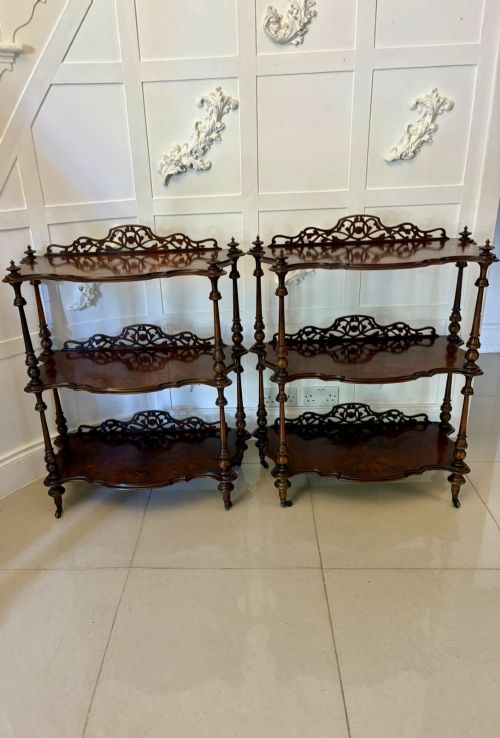
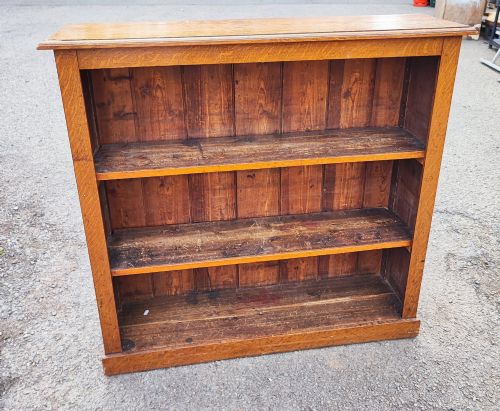
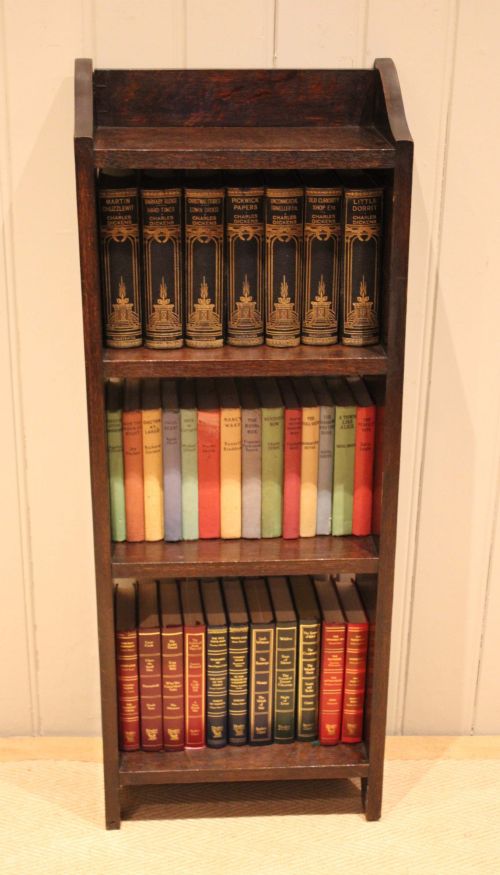
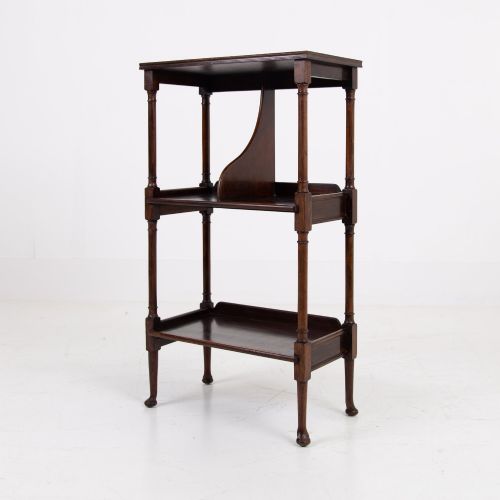
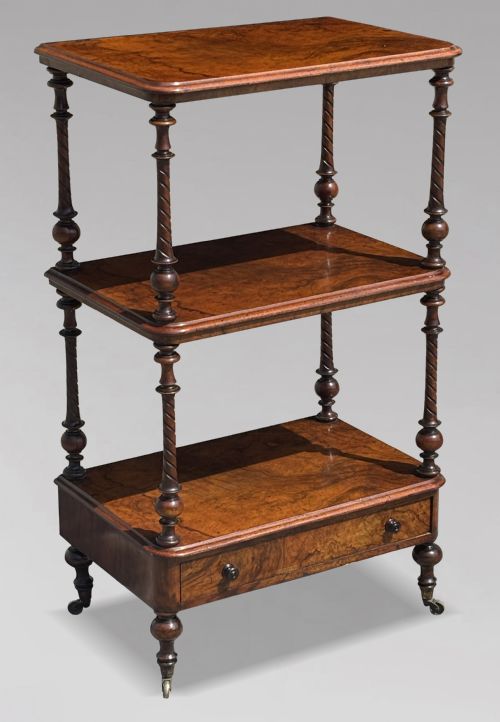
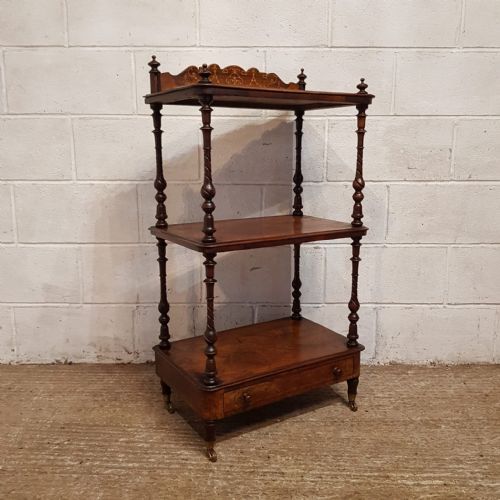
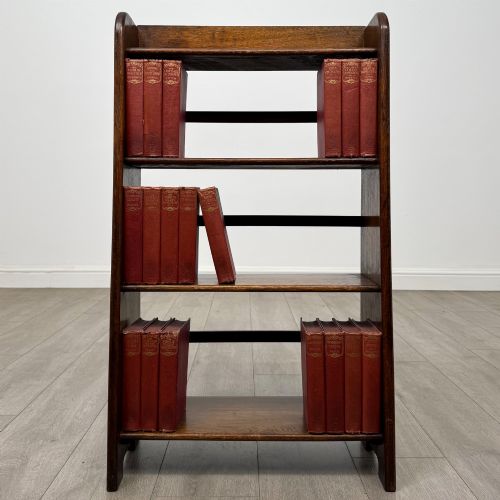
A three tier open shelf gives you stacked display space with architectural presence, whether you choose a refined Victorian burr walnut whatnot or a sturdy oak bookcase.
Three Tier Open Shelf
When you search for a three tier open shelf, you encounter multi-level storage pieces designed for display and utility, spanning whatnots, etageres, and open bookcases. These items appear across the nineteenth and early twentieth centuries, drawing on Victorian, Edwardian, and Regency aesthetic traditions.
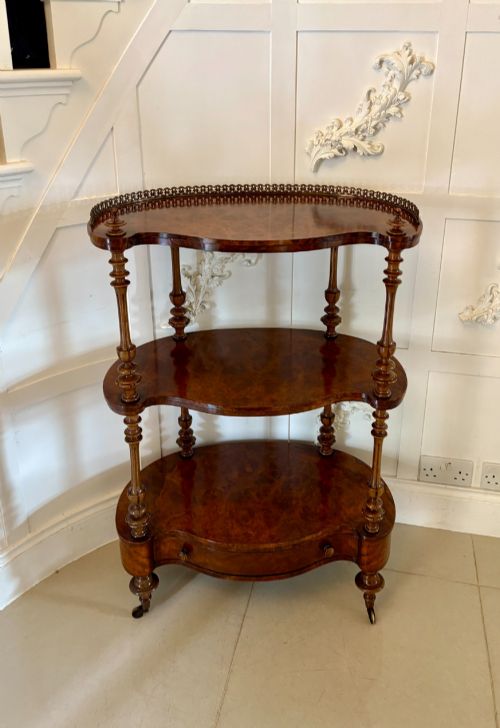
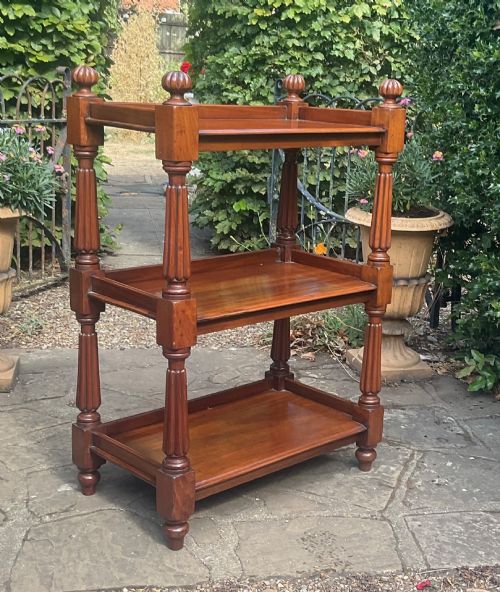
The selections on this page lean heavily towards Victorian burr walnut and mahogany whatnots alongside oak and rosewood bookcases. You will find freestanding buffet shelves, wall-mounted variants, and serpentine-shaped display stands that serve utilitarian storage and ornamental roles alike.
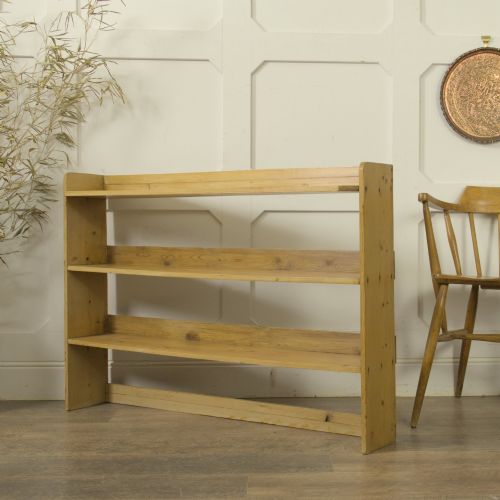
Makers utilised diverse timbers to suit domestic interiors, producing slim etageres alongside substantial corner or freestanding units. The three-tier format remains a practical choice for organising books and objects without dominating a room's floor space.
Materials and construction
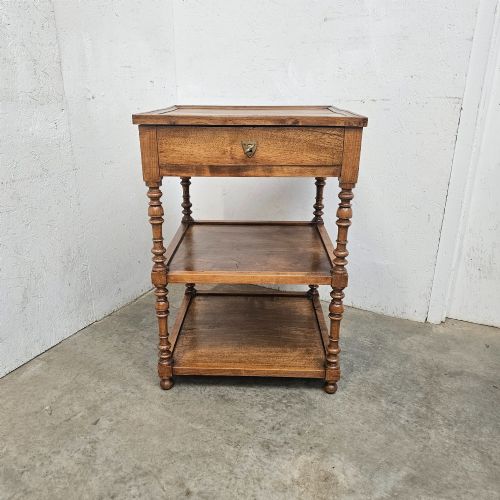
Cabinet makers constructed these tier shelves primarily using dense hardwoods such as mahogany, walnut, rosewood, and oak, often selecting burr walnut veneers for ornamental impact. Turnings, brass mounts, and original castors appear frequently to support portability and decorative flair.
Joinery techniques relied on solid timber framing and careful veneering to build stable vertical tiers. Workshop methods balanced structural load-bearing capacity with refined decorative carving, particularly on exhibition-quality Victorian and Edwardian examples.
Listings feature woods spanning mahogany, walnut, rosewood, burr walnut, oak, pine, and birdseye maple across Victorian and Edwardian periods.
What separates the finest pieces
Quality rests upon the selection of timber figure, particularly the depth of burr walnut or the grain pattern in rosewood and mahogany. Finer examples display meticulous turning on upright supports, crisp carving, and harmonious proportions across all three tiers.
The integrity of original castors, brass mounts, and surface polish distinguishes workshop output. Superior pieces maintain structural rigidity without relying on later repairs, preserving the intended balance between open display and load-bearing function.
The Three Tier Open Shelf Glossary
- Etagere
- A piece of furniture consisting of a set of open shelves for displaying articles. French in origin, these often utilise lighter timbers like rosewood or satin birch.
- Buffet
- A low sideboard or tiered shelving unit used for serving or display. These frequently appear in nineteenth-century mahogany or teak.
- Burr walnut
- Wood taken from a walnut tree growth featuring swirling, irregular grain patterns. Cabinet makers prized this timber for high-status Victorian display furniture.
- Serpentine
- A furniture shape featuring a wavy outline with a convex centre flanked by concave curves. This contour adds considerable visual movement to tier shelves.
Three Tier Open Shelf: Frequently Asked Questions
How were three tier open shelves used?
These tiers served as prominent display areas in Victorian and Edwardian reception rooms for books, ceramics, and ornaments. They provided accessible surface storage while keeping domestic spaces orderly.
Freestanding versions stood against walls or functioned as central room dividers, whereas wall-mounted variants maximised floor space in smaller chambers.
What is the difference between a whatnot and an etagere?
A whatnot is primarily an English term for multi-tiered shelving units designed for general display. They often include enclosed cabinet sections below the open tiers.
An etagere is typically lighter in construction with French stylistic origins, focusing purely on open display shelves supported by turned columns.
How do I date an antique shelf unit?
Dating relies on identifying timber choices, construction methods, and stylistic cues. Victorian pieces frequently feature burr walnut and heavy turnings, while Edwardian examples often utilise simpler oak.
Hardware such as original brass castors and fastening screws also provide clues to manufacturing decades between the Regency era and the early twentieth century.
Can these shelves support heavy books?
Sturdier hardwood variants in oak or mahogany handle heavy volumes easily, especially those designed explicitly as open bookcases. Lighter etageres in rosewood or satin birch suit decorative objects and lighter reading material better.
Checking the stability of the vertical uprights and shelf joints determines the safe weight capacity for each individual piece.