



Three Tier Mahogany Waiter
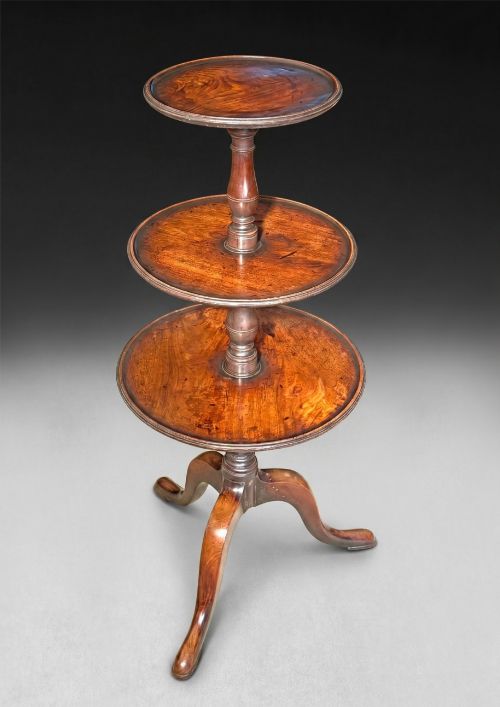
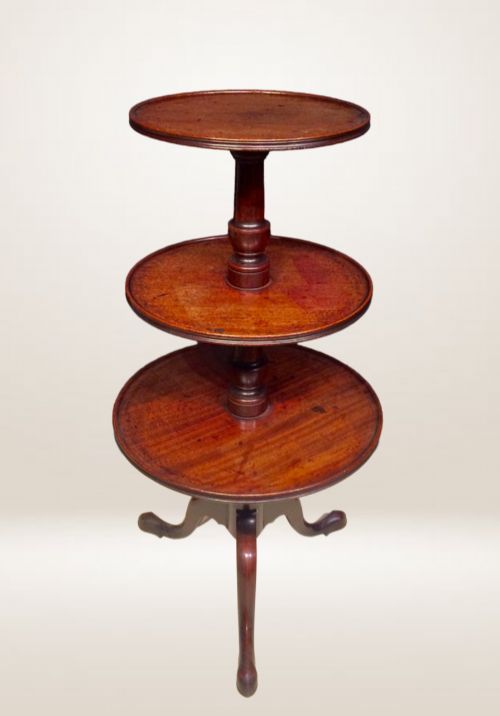
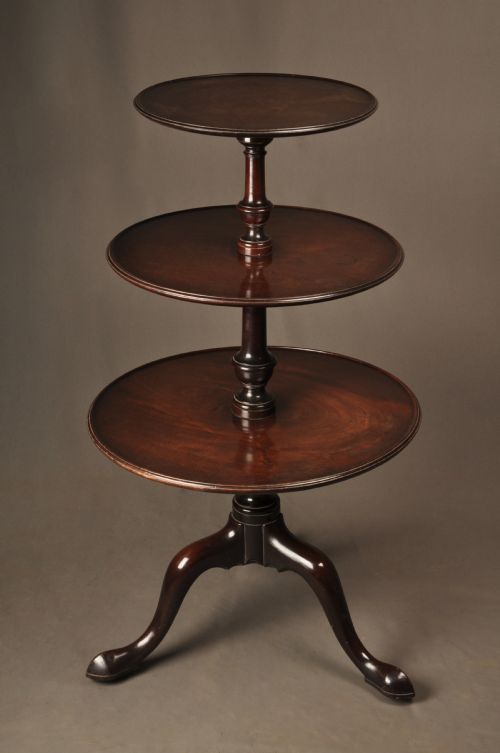
A three tier mahogany waiter is a tiered serving piece designed for dining rooms, offering graduated shelves that combine practicality with graceful proportion.
Three Tier Mahogany Waiter
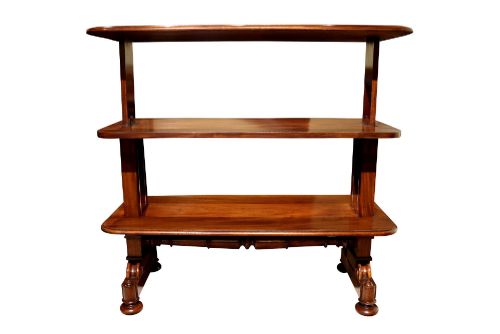
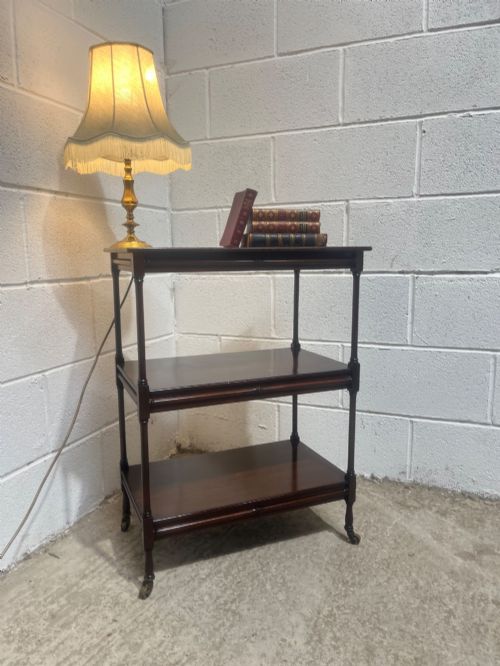
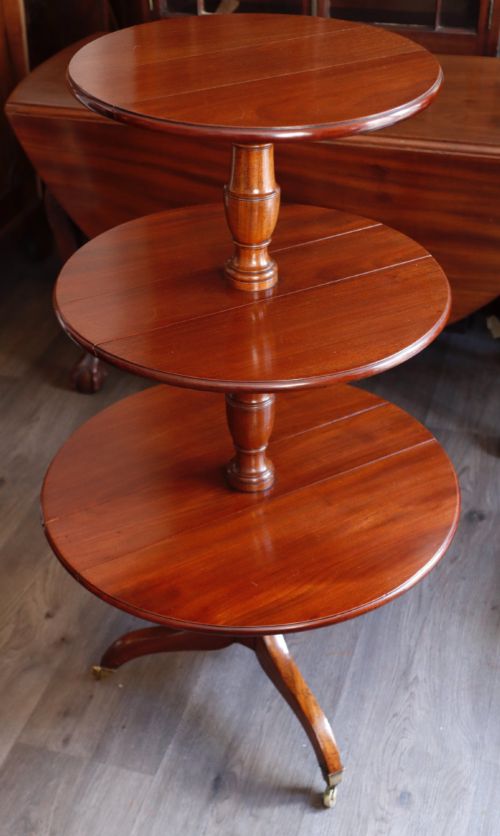
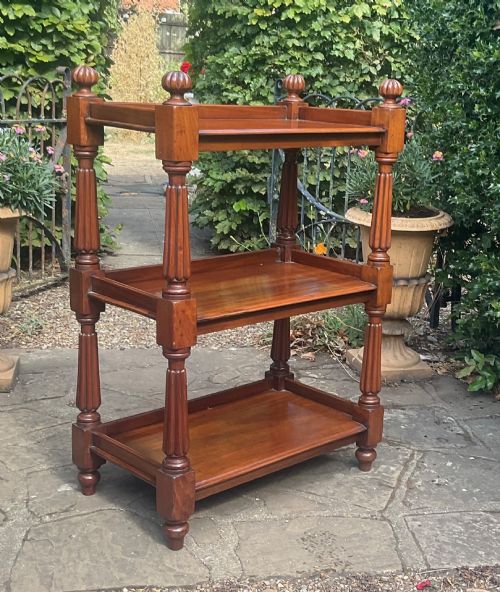
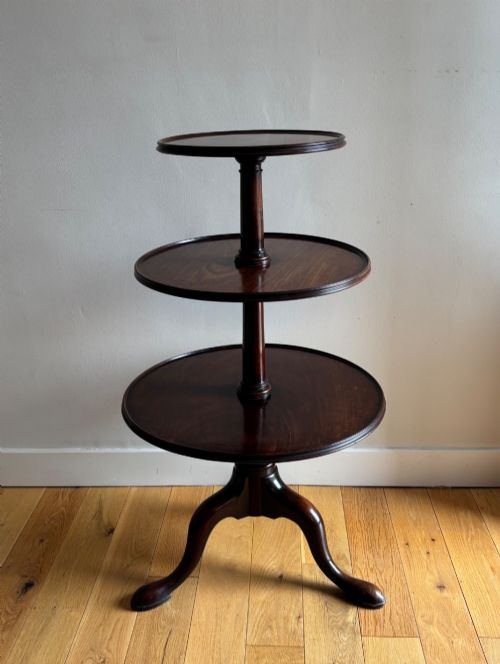
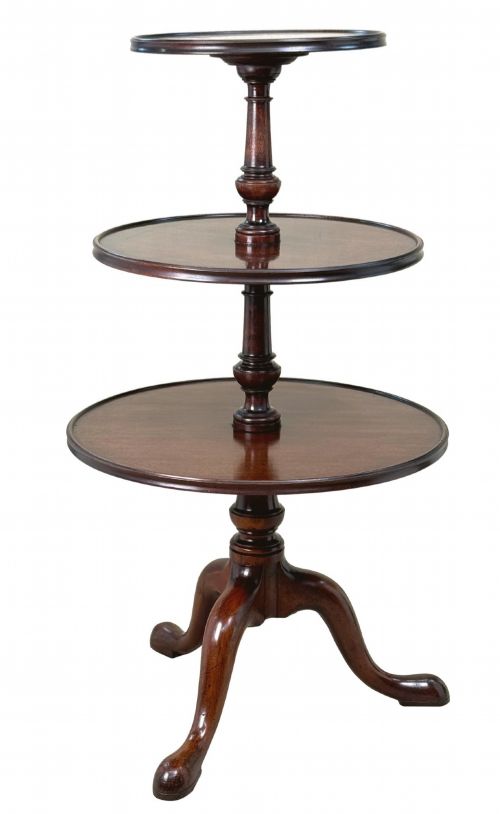
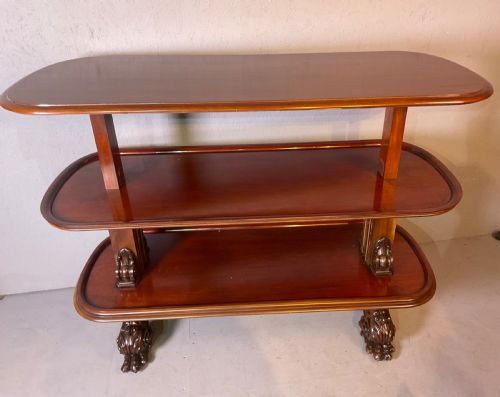
When searching for a three tier mahogany waiter, you encounter dining room furniture primarily spanning the eighteenth, nineteenth, and early twentieth centuries. These pieces appear as circular dumb waiters, revolving tiers, rectangular drop-leaf designs, and étagères.
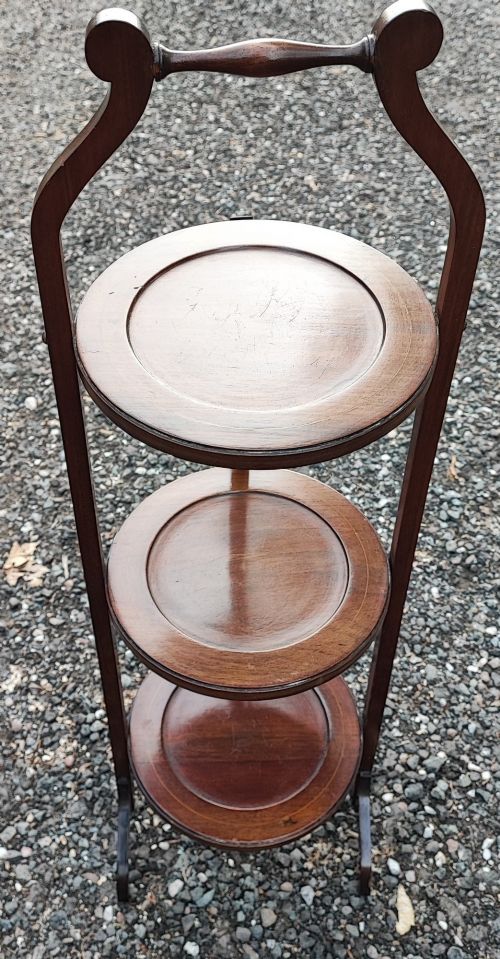
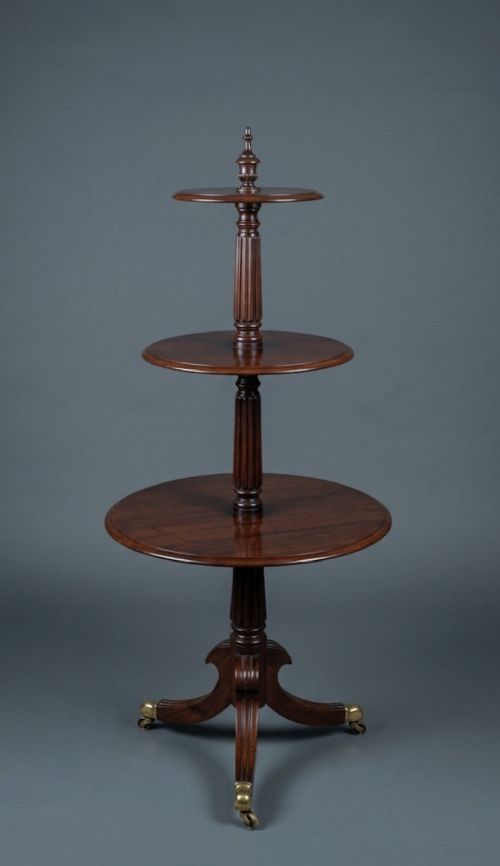
The form developed to serve meals without servants present, allowing dishes to sit on separate ascending levels. Examples range from early George III circular iterations to Victorian buffets on castors and Edwardian folding cake stands.
How they were made
Cabinet makers utilised solid mahogany and Cuban mahogany, occasionally selecting fiddleback figure or incorporating satinwood and boxwood inlay. Structural support relies on turned and block pillars, sometimes featuring brass hardware, marble tops, or original castors.
Revolving mechanisms permit upper tiers to turn independently on central columns, while drop-leaf drop actions allow shelves to fold downward when space requires. Joinery focuses on stability across multiple stacked platforms carrying weight on graduated tiers.
Listings feature mahogany, brass, boxwood, satinwood, and marble across periods spanning Georgian, Regency, Victorian, and Edwardian eras.
What varies in quality
The excellence of a three tier mahogany waiter rests on the selection of timber grain, particularly dense Cuban mahogany or rich fiddleback figuring. Cabinet-making precision dictates whether revolving tiers turn smoothly and whether turned uprights retain crisp, sharp definition.
Proportion and stability separate standard utility pieces from finer examples. The integration of subtle boxwood inlay, well-turned finials, and original brass capped castors elevates the status of the piece.
Gillows
The Three Tier Mahogany Waiter Glossary
- Dumb waiter
- A tiered freestanding piece of dining room furniture designed to hold plates, glassware, or food dishes without requiring attendants. These items feature two or three graduating circular or rectangular shelves.
- Étagère
- A piece of furniture consisting of a set of open shelves for displaying small objects or serving. In mahogany pieces, these often take a slim profile with three stacked tiers.
- Rise and fall
- A mechanical function allowing specific tiers to be adjusted vertically on a central shaft. This engineering feature is found on select nineteenth-century buffet and trolley forms.
- Campaign
- A style of portable furniture designed for travel, featuring recessed brass handles and robust construction. Such items in mahogany often include washstands or adaptable serving pieces.
- Fiddleback
- A type of figured mahogany grain displaying undulating ripples resembling the back of a violin. Cabinet makers prized this wood figure for decorative surfaces on high-status tables.
Three Tier Mahogany Waiter: Frequently Asked Questions
What is a three tier mahogany waiter used for?
These pieces served historically as dining room adjuncts to hold dishes, glassware, and silver away from the main dining table. Today they function effectively as side tables, display stands, or serving tiers in domestic interiors.
Their graduated shelves provide vertical storage without occupying excessive floor space, making them adaptable for books, plants, or decorative objects.
How do I tell an 18th century waiter from a Victorian one?
Eighteenth-century examples, particularly from the George III period, typically feature circular graduated tiers on tripod cabriole legs with pad or snake feet. They often incorporate revolving mechanisms carved from solid timber.
Victorian and later iterations frequently employ heavier turned and block supports, rectangular buffet designs, or castors, reflecting changing dining habits and a preference for mobile service trolleys.
Are all tiers on these pieces revolving?
Not all tiers turn on a central pivot, though revolving mechanisms are common among circular Georgian and Regency examples. Many nineteenth-century buffet and etagere styles feature fixed stacked shelves supported by upright pillars.
When evaluating a piece, check whether the upper levels rotate independently or remain locked in a static, tiered formation.
Where should I place a three tier waiter at home?
Because these pieces offer multiple levels within a compact footprint, they suit corners of dining rooms, hallways, or living spaces where surface area is needed. Their finished appearance from all sides allows freestanding placement.
Avoid positioning them in direct sunlight or beside intense heat sources to protect the polished mahogany surface and prevent timber movement.