

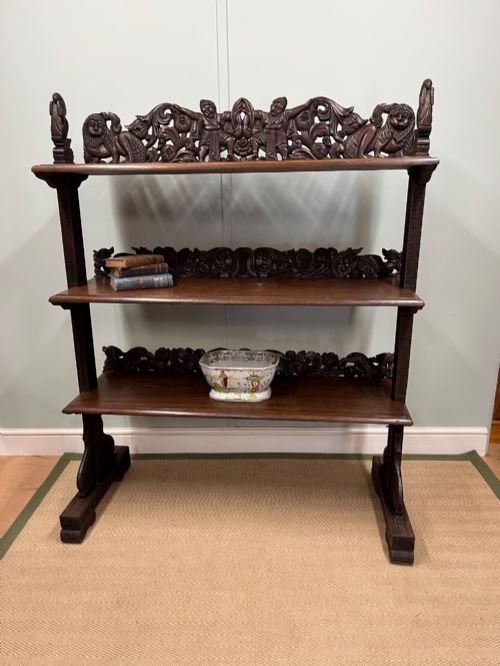
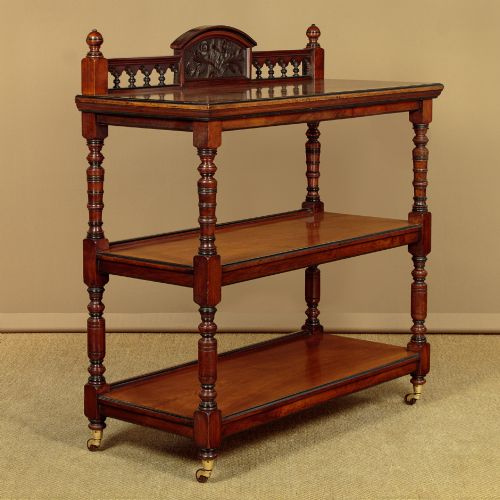


Three Tier Dinner Buffet
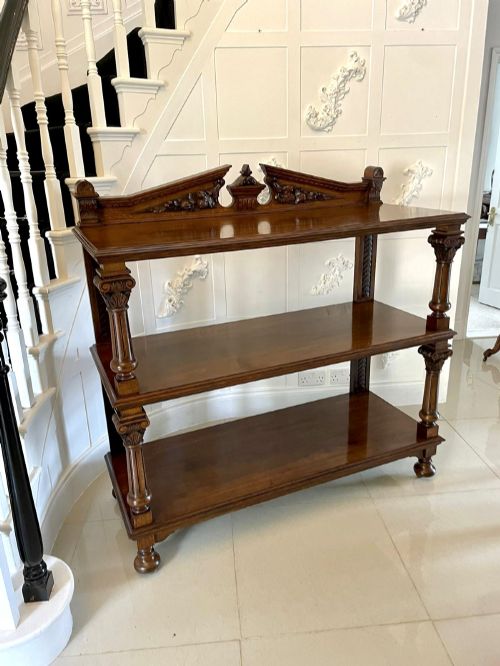
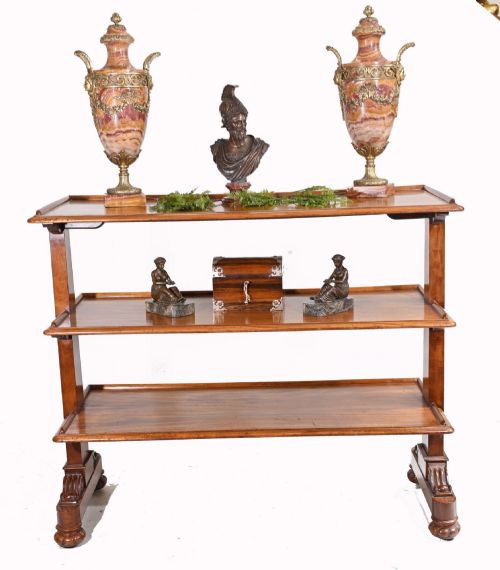
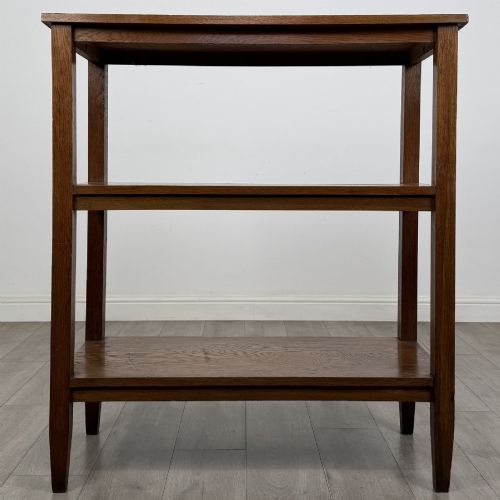
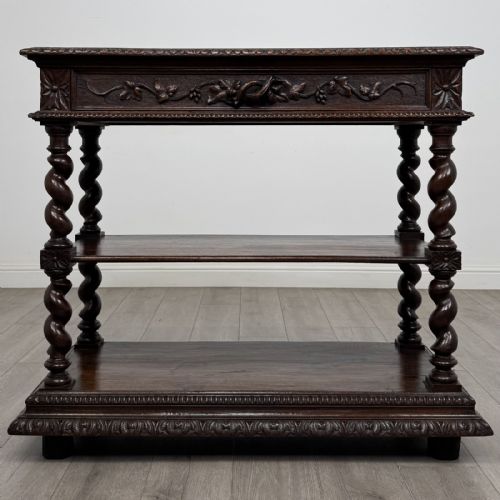
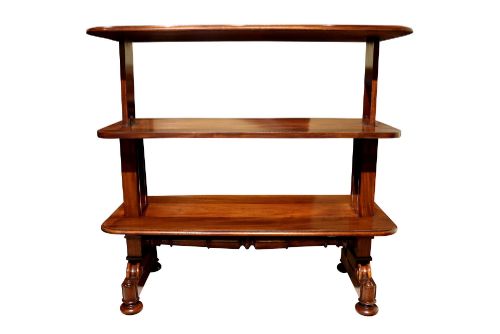
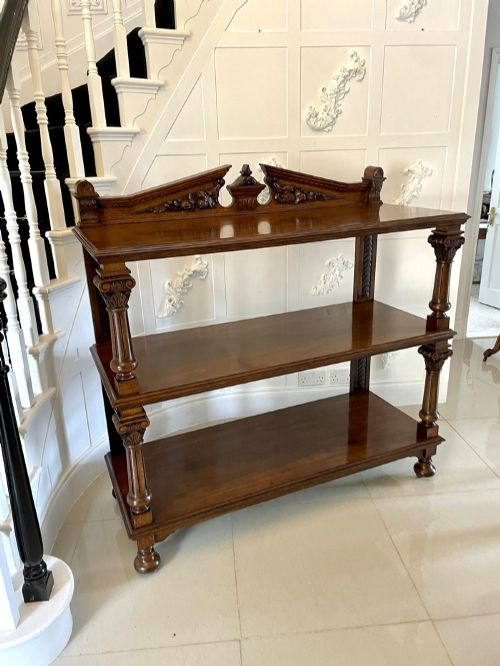
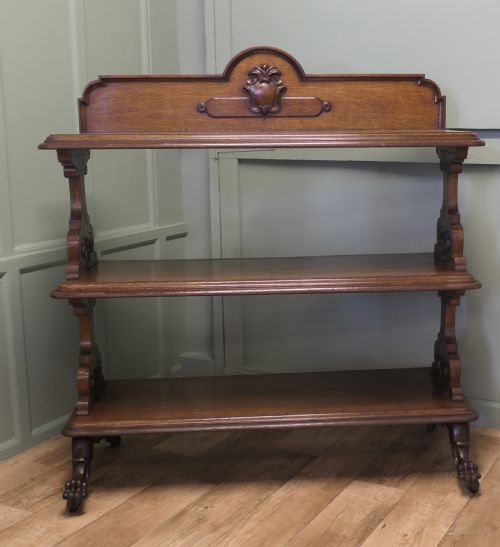
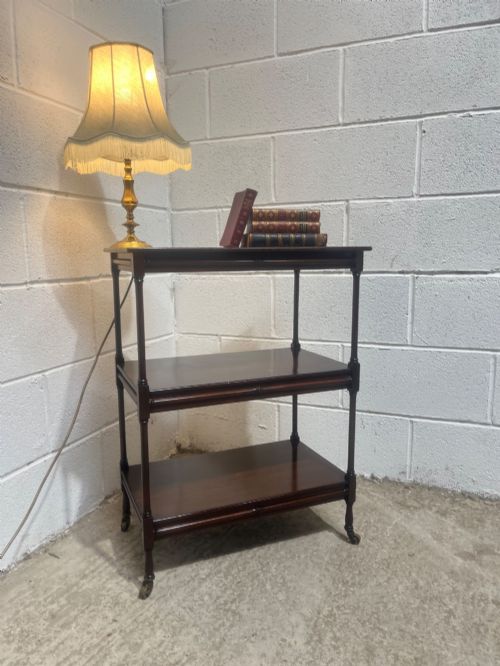
A three tier dinner buffet offers tiered shelving for serving, appearing in mahogany, oak, walnut, and teak across the nineteenth century.
Three Tier Dinner Buffet
When you search for a three tier dinner buffet, you are looking at tiered serving furniture designed to hold dishes and serving ware during meals. These pieces appear under various names in the records, including dumb waiters, trolleys, and serving tables.
The version you are most likely to meet on this page is a nineteenth-century Victorian or William IV mahogany piece with three stepped shelves supported on turned columns, occasionally featuring adjustable mechanisms or castors.
How they were made
Cabinet makers utilised dense hardwoods such as mahogany, oak, walnut, and teak, shaping them with turned barley twist supports or robust upright pillars. Many examples incorporate clever mechanical elements like rise and fall actions or fully adjustable shelves.
Joinery techniques included sturdy framing to support multiple tiers laden with heavy dishes, often mounted upon original brass castors for mobility in the dining room.
Three Tier Dinner Buffet Retail Price Guide 2026
Typical asking prices for three tier dinner buffet among the pieces listed under this phrase on Sellingantiques today, from the lower quarter to the upper quarter. They describe what is for sale here now, not the wider market.
Object descriptions record diverse functional forms including dumb waiters, trolleys, side tables, and servers equipped with adjustable tiers and castors.
What varies in quality
The calibre of a three tier dinner buffet rests upon the selection of timber grain, the crispness of carved details such as barley twists, and the sophistication of any mechanical adjustments.
Simpler utility items stand apart from pieces produced by notable cabinet makers, where proportion, thoughtful timber matching, and robust hardware elevate the serving stand.
Gillows and Co·Maple and Co
The Three Tier Dinner Buffet Glossary
- Dumb waiter
- A tiered serving stand designed to hold food and tableware near the dining table without requiring servant presence. It functions as a mobile auxiliary surface during large meals.
- Rise and fall
- A mechanical mechanism allowing specific tiers to adjust in height via a central column or screw action. This permits versatile display and serving arrangements.
- Barley twist
- A decorative turning style resembling a spiralling rope, frequently carved into the vertical support columns of nineteenth-century furniture. It adds robust texture to the uprights.
- Castors
- Small wheel attachments fixed to the base of furniture legs to permit easy rolling across floors. Original brass examples enhance the authenticity of nineteenth-century pieces.
- Ebonised wood
- Timber treated with a dark finish to imitate expensive ebony. This dark surface treatment was particularly favoured during the Victorian and Aesthetic Movement periods.
Three Tier Dinner Buffet: Frequently Asked Questions
What is a three tier dinner buffet used for?
These tiered stands served meals by holding extra dishes, serving platters, and cutlery close to the dining table.
They allowed diners to help themselves or enabled staff to manage courses efficiently in the dining room.
How do I identify a Victorian buffet?
Victorian buffets typically display dense mahogany, walnut, or oak construction with turned upright supports and often include castors.
Look for period manufacturing details such as hand-cut joinery and heavy timber shelves designed to bear weight.
What is a rise and fall mechanism?
A rise and fall mechanism permits the middle or top tiers to adjust vertically along a central column.
This functional adaptation allowed the stand to transform between a compact display and an extended serving station.
Where should I place a dumb waiter at home?
A dumb waiter fits naturally in a dining room or large kitchen as a functional serving surface or display stand.
Its multi-tiered shelving makes efficient use of vertical space while holding books, ceramics, or decorative objects.