


Three Strand Pearl Necklace
A three strand pearl necklace brings an unmistakable presence to the neck, offering layers of lustre anchored by a decorative clasp.
Three Strand Pearl Necklace
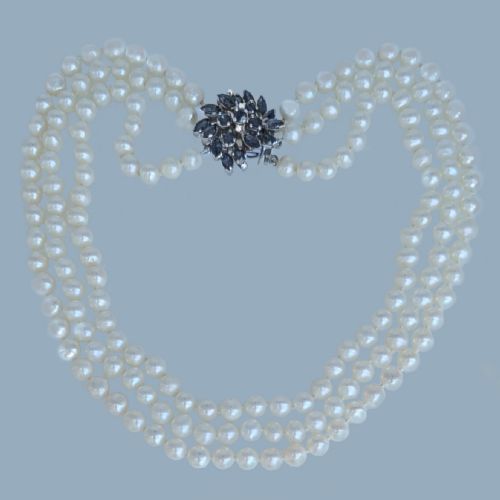
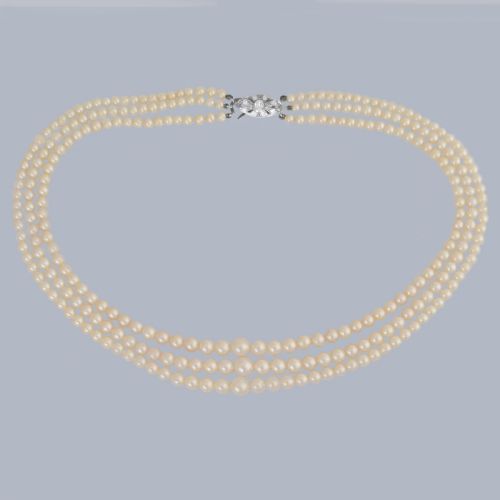
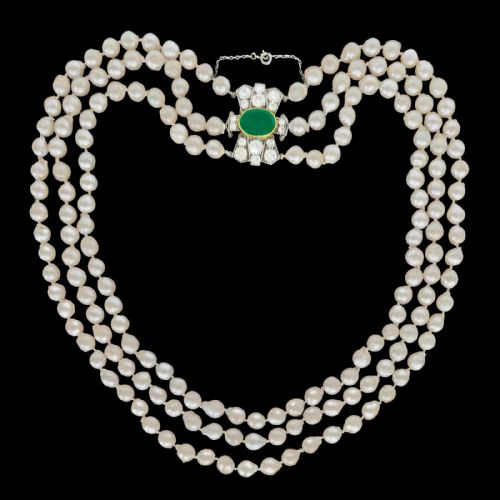
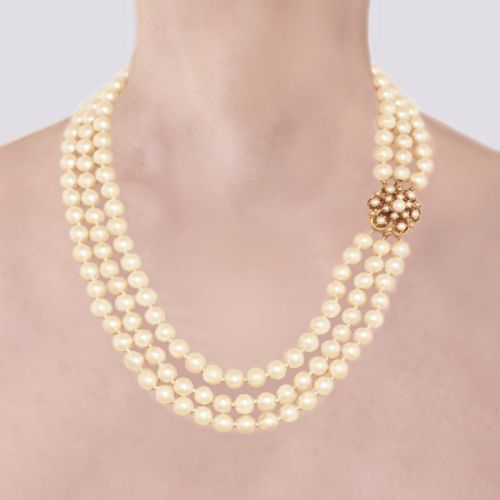
When you search for a three strand pearl necklace, you encounter multi-tiered designs featuring three parallel rows of pearls secured by a central fastener. The pieces span periods from the Victorian era through the Art Deco years into the 1950s and 1960s.
You are most likely to meet mid-century examples featuring cultured pearls alongside 1920s and 1930s creations displaying geometric fastenings. Early Victorian iterations utilise natural Basra pearls paired with simple gold locks.
The form relies on balanced grading or uniform sizing across the triple strands to create a cohesive collar or choker profile. Every version places equal emphasis on the intricacy of the clasp as a secondary focal point.
Materials and construction methods
The construction of these necklaces depends upon durable silk thread threaded individually through each pearl to maintain spacing and flexibility. Cultured pearls and natural pearls form the body of the work, augmented by precious metal settings in 9ct gold, 14ct gold, 18ct white gold, and platinum.
Clasps utilise traditional bench techniques incorporating diamonds, sapphires, emeralds, rubies, and jadeite set into silver or gold mounts. Birmingham assay office hallmarks and certified gem reports frequently accompany the metal and stone components.
Three Strand Pearl Necklace Retail Price Guide 2026
Typical asking prices for three strand pearl necklace among the pieces listed under this phrase on Sellingantiques today, from the lower quarter to the upper quarter. They describe what is for sale here now, not the wider market.
Some clasps double as detachable brooches, offering a clever two-in-one trick for the adaptable wearer.
Distinctions in quality
The distinction between standard examples and superior pieces rests upon the uniformity, lustre, and skin quality of the pearls themselves. Finer specimens display matching orient and deep nacre across all three strands without significant blemishes.
Clasp craftsmanship elevates the overall standard, moving from simple gold cluster designs to intricate Art Deco platinum and diamond settings housing precious coloured stones. The structural integrity of the silk threadwork and secure knotting between individual pearls also dictates the tier of the piece.
The Three Strand Pearl Necklace Glossary
- Cultured pearl
- Pearls formed with human assistance by inserting an irritant into an oyster to stimulate nacre production. These appear frequently in mid-century pieces.
- Basra pearl
- Natural pearls originating from the Persian Gulf, prized for their exceptional orient. They appear in earlier Victorian items.
- Orient
- The iridescent interplay of light reflected from the surface and interior of a pearl. High orient defines superior quality.
- Nacre
- The organic substance secreted by oysters that builds up in layers to form a pearl. Thick nacre ensures lasting durability.
- Rose cut
- A vintage diamond cutting style featuring a flat base and a domed crown with triangular facets. This cut is common in Art Deco clasps.
Three Strand Pearl Necklace: Frequently Asked Questions
How do I care for my necklace?
Store your necklace flat in a lined box to prevent the silk thread from stretching or fraying under tension.
Wipe the pearls gently with a soft cloth after wearing to remove oils and cosmetics that might dull the nacre.
Can the necklace be shortened?
Altering the length requires a specialist jeweller to unstring the piece and knot the silk thread anew.
Removing strands or pearls alters the original balance designed into the triple tier formation.
What clothes suit these necklaces?
The multi-strand layout pairs well with boat necks and open collars that frame the triple rows clearly.
Evening wear and tailored dresses allow the decorative gemstone clasp to sit prominently at the front or side.
How are periods identified?
Clasp styles provide the clearest indicator of era, shifting from Victorian gold locks to geometric Art Deco platinum.
Assay office hallmarks and accompanying certificates further pinpoint the decade of manufacture.