
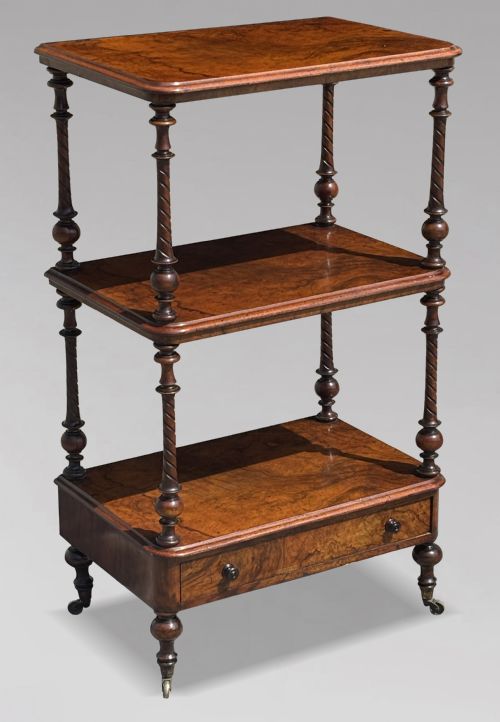
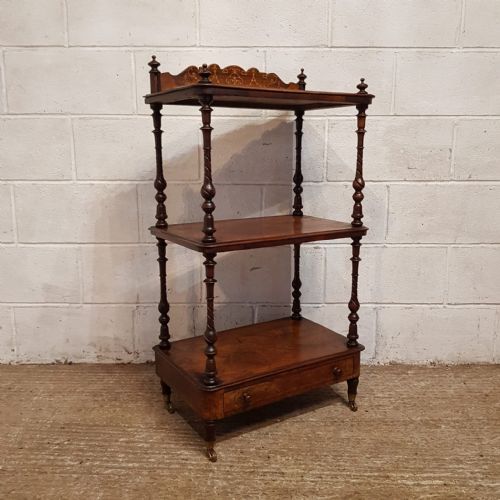


Three Shelf Walnut Etagere
A three shelf walnut etagere brings tiered display space to a room, combining open shelving with rich timber grain.
Three Shelf Walnut Etagere
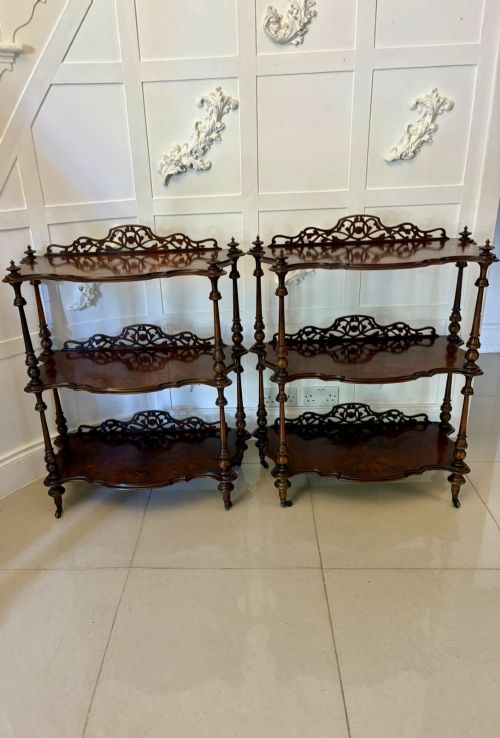
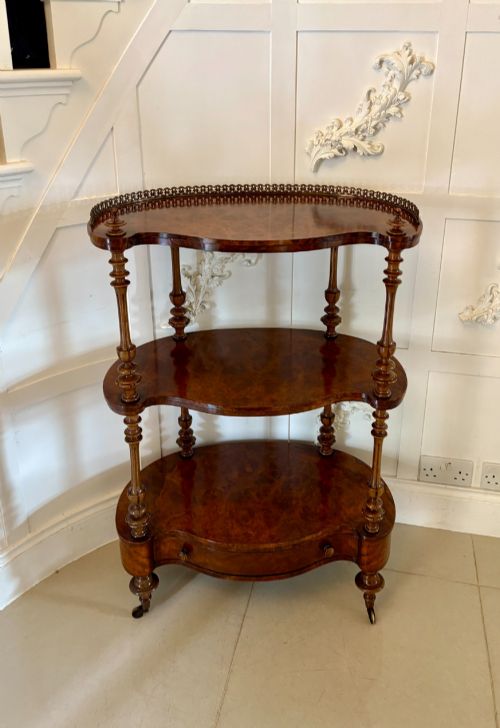
A three shelf walnut etagere is an open tiered display piece designed for holding decorative objects, books or small porcelain items. These pieces appear most frequently in Victorian and Edwardian iterations, spanning the mid nineteenth century up to the early twentieth century.
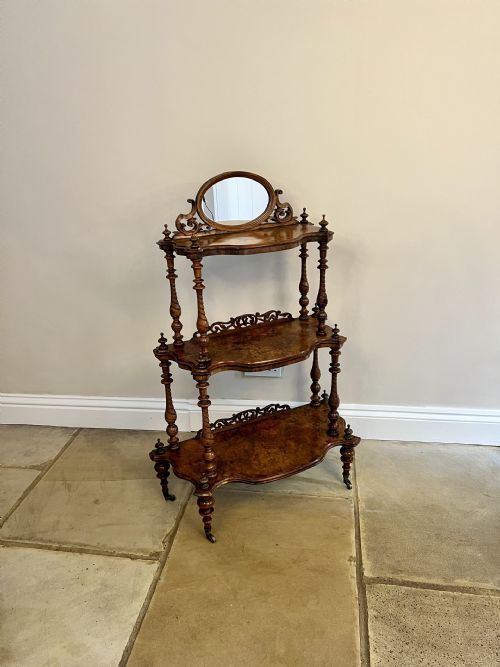
The primary forms found in this search include freestanding tiered whatnots, corner stands and low console arrangements. Walnut and burr walnut dominate the construction, often enhanced by marquetry inlay or brass mounts.
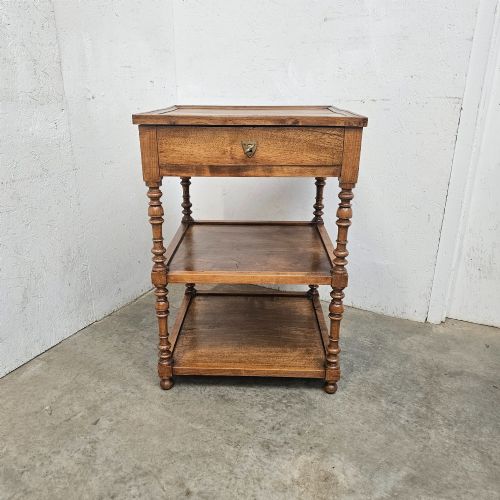
Makers and workshops constructed these shelves in both English and French manners, ranging from simple turned-leg models to exhibition pieces with carved details and serpentine tiers.
How they were made
Structural support comes from turned or carved wooden uprights, sometimes supplemented by brass columns, metal mounts or ormolu details. Mirror glass panels and inlaid banding occasionally integrated into the design of the tiers.
Listings span Victorian, Edwardian and Regency periods, utilising walnut, burr walnut, mahogany, brass and mirror glass.
What varies in quality
The selection of veneer determines much of the visual impact, with richly figured burr walnut commanding attention over plain timber surfaces. Finely executed marquetry inlay and intricate carved ornamentation separate standard workshop production from exhibition standard pieces.
Gillows
The Three Shelf Walnut Etagere Glossary
- Etagere
- A piece of furniture consisting of a set of open shelves for displaying small objects. These tiered stands developed in France before becoming popular in British homes.
- Whatnot
- A multi-tiered stand or open cabinet used for storing or displaying ornaments. The term emerged in the nineteenth century as these convenient pieces found a place in every parlour.
- Burr walnut
- A prized timber harvested from walnut tree growths that produces intricate, swirling grain patterns. Cabinetmakers sliced this wood into thin veneers for decorative surfaces.
- Marquetry
- The art of applying pieces of veneer to a structure to form decorative patterns and pictures. Craftsmen used various tinted woods to build floral or geometric motifs onto the top tiers.
Three Shelf Walnut Etagere: Frequently Asked Questions
What is a three shelf walnut etagere used for?
These tiered stands served historically to display ornaments, ceramic collections and small books in the principal rooms of a house.
Today they function effectively in modern interiors for holding plants, lamps or everyday display items while adding vertical interest to a corner or wall space.
How do I tell Victorian pieces apart from Edwardian ones?
Victorian examples often display heavier proportions, darker walnut tones and deep carved details or rich burr veneers. Pieces from this era frequently utilise turned walnut supports and occasional brass mounts.
Edwardian pieces tend toward lighter constructions, sometimes incorporating French marquetry inlay, ormolu mounts or gilt metal details reflecting continental design influences.
Are corner etageres different from standard ones?
Corner etageres feature wedge-shaped tiers designed to fit directly into the angle of a room, making efficient use of overlooked space.
Freestanding rectangular or serpentine models stand out in the middle of a room or against a flat wall, offering access from multiple sides.
What maintenance do walnut shelves require?
Walnut benefits from occasional polishing with traditional beeswax to nourish the timber and protect the veneer from drying out.
Keeping the furniture away from direct sunlight and extreme temperature shifts preserves the polished finish and prevents movement in the wood.