


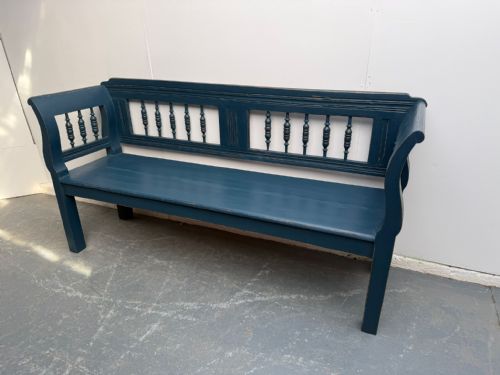
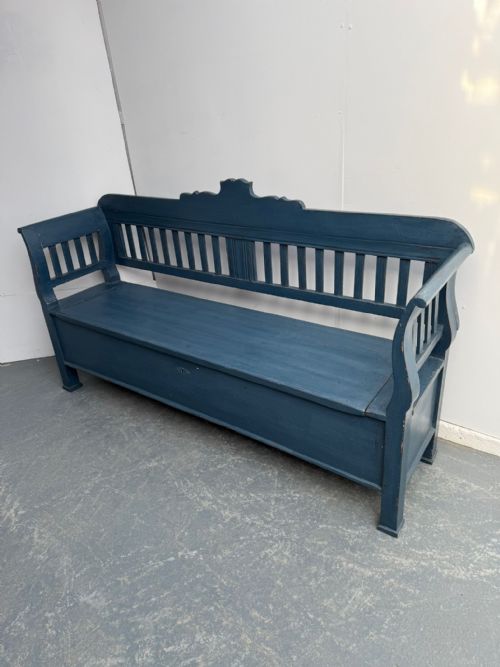
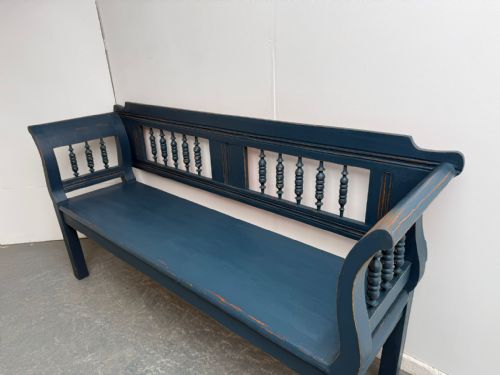


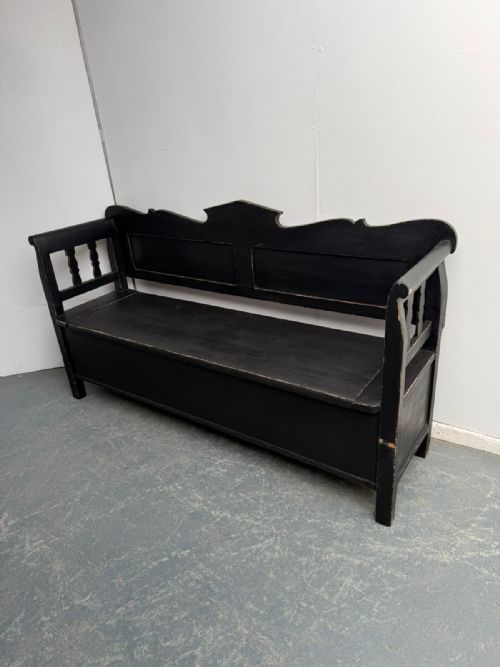
Three Seater Pine Bench
A three seater pine bench offers generous seating with distinct regional character, bridging practical domestic utility and folk tradition.
Three Seater Pine Bench
When you search for a three seater pine bench, you encounter robust seating forms originating primarily from the Georgian and Victorian periods, alongside early twentieth-century examples. These pieces span rustic country styles and Hungarian folk art traditions, offering substantial length for hallways or kitchens.
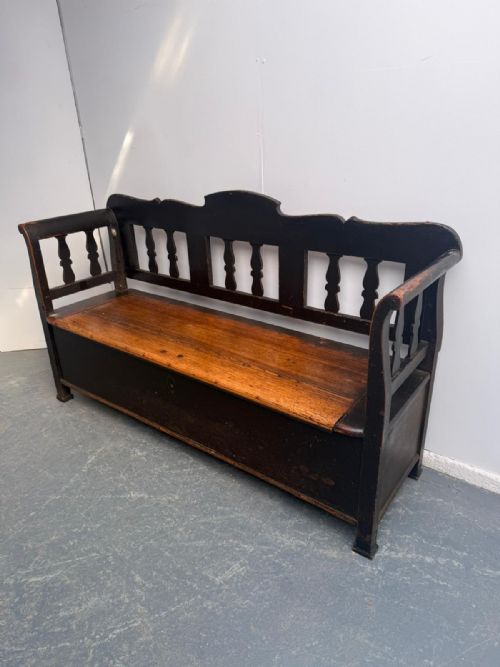
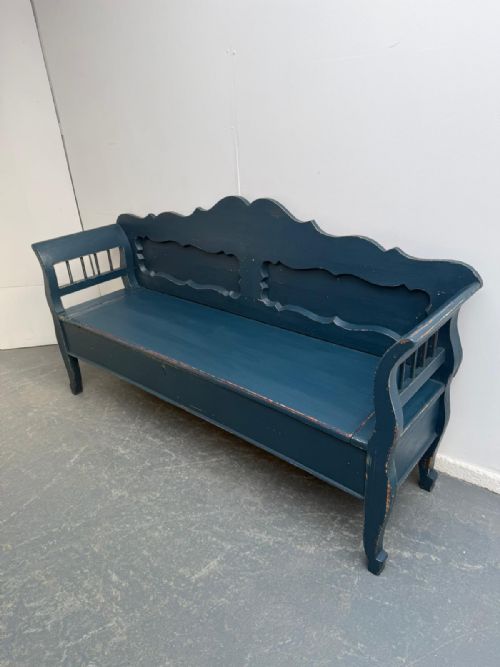
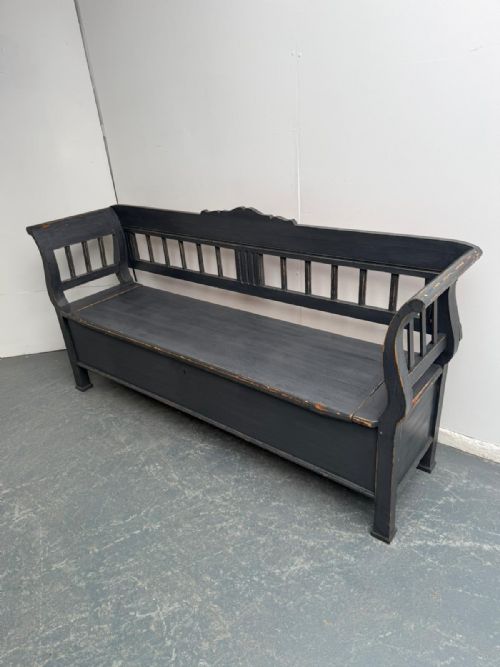
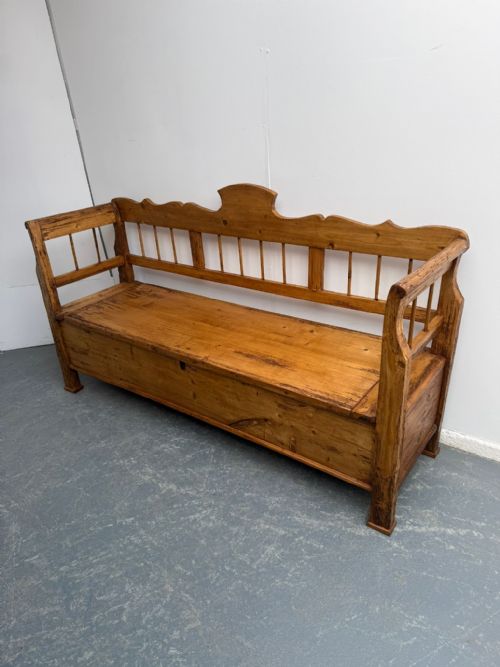
The most common versions on this page are Hungarian painted benches and box settles, often finished in historical blue, black, or grey paint as well as warm wax surfaces. Many incorporate integrated storage beneath the seat, serving as functional settles as well as open benches.
Origins heavily lean towards continental and British country workshops, where local timber was shaped into durable furniture for everyday domestic life. The selection ranges from unpainted waxed pine to vibrant folk-painted surfaces that display generations of wear.
How they were made
Makers built these pieces primarily from solid pine, utilising standard regional joinery techniques suited to sturdy utility furniture. Surfaces were either left exposed and treated with wax to highlight the grain or finished with traditional paint layers in blue, black, and grey.
Box settles incorporate hinged lids and enclosed lower compartments, requiring straightforward panel construction to bear weight while providing internal storage. Simple peg joinery and hand-cut boards characterise the structural framework across both British and Hungarian workshops.
Three Seater Pine Bench Retail Price Guide 2026
Typical asking prices for three seater pine bench among the pieces listed under this phrase on Sellingantiques today, from the lower quarter to the upper quarter. They describe what is for sale here now, not the wider market.
Early box settles doubled as makeshift beds by the hearth on cold winter nights when the fire finally died down.
What varies in quality
Quality in these benches rests largely on the preservation of original paint surfaces and the integrity of the structural timber. Examples retaining their initial blue, black, or grey coatings present stronger historical character than stripped or heavily restored alternatives.
Proportion and execution distinguish finer folk art pieces from standard utilitarian seating, particularly where decorative paneling or shaped armrests are present. The balance between heavy box settle storage bases and accessible seat heights dictates the refinement of the piece.
The Three Seater Pine Bench Glossary
- Pine
- A softwood commonly used for country and folk furniture due to its widespread availability and ease of working. It takes wax finishes and paint layers readily.
- Box settle
- A wooden bench featuring a high back and a concealed storage compartment beneath the hinged seat. This form kept drafts at bay in older interiors while maximising storage.
- Folk art
- Decorative traditions rooted in regional culture rather than academic design schools. In these benches, it appears through hand-applied paint colours and vernacular structural details.
- Waxed finish
- A protective treatment applied to bare timber to nourish the wood and produce a soft sheen. It highlights the natural knots and grain of the pine.
- Georgian period
- The era spanning the reigns of the first four Georges, known for proportion and early country craftsmanship. Pieces from this time display hand-cut joinery and honest construction.
Three Seater Pine Bench: Frequently Asked Questions
Where should I place a three seater bench?
These benches suit long hallways, large kitchens, or dining spaces where their extended length provides ample seating capacity. Box settle variants also function well in boot rooms to conceal clutter.
Ensure you measure the intended wall space carefully, as three-seater proportions require considerable clearance compared to standard chairs.
How do I maintain a waxed pine surface?
Apply a clear natural beeswax periodically using a soft cloth, then buff gently to maintain the protective layer against moisture and dust. Avoid placing the bench near direct heat sources that might dry out the timber.
Regular dusting with a dry cloth is generally sufficient for day-to-day upkeep of both waxed and painted examples.
What is the difference between a bench and a settle?
A standard bench provides open seating on legs, whereas a box settle incorporates an enclosed storage chest beneath the seat and often a high protective back. Both formats accommodate three people comfortably depending on the length of the seat deck.
Settles were historically positioned near hearths to block cold drafts from entering the seating area.
How can I tell a Victorian pine bench from a Georgian one?
Georgian pieces generally exhibit earlier hand-tool marks and simpler, heavier structural proportions associated with eighteenth-century country joinery. Victorian examples often incorporate slightly more standardised construction methods while retaining folk art painted finishes.
Examining the underside and interior boards helps reveal the age of the fixings and the depth of the patina.
Are painted finishes on these benches original?
Many Hungarian pieces retain historic or original folk paint layers, though some surfaces have been refreshed or redone over the centuries. Wear patterns, craquelure, and underlying timber oxidation help indicate the age of the paint layer.
Examining the edges and high-contact zones reveals how the colour has aged alongside the pine substrate.