





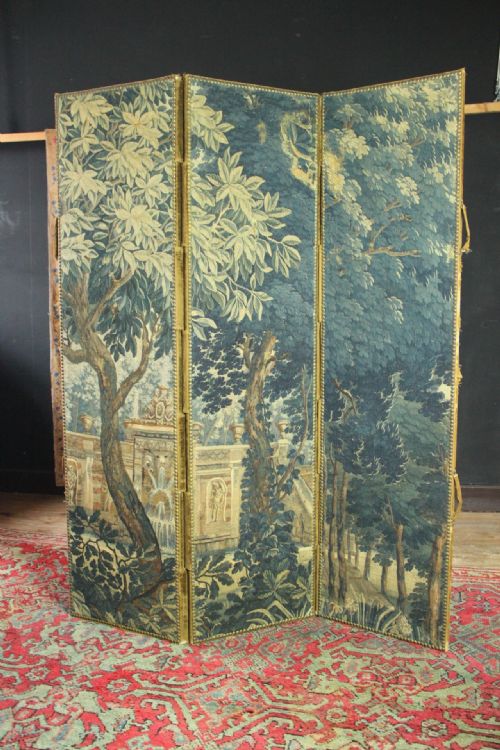


Three Panel Room Screen
When you need a three panel room screen, you are looking for a folding partition that divides a space or frames a corner with decorative panels.
Three Panel Room Screen
A three panel room screen functions as a folding divider or modesty screen, shaped by periods from the nineteenth century into the Edwardian era. These pieces appear in forms such as dressing room vanity dividers and larger privacy screens originating from English, French, and Oriental workshops.
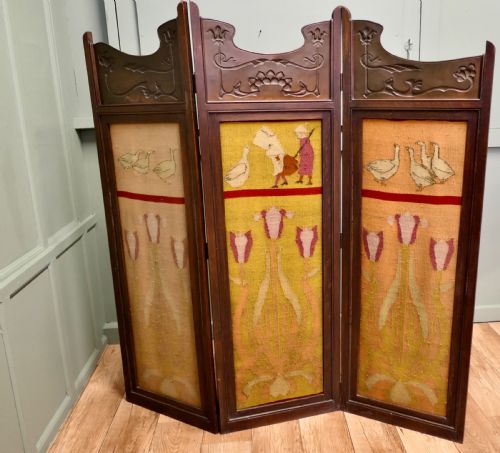
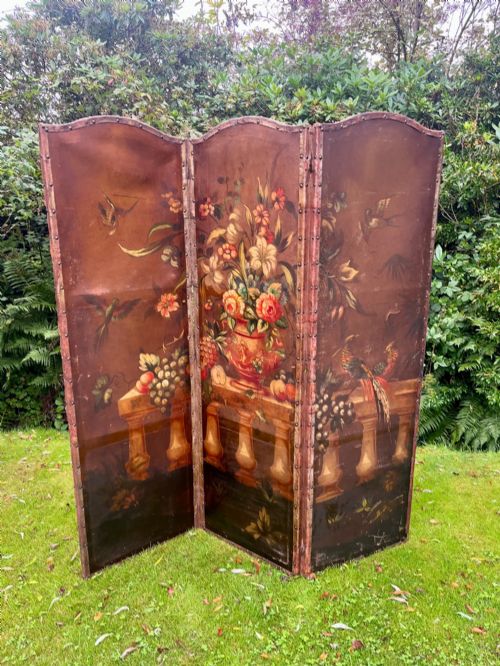
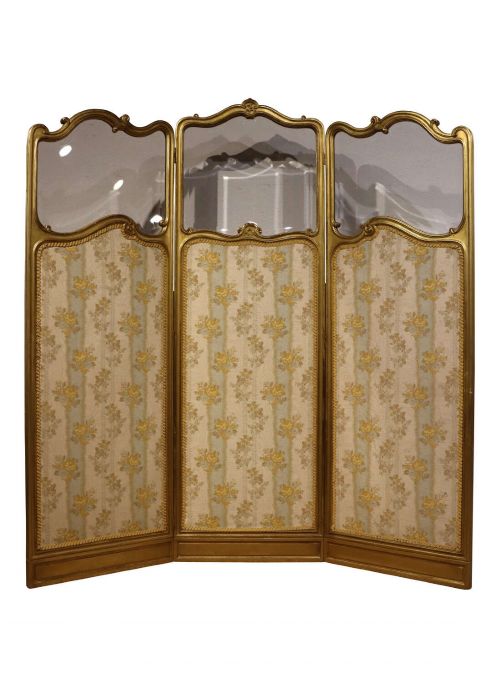
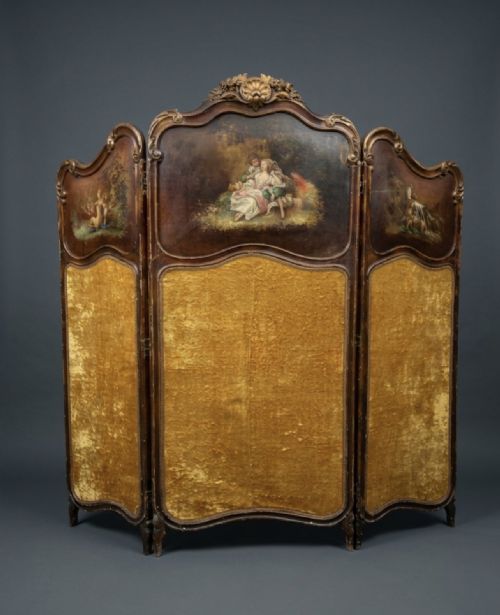
Makers utilised wood frameworks of oak, walnut, and giltwood to support hinged leaves, frequently incorporating glass, painted leather, wool, or silk into the partitions. The selection ranges from carved giltwood frames with bevelled glass to naïve wool panels and scrap work compositions.
Continental and British examples demonstrate diverse cultural influences, including French Rococo Revival, Art Nouveau, Anglo-Indian, and Scandinavian country styles. Buyers most commonly encounter three fold configurations constructed from timber fitted with decorative textiles, paint, or glazed sections.
How these folding screens were constructed
Frames rely on sturdy timbers like oak, walnut, mahogany, and padauk, joined to form three folding sections that pivot on hinges. Carved giltwood and lacquered hardwoods provide structure for more ornate frames.
Panels insert into these wooden skeletons using materials such as bevelled glass, hand-painted leather, oil paint on canvas, woven wool, and silk fabrics. Details like bone inlay and decoupage scrap work enrich the surface ornamentation of specific folding screens.
One exceptional screen preserves the lively debates of Eton College inside an oak frame.
What distinguishes finer three panel room screen pieces
The sophistication of the timber carving and the integrity of the joinery dictate the baseline quality of the frame, distinguishing substantial hardwood structures from lighter constructions. Giltwood detailing and inlaid elements demand precise handwork that remains intact across the folding hinges.
Panel material elevates a piece significantly, with hand-painted leather, Aubusson tapestry, and bevelled glass representing higher artistic execution than standard fabric or plain painted inserts. The harmony between the frame's style, such as French Rococo or Art Nouveau, and the decorative infill determines the overall coherence of the design.
The Three Panel Room Screen Glossary
- Verdure screen
- A folding screen featuring woven or painted landscape foliage scenes, typically depicting lush trees and greenery. These pastoral compositions draw inspiration from Flemish tapestry traditions.
- Modesty screen
- A low-standing folding partition originally used in bedrooms or dressing rooms to provide privacy while changing clothes. They often incorporate fabric or painted leather panels.
- Giltwood
- Timber that has been coated with a thin layer of gold leaf or gold paint to create a lustrous surface finish. This technique appears frequently on nineteenth-century Continental frames.
- Scrap work
- A decorative technique involving the application of numerous cut-out paper prints or illustrations onto a surface before sealing. Screens finished this way display dense collages of Victorian imagery.
- Aubusson
- A style of tapestry woven in the French town of the same name, known for pictorial designs without metallic threads. These textiles frequently form the central panels of antique French screens.
Three Panel Room Screen: Frequently Asked Questions
How were three panel room screens used?
These partitions served to divide large chambers into smaller, intimate zones, block drafts near doorways, or create private dressing areas within bedrooms. Their folding design allowed domestic inhabitants to alter room layouts instantly.
In larger reception rooms, they framed corners or shielded occupants from the direct heat of open fires. Academic and institutional spaces also employed them during debates or meetings for temporary privacy.
How do I care for antique folding screens?
Keep wooden frames and panels away from direct sunlight and fluctuating heat sources to prevent timber splitting and paint cracking. Dust carved elements gently with a dry, soft brush.
Handle the folding hinges carefully when repositioning the panels to avoid stressing the joints. Fabric and leather inserts require specialist cleaning depending on their specific medium.
Are these screens suitable for modern homes?
Their flexible folding structure makes them practical for zoning open-plan living areas or concealing home office corners. They introduce texture, colour, and historical character into contemporary interiors.
Placing a screen against a plain wall allows the painted, glazed, or textile panels to function as large-scale decorative art. Stability improves when positioned with the panels set at a gentle angle rather than pulled completely flat.
How do I distinguish nineteenth-century screens?
Examine the construction methods of the frame, looking for hand-cut joints, traditional wood species like walnut or oak, and period-appropriate hardware on the hinges. Nineteenth-century examples often display patination consistent with age on the timber and finishes.
Stylistic markers such as Art Nouveau curves, Victorian giltwood carvings, or hand-painted leather details provide clues to the manufacturing era. Material choices like heavy bevelled glass and original wool or silk panels further anchor the piece in this period.