



Asian Decorative Room Divider
An asian decorative room divider partitions a space with panelled storytelling and layered craft, bringing immediate architectural depth to a quiet interior.
Asian Decorative Room Divider
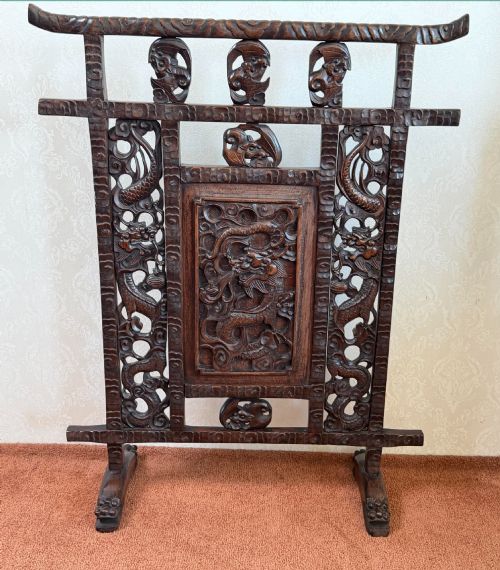
When you search for an asian decorative room divider, you encounter folding screens, fire screens, and table screens spanning the Victorian era through the mid-twentieth century. These pieces serve to section a room or provide a striking backdrop, originating from Chinese, Japanese, and Burmese traditions.
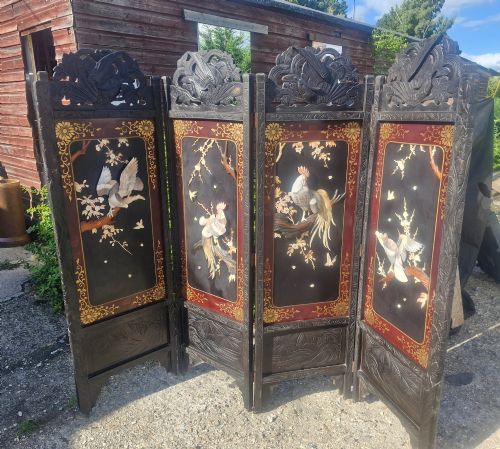
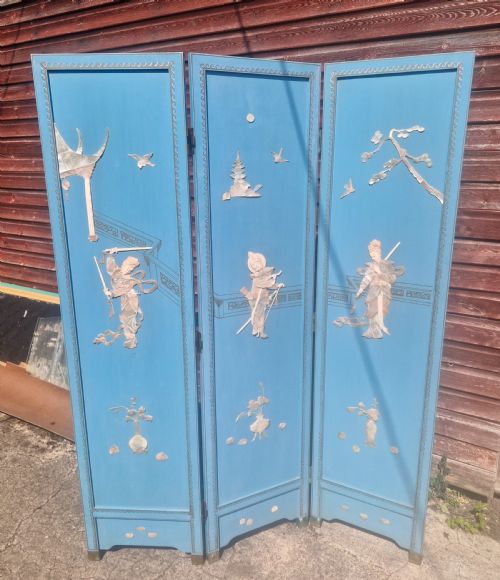
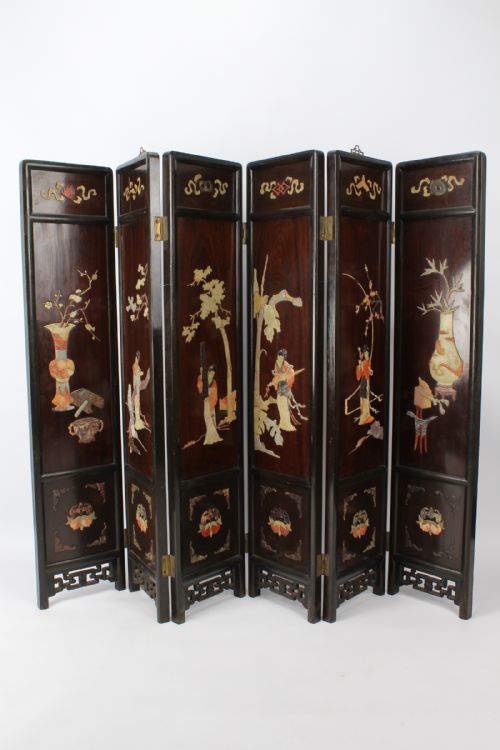
You are most likely to meet multi-fold folding screens featuring lacquer work, carved bone, or textile panels. The forms range from three-fold dressing screens to substantial six-panel configurations designed for grander interiors.
How they were made
Maker workshops constructed these dividers using sturdy hardwood or softer wood frames finished with layers of black lacquer. Artisans then applied intricate details directly onto the prepared surfaces.
Decoration relied heavily on contrasting inlays and mountings, utilising bone, mother-of-pearl, and hardstone to build raised pictorial scenes. Textile screens incorporate delicate silk cotton panels alongside traditional framing.
Asian Decorative Room Divider Retail Price Guide 2026
Typical asking prices for asian decorative room divider among the pieces listed under this phrase on Sellingantiques today, from the lower quarter to the upper quarter. They describe what is for sale here now, not the wider market.
The listings here feature items dated from the Victorian period up to 1950, utilising lacquer, hardwood, silk, and bone.
What varies in quality
The distinction between ordinary and exceptional work lies in the depth and precision of the carving. Deeply carved bone figures and meticulous hardstone placement demonstrate a higher level of artisan commitment than surface painting alone.
The integrity of the lacquer finish and the weight of the supporting hardwood frame dictate the overall durability and visual richness of the divider. Superior examples maintain crisp joinery across multiple folding panels without sagging hinges.
The Asian Decorative Room Divider Glossary
- Lacquer
- A durable resin finish applied in multiple layers to wood surfaces. It provides a glossy, protective background that often receives decorative inlays.
- Hardstone
- Naturally occurring minerals carved and mounted onto screens. These stones add varied colour and texture to pictorial compositions.
- Chinoiserie
- A European artistic style reflecting Chinese motifs and techniques. It appears frequently in decorative screens produced during the Victorian period.
- Meiji
- A Japanese historical period associated with fine metalwork, lacquer, and textile arts. Pieces from this era often display exceptional narrative detail.
Asian Decorative Room Divider: Frequently Asked Questions
How do I use a folding screen?
These screens partition large rooms, create private dressing areas, or stand as decorative wall art against plain plaster. They adapt easily to changing spatial needs.
Position your divider away from direct sunlight and excessive moisture to protect delicate lacquer and silk elements over time.
What materials are common?
Wood and hardwood form the structural core of these pieces, frequently coated in deep black lacquer. Artisans embellished these surfaces with bone, hardstone, mother-of-pearl, and brass.
Textile components also appear, utilising silk cotton within folding and photographic prop screen formats.
How do I date an antique screen?
Dating relies on stylistic clues, construction methods, and materials recorded from periods such as the nineteenth century, the Victorian era, and the early twentieth century. Chinoiserie styles and Meiji influences offer clear chronological markers.
Examine the hinges, the composition of the wood, and the wear on the lacquer finish to help establish the age of the piece.
Are these screens fragile?
While built to be functional room dividers, antique pieces require gentle handling due to their age and delicate inlaid materials. Bone and hardstone elements can chip if subjected to heavy impacts.
Dust them softly with a dry cloth and avoid harsh chemical polishes that might damage the historical lacquer surfaces.