
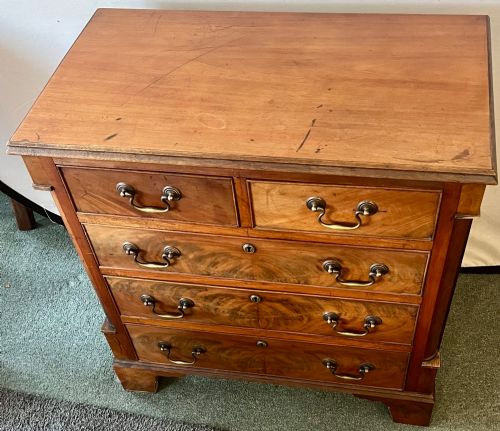
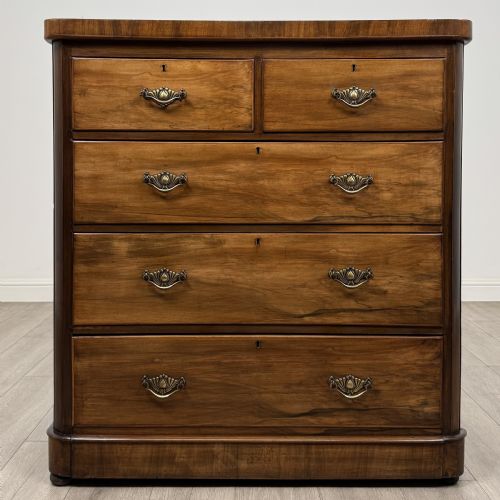
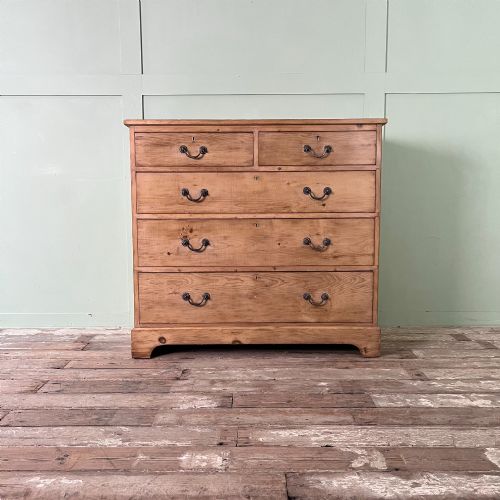
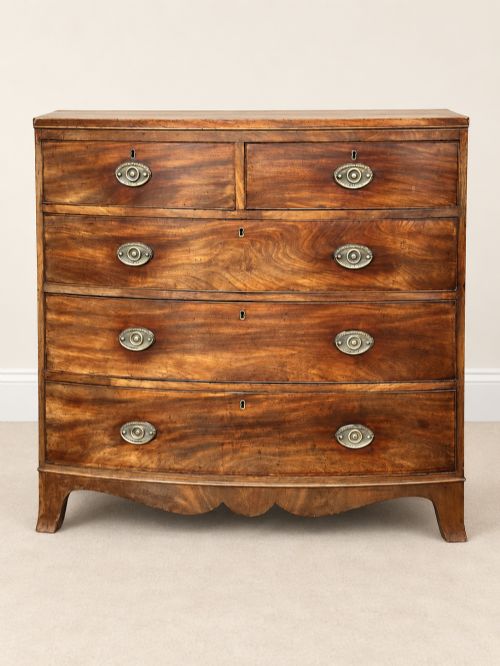
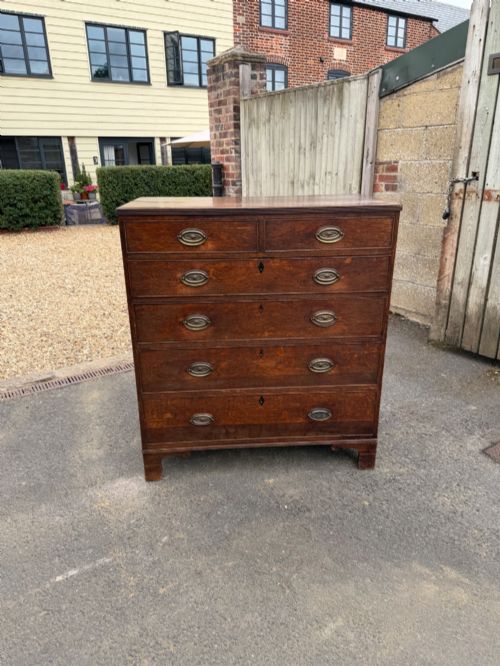
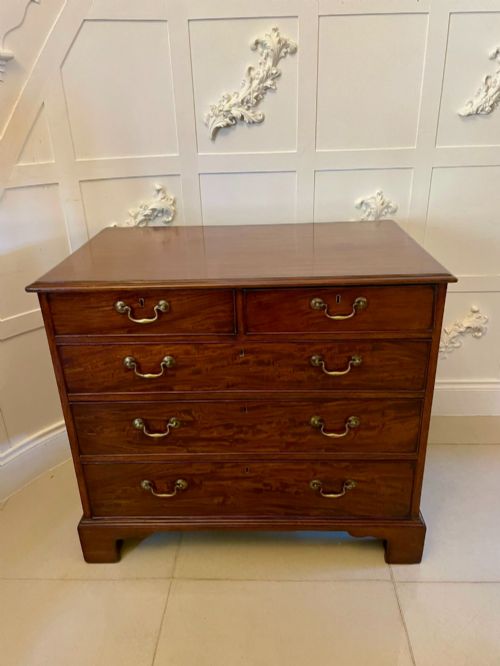
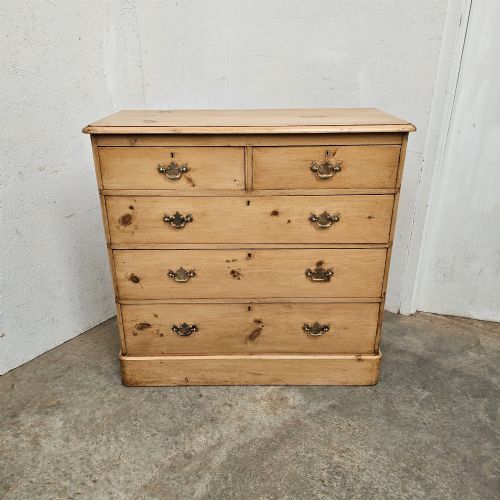
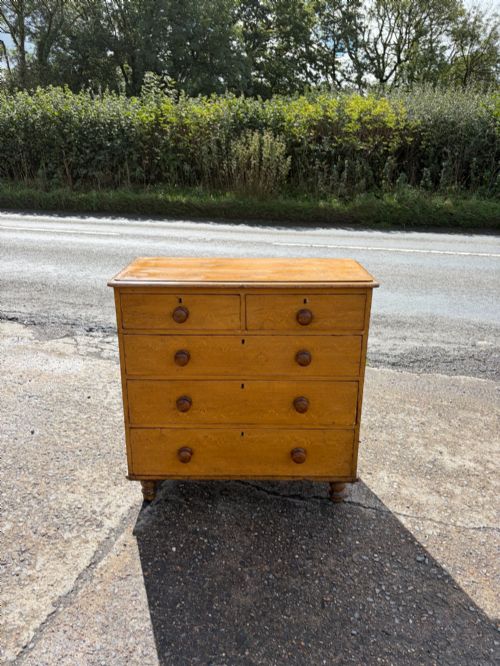
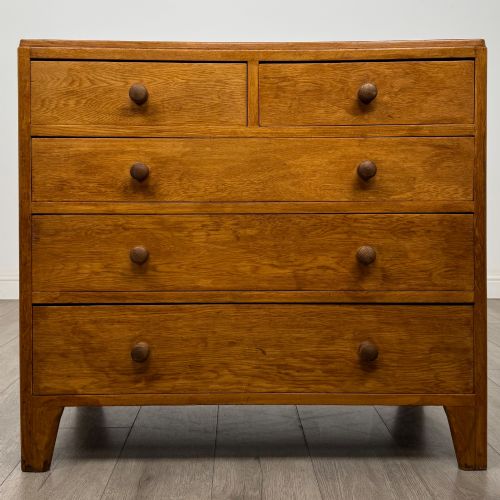
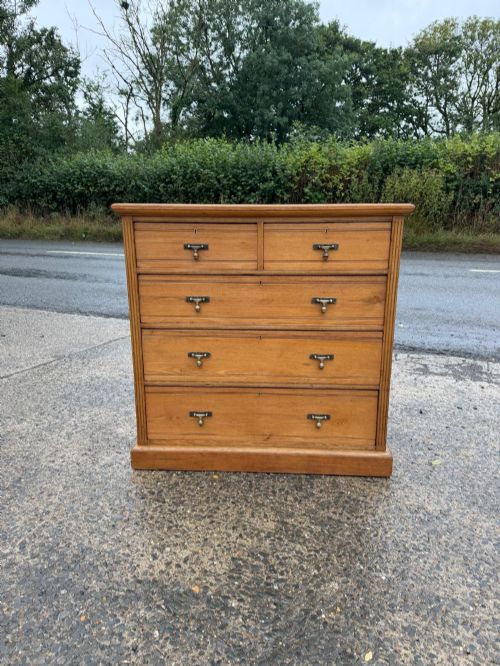
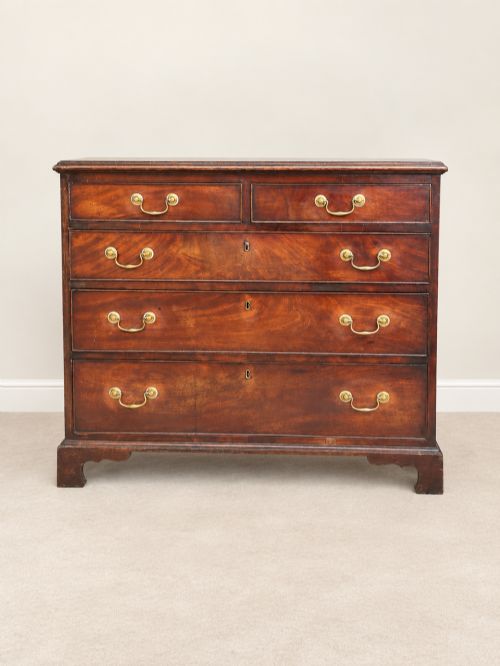
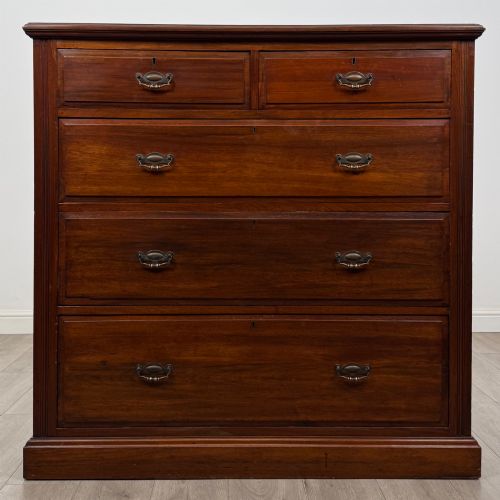
Three Over Three Chest
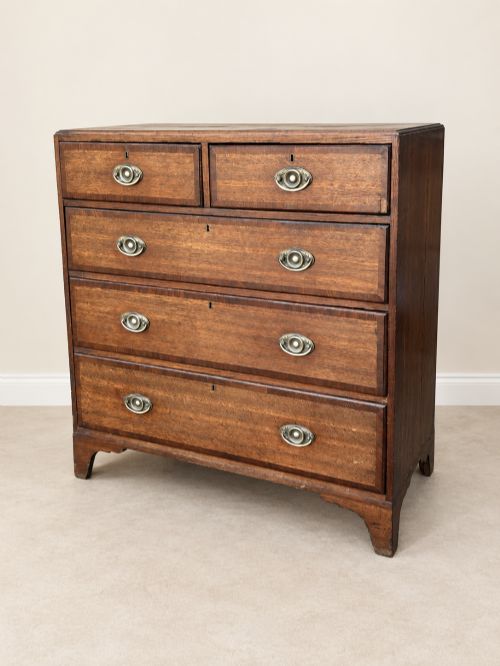
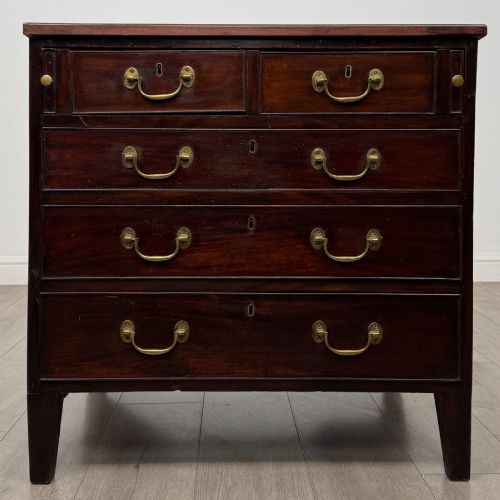
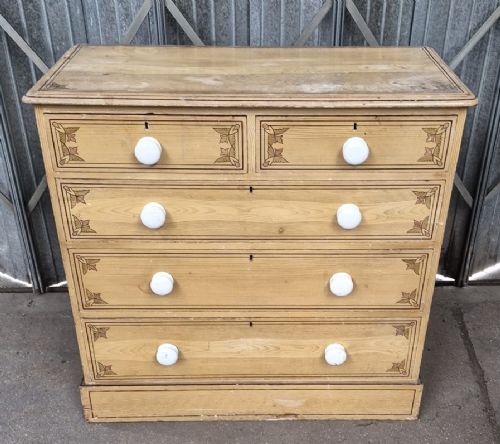
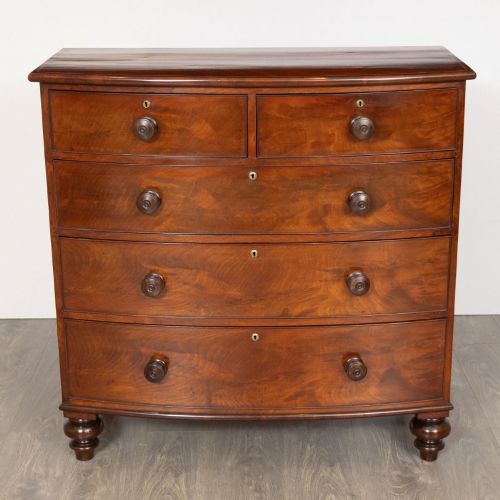
A three over three chest provides essential storage with its classic configuration of three smaller drawers above three larger ones.
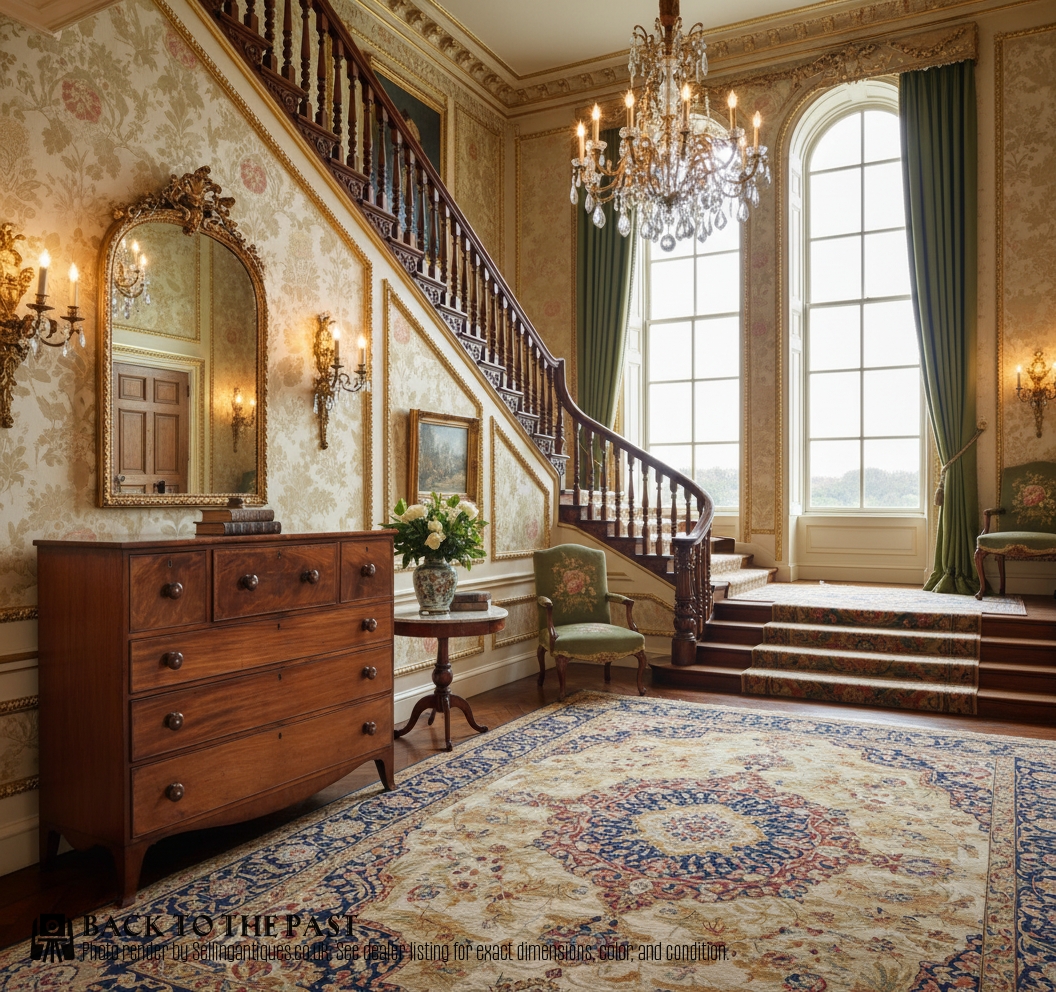
Three Over Three Chest
A three over three chest brings practical storage and traditional proportion to a room, configured with a tier of three smaller drawers positioned above three wider full-width drawers below.
The pieces available on this page span the 18th century, Georgian, Regency, Victorian and Edwardian periods, offering formats built from timber such as mahogany, oak and pine.
Buyers encounter examples ranging from formal mahogany and walnut pieces to vernacular pine items, reflecting domestic needs across multiple centuries.
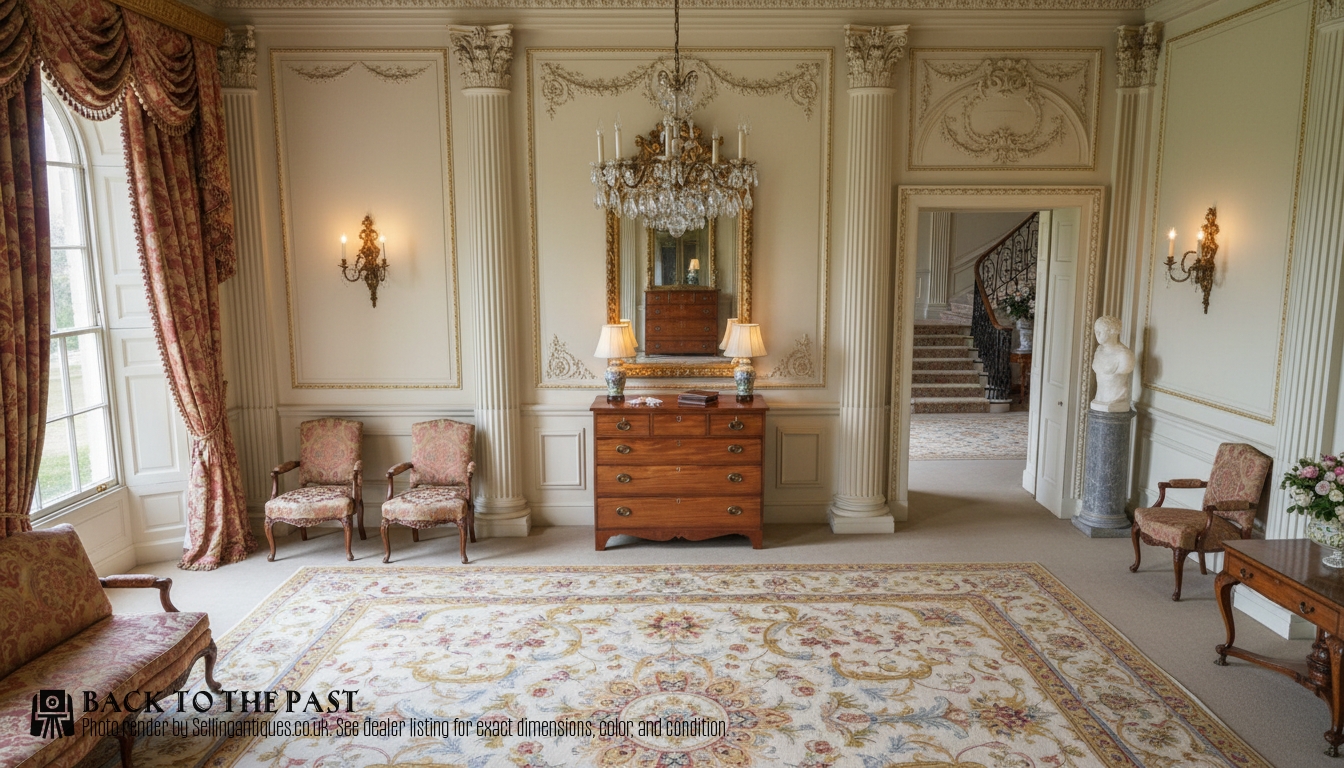
Materials and construction methods
Cabinetmakers utilised native and imported hardwoods like mahogany, oak and walnut, alongside softwood pine for vernacular or painted items.
Surface finish was achieved through French polishing, decorative veneers such as flame mahogany or crossbanding, and sometimes stencilled or scumbled paint effects on pine.
Hardware typically included brass handles and escutcheons, securing the structural integrity and operation of the drawers.
Listings feature timbers including mahogany, oak, pine, walnut, satinwood and flame mahogany veneer across Georgian and Victorian eras.
Factors influencing quality
The refinement of the timber selection dictates the visual appeal, moving from utilitarian pine to figured flame mahogany veneers and crossbanded details.
Proportion and scale distinguish standard bedroom storage from pieces of finer proportions or smaller dimensions designed for specific parlour or hallway settings.
The preservation of original surfaces, patination and working brass fittings separates untouched examples from heavily restored ones.
J Moorcroft·Howard and Sons
The Three Over Three Chest Glossary
- Bow front
- A convex curved front to a chest of drawers that swells outwards. This style gained popularity during the late 18th and early 19th centuries.
- Crossbanding
- A decorative border of veneer laid around the perimeter of a drawer front so the grain runs perpendicular to the main panel. It creates a neat framing effect.
- Flame mahogany
- A highly figured veneer cut from the branch forks of the mahogany tree, displaying flame-like patterns. Cabinetmakers utilised it on high-status surfaces.
- Scumbled
- A paint finish applied in translucent layers to simulate the grain of more expensive wood on a pine base. It allowed simpler timbers to mimic grander ones.
- Patina
- The surface sheen and mellowing developed by wood over decades of handling and polishing. It serves as an indicator of age and careful maintenance.
Three Over Three Chest: Frequently Asked Questions
What is a three over three chest?
A three over three chest is a drawer unit featuring three small drawers arranged side by side at the top, placed above three larger full-width drawers.
This specific layout provides versatile storage for smaller items up top and bulkier clothing below, maintaining a balanced facade.
How do I date a chest of drawers?
Dating relies on observing construction techniques, timber choices, handle styles and overall proportions across periods like the Georgian and Victorian eras.
Secondary woods inside the drawer construction and the method of dovetailing also offer clear clues to the decade of manufacture.
Where should I place this chest?
These chests suit bedrooms, hallways and living spaces where traditional furniture adds character and practical surface area.
Measuring the floor space and clearance for drawer pull-out ensures the piece fits comfortably in the chosen room.
What is the difference between oak and mahogany chests?
Oak chests generally date from earlier periods like the 17th and 18th centuries, offering a heavy, rustic appearance with visible grain.
Mahogany chests often display a smoother, darker finish associated with formal Georgian and Victorian cabinetmaking.