
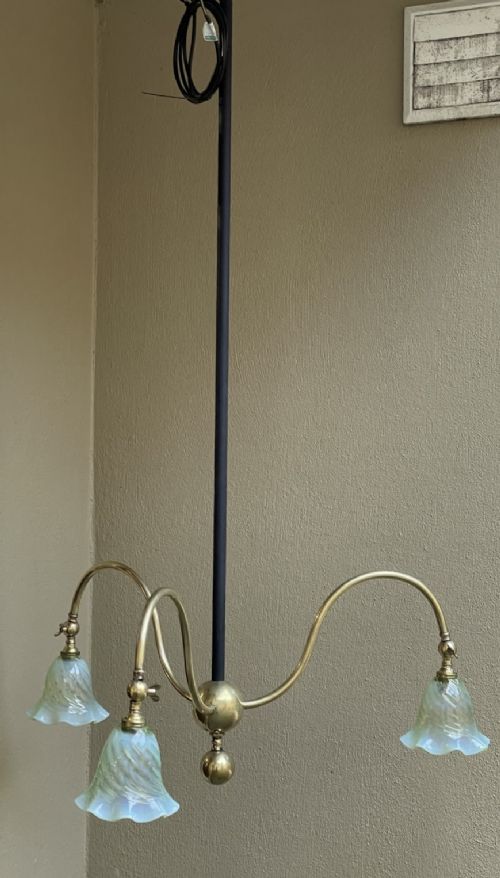
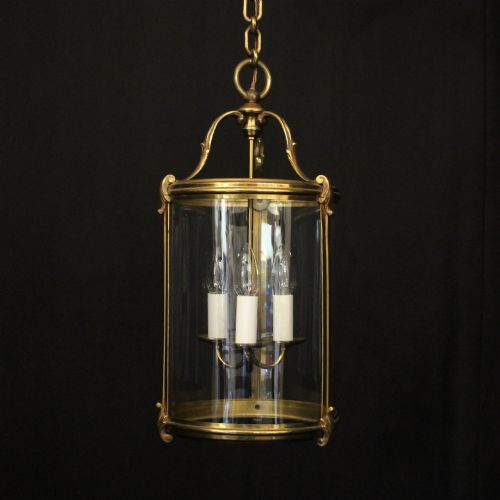
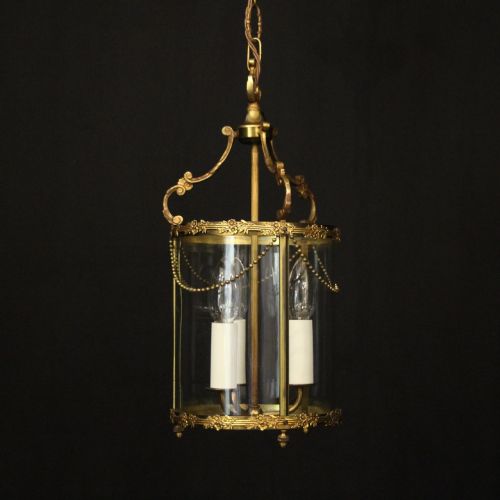
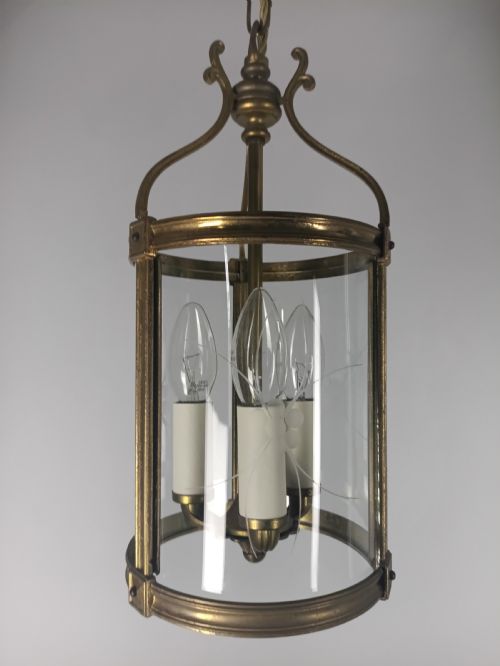
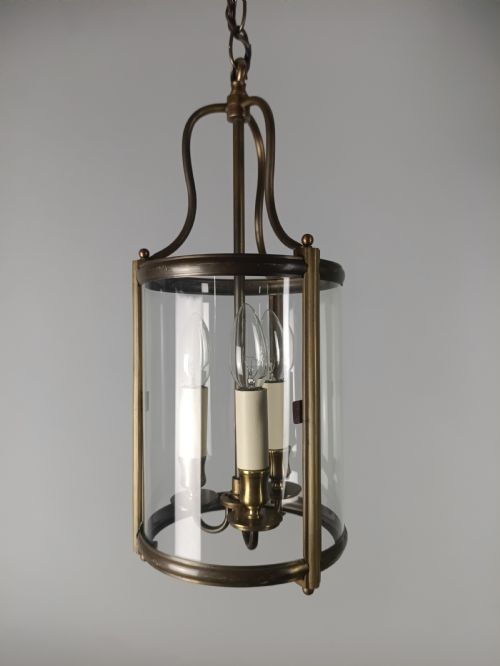
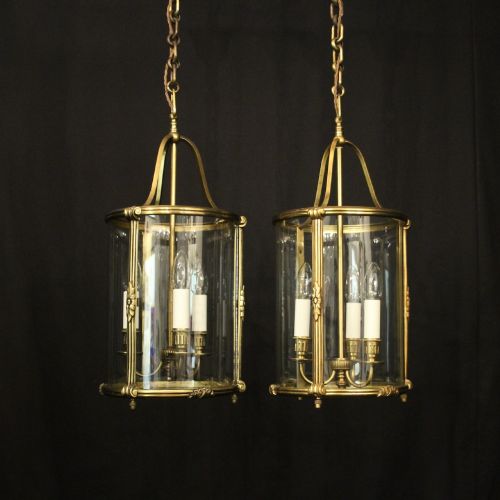


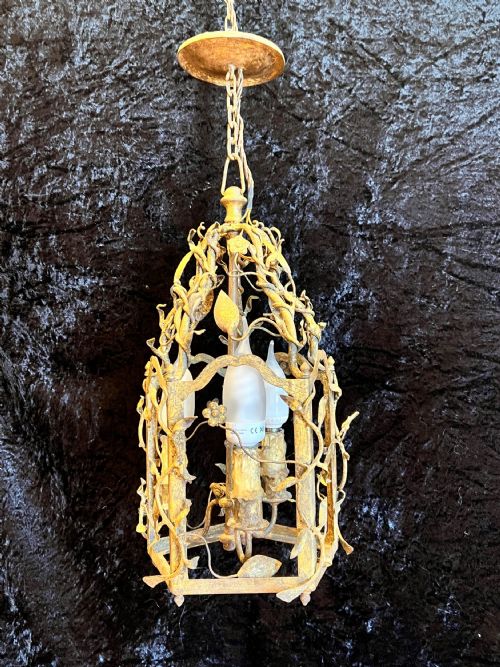

Three Light Hall Pendant
A three light hall pendant lights an entryway with brass and glass, bringing period warmth to a hallway before guests even step inside.
Three Light Hall Pendant
A three light hall pendant, also described in listings as a hall lantern or ceiling light, hangs from overhead to illuminate entrance spaces. These fittings range from the early twentieth century, taking forms influenced by French styles and Edwardian design.
You are most likely to encounter French brass and bronze lanterns featuring convex glass panels and three internal lights. Pieces span several decades from nineteen hundred through to nineteen thirty, showing diverse regional interpretations.
The selection includes Arts and Crafts designs alongside French Rococo and neoclassical interpretations. Most examples utilise hanging chains or direct ceiling mounts to suit varying ceiling heights in period properties.
How they were made
Metals form the structural framework of these lanterns, with brass, gilt brass, bronze, and gilt bronze dominating the construction. Artisans cast and chased these metal frames, often applying gilding to enhance the decorative surface.
Glass panels enclose the internal three light fittings, sometimes featuring etched patterns on convex surfaces. The glass diffuses the light while protecting the bulbs from drafts in busy entrance halls.
French design influences appear frequently across the selection, alongside notable English Arts and Crafts examples from nineteen ten.
What varies in quality
The finesse of the metalwork distinguishes finer examples, particularly where casting and chasing create crisp detail on bronze and gilt brass frames. Heavier gauge metal and refined surface finishing separate standard production from superior decorative objects.
Glass selection also marks the difference between tiers, with thick convex panes and delicate etching requiring greater skill to produce than plain flat glass. The cohesion of the decorative style, whether French Rococo or Arts and Crafts, reflects the original maker's design ambition.
The Three Light Hall Pendant Glossary
- Convex glass
- Curved glass panels that project outward to diffuse light more broadly. This technique was frequently utilised on French lanterns to soften illumination in narrow spaces.
- Gilt bronze
- Bronze metal treated with a thin layer of gold or gold-coloured alloy. It provides a durable, lustrous finish that resists tarnishing over decades of use.
- Hall lantern
- An overhead lighting fixture specifically proportioned for corridors and vestibules. These pieces hang closely to ceilings or on short chains to clear passing traffic.
- Triple light
- A configuration housing three internal lamp holders within a single frame. This arrangement provides sufficient illumination for large entrance halls without requiring auxiliary wall sconces.
Three Light Hall Pendant: Frequently Asked Questions
How high should a hall pendant hang?
These pendants generally require adequate clearance below for people to walk underneath comfortably. In most entrance halls, the bottom of the lantern sits at least seven feet above the finished floor level.
For taller stairwells or double-height ceilings, positioning the fixture slightly lower ensures proper illumination while maintaining correct proportion within the architectural space.
Are these lanterns suitable for low ceilings?
Many examples utilise shorter hanging mechanisms or flush ceiling mounts designed specifically for restricted vertical spaces. Assessing the drop length listed helps determine if a particular piece suits your hallway dimensions.
Pieces with compact brass frames and minimal chain lengths work effectively where standard pendants might hang too low for daily passage.
How do I clean a glass and brass lantern?
Routine maintenance involves dusting the brass frame with a soft, dry cloth to prevent grime accumulation. Glass panels can be removed carefully or cleaned in place using a mild glass cleaner applied to a cloth rather than sprayed directly onto the metal.
Avoid abrasive cleaners on gilded or polished surfaces to preserve the original metal finish and patination accumulated over the decades.
What period styles are common?
The available selection leans heavily toward early twentieth century pieces, particularly nineteen twenty and nineteen thirty French designs. You will also find Edwardian examples and Arts and Crafts pieces originating from municipal or domestic commissions.
French styles range from simple brass frames to ornate Rococo and neoclassical interpretations featuring cast bronze details and convex glass.