
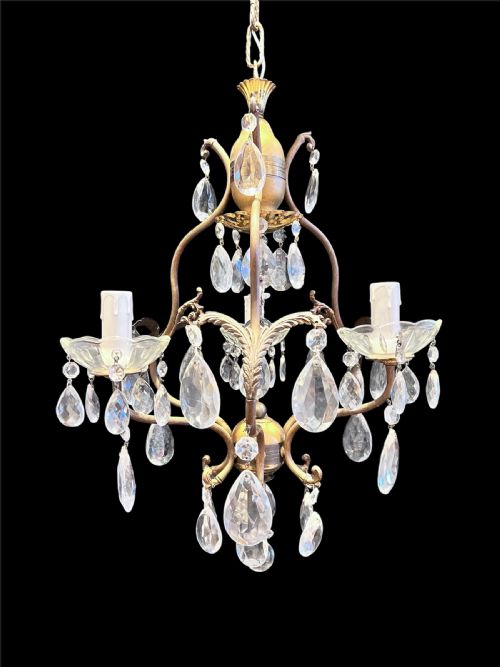


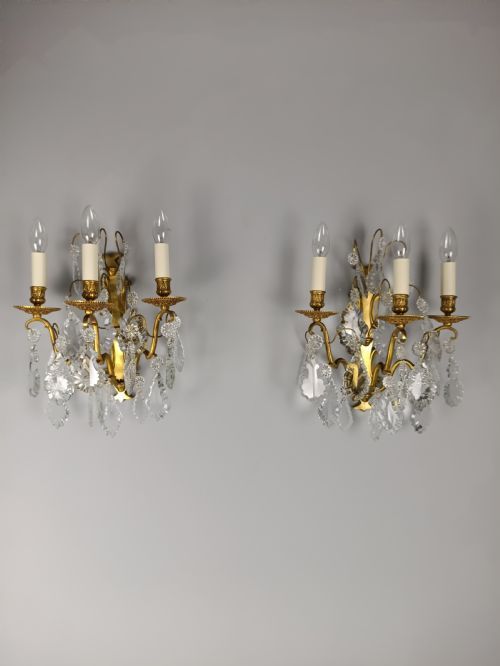


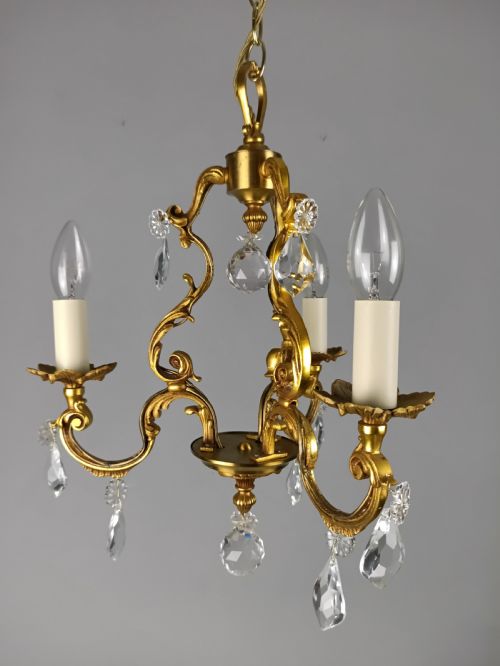
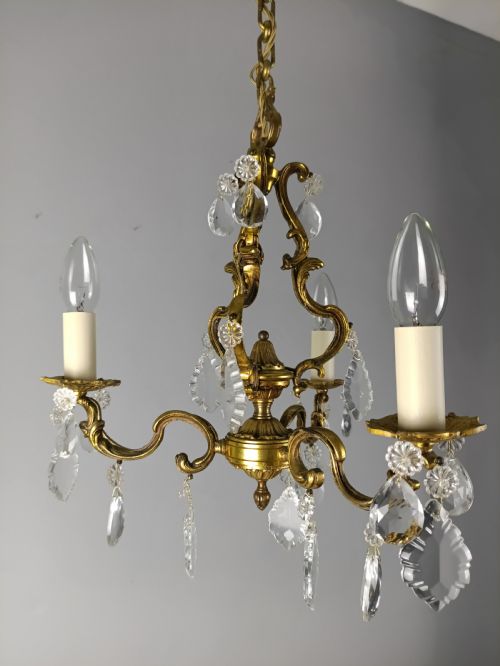


Three Light Crystal Chandelier
A three light crystal chandelier brings sparkling illumination and classic European character to a compact room or hallway.
Three Light Crystal Chandelier
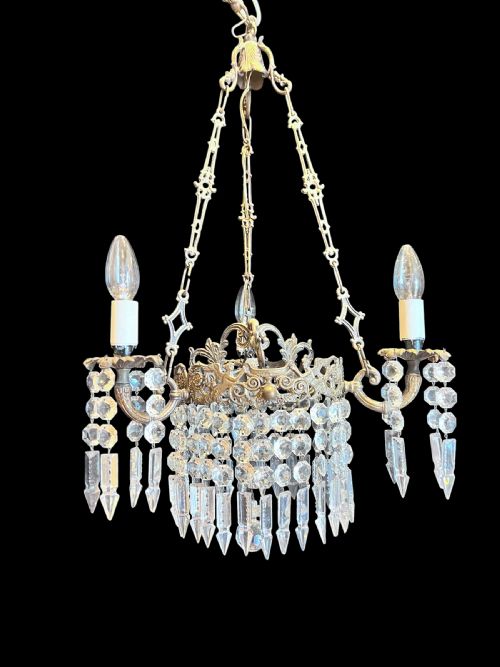
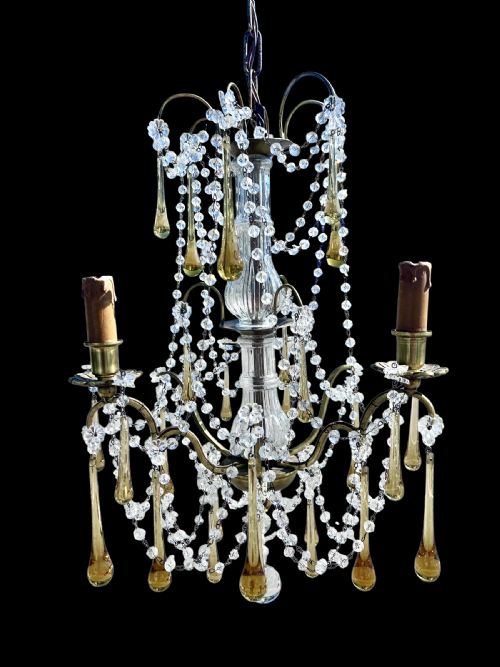
When searching for a three light crystal chandelier, you are looking at smaller scaled hanging fittings designed to catch and refract light across a space. These fixtures typically feature three candle arms or bulb holders surrounded by glass drops, beads, or tiers.
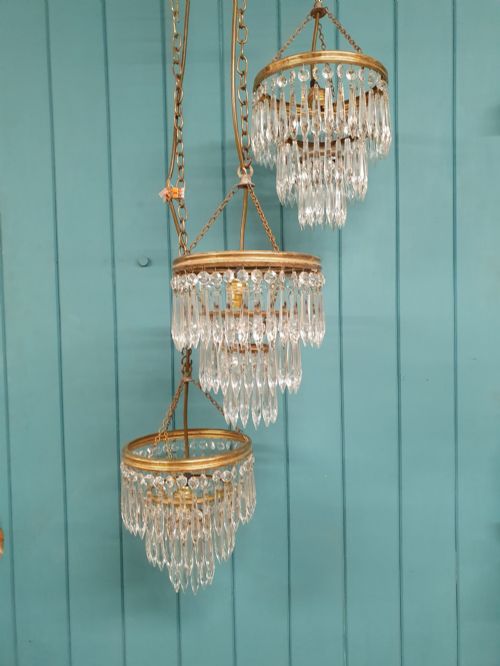
The versions you meet most frequently on this page date from the early twentieth century, spanning Edwardian examples through to nineteen-thirties French and Italian designs. They appear in styles ranging from French Art Nouveau and Rococo to waterfall tiers and simpler spike arrangements.
While primarily designed as ceiling lighting, related forms such as triple arm wall lights, candelabra, and converted table lamps also appear within these periods and materials. Their modest proportions make them suitable for lower ceilings or intimate spaces where larger multi-arm fixtures would overwhelm the room.
What varies in quality
Quality in these chandeliers rests on the clarity and depth of the crystal work alongside the finishing of the metal frame. Finer examples feature hand-cut crystals with sharp facets that disperse light effectively, paired with heavily gilded or chased brass rather than plain stamped metal.
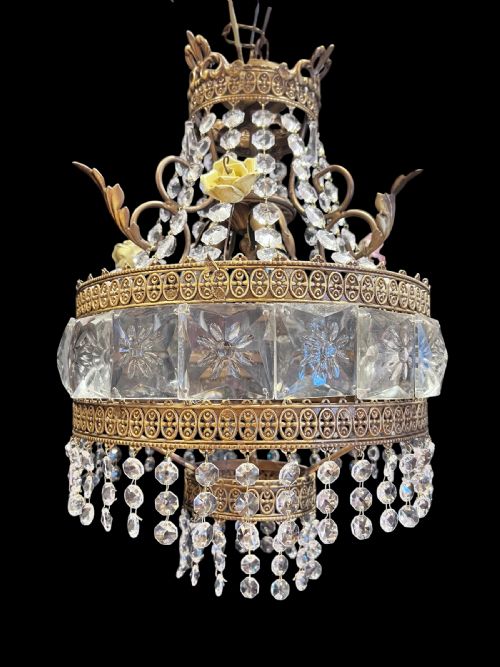
The integration of decorative details such as porcelain flowers, bronze casting quality, and the overall balance of the tier proportions distinguish finer workshop output from standard production pieces.
Materials recorded across these items include cut crystal, gilt brass, porcelain flowers, and bronze.
The Three Light Crystal Chandelier Glossary
- Crystal
- High-grade glass containing lead oxide, which increases its weight, refractive index, and ability to disperse light into spectral colours. It forms the primary sparkling drops on these chandeliers.
- Gilt brass
- Brass that has been coated with a thin layer of gold leaf or gilt wash to impart a rich, warm metallic lustre. This finish protects the underlying metal while enhancing the decorative appeal.
- Waterfall chandelier
- A lighting fixture where cascading tiers of crystal drops or beads overlap to resemble falling water. This configuration concentrates light through dense layers of glass.
- Art Nouveau
- A decorative style popular in the late nineteenth and early twentieth centuries, characterised by flowing, organic lines and natural motifs. In these fixtures, it influences the curving shapes of the brass arms and floral elements.
- Candelabra
- A branched candlestick holder designed to hold multiple candles, which in later adaptations often accommodates electric lamp holders. Antique pairs frequently match the stylistic vocabulary of contemporary chandeliers.
Three Light Crystal Chandelier: Frequently Asked Questions
How do I clean a crystal chandelier?
Cleaning requires a gentle approach using a specialised spray cleaner and a soft cloth to wipe each crystal drop individually without straining the brass wire fixings.
Taking down the individual glass pieces for a careful wash in lukewarm soapy water yields the brightest sparkle, provided everything is dried thoroughly before reattachment.
Can these chandeliers take modern bulbs?
Most antique fittings accept standard small Edison screw or bayonet LED bulbs, provided the wattage matches the capacity of the original internal wiring.
Consulting a qualified electrician ensures that older or recently rewired fixtures operate safely with contemporary power supplies.
Where should I hang a three light fixture?
The compact scale of a three light fitting suits smaller rooms, cloakrooms, bedrooms, or above a compact dining table where a grander chandelier would dominate.
Suspending the fixture at a height that clears head traffic while maintaining a clear focal point in the room balances practicality with visual presence.
How do I identify French and Italian styles?
French examples often display gilt brass frames with refined Rococo curves, cascading waterfall crystals, or Art Nouveau floral motifs reflecting Parisian tastes of the period.
Italian pieces frequently incorporate distinctive polychrome elements, porcelain flowers, or bolder Baroque Revival forms that impart a different regional decorative character.