


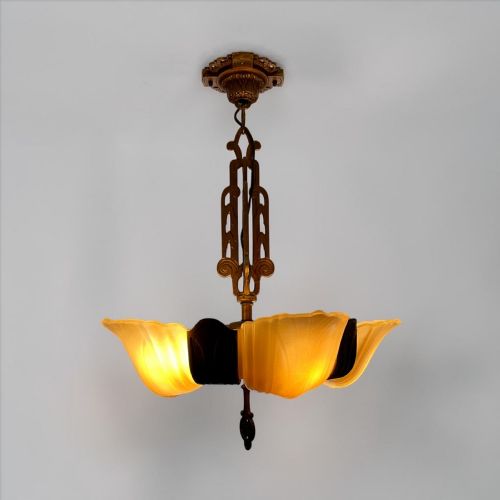
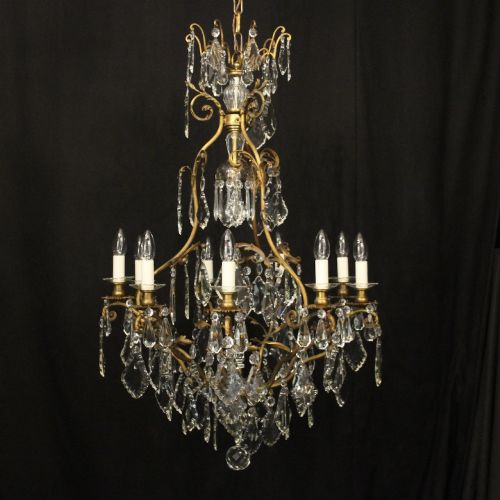
Brass Glass Ceiling Fixture
A brass glass ceiling fixture brings period illumination and warm metal tones to a room, spanning styles from Victorian gasoliers to Art Deco shades.
Brass Glass Ceiling Fixture
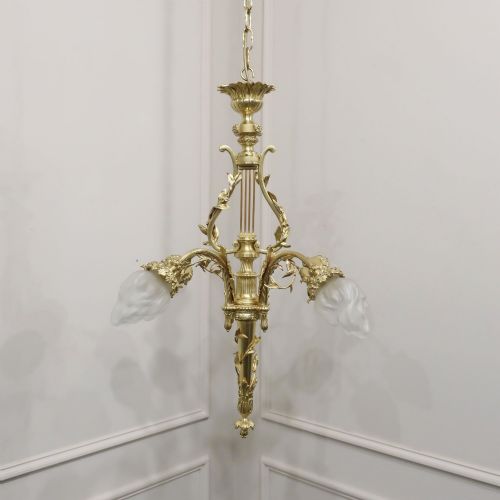
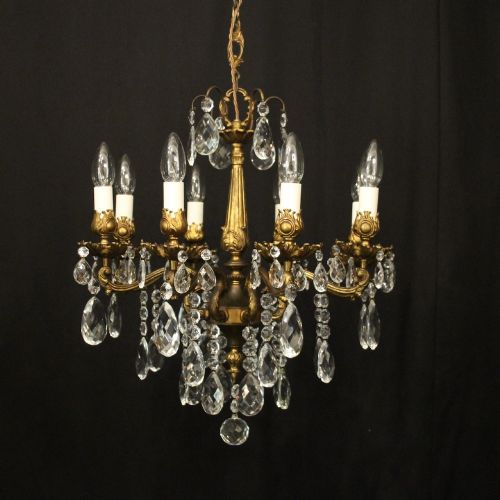
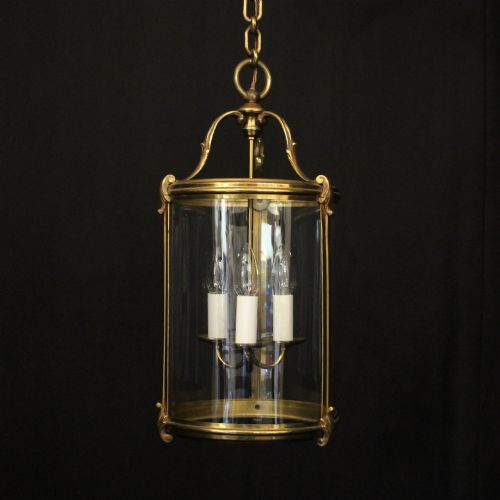
A brass glass ceiling fixture encompasses a wide variety of hanging illumination, from elaborate chandeliers to enclosed hall lanterns. When exploring this selection, buyers encounter diverse forms shaped by aesthetic movements spanning the nineteenth and early twentieth centuries.
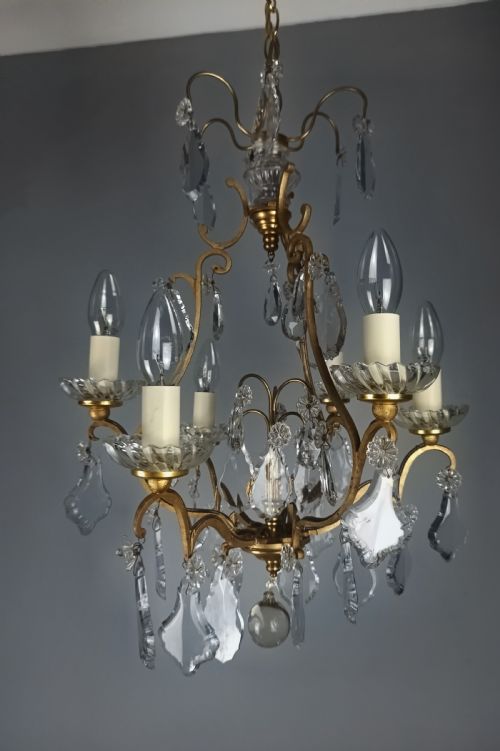
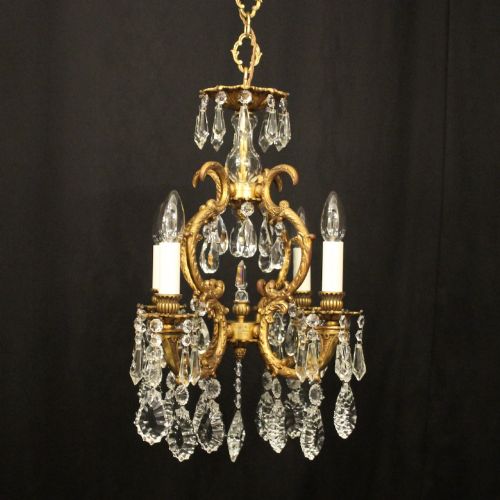
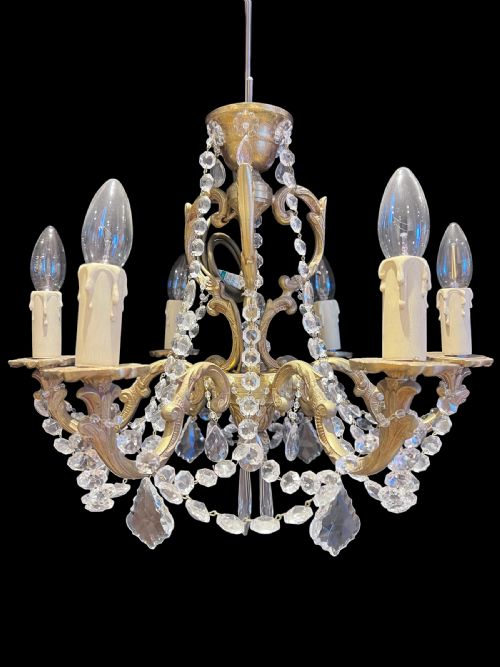
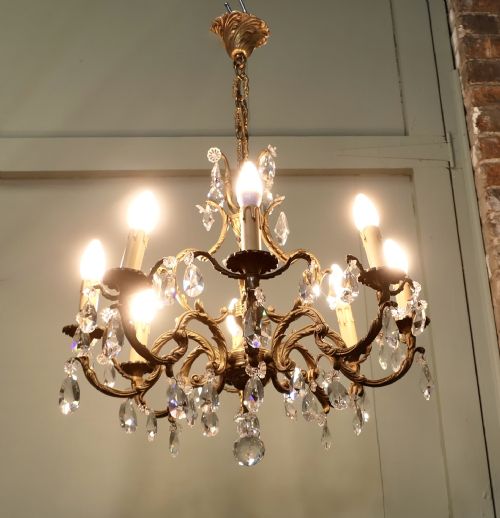
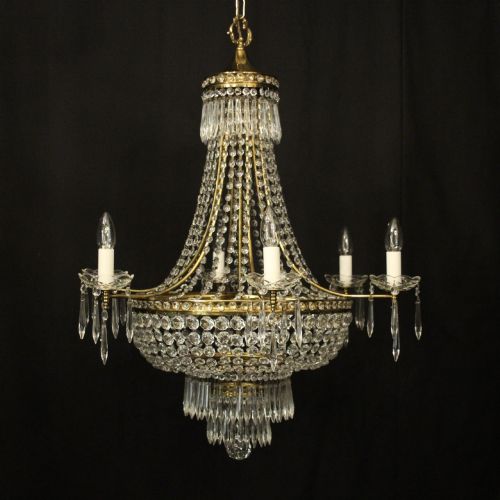
The most common examples on this page originate from French workshops and English makers, frequently taking the form of multi-branch chandeliers hung with crystal lustres or glass lanterns suspended on chains. These pieces reflect specific historic periods including the Edwardian era, Art Deco period and Victorian times.
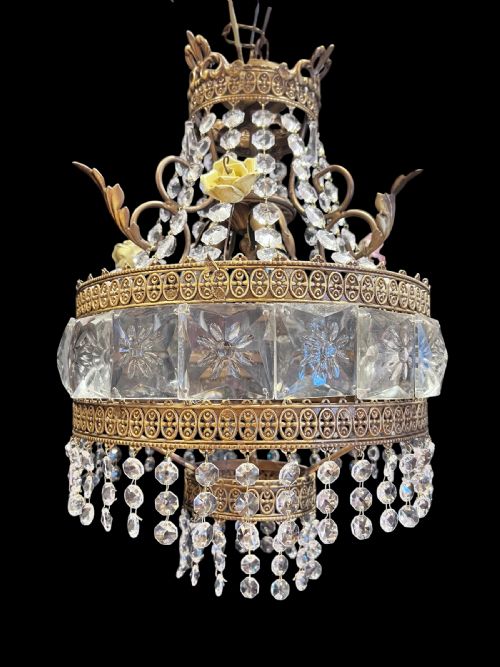
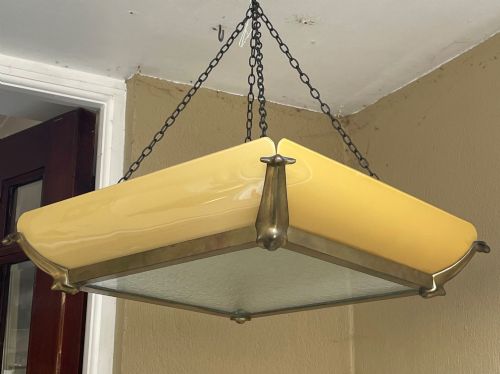
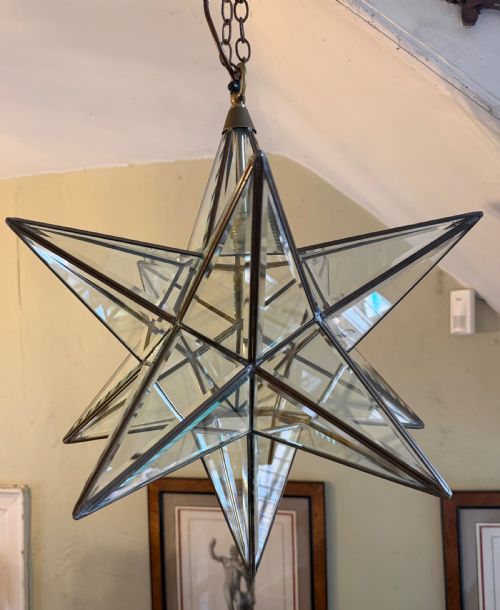
Beyond standard chandeliers, the selection includes specialised lighting types such as plafonniers, flush-mounted fixtures, and star-shaped lanterns incorporating bevelled glass. Each object serves the dual purpose of functional room illumination and decorative architectural ornament.
How they were made
Makers constructed the primary framework of each brass glass ceiling fixture using cast or spun brass, often finished with a layer of gilt bronze, gilded brass or standard gilding. Metal components provide the structural integrity required to support heavy glass bowls, shades and crystal drops.
Glass elements range from mould-blown globes and opalescent shades to heavily cut crystal prisms, droplets and panel inserts. Artisans combined these materials using mechanical connectors, metal prongs and wire ties to secure glass panels within brass frames or suspend crystal lustres from upper branches.
Materials documented across the listings include solid brass, gilt bronze, cut glass, crystal, opalescent glass, and leaded panels.
What varies in quality
The standard of a brass glass ceiling fixture depends on the weight and purity of the metalwork, alongside the clarity and depth of the glass components. Finer examples display crisp casting details on brass frames and hand-cut facets on crystal prisms that refract light evenly.
Design complexity and structural integrity distinguish ordinary production from superior examples. Pieces featuring intricate French neoclassical motifs, heavy gilded bronze, or specialised glass elements such as slip shades and opalescent bowls demonstrate greater artisanal skill.
The Brass Glass Ceiling Fixture Glossary
- Plafonnier
- A ceiling light designed to sit flush or very close to the ceiling surface. These fixtures often utilise a glass bowl held within a brass or gilt metal mount.
- Tent and waterfall chandelier
- A traditional multi-light fixture featuring strings of small glass beads gathered in a tent shape above, flowing down into a cascading arrangement of crystal drops.
- Hall lantern
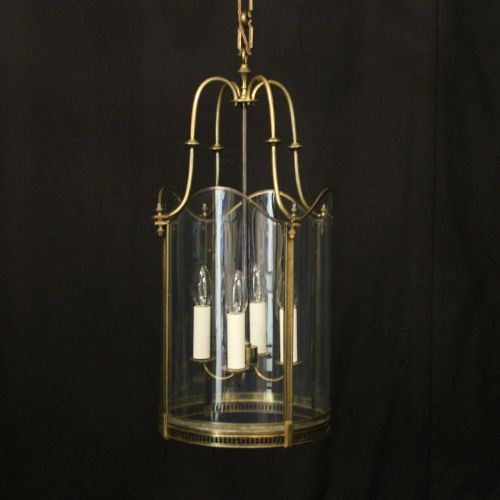
- An enclosed hanging light fixture designed primarily for entranceways and corridors. These pieces utilise brass frames fitted with convex, bevelled or leaded glass panes.
- Gasolier
- A historic lighting fixture originally designed to burn coal gas before being converted to electricity. These pieces often date from the nineteenth century and retain period brass arms.
- Crystal lustre
- A cut glass pendant or droplet hung from the arms of a chandelier to enhance light reflection. They vary in shape from simple spear points to complex coffin prisms.
Brass Glass Ceiling Fixture: Frequently Asked Questions
How do I hang a heavy brass chandelier safely?
Suspending a heavy brass and crystal fixture requires securing the weight directly to a ceiling joist or using a designated metal ceiling brace. Professional installation ensures the electrical box and structural support can bear the complete load safely.
Connecting the wiring safely also requires matching the historic internal circuits to modern domestic supplies. An electrician should check the earth grounding, particularly on older metal frames.
Can I clean crystal lustres while they remain on the fixture?
Cleaning crystal lustres in place is possible by spraying them with a specialised glass cleaner and catching drips with a cloth below. Many collectors prefer this method to avoid disturbing old wire ties.
For a deeper clean, individual drops can be unhooked and washed in lukewarm soapy water. Drying them thoroughly with a lint-free cloth restores their original sparkle before reattachment.
How do I distinguish an Edwardian fixture from a Victorian one?
Victorian lighting often displays heavier ornamentation, darker patination, and functional connections to early gas lighting technology. Gothic Revival and elaborate classical influences dominate this earlier nineteenth-century grouping.
Edwardian pieces generally exhibit lighter proportions, brighter brass finishes, and simpler transitional forms influenced by early twentieth-century design. The shift towards electricity became standard during this lighter, more refined period.
What is the difference between a pendant and a plafonnier?
A pendant light hangs downward from the ceiling on a chain, cord, or rigid metal rod, creating a noticeable drop into the room space. These fixtures work well over dining tables and open areas where directional light is needed.
A plafonnier mounts directly against or very close to the ceiling surface, enclosing the bulbs within a glass bowl or shade. This style suits rooms with lower ceiling heights where a hanging pendant would obstruct movement.