



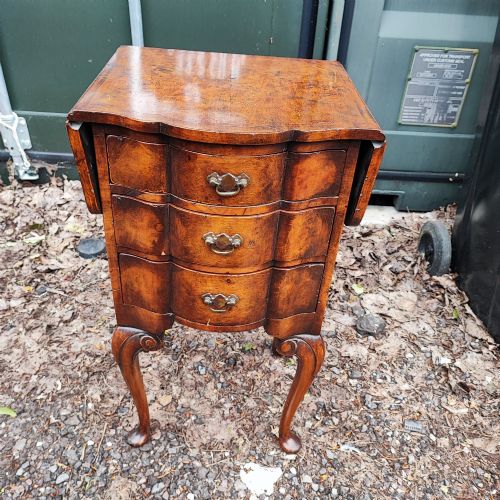
Three Drawer Bedside
A three drawer bedside provides practical surface space and concealed storage beside the bed, drawing on a long tradition of compact domestic cabinetry.
Three Drawer Bedside
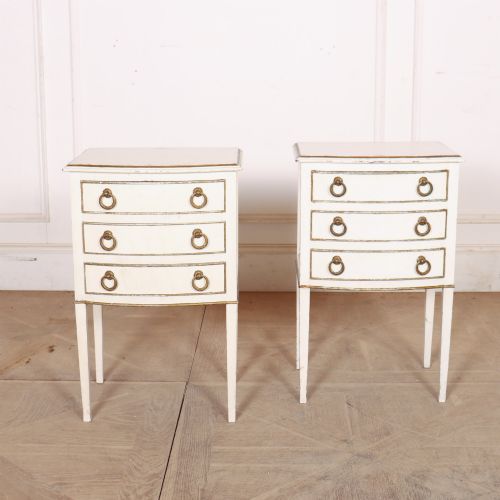
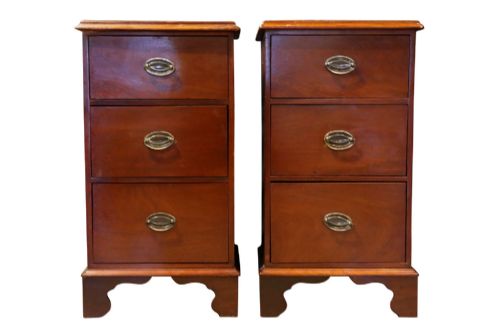
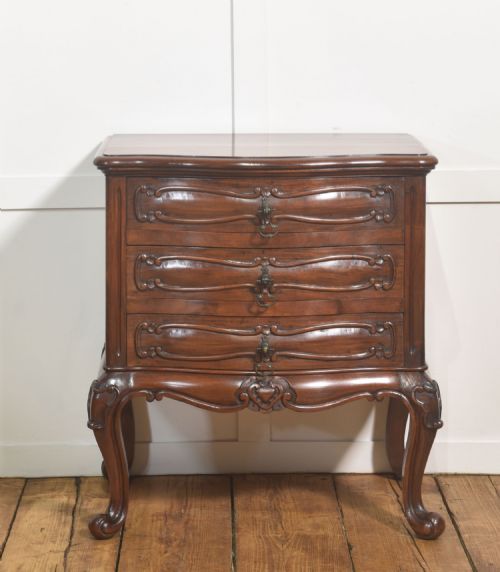
A three drawer bedside encompasses compact chests, small commodes and bedside cabinets designed to sit next to a bed. These pieces provide three horizontal tiers of drawers within a neat footprint, suitable for holding evening essentials while keeping the bedroom floor clear.
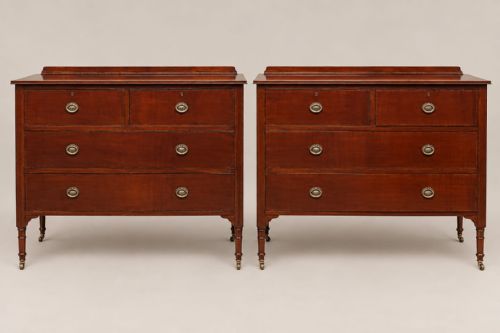
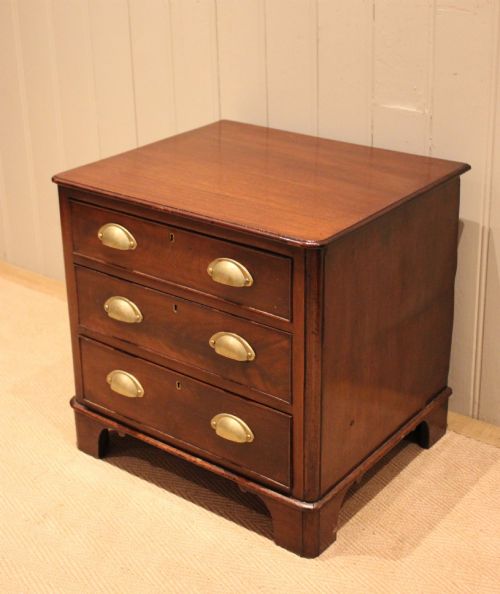
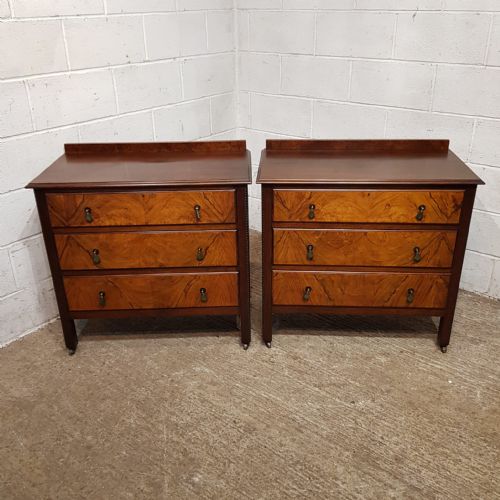
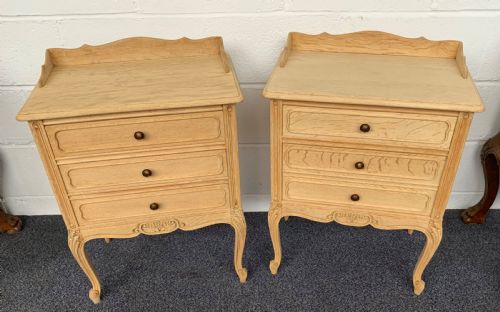
The selections span the nineteenth and twentieth centuries, taking the form of English Victorian mahogany chests, French provincial fruitwood pieces and Art Deco walnut designs. Many examples appear as matched pairs, reflecting the historical demand for symmetry in bedroom furnishings.
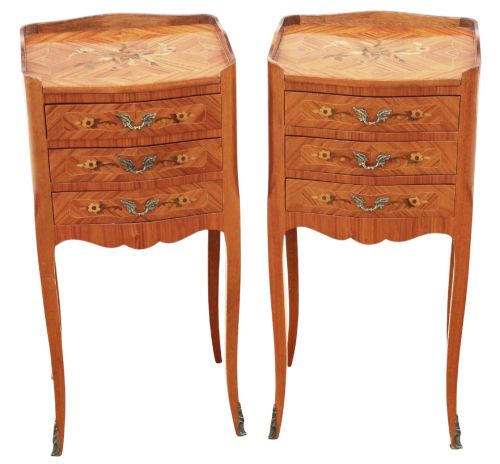
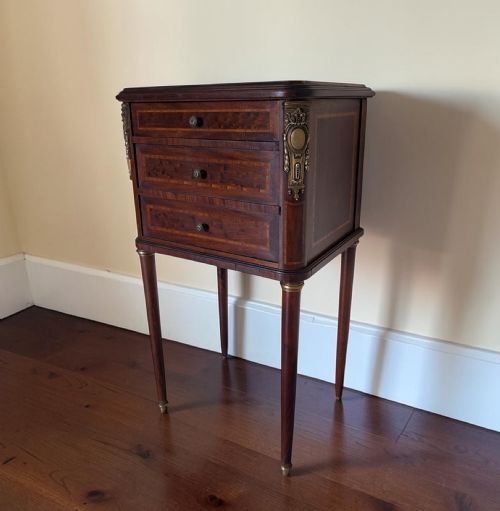
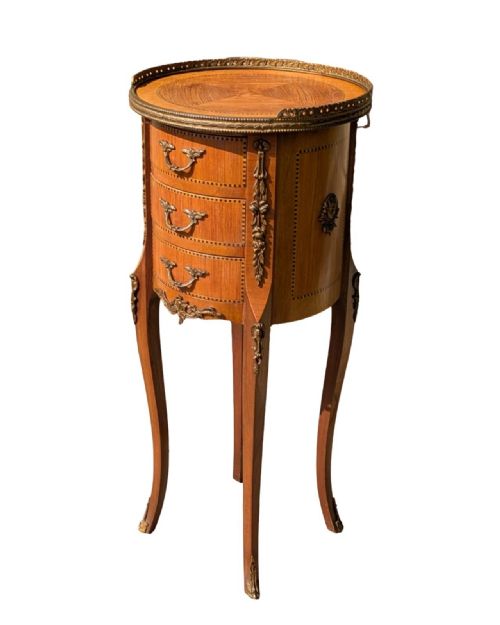
Makers utilised various regional styles, including Louis XV and Louis XVI revivals alongside clean-lined modernist interpretations. Buyers encounter everything from simple timber carcases to highly decorative inlaid surfaces and marble-topped commodes.
How They Were Made
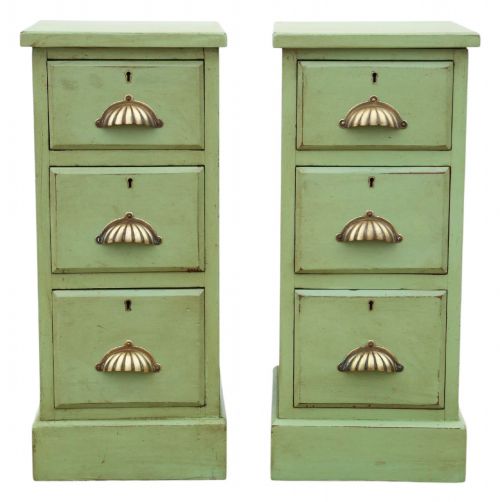
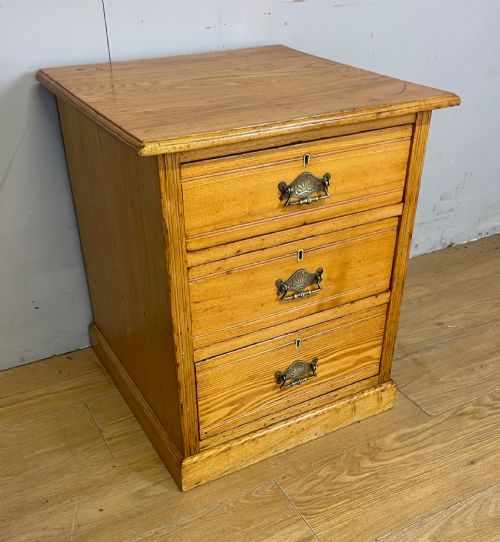
Cabinetmakers constructed these pieces using solid timbers such as mahogany, walnut, oak and pitch pine, often applying figured veneers like burr walnut or satinwood to the primary visual surfaces. Marquetry and floral inlay required precise hand-cutting of contrasting woods, while painted finishes incorporated layers of pigment over a prepared wood base.
Structural integrity relied on traditional joinery methods, including dovetail joints for the drawer carcases and mortise and tenon frames for the main body. Marble tops on French and Continental examples were cut, shaped and polished to fit precisely onto the wooden framework without mechanical fixings.
Materials range from solid mahogany and walnut to painted wood, marble tops and intricate marquetry inlay.
What Varies in Quality
Quality rests in the selection of materials and the precision of the cabinetmaker's execution. Fine pieces display continuous grain patterns across drawer fronts, crisp marquetry work and neatly cut dovetails that remain tight after decades of use.
Proportion and decorative restraint dictate the distinction between standard utility furniture and finer examples. Superior pieces balance the height of the three drawers with balanced hardware, well-chosen timber figures and refined edge mouldings.
The Three Drawer Bedside Glossary
- Commode
- A low chest of drawers or cabinet, frequently of French origin and often featuring a marble top.
- Marquetry
- Decorative patterns formed by fitting together thin veneers of different coloured woods or other materials onto a carcase.
- Serpentine
- A curved furniture front characterised by a convex central section flanked by two concave curves.
- Dovetail
- A joint formed by interlocking wedge-shaped fingers, standard in traditional drawer construction.
- Veneer
- A thin layer of choice wood applied over a base timber to provide a decorative exterior surface.
Three Drawer Bedside: Frequently Asked Questions
Are these pieces sold as pairs?
Many three drawer bedside selections are offered as matched pairs, particularly French and Victorian examples.
Single pieces also appear frequently for those seeking an asymmetrical bedroom layout.
What materials were commonly used?
Mahogany and walnut predominate across English and French pieces, often accompanied by burr walnut veneers.
Other materials include oak, pitch pine, painted wood and marble tops.
How do I identify the period?
Stylistic details such as inlaid marquetry, cabriole legs or geometric Art Deco lines point to specific decades of manufacture.
Construction methods inside the drawers also indicate whether a piece dates to the nineteenth or twentieth century.
Can these fit in modern bedrooms?
Their compact dimensions make them suitable for contemporary spaces needing bedside storage and surface area.
Height and width measurements vary, allowing placement beside beds of different proportions.