


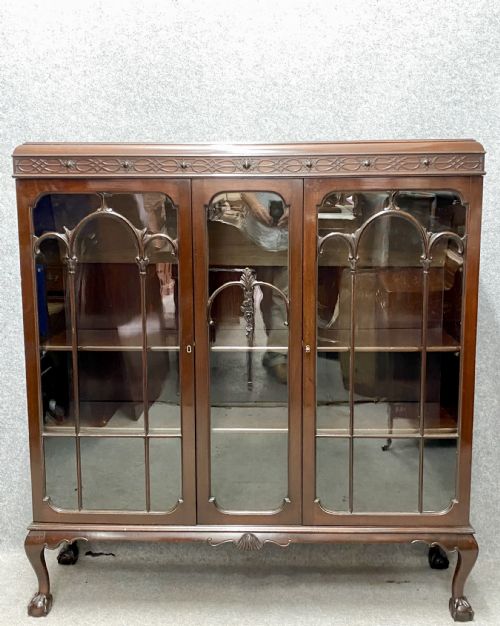

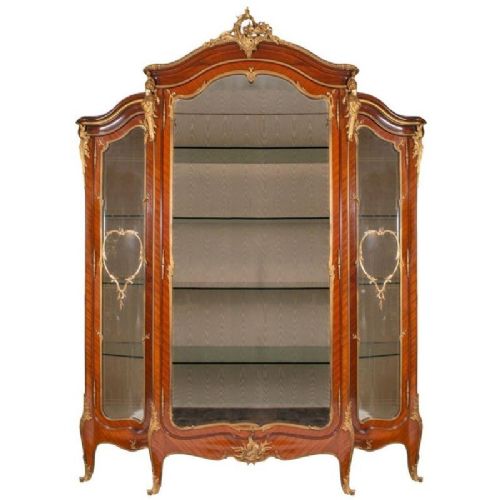


Three Door Vitrine
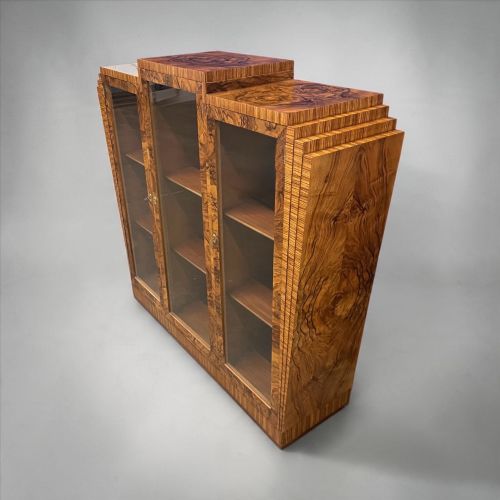
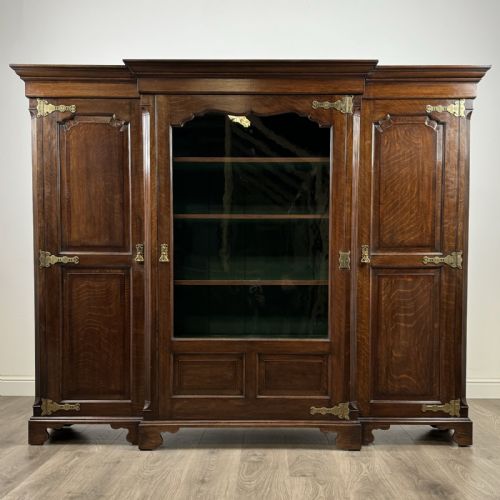
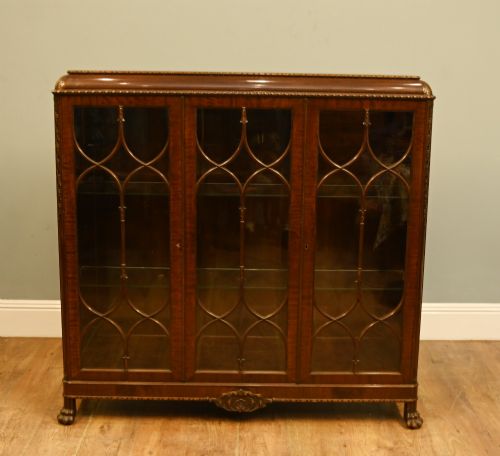
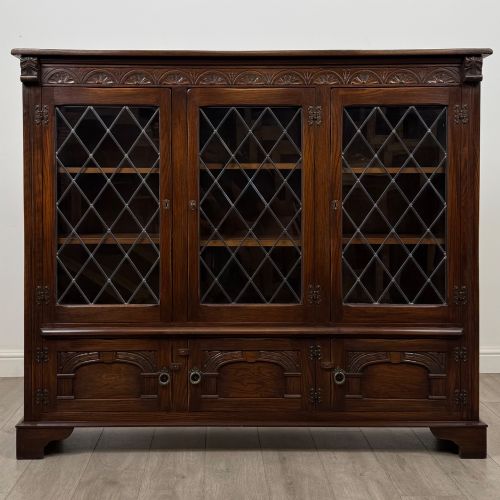
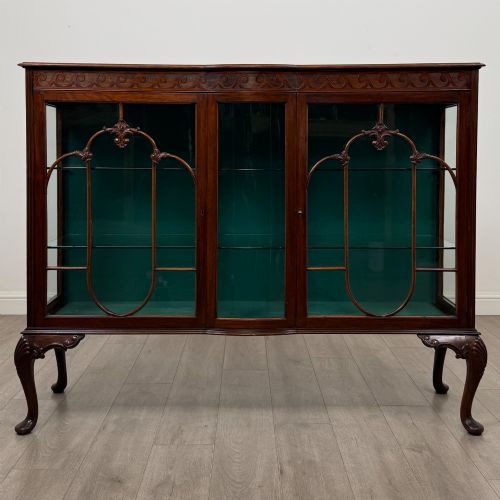
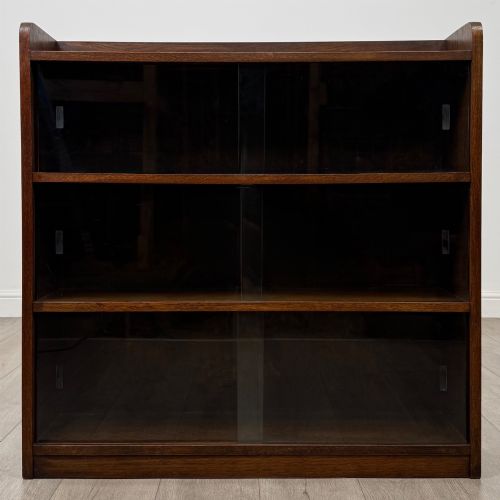
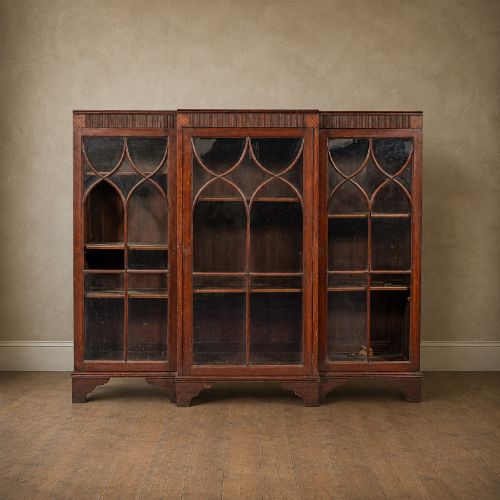
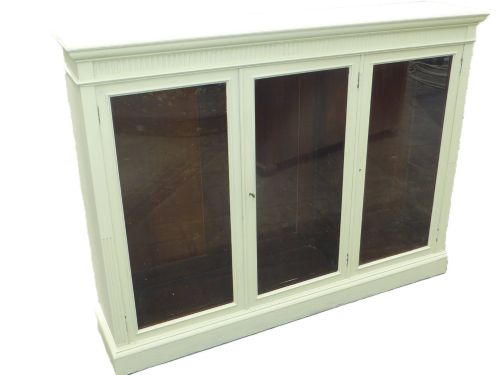
A three door vitrine offers generous display space for prized collections, combining expansive glass panels with period timber frames.
Three Door Vitrine
When you search for a three door vitrine, you are looking at substantial display cabinets and bookcases designed to showcase fine objects while protecting them behind glass. The pieces found here span the Victorian, Edwardian, and early twentieth century periods, reflecting diverse stylistic revivals from Gothic to Sheraton.
How they were made
Cabinet makers utilised dense hardwoods such as mahogany, oak, walnut, and kingwood for the structural frames, often applying delicate satinwood veneers or carved details. Brass hardware frequently secures the doors and supports interior shelving.
Glass panels are fitted into individual wooden muntins to create large viewing areas, while fabric linings occasionally back the interior spaces to highlight displayed ceramics and glassware.
Three Door Vitrine Retail Price Guide 2026
Typical asking prices for three door vitrine among the pieces listed under this phrase on Sellingantiques today, from the lower quarter to the upper quarter. They describe what is for sale here now, not the wider market.
Several cabinets include six adjustable shelves, proving that past owners accumulated books faster than their architects anticipated.
What varies in quality
The distinction between standard examples and exceptional pieces lies in the sophistication of the timber selection and the precision of the carving. Master workshops employed finely figured veneers, intricate brass mounts, and balanced proportions that elevate the entire presence of the furniture.
Execution of period revival styles also dictates value, where hand-carved ornamentation and complex breakfront architecture demonstrate superior craftsmanship compared to plain or heavily mechanised production.
Edwards & Roberts·Linke
The Three Door Vitrine Glossary
- Vitrine
- A glass-fronted cabinet designed specifically for displaying fine objects or collections. These pieces rely heavily on large glazed panels to maximise visibility from multiple angles.
- Breakfront
- A cabinet design where the central section projects forward from the flanking wings. This architectural arrangement adds depth and visual interest to larger case furniture.
- Veneer
- A thin layer of finely figured wood applied over a secondary timber base. This technique allowed makers to utilise expensive materials like kingwood and satinwood efficiently.
- Muntin
- A narrow strip of wood holding the panes of glass within a glazed door. Fine muntins create a lighter, more elegant lattice across large viewing areas.
Three Door Vitrine: Frequently Asked Questions
What is a three door vitrine used for?
These large cabinets were traditionally used in grand drawing rooms and libraries to display valuable porcelain, glassware, and leather-bound books. The expansive glass doors kept dust away from delicate items while allowing them to be admired.
Today, they serve the exact same purpose in modern homes, functioning as statement storage pieces that anchor a room's decor.
How do I date a three door vitrine?
Dating relies heavily on identifying the predominant wood species, construction techniques, and stylistic revival motifs present in the piece. Victorian examples often feature heavy carvings and Gothic influences, while Edwardian versions tend to show lighter satinwood inlays and Sheraton revival lines.
Examining the interior shelving hardware and backboards also provides valuable clues regarding the manufacturing era.
How do I care for antique wood and glass?
Maintain timber surfaces by applying a quality beeswax polish sparingly, avoiding silicone-based sprays that can damage old finishes. Keep the cabinet away from direct sunlight and dramatic temperature fluctuations to prevent wood splitting and veneer lifting.
Glass panels can be cleaned gently with standard glass cleaner applied to a cloth rather than sprayed directly near the wood.