

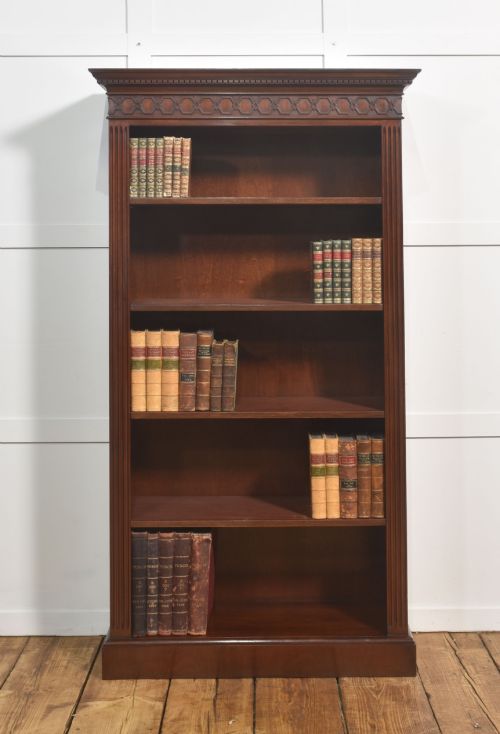
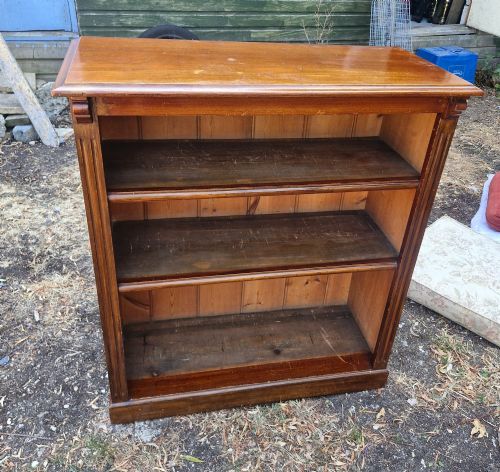


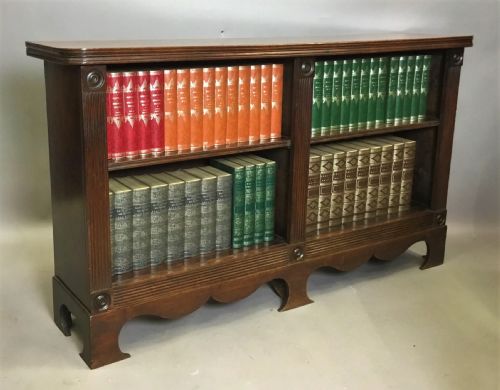
Carved Fluted Bookcase
A carved fluted bookcase brings architectural discipline to a room, offering sturdy timber shelving framed by classical detail.
Carved Fluted Bookcase
A carved fluted bookcase is a substantial piece of furniture designed to house libraries, typically appearing in open fronted formats or as glazed cabinets with adjustable shelves. These pieces frequently emerge from the Victorian, Edwardian, and early twentieth century periods, showing distinct stylistic revivals such as Georgian, Regency, and Neoclassical designs. Oak and mahogany dominate the forms seen here, often augmented by walnut, satinwood, and brass hardware.
The version most commonly met on this page is the open fronted bookcase, ranging from late Victorian walnut examples to Edwardian oak pieces and Sheraton revival bow fronted open book shelves. Taller and more architectural iterations feature glazed doors, frieze drawers, and turned carved and fluted columns supporting breakfront structures. Buyers encounter everything from country house mahogany pieces of unusual design to standard adjustable shelving units built for domestic libraries.
How they were made
Cabinet makers constructed these bookcases using dense hardwoods like mahogany, oak, and walnut, frequently selecting pine for secondary framing and internal carcass work. Timber boards were joined to create solid plinth bases and cornices, while finer examples incorporated satinwood banding or brass fittings to accent the primary grain.
Carving and fluting were applied directly to structural elements such as columns and friezes using traditional hand chisels to produce crisp vertical channels. Glazed doors were framed with tight joints to hold glass securely, and internal side walls were fitted with rack and pinion mechanisms or traditional wooden fillets to support adjustable shelving.
Carved Fluted Bookcase Retail Price Guide 2026
Typical asking prices for carved fluted bookcase among the pieces listed under this phrase on Sellingantiques today, from the lower quarter to the upper quarter. They describe what is for sale here now, not the wider market.
Listings span the nineteenth and early twentieth centuries, featuring robust oak, rich mahogany, and warm walnut timbers across various revival styles.
What varies in quality
Quality in these bookcases rests upon the selection of timber and the precision of the joinery rather than the sheer scale of the piece. Superior examples display carefully matched timber grains across the front elevation and deeply carved fluting that maintains sharp, clean edges along the columns.
Internal construction dictates the longevity of the furniture, distinguishing standard utility storage from finer parlour pieces. Adjustable shelving systems that move smoothly without binding, solid plinth bases, and well fitted doors indicate higher standards of workshop production.
The Carved Fluted Bookcase Glossary
- Fluting
- Vertical rounded grooves carved into a column or pilaster. This classical decorative detail adds linear shadow and visual rhythm to the furniture frame.
- Breakfront
- A cabinet design where the central section projects forward from the flanking wings. This architectural arrangement creates depth and breaks up a flat wall elevation.
- Frieze
- The wide horizontal section of woodwork situated directly beneath the cornice. It often carries carved decoration, mouldings, or integrated drawers.
- Plinth base
- The solid lower block or platform upon which a heavy piece of furniture rests. It provides a stable foundation and elevates the lower shelving above the floor.
Carved Fluted Bookcase: Frequently Asked Questions
How do I adjust the shelves?
Most period bookcases utilise either wooden side fillets, traditional peg supports, or metal rack strips set into the interior walls. You simply lift the shelf clear of its supports and reposition the pins or move the board to the desired height.
Heavier oak and mahogany boards require care during adjustment to avoid marking the interior veneer or side walls. Take your time to ensure the shelf sits level on all four supports before loading books back onto it.
Are the shelves strong enough for heavy books?
Solid hardwood shelves made from oak or mahogany easily support heavy volumes and reference books over long periods. Adjustable wooden boards are designed to handle standard library loads without bowing.
Very long shelves spanning wide bookcase bays can experience slight sagging if overloaded with dense octavos. Distribute heavy sets evenly across shorter bays to maintain the integrity of the timber.
How do I care for mahogany and oak surfaces?
Timber surfaces respond best to occasional cleaning with a soft, lint-free cloth and traditional beeswax rather than modern liquid polishes. Keeping the wood away from direct heat sources and strong sunlight prevents the finish from drying out or fading.
Applying wax twice a year nourishes the grain and builds a protective barrier against everyday moisture. Buff the wax thoroughly after application to maintain a soft, natural sheen across the carved mouldings.
What is the difference between open and glazed bookcases?
Open bookcases provide direct, unhindered access to books and present a lighter visual profile within a room. They suit frequently read volumes and allow the internal timber lining to be seen clearly.
Glazed bookcases feature glass fronted doors that protect valuable or delicate leather bound books from dust and environmental moisture. These enclosed cabinets generally occupy a more formal position in a library or study.