


Three Door Pine Cupboard
A three door pine cupboard offers substantial storage and utilitarian presence, combining generous proportions with domestic utility across regional and country traditions.
Three Door Pine Cupboard
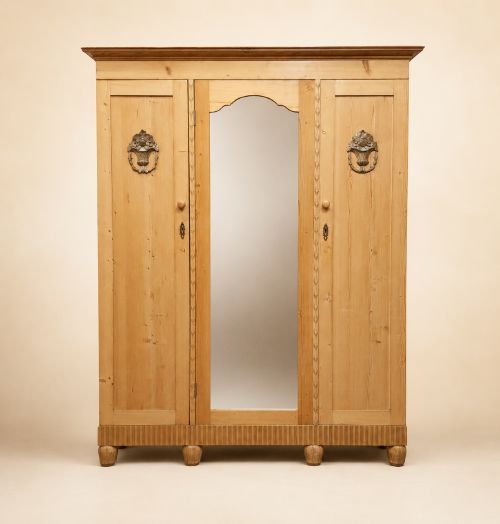
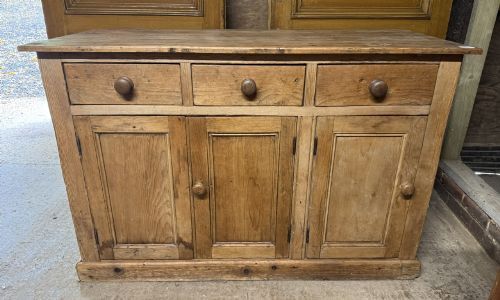
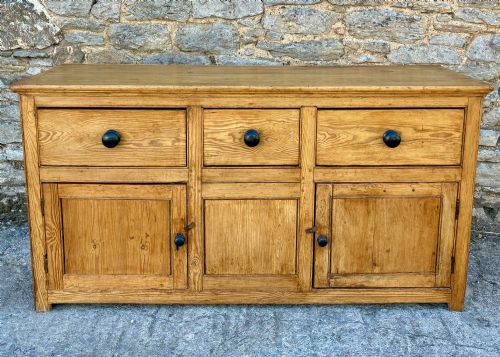
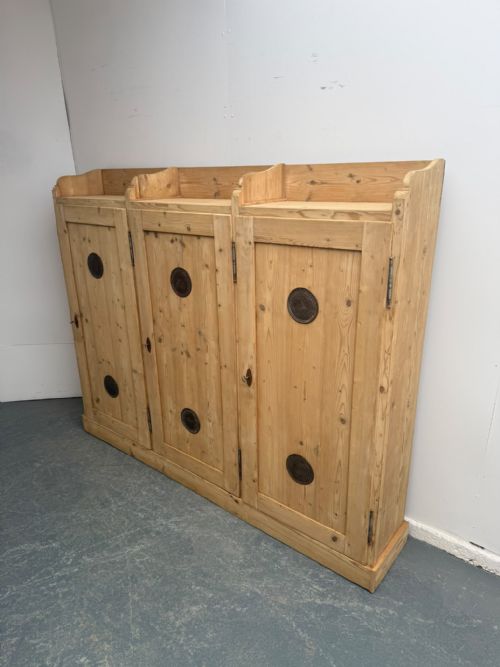
A three door pine cupboard provides large-scale storage through a tripartite facade, appearing across nineteenth-century Victorian and earlier Georgian periods. These pieces serve domestic spaces as wardrobes, linen cupboards, corner cabinets, and kitchen dressers.
The layout typically spans extensive widths, utilising multiple panels to divide the elevation. Examples emerge from English, Irish, Scottish, and Hungarian vernacular traditions, reflecting regional cabinet-making practices.
Makers constructed these large carcases for utility, resulting in tall or low configurations suited to domestic storage. Buyers encounter waxed finishes, bare timber surfaces, and original painted coats.
Materials and construction
Makers built these pieces primarily using solid pine and pitch pine timbers, reinforced with iron and brass hardware for hinges and handles. Secondary woods supported internal shelving and backboards.
Surfaces received various treatments, from clear wax applications to lead-based paints in cream or other pigments. Glass panels occasionally feature in upper sections, while vented doors or solid panels comprise the main facades.
Some school cupboards carry the quiet ghost of generations of ink stains and hurried coat hooks inside their heavy doors.
Evaluating quality and proportion
Quality rests in the retention of original surface treatments, whether aged paint or historic wax finishes. Altered hardware and replacement timber diminish the integrity of the piece.
Proportion and scale distinguish finer vernacular pieces from utilitarian work furniture. Sound structural joinery in the large carcase ensures the heavy doors hang true without sagging.
The Three Door Pine Cupboard Glossary
- Pitch pine
- A dense, resinous softwood with a pronounced grain pattern, frequently utilised for durability in nineteenth-century furniture.
- Vernacular
- Objects made by local craftsmen for everyday use rather than high-style urban workshops, often displaying distinct regional characteristics.
- Carcase
- The main structural body or frame of a piece of furniture, excluding doors and drawers.
- Original finish
- The initial paint, stain, or wax applied to the timber when first made, preserved without subsequent stripping.
Three Door Pine Cupboard: Frequently Asked Questions
What rooms suit a three door pine cupboard?
These large pieces require substantial wall space, making them ideal for spacious kitchens, utility rooms, or generous bedrooms. Their deep interiors accommodate bulk storage while anchoring the room visually.
Smaller rooms struggle with their extensive width, though lower dresser bases fit well beneath high ceilings.
How do I care for waxed pine surfaces?
Maintain waxed pine by applying a traditional beeswax polish sparingly and buffing with a soft cloth to preserve the sheen. Avoid placing the timber near direct heat sources or moisture.
Regular dusting prevents grime build-up in the grain and keeps the historic patina intact.
Are painted finishes original on these cupboards?
Many pieces retain historic paint layers, which vary from early cream coats to later regional colours. Examination of the paint surface under natural light reveals wear patterns consistent with age.
Original paint adds significantly to the character and historic value of country furniture.
How do I date a pine cupboard?
Dating relies on construction methods, such as hand-cut dovetails, backboard thickness, and fastener types used in the carcase assembly. Hardware styles and timber selection also offer clues to the period.
Earlier eighteenth and early nineteenth-century pieces display different proportions compared to later Victorian iterations.