

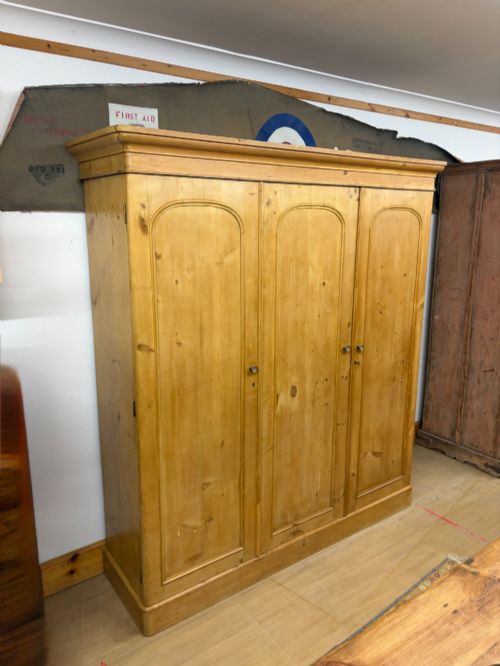
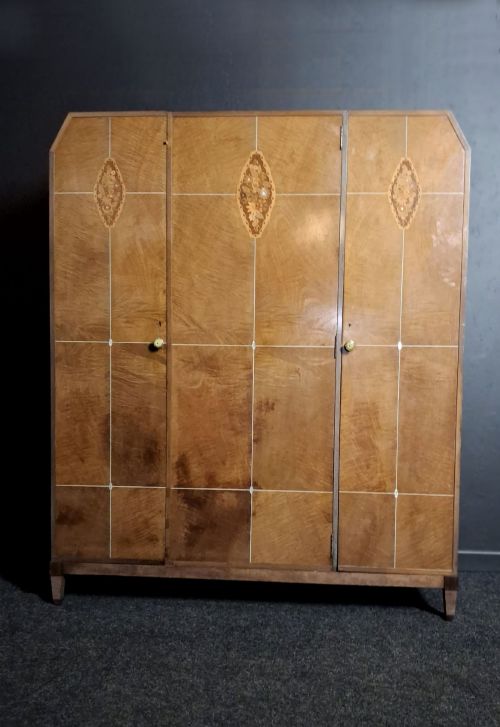
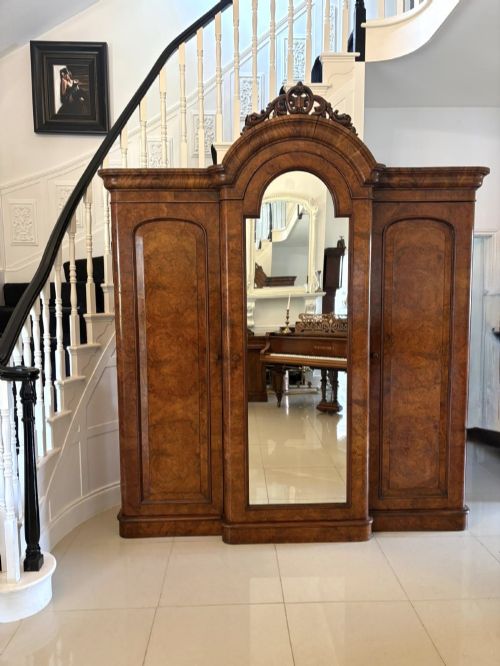
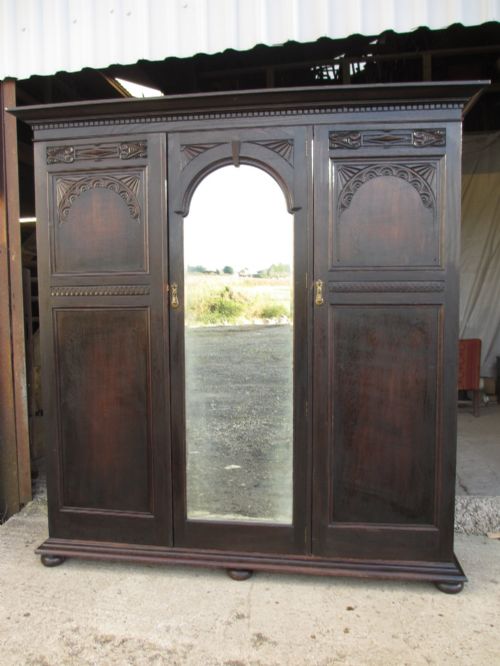


Three Door Compactum
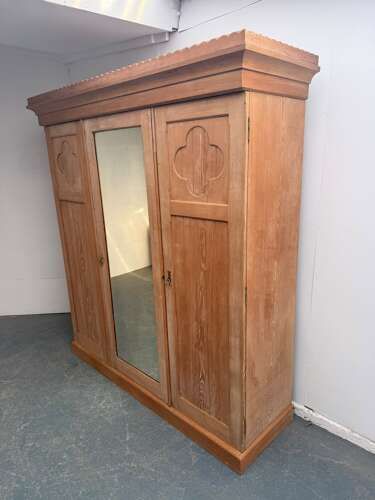
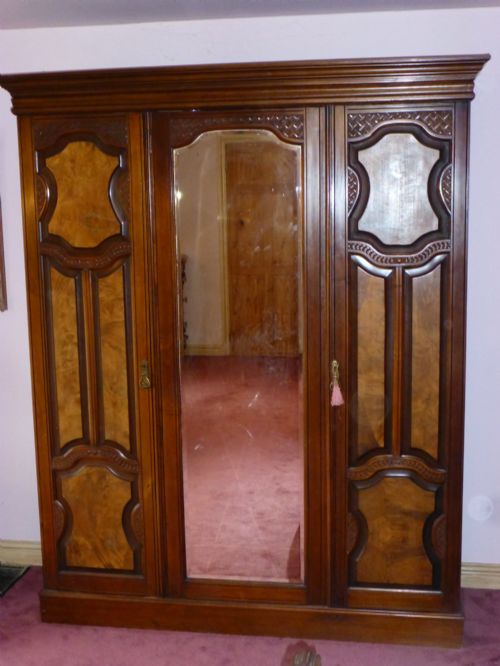
A three door compactum combines hanging space and shelving in one substantial bedroom piece, offering traditional storage with genuine period character.
Three Door Compactum
A three door compactum is a triple wardrobe configuration designed to maximise bedroom storage by dividing the interior into hanging compartments and linen sections. Most examples encountered here belong to the Victorian and Edwardian periods, appearing in forms from plain mahogany to elaborate walnut and oak.
How they were made
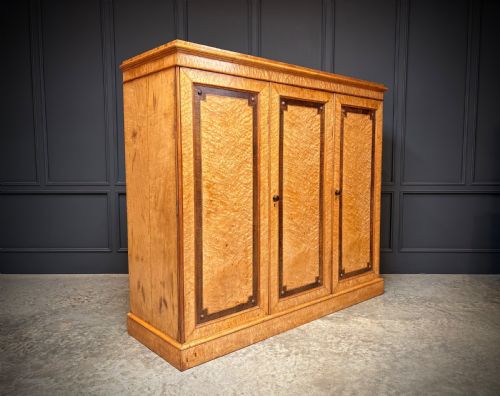
Cabinet makers utilised dense hardwoods such as mahogany, oak, and walnut, frequently applying burr walnut, birds-eye maple, or satinwood veneers to the principal surfaces. Carved mouldings, boxwood stringing, and satinwood inlay define the decorative vocabulary of Edwardian and Victorian workshops.
Mirrored doors frequently form the central or flanking panels, adding depth to smaller bedrooms while concealing internal storage. Brass handles, escutcheons, and heavy hinges provide functional and visual contrast to the dark timber finishes.
Three Door Compactum Retail Price Guide 2026
Typical asking prices for three door compactum among the pieces listed under this phrase on Sellingantiques today, from the lower quarter to the upper quarter. They describe what is for sale here now, not the wider market.
Some gentlemen's compactums still retain their original sliding trouser racks, reminding us that Victorian laundry organisation was a serious architectural pursuit.
What varies in quality
The choice of timber grain and veneer selection dictates the visual standing of a three door compactum. Finer pieces display matched burr walnut or figured mahogany across the doors, whereas simpler variants rely on plain pine or standard oak.
Internal joinery separates basic production from superior craftsmanship. Fitted linen slides, dovetailed drawer construction, and original brass hardware indicate workshops that prioritised durability alongside exterior appearance.
Maple & Co·Holland and Sons
The Three Door Compactum Glossary
- Burr walnut
- A highly prized timber veneer showing swirling knot patterns created from the growths of the walnut tree. Cabinet makers selected it for its decorative impact on primary display surfaces.
- Breakfront
- A piece of furniture where the central section projects forward from the flanking wings. This architectural arrangement creates depth and breaks up the flat plane of a large wardrobe.
- Stringing
- A narrow inlay of contrasting wood used to outline panels and drawers. It highlights the geometric proportions of Edwardian and Victorian case pieces.
- Escutcheon
- A protective plate surrounding a keyhole. On period wardrobes, these are typically cast in brass and occasionally integrated into decorative mounts.
Three Door Compactum: Frequently Asked Questions
What is a three door compactum?
A three door compactum is a large triple wardrobe that houses hanging space, drawers, and shelving in a single unit. It was designed to provide comprehensive clothing storage for period bedrooms.
These pieces typically divide into three distinct internal sections behind full-length doors, frequently including a mirrored centre panel.
How do I fit a compactum in a modern room?
Measure your ceiling height and wall space carefully before acquisition, as these wardrobes are exceptionally tall and deep. Allow clearance for cornices and protruding mouldings.
Most period compactums dismantle into modular sections, including a cornice, a plinth, and three separate carcase pieces, which simplifies transport and room placement.
How do I distinguish Victorian from Edwardian examples?
Victorian compactums generally employ heavier timbers such as dark mahogany, burr walnut, and pollard oak with deep carved detailing. Their proportions are robust and substantial. N Edwardian versions often feature lighter woods like satinwood, ash, or inlaid mahogany, reflecting the Sheraton Revival and Arts and Crafts tastes for brighter domestic interiors.
How should I maintain the wood finish?
Apply traditional beeswax periodically to nourish the timber and maintain a soft lustre on mahogany, walnut, and oak surfaces. Avoid modern silicone sprays that can damage antique polishes.
Keep the wardrobe away from direct heat sources and strong sunlight to prevent the timber veneers from drying out or splitting over time.