



Victorian 3 Door Wardrobe
A victorian 3 door wardrobe offers substantial storage while anchoring a bedroom with period presence.
Victorian 3 Door Wardrobe
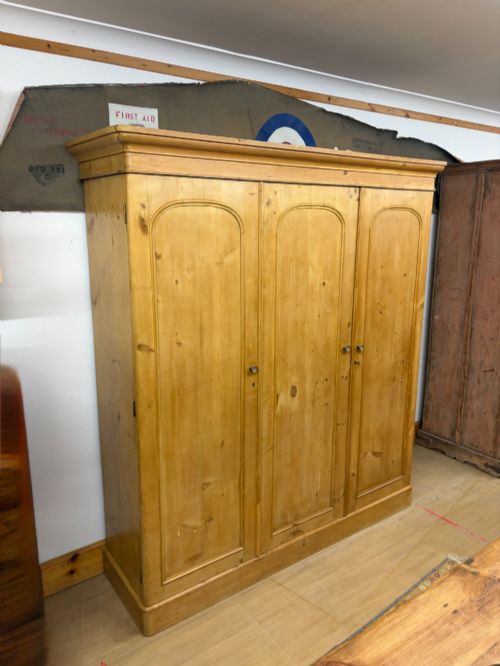
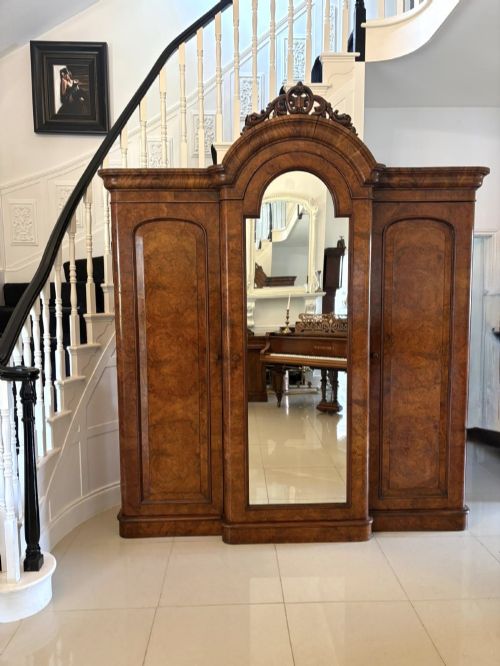
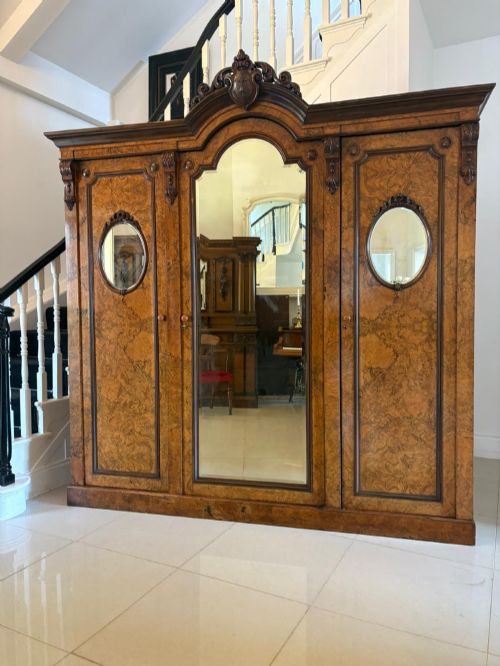
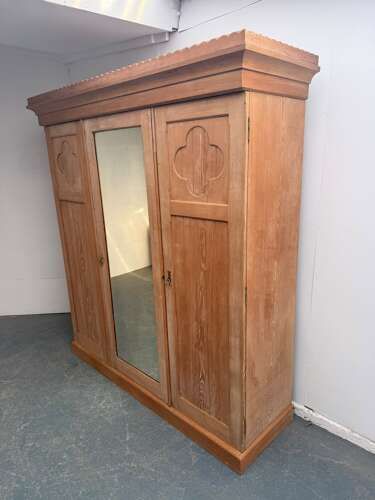
A victorian 3 door wardrobe represents a large scale bedroom storage piece designed primarily during the nineteenth century. These items typically feature a central mirrored or panelled door flanked by two full-length hanging or shelved compartments.
Examples on this page span the Victorian era, the Edwardian period, and associated nineteenth-century styles such as Arts and Crafts, Chippendale Revival, and Gothic. Materials range from dense hardwoods like mahogany and burr walnut to softer timbers such as pine and ash.
Materials and Construction
Cabinet makers utilised solid timbers and selected veneers, applying flame mahogany, burr walnut, ash, and pine according to the desired finish and regional tradition. Many pieces incorporated brass hardware, glass mirrors, and iron internal mechanisms.
Construction methods often included knockdown capabilities to allow these large items to be transported and assembled in domestic chambers. Surfaces received wax finishes, polished sheens, scumble paintwork, or ebonised treatments.
Victorian 3 Door Wardrobe Retail Price Guide 2026
Typical asking prices for victorian 3 door wardrobe among the pieces listed under this phrase on Sellingantiques today, from the lower quarter to the upper quarter. They describe what is for sale here now, not the wider market.
Listings feature woods ranging from pine and ash to burr walnut, flame mahogany, and bird's eye maple.
Distinctions in Execution
The standard of a piece rests on the selection of timber figures, such as figured mahogany or burr walnut, and the precision of the cabinet work. Superior items display careful matching of grain patterns across multiple doors and panels.
Maker attribution and internal complexity also define the grade of the wardrobe. Compactums with fitted interior drawers, sliding trays, and original brass fittings demonstrate higher workshop standards than plain utilitarian counterparts.
Shapland & Petter·Holland and Sons·S & H Jewell
The Victorian 3 Door Wardrobe Glossary
- Compactum
- A multi-compartment wardrobe that combines hanging space with internal drawers, shelves, and sliding trays. This form maximises storage within a single architectural footprint.
- Breakfront
- A cabinet design where the central section projects forward from the flanking wings. This configuration creates visual depth and architectural presence.
- Scumble
- A decorative paint technique used to imitate the grain of costlier woods like oak or walnut over a cheaper softwood base. It was widely applied during the nineteenth century.
- Knockdown
- A construction method employing bolts, wedges, or slot-in panels so a large piece of furniture can be disassembled for transport. This design was essential for moving heavy wardrobes into upper-floor bedrooms.
Victorian 3 Door Wardrobe: Frequently Asked Questions
How do I dismantle a large wardrobe?
Many nineteenth-century wardrobes use internal bolts, pegs, or tongue-and-groove joints to hold the cornice, base, and sides together without permanent glue. Label each loose component as you remove the doors and crown to ensure a straightforward reassembly.
Enlist a second person to support heavy mirrored or solid wood panels during the process. Keep all original hardware, screws, and wooden pins safely contained.
Will these wardrobes fit standard modern bedrooms?
These large storage pieces require significant wall space and adequate ceiling height for the heavy moulded cornices. Measure your room dimensions carefully, accounting for door swing clearance and internal depth.
Consider the knockdown construction format if access stairways or tight hallways present obstacles. Many antique carcasses can be taken apart into manageable flat sections for transit.
How should I clean the wood surface?
Dust regularly with a dry, soft cloth and apply traditional beeswax periodically to nourish unsealed or waxed timber surfaces. Avoid silicone-based sprays that can penetrate the grain and damage historic polishes.
Treat glass mirrors with standard glass cleaner applied to a cloth rather than sprayed directly near the wooden frame. Protect mahogany and walnut surfaces from direct sunlight to prevent fading.
What is the difference between a compactum and a standard wardrobe?
A standard wardrobe focuses primarily on vertical hanging space behind two or three full-length doors. A compactum integrates internal banks of drawers, sliding linen trays, and smaller compartments alongside the hanging sections.
This multi-functional layout provides comprehensive storage for folded garments and accessories within a single unit.