

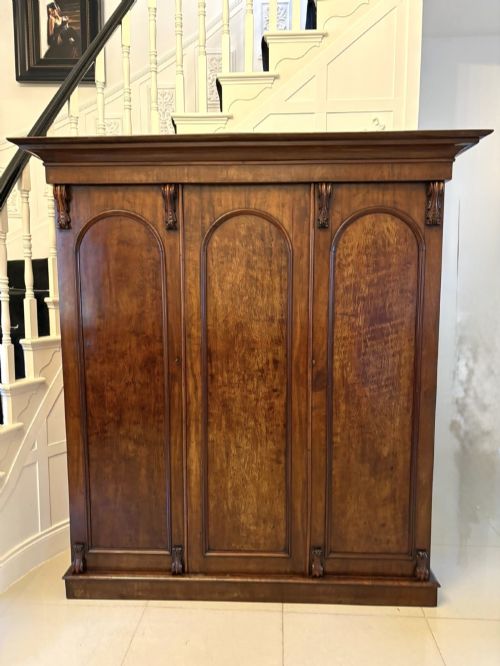
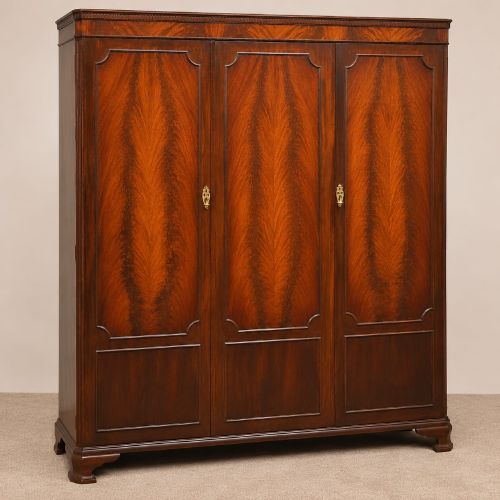
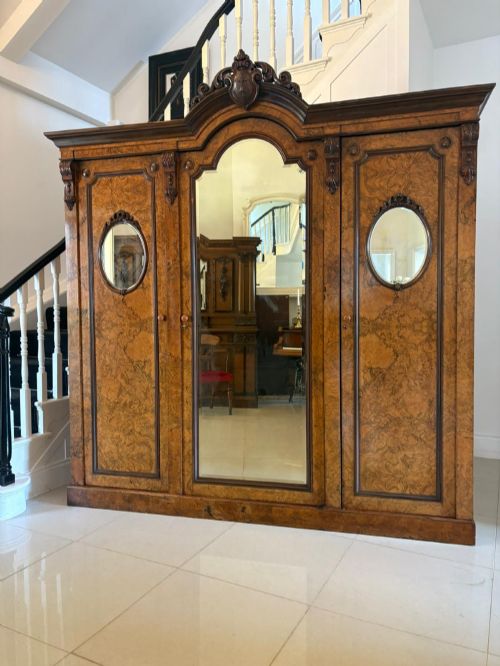
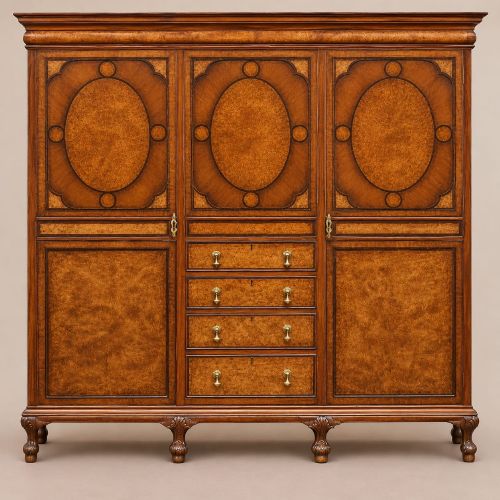
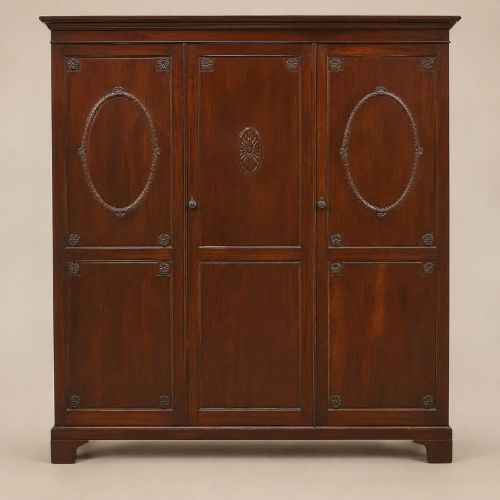
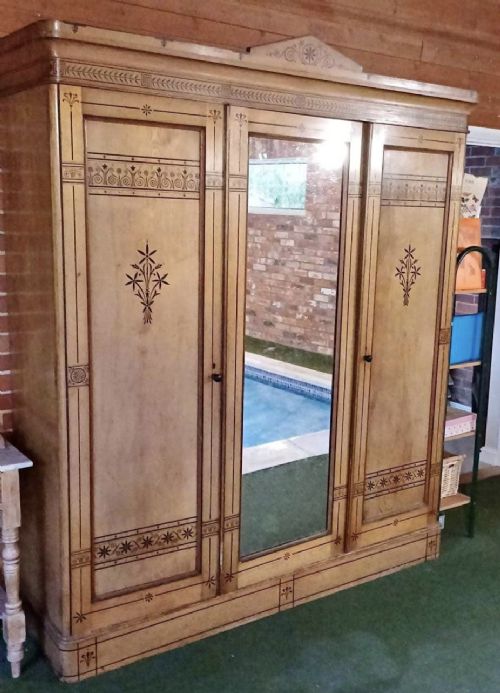
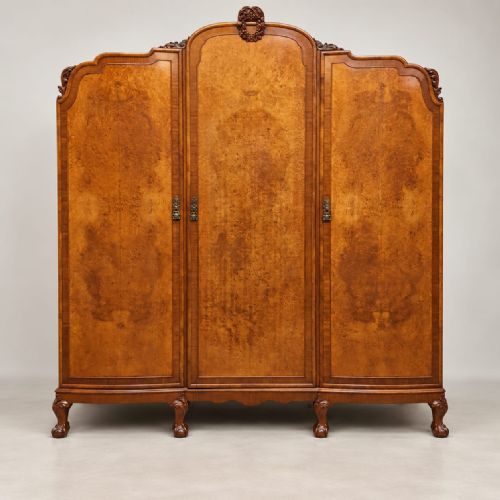
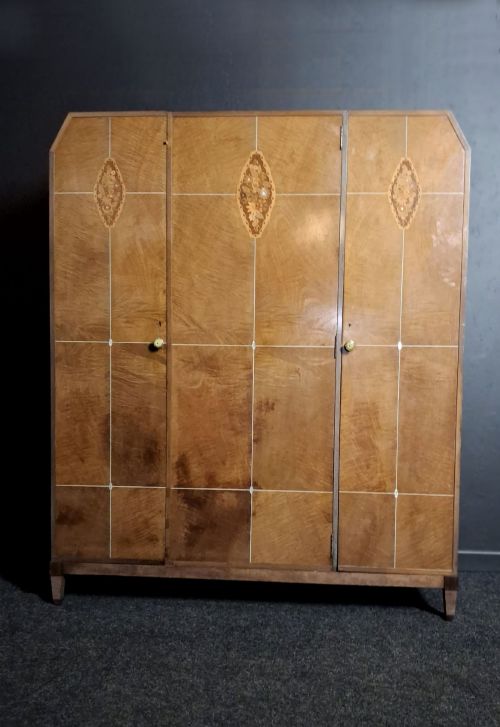
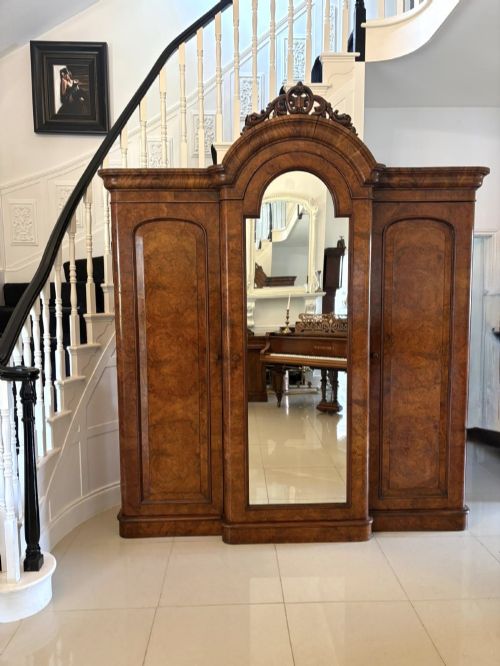
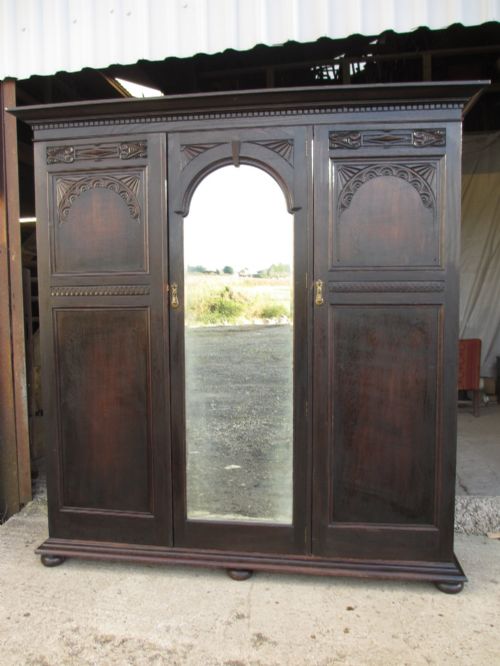
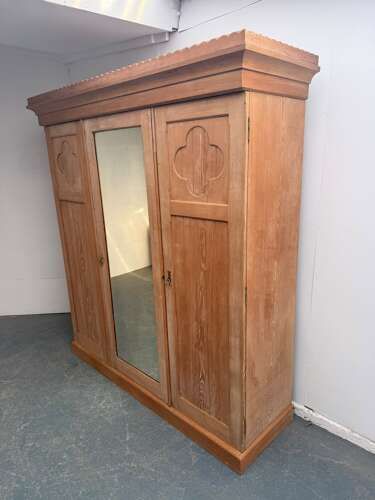
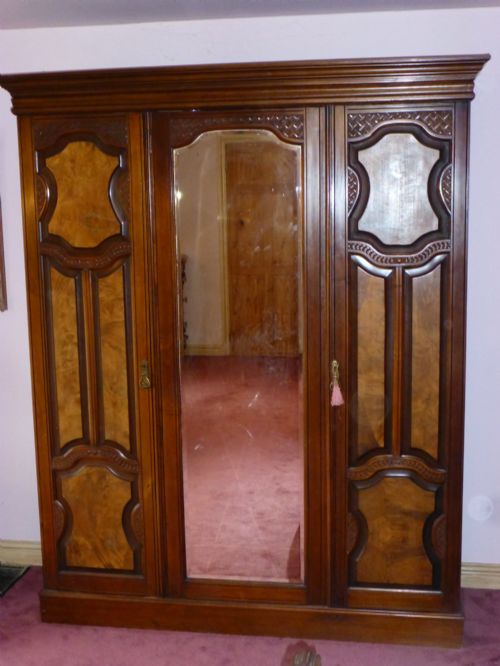

Three Door Bedroom Armoire
A three door bedroom armoire provides substantial hanging and drawer space while anchoring a room with period character.
Three Door Bedroom Armoire
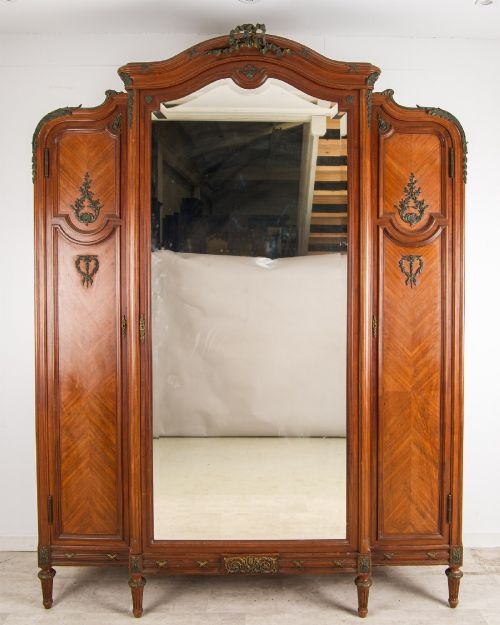
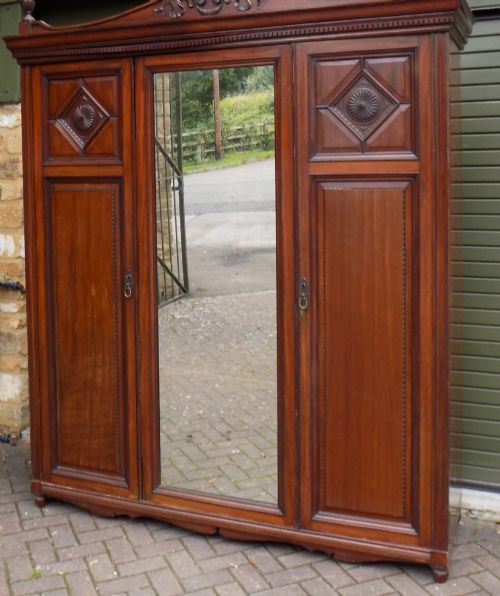
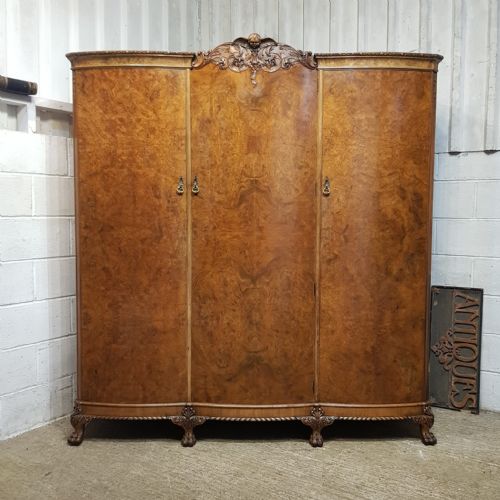
A three door bedroom armoire is a large freestanding wardrobe providing expansive storage through a central compartment flanked by two side sections or wing doors. When searching for a three door bedroom armoire, buyers encounter impressive triple wardrobes and compactum pieces designed to hold extensive garments and linens.
The pieces span periods from the nineteenth century through the Edwardian era and into the 1930s, reflecting changing domestic needs. Victorian examples often utilise rich burr walnut or figured mahogany, while Edwardian models frequently display inlaid woodwork and mirror doors.
Makers such as Maple and Co., Hille for Harrods, Holland and Sons, and Jean Faure appear among the listings, alongside substantial pine and oak country house pieces. The format typically balances hanging space in the main wings with internal drawers, shelves, or compartments in the centre section.
Materials and construction methods
Makers utilised timber veneers such as burr walnut, straight-grained walnut, and satinwood applied over sturdy carcass woods like mahogany, pine, and oak. Solid timbers were carved, panelled, or inlaid to decorate the expansive front facades of these large wardrobes.
Glass found application in bevelled mirror doors, which became common by the Victorian and Edwardian periods to add light and utility to the bedroom. Brass and gilt bronze ormolu mounts provided structural hardware and decorative accents on French and English pieces alike.
Three Door Bedroom Armoire Retail Price Guide 2026
Typical asking prices for three door bedroom armoire among the pieces listed under this phrase on Sellingantiques today, from the lower quarter to the upper quarter. They describe what is for sale here now, not the wider market.
Several pieces include hidden compartments and secret drawers, proving that Victorians loved a good hiding spot for their valuables.
Markers of distinction and craftsmanship
Quality rests in the selection of timbers, where highly figured burr walnut, pollard oak, or birds eye maple veneers demonstrate superior cabinet-making ambition. Finer pieces incorporate carved detailing, string inlay, and balanced proportions across their triple sections.
Maple and Co·Hille for Harrods·Holland and Sons·Jean Faure·Harry and Lou Epstein
The Three Door Bedroom Armoire Glossary
- Compactum
- A multi-compartment wardrobe that combines hanging space with internal drawers, shelves, and sliding trays. This efficient layout maximises storage within a single footprint.
- Breakfront
- A cabinet design where the central section projects forward from the flanking wings. This architectural arrangement creates depth and visual interest on large furniture.
- Burr walnut
- A prized timber cut from walnut tree growths, yielding intricate, swirling grain patterns. Cabinet-makers used these figured veneers on primary display surfaces.
- Ormolu
- Gilded bronze mounts and decorative fittings applied to furniture. This technique enhanced the aesthetic appeal of high-end armoires.
- Aesthetic Movement
- A late nineteenth-century design style focusing on visual beauty rather than narrative meaning. Pieces from this period often utilised satin birch or dark mahogany.
Three Door Bedroom Armoire: Frequently Asked Questions
What is a compactum wardrobe?
A compactum wardrobe integrates multiple storage formats, combining traditional hanging space with internal linen slides, shelves, and lower drawers. This design offered comprehensive bedroom storage within one large piece.
Buyers find these configurations particularly useful for organising diverse garments and accessories without needing separate drawer chests.
How do I date an antique wardrobe?
Dating relies on observing timber choices, decorative styles, and construction techniques characteristic of specific periods like the Victorian, Edwardian, or 1930s eras. For instance, heavy burr walnut and ornate carvings point toward mid-to-late nineteenth-century work.
Lighter satinwood inlays and mirror glass doors frequently indicate Edwardian manufacture, while streamlined surfaces suggest later Art Deco influences.
Are these wardrobes easy to dismantle?
Many large triple wardrobes and armoires were constructed to dismantle into sections - typically a cornice, base, two side carcases, and a central hanging compartment - to facilitate transport and installation in bedrooms.
Checking the construction reveals whether historical knockdown bolts were utilised by the original cabinet-makers for domestic placement.
Where should I place a large armoire?
A large triple wardrobe requires a bedroom wall with sufficient width and ceiling clearance to accommodate its expansive proportions without overwhelming the room. Placing the piece away from direct heat sources protects the timber veneers and solid wood panels.
Mirrored doors also benefit from positioning opposite windows to reflect natural light across the interior space.