
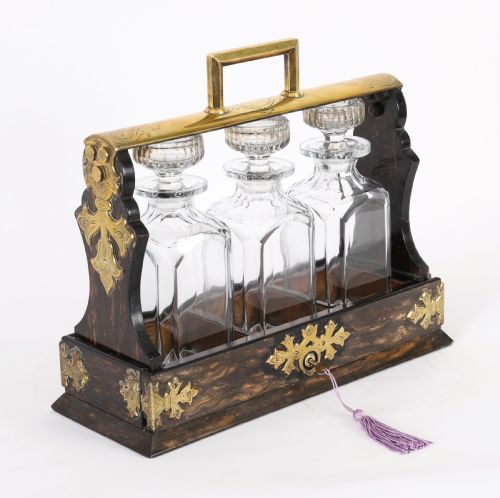


Three Decanter Stand
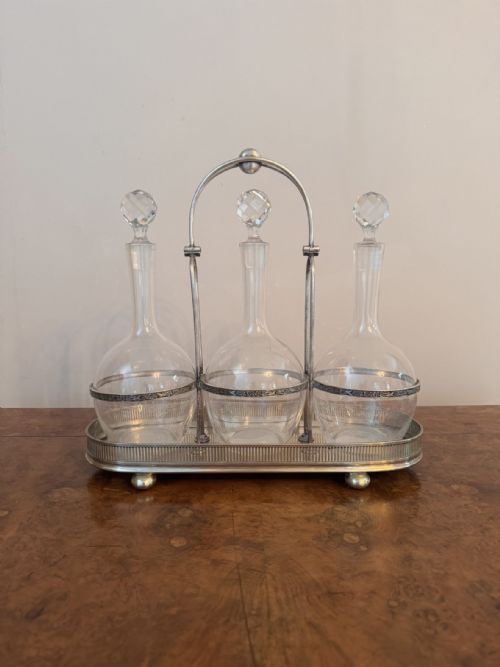
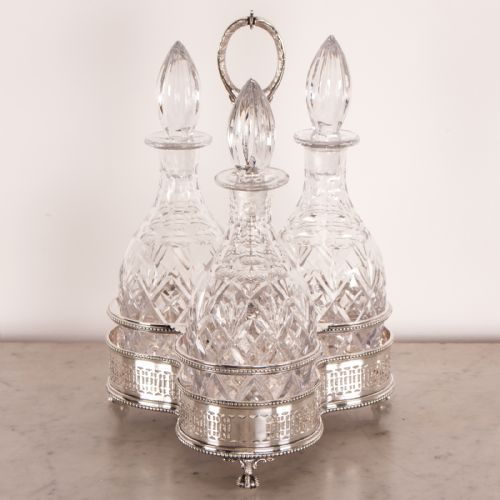
A three decanter stand organises three bottles securely for after-dinner service, bringing structured symmetry and polished metalwork to a sideboard.
Three Decanter Stand
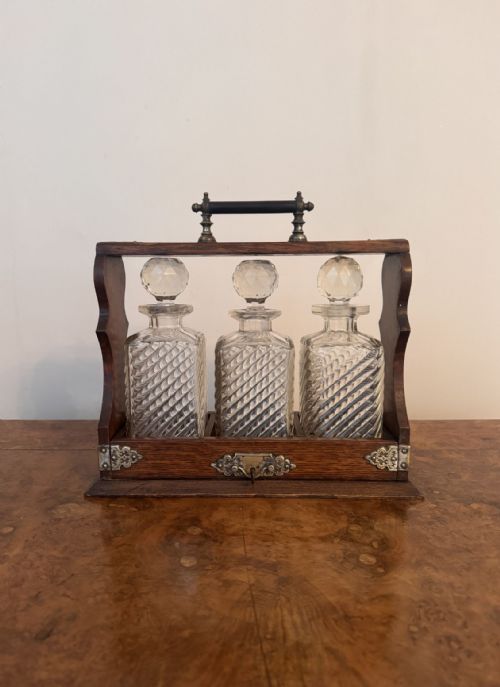
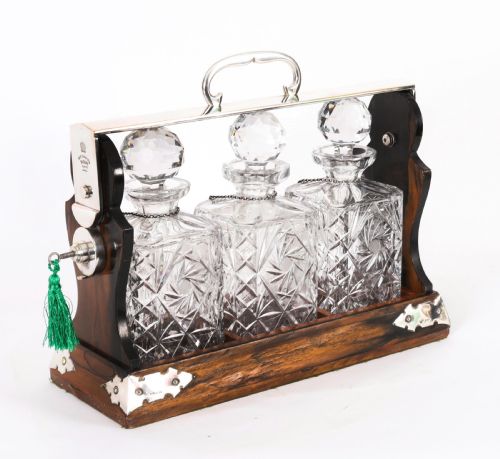
A three decanter stand holds three matching vessels within a secure metal or wooden frame, often functioning as a locking tantalus to protect spirits from unauthorised pouring. The pieces encountered here span the Victorian, Edwardian, and nineteenth-century periods, presenting robust after-dinner barware.
Materials and Construction
Woodworkers constructed the sturdy frames using oak, walnut, and coromandel, occasionally adding marquetry stringing or brass mounts for reinforcement. Silversmiths applied silver plating or Old Sheffield Plate to frames, handles, and locking mechanisms.
Glassmakers shaped heavy vessels from cut glass and cut crystal, sometimes incorporating coloured glass or engraved vine and grape motifs. Metal mechanisms integrated securely into the wooden bases to lock the decanter necks in place.
Listings feature oak, coromandel, and walnut frames paired with silver plate, brass, and cut crystal from Victorian and Edwardian periods.
Craftsmanship and Materials
The choice of cabinet wood dictates the grade of the piece, with dense coromandel and finely figured walnut sitting above standard oak frames. Rich silver plating and substantial brass mounts separate superior frames from simpler plated alternatives.
The clarity and depth of cut glass or crystal decanters influence overall execution, particularly when matched with fully functioning locking mechanisms and original keys.
Walker And Hall·Betjemann And Sons·Elkington And Co·The Goldsmith Co·Philip Ashberry·Henry Wilkinson And Co
The Three Decanter Stand Glossary
- Tantalus
- A locking drink cabinet that secures decanters within a metal bar so the bottles cannot be removed without a key. This mechanism prevents servants or guests from accessing the contents.
- Silver Plate
- A thin layer of silver fused or electroplated onto a base metal such as copper or brass. This technique provided the appearance of solid silver at a lower production cost.
- Coromandel Wood
- A dense, heavily figured exotic timber with dark brown and black stripes. Makers utilised this premium wood for luxury nineteenth-century boxes and tantalus frames.
- Cut Crystal
- Glass containing lead oxide that increases weight, brilliance, and refractive index. Artisans cut geometric patterns into the surface using rotating wheels.
- Old Sheffield Plate
- An early fusing technique where a sheet of silver is fused to a copper core under heat and pressure. This predates standard electroplating methods.
Three Decanter Stand: Frequently Asked Questions
How do you open a tantalus?
A tantalus opens by inserting a key into the lock on the top bar and turning it to release the retaining mechanism. Once unlocked, the metal retaining bar pivots upward or slides sideways to allow the decanters to be lifted free from the frame.
Many surviving pieces retain their original working locks and keys, though locksmiths can often fit replacement keys if necessary.
Are the decanters removable?
The decanters lift out easily from an open stand once any retaining handle or swing frame is moved. In a locked tantalus, however, the bottles remain securely trapped around their necks until the lock is opened with a key.
Original sets usually include three matching bottles designed specifically to fit the exact contours of the base frame.
What wood was used for frames?
Oak appears most frequently in these frames, offering a sturdy and durable housing for heavy glass bottles. Walnut and coromandel wood also feature in finer examples, often paired with marquetry stringing or brass mounts.
These timbers reflect nineteenth-century cabinet-making trends for substantial dining room and after-dinner accessories.
How do you date these stands?
Dating relies on stylistic clues, manufacturer marks stamped onto the silver plating, and registration numbers where present. Victorian examples often display heavy cast mounts and ornate engraving, while Edwardian pieces lean towards simpler oak and silver-plated designs.
Patent marks and maker stamps help narrow down production eras to specific decades within the nineteenth and early twentieth centuries.