






Three Bottle Tantalus
A three bottle tantalus is a locking spirit decanter frame designed to secure fine liqueurs away from servants or guests.
Three Bottle Tantalus
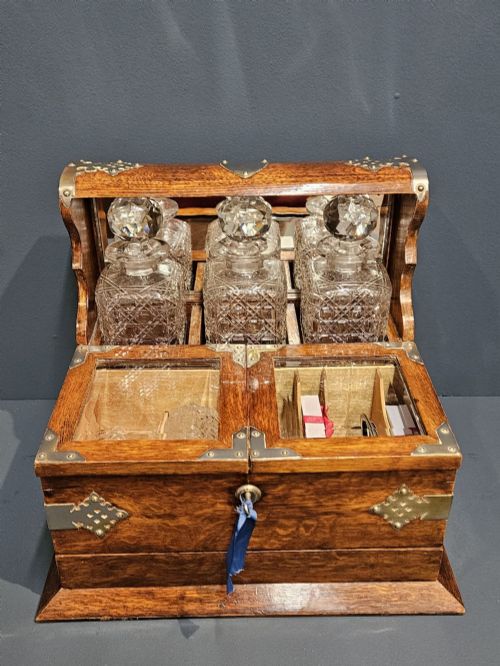
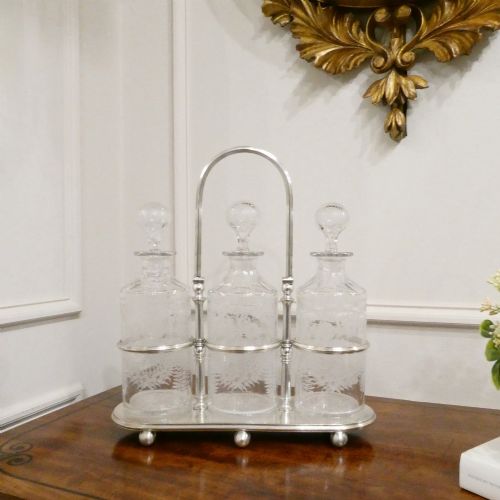
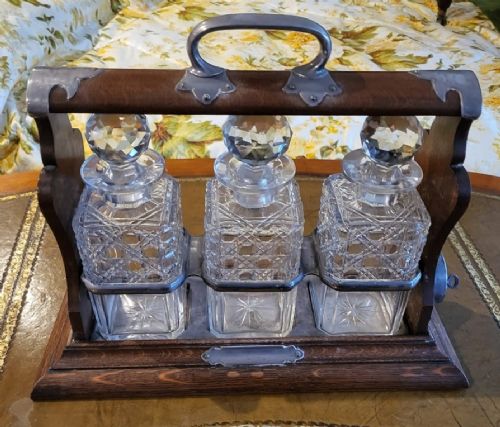
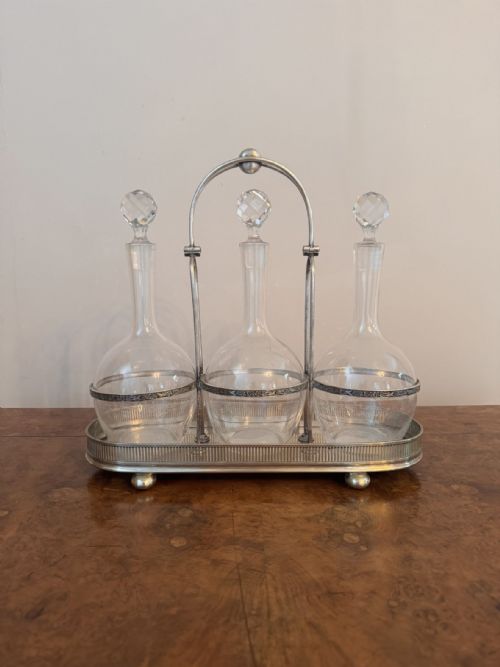
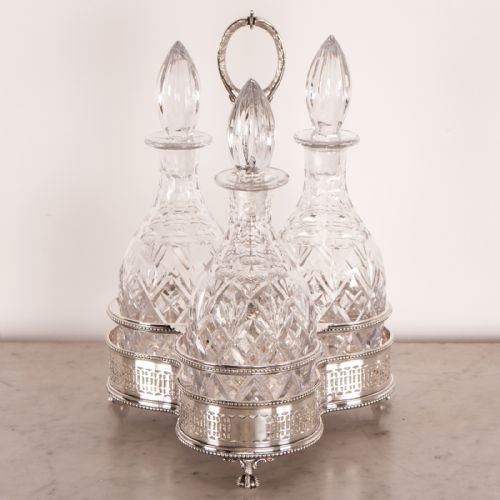
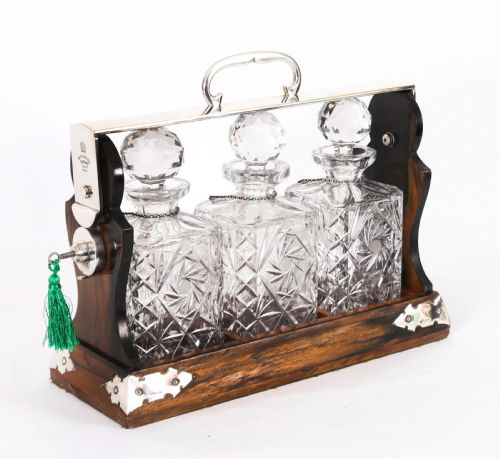
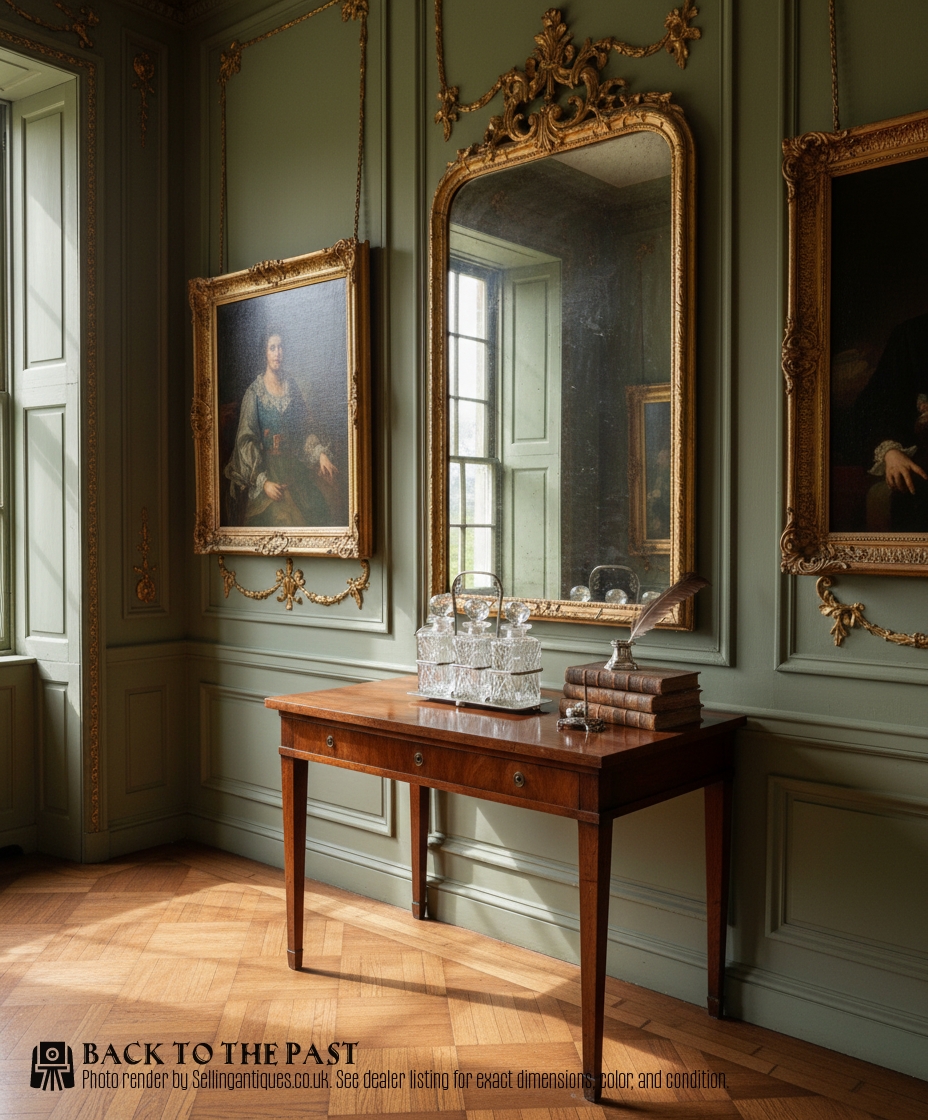
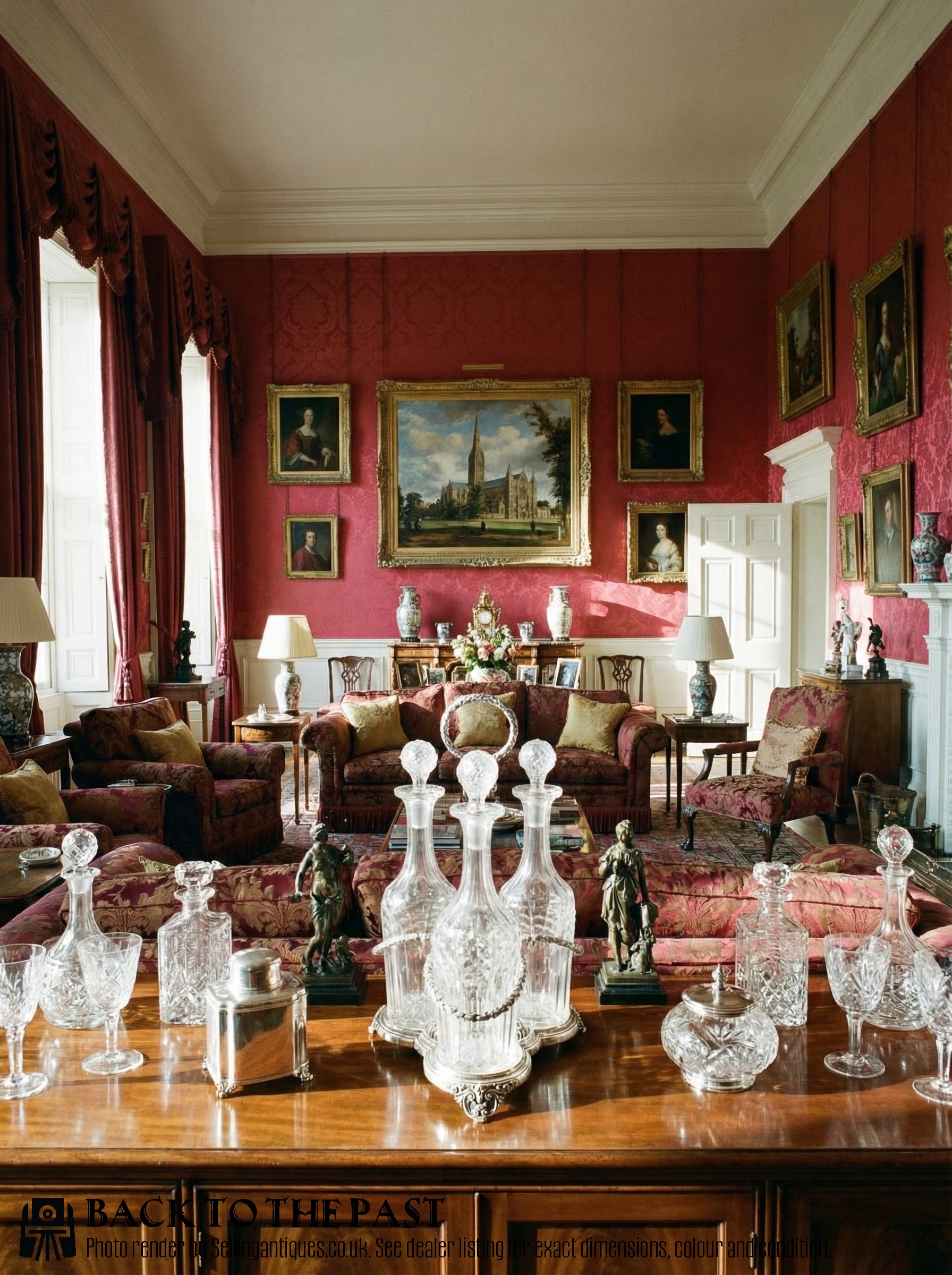
A three bottle tantalus secures three decanters behind a locking metal bar that prevents the removal of the bottles without a key. Most examples encountered here date from the Victorian and Edwardian periods, constructed to house after-dinner spirits in the drawing room or study.
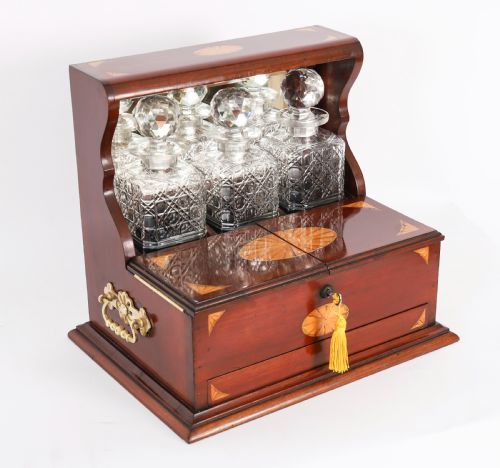
The standard form comprises a rectangular wooden base fitted with an upright back and carrying handle, though some incorporate games compendiums or folding serving surfaces. Cut crystal decanters sit within individual recesses, held fast until the silver plated mechanism is unlocked.
Materials and construction
Makers utilised dense hardwoods including oak, walnut, coromandel, and satinwood for the carcasses, frequently applying marquetry stringing, shell inlay, or brass mounts. These wooden frames require stable joints to support the considerable weight of three full glass decanters and heavy metal hardware.
The locking mechanism and carrying handle consist of cast brass finished with silver plate, operating via a turning key that lifts the retaining bar. Decanters are formed from heavy cut crystal or cut glass, often featuring matching stoppers designed to remain secure within the locked frame.
Three Bottle Tantalus Retail Price Guide 2026
Typical asking prices for three bottle tantalus among the pieces listed under this phrase on Sellingantiques today, from the lower quarter to the upper quarter. They describe what is for sale here now, not the wider market.
The archive shows that three-bottle configurations outnumber smaller variants, reflecting Victorian hosting preferences.
Distinguishing finer examples
Quality rests upon the execution of the woodwork and the complexity of the housing, ranging from plain polished oak to figured coromandel with intricate inlay and integrated games drawers. Finer pieces incorporate substantial silver plated brass work with fully functioning locks and original marked keys.
The matching status and condition of the three cut crystal decanters influence the integrity of the set, as replacement bottles rarely fit the specific frame tolerances. Maker attribution to notable patent holders adds significant distinction to the physical construction.
Betjemann·Walker & Hall·Elkington·The Goldsmith Co·Philip Ashberry·Mappin and Webb
The Three Bottle Tantalus Glossary
- Tantalus
- A locking decanter stand named after the mythological figure who was kept just out of reach of water and food. The mechanism frustrates would-be drinkers by exposing the spirit bottles while locking their stoppers in place.
- Silver Plate
- A layer of silver fused to a base metal, usually copper or nickel brass, utilised extensively for the handles, locking bars, and corner mounts of Victorian barware. This technique provided the appearance of solid silver at a lower manufacturing cost.
- Coromandel
- An exotic, dark brown timber with contrasting black graining imported from Asian regions, favoured by luxury cabinet makers for high-end Victorian luxury goods. It appears on select pieces alongside walnut and satinwood.
- Cut Crystal
- Glass containing lead oxide that increases its weight, brilliance, and refractive index, heavily faceted by grinding wheels. The decanters held within these stands typically display deep geometric cutting.
- Games Compendium
- A fitted box containing equipment for multiple parlour pastimes, occasionally built into the base or drawer of a tantalus. These multi-functional objects served the Victorian host who entertained guests after dinner.
Three Bottle Tantalus: Frequently Asked Questions
How does a tantalus lock work?
A key turns to release a metal retaining bar that drops down over the necks of the three decanters. When locked, the stoppers cannot be removed from the bottles, preventing anyone from pouring the contents.
The entire mechanism is usually mounted to the wooden backplate and connected to a hinged handle or side locking box. Early versions often utilised patent spring locks invented by specialist cabinet makers.
Are the decanters original to the stand?
Original decanters fit the wooden base recesses precisely and share matching cut crystal patterns and stoppers. Because decanters were fragile and frequently broken during use over the decades, many surviving stands contain matched replacements.
Examining the wear marks on the bottom of the wood and the glass helps determine if the bottles have rested in the frame for its entire lifetime. Minor variations in the crystal cutting often indicate a later pairing.
What is the difference between a tantalus and a cruet?
A tantalus specifically secures alcoholic spirit decanters behind a locking security bar to prevent unauthorised consumption. A cruet frame holds condiment bottles, oil, and vinegar for dining table service without any locking mechanism.
While both utilise silver plated stands and glass bottles, cruets are smaller and designed for food service rather than after-dinner hospitality in the study or drawing room.
How should I clean the wood and silver plate?
Wood surfaces benefit from gentle cleaning with a soft cloth and application of traditional beeswax to nourish the grain. Avoid excessive moisture on antique polished oak, walnut, or coromandel.
Silver plated brass mounts require minimal polishing with a non-abrasive cloth to preserve the remaining plate over the base metal. Take care not to let metal cleaner touch the surrounding timber or fabric interiors.