


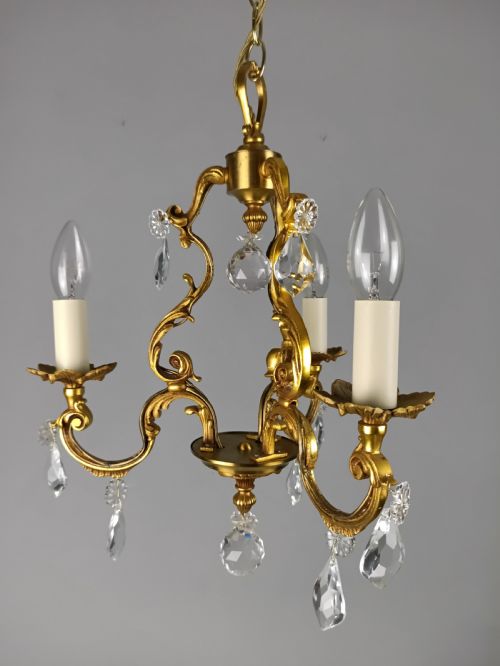


Three Arm Pendant Light
A three arm pendant light offers concentrated illumination and character, pairing period metalwork with glass for a focal ceiling fixture.
Three Arm Pendant Light
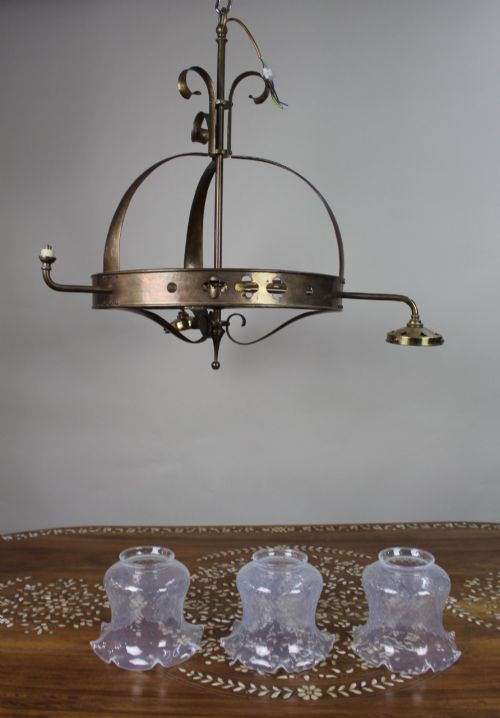
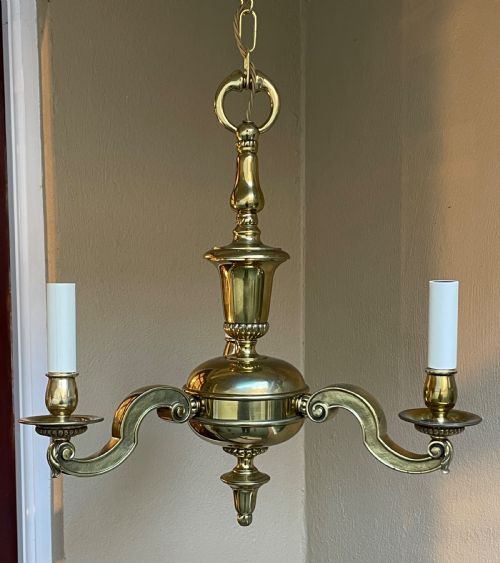
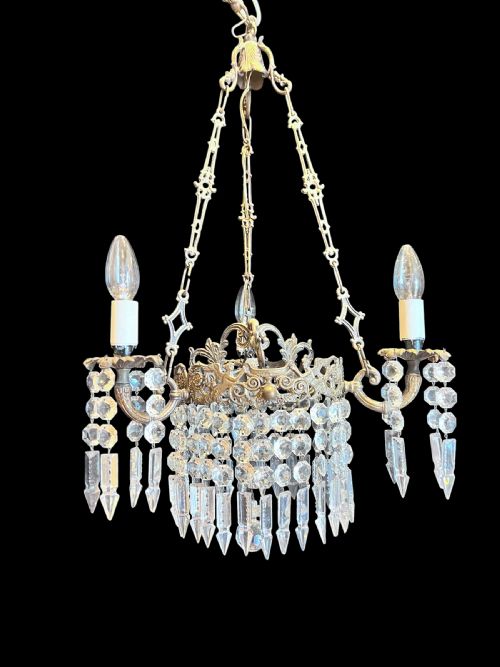
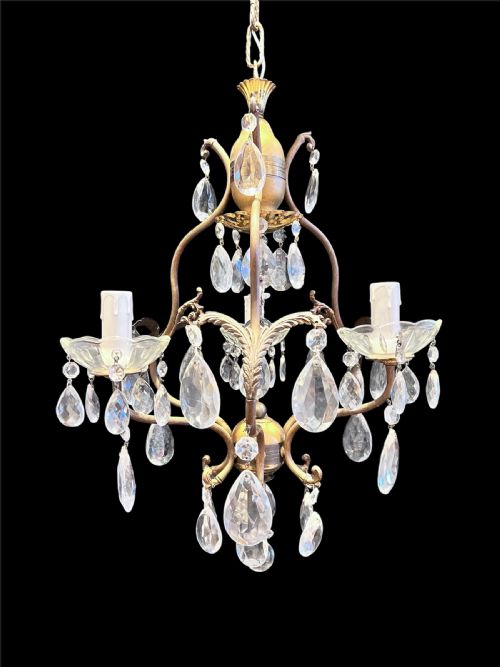
A three arm pendant light encompasses ceiling fixtures with three branches designed to illuminate a room from above. When you examine a three arm pendant light in this collection, you encounter pieces spanning the nineteenth century through the Art Deco era, including Edwardian examples.
Makers and origins stretch from British municipal buildings to French chateaux, Italian workshops, and Dutch or Flemish style designs. These chandeliers and ceiling lights serve as central overhead lighting in period interiors.
What Varies in Quality
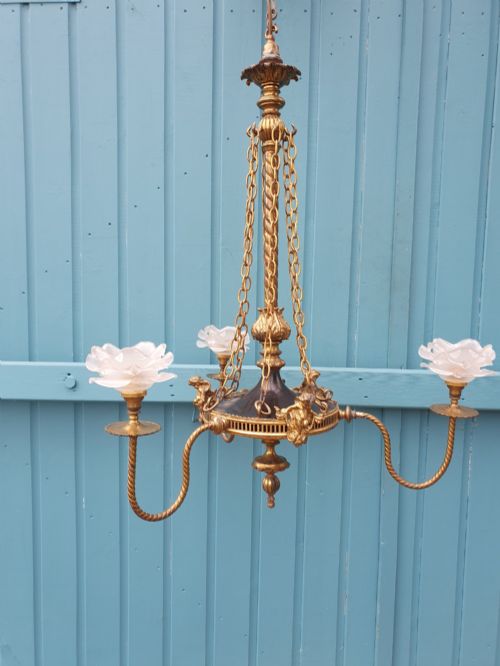
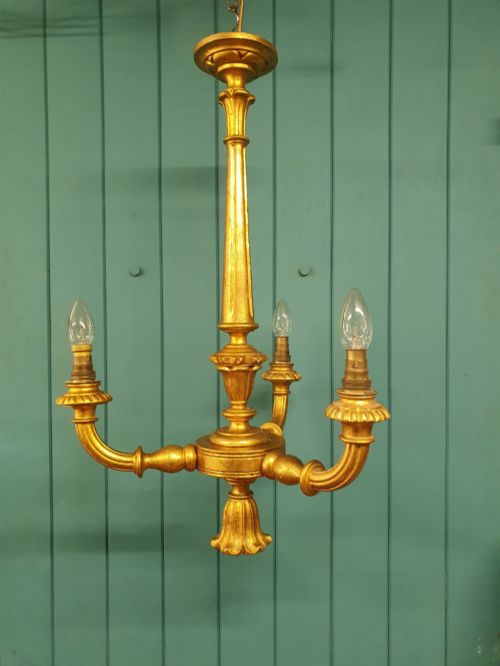
The refinement of the casting and carving dictates the fidelity of period styles such as French Rococo or Gothic Revival, separating mass production from master craftsmanship. Crisp detail in the brass foliage, cherub arms, or giltwood moulding marks superior examples.
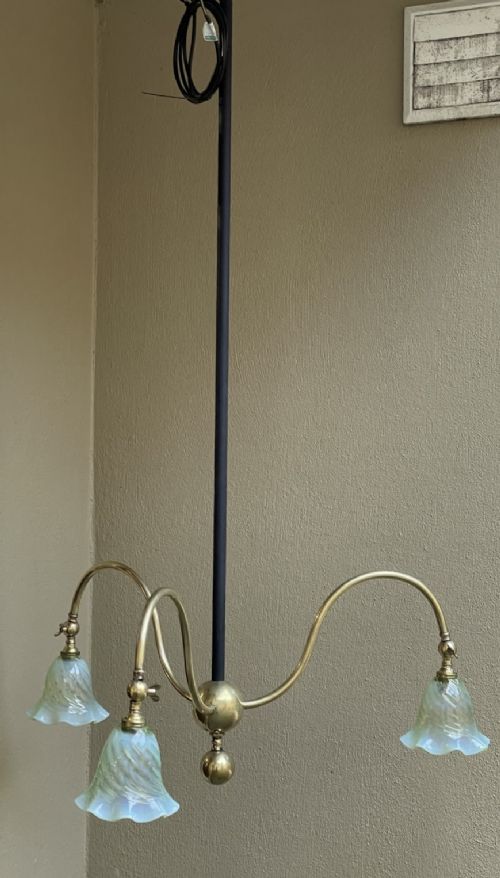
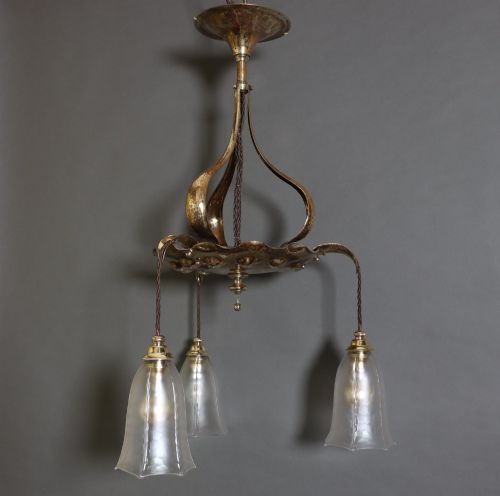
The integrity and originality of the glass elements, from crystal drops to opalescent or crimped shades, govern the overall standard of the piece. Complete suites with matching period components command greater appreciation among collectors.
Listings span the nineteenth century through nineteen-thirty, uniting brass, glass, crystal, giltwood, and wrought iron in diverse European styles.
F&C Osler
The Three Arm Pendant Light Glossary
- Gasolier
- A light fixture originally designed to burn coal gas before being converted to electricity. These brass and bronze fittings often retain nineteenth-century proportions.
- Giltwood
- Timber coated with a thin layer of gold leaf or gilt powder over a gesso base. Florentine and French workshops utilised this technique for decorative chandeliers.
- Opalescent glass
- Glass that has a milky, translucent appearance diffusing light softly. It appears frequently in period shades to reduce glare.
- Gesso
- A plaster-like mixture applied to wood surfaces as a base for gilding. It allows for intricate moulded relief work on antique frames and fixtures.
- Ceiling rose
- A decorative plaster or metal moulding fixed to the ceiling from which a pendant light hangs. It provides a finished architectural transition to the room.
Three Arm Pendant Light: Frequently Asked Questions
How do I install a vintage three arm pendant light?
Vintage ceiling fixtures require secure mounting to a ceiling joist or an adequate electrical box to support the weight of brass, glass, and crystal components. Professional installation by a qualified electrician ensures safe wiring and adherence to modern standards.
Many antique fittings accommodate standard modern bulb bases, though some gasolier conversions require specific adapter lamps. Check the existing wiring condition before hanging the fixture in your space.
What rooms suit a three arm pendant light?
These three branch chandeliers suit medium-sized spaces such as bedrooms, studies, hallways, or dining nooks where intense multi-bulb illumination is unnecessary. Their modest footprint allows them to hang comfortably without overwhelming the room volume.
Placing the fixture centrally or above a specific piece of furniture creates a defined focal point. The spread of three arms distributes light evenly across the surrounding perimeter.
How do I clean an antique glass and brass chandelier?
Dust brass and giltwood frameworks gently with a dry microfibre cloth to preserve the patination and delicate gilding. Avoid harsh chemical cleaners that strip historical finishes from the metal surfaces.
Remove glass shades and crystal drops for washing in warm soapy water when necessary, ensuring they dry completely before reattachment. Handle crystal components carefully to prevent chipping the edges.
How do I distinguish Arts and Crafts lights from Art Deco?
Arts and Crafts pieces emphasise honest construction, hand-wrought iron or brass, and utilitarian forms rooted in medieval or vernacular traditions. They often originate from civic or domestic contexts dating around nineteen-ten.
Art Deco fixtures favour geometric symmetry, stylised motifs, and sleek metallic finishes characteristic of the nineteen-twenties and nineteen-thirties. The silhouette shifts from organic handcrafted curves to streamlined modernism.