


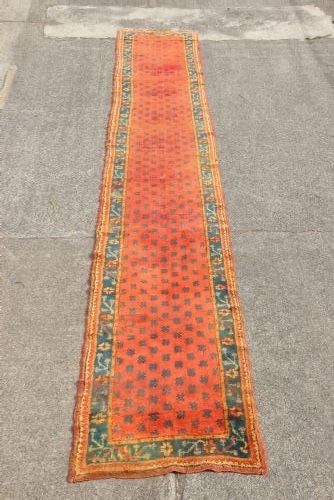

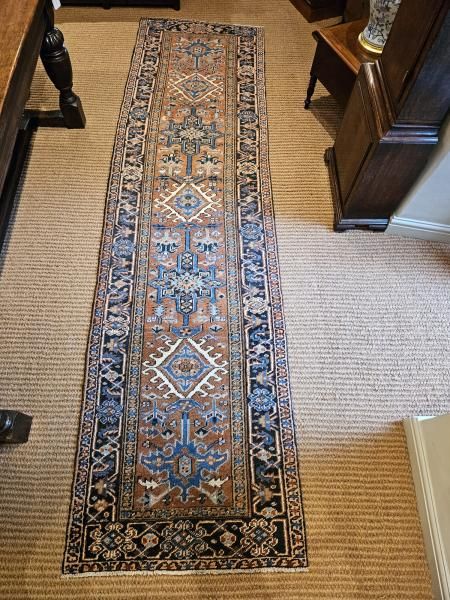
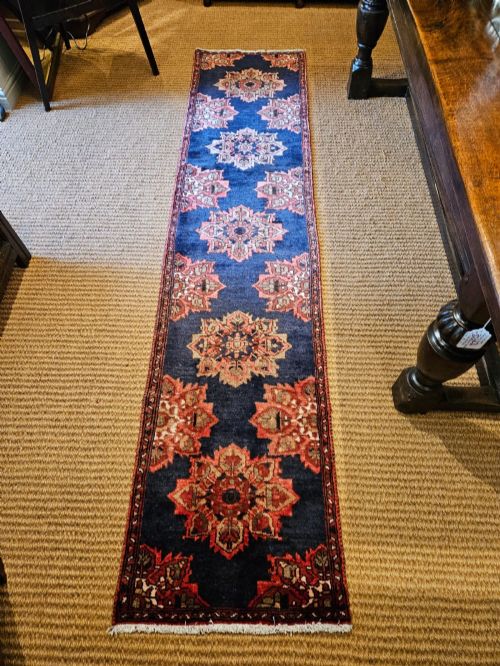

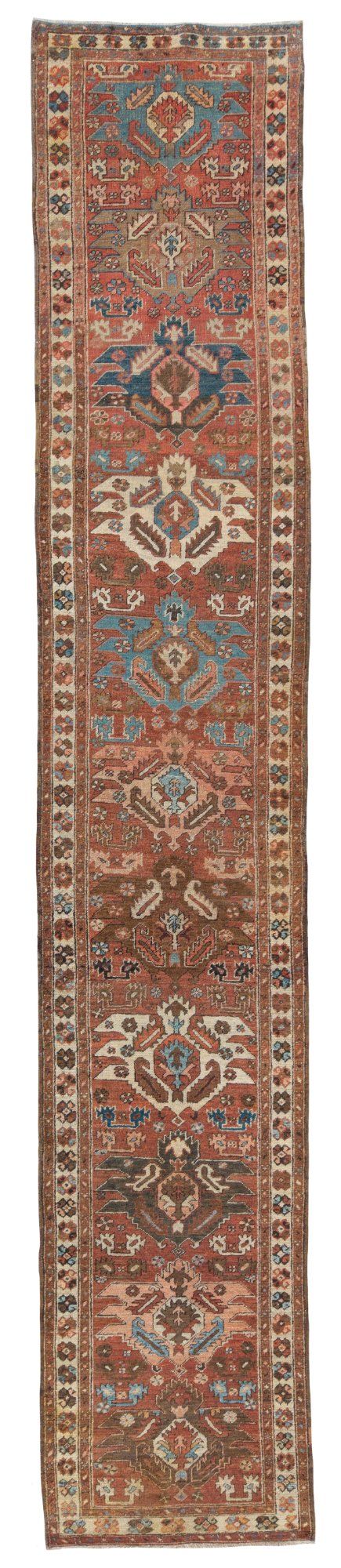


Terracotta Wool Long Rug
A terracotta wool long rug brings warmth and linear rhythm to a hallway, drawn from nineteenth and early twentieth-century tribal and village traditions.
Terracotta Wool Long Rug
When searching for a terracotta wool long rug, collectors encounter elongated formats designed for corridors and galleries, commonly catalogued as runners or kellehs. These pieces originate predominantly from Persian, Turkish, and Caucasian weaving centres, dating from the late nineteenth century through to the 1930s. The selection on this page relies heavily on regional village workshops and nomadic groups, where narrow proportions suit extended spaces.
The visual vocabulary typically includes geometric medallions, repeated shrub motifs, and tribal field patterns rendered in earthy terracotta, madder red, and deep rust tones. Makers utilised durable wool foundations and pile, often supported by cotton warps in later nineteenth-century examples. Lengths vary significantly, stretching from modest hall lengths to grand gallery proportions exceeding five metres.
Materials and construction
Weavers constructed these long carpets primarily using hand-spun sheep's wool for the pile, dyed with natural substances that yielded rich terracotta and rust hues. Wool provided the necessary resilience for high-traffic corridors, enduring decades of footfall while maintaining tactile depth.
Foundations generally combine wool or cotton warps and wefts, secured with hand-finished selvedges. Nomadic and village pieces often display slight irregularities in width and straightness, reflecting the tension of upright vertical looms set up in domestic spaces.
Nomadic weavers frequently incorporated intentional minor irregularities into their geometric repeats, believing perfection belonged solely to the divine.
Indicators of quality
Quality rests upon knot density, the clarity of geometric design execution, and the vibrancy of the natural dye palette. Tighter knotting allows crisper delineation of medallions and borders, whereas coarser weaves result in softer, more diffused pattern edges.
The condition of the wool pile and the integrity of the original foundational structure dictate the grade of a survivor. Pieces retaining full pile depth alongside stable, untouched selvedges stand apart from examples showing heavy structural wear or extensive reweaving.
The Terracotta Wool Long Rug Glossary
- Runner
- A long, narrow carpet format specifically proportioned for hallways, corridors, and staircases. These pieces measure significantly longer than they are wide.
- Kelleh
- A large format rug, intermediate in proportion between a standard room carpet and a long runner. They often display striking tribal medallion layouts.
- Warp
- The vertical threads stretched lengthwise on a loom that form the structural foundation of the rug. Cotton or wool warps determine the rigidity and drape of the textile.
- Weft
- The horizontal threads passed alternately over and under the warp threads to lock the rows of knots in place. Wefts secure the structural integrity of the woven field.
- Gul
- A repeated octagonal medallion motif frequently found in Turkmen and related tribal weaving traditions. Each emblem serves as a traditional clan or regional identifier.
Terracotta Wool Long Rug: Frequently Asked Questions
How are long rugs cleaned?
Professional immersion washing remains essential for historic wool textiles, as household detergents and mechanical agitation damage natural dyes and brittle foundations. Specialists gently flush accumulated grit from the base of the pile without saturating vulnerable structural elements.
Regular maintenance involves gentle surface suction using a vacuum without a rotating beater bar. This prevents fibre abrasion while lifting loose dust from between the knots.
Where should a runner be placed?
Hallways, corridors, and entrance galleries represent traditional placements where long formats guide movement through a home. Their linear geometry bridges separate rooms while softening high-traffic wooden or stone flooring.
Placing a breathable rug underlay underneath prevents slipping and cushions the wool pile against hard subfloors. This simple addition distributes foot pressure evenly, extending the functional lifespan of nineteenth-century weaves.
Why do terracotta tones vary?
Natural dye sources, primarily madder root combined with various mordants, produced shifting terracotta shades across different regional workshops. Small variances in water chemistry and dyeing duration meant no two dye batches resulted in identical hues.
Age and exposure to light further mellow these terracotta tones over decades, creating subtle tonal shifts known as abrash. This uneven shading is a characteristic mark of genuine organic dyeing rather than a manufacturing defect.
How do I date an old runner?
Dating relies on analysing structural clues, including material transitions from hand-spun wool to imported mill-spun cotton, alongside regional design evolution. Palette analysis also helps, as the introduction of synthetic aniline dyes marks the transition from nineteenth-century organic colouring.
Comparative study of knot types and edge finishes provides further chronological context. Examining how weavers structured the ends helps differentiate late nineteenth-century village work from early twentieth-century production.