
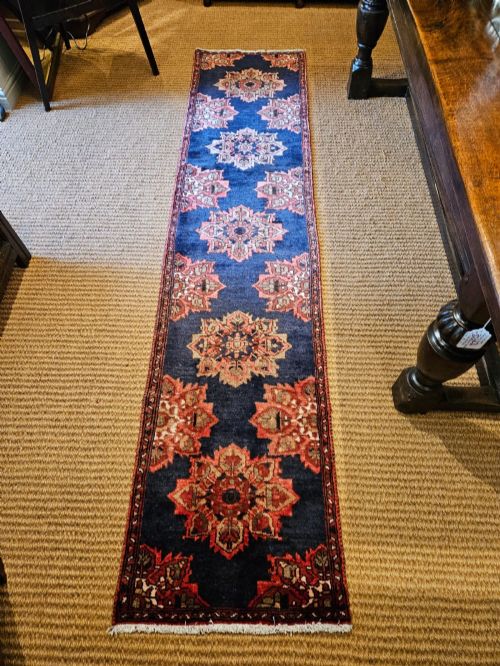
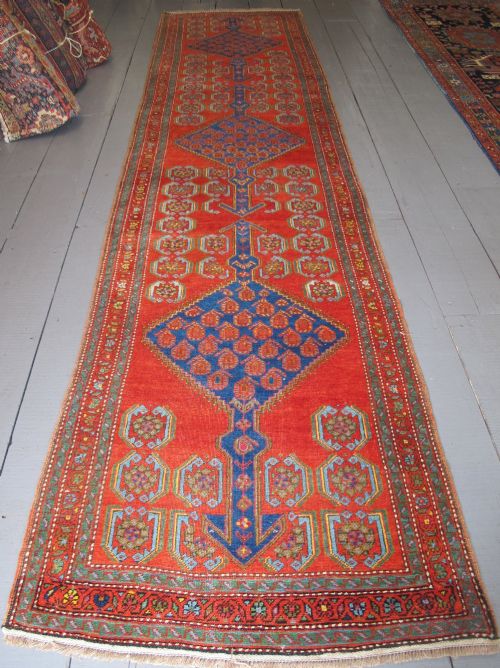


Terracotta Wool Hall Runner
These terracotta wool hall runner examples bring warmth and pattern to long corridors through traditional Persian and Caucasian weaving.
Terracotta Wool Hall Runner
A terracotta wool hall runner provides a narrow format designed specifically for corridors and walkways. The pieces span from the late nineteenth century into the early twentieth century.
Buyers encounter tribal and traditional styles originating from Persian and Caucasian regions. Common formats include long narrow runners and carpet runners.
Materials and construction
Weavers utilised wool for the pile and foundation structure, often pairing it with cotton for strength. These materials ensure durability under heavy foot traffic in hallways.
Natural dyes provide the characteristic colour palette seen across these floor coverings. Artisans knotted the wool by hand onto traditional looms to create enduring patterns.
Listings span from eighteen-eighty to nineteen-twenty, featuring wool, cotton, and natural dyes across Persian tribal and Caucasian styles.
What separates the finest pieces
Knot density and precision of the weave dictate the structural integrity of each runner. Finer examples display crisper geometric or floral motifs rendered by skilled hands.
The depth and complexity of natural dyes influence the visual richness of the surface. Age and regional origin also contribute to the distinction between standard and exceptional weaving.
The Terracotta Wool Hall Runner Glossary
- Runner
- A long, narrow carpet format designed for hallways, corridors, and stairs. This shape directs movement through domestic spaces.
- Pile
- The upright yarn loops or cut ends that form the soft surface of the rug. It provides comfort and protects the foundation structure underneath.
- Natural dye
- Colourants derived from plants, insects, and minerals rather than synthetic chemicals. These dyes mature gracefully over decades.
- Foundation
- The underlying grid of warp and weft threads that holds the knots in place. Its tightness determines the overall stability of the textile.
Terracotta Wool Hall Runner: Frequently Asked Questions
Where do these runners originate?
The pieces originate from traditional weaving centres across Persia and the Caucasus. Regions represented include Heriz, Bakshaish, Kurdish areas, and Karaja.
Tribal workshops and village weavers produced these runners using regional designs passed down through generations.
How do I maintain a wool runner?
Regular gentle vacuuming without a rotating brush helps remove embedded grit from the wool pile. Professional cleaning suited for antique textiles preserves the natural dyes and fibres.
Positioning the runner away from direct, harsh sunlight prevents uneven fading of the terracotta tones.
What periods are represented here?
The selection spans from the late nineteenth century through to the early twentieth century. Dates include eighteen-eighty, eighteen-ninety, nineteen-hundred, nineteen-ten, and nineteen-twenty.
Each period reflects the traditional weaving practices and dye methods of its specific decade.
Are these pieces suitable for hallways?
The narrow proportions and sturdy wool construction make them ideal for corridors and narrow spaces. Their dense weave withstands daily walking while adding warmth to stone or wood floors.
Using an appropriate underlay keeps the runner secure and provides extra cushioning.