

Terracotta Ceramic Urns
These terracotta ceramic urns bring tactile earthen warmth and classical proportion to interior spaces and gardens alike.
Terracotta Ceramic Urns
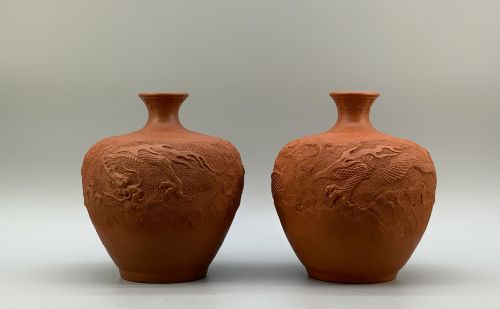
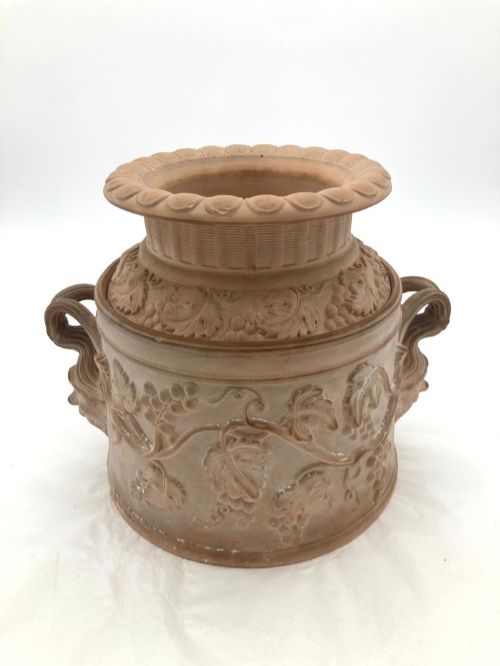
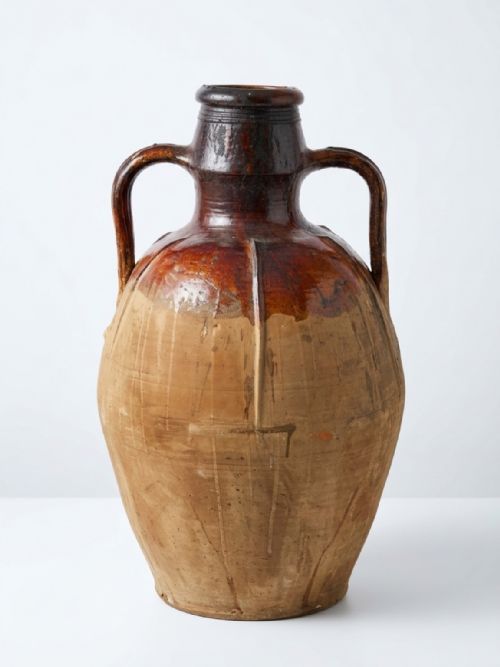
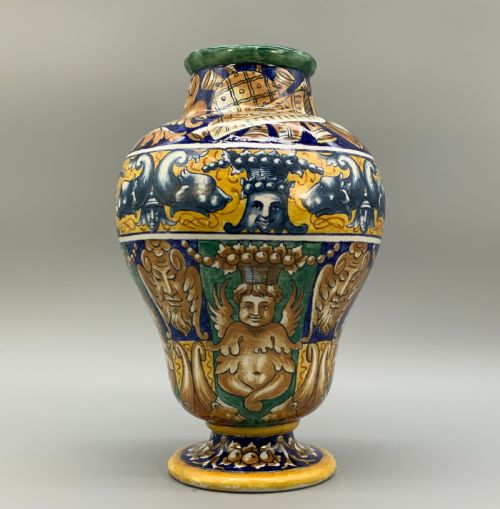
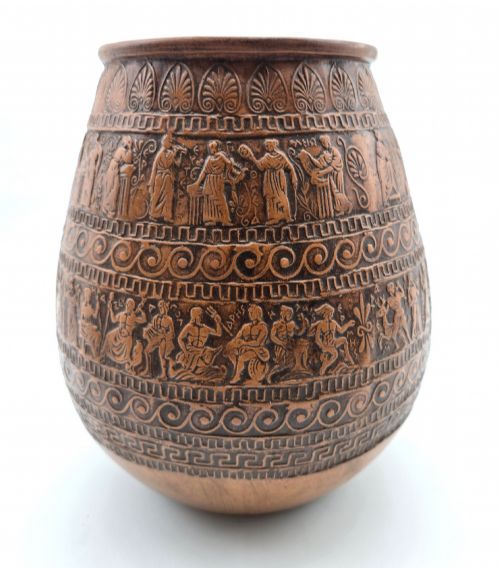
When you search for terracotta ceramic urns, you encounter a varied selection of garden planters, oil jars, amphorae, and decorative vessels spanning centuries of production. The listings draw heavily from nineteenth-century European makers, Mediterranean agricultural storage vessels, and Asian ceramic traditions.
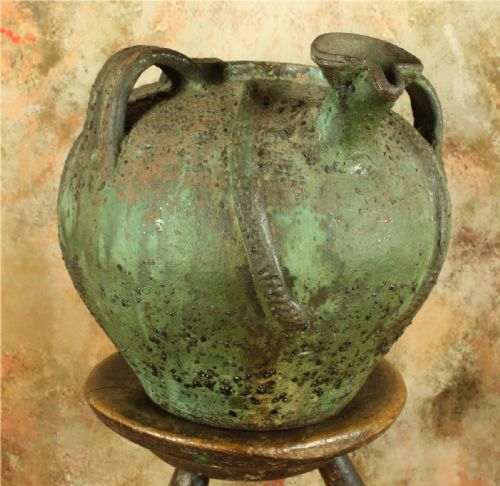
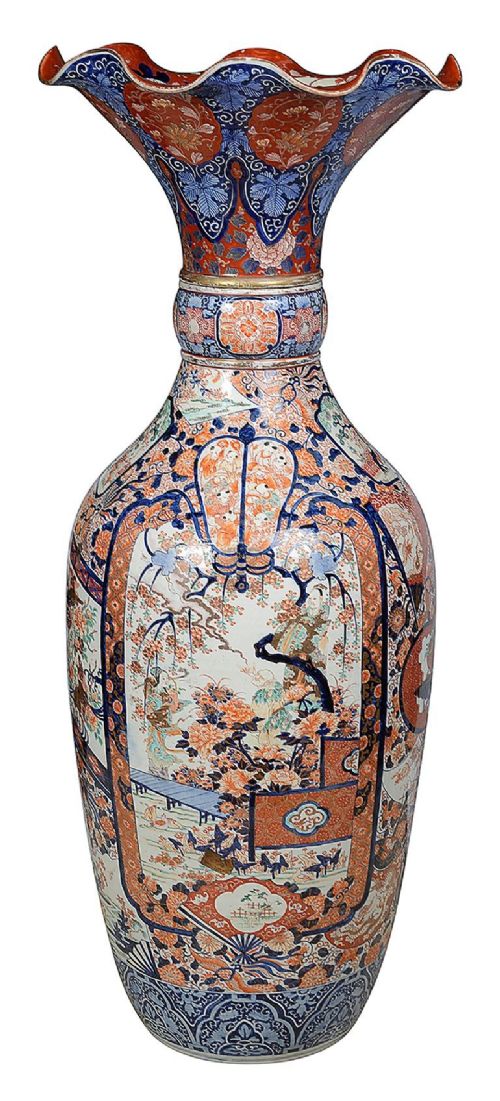
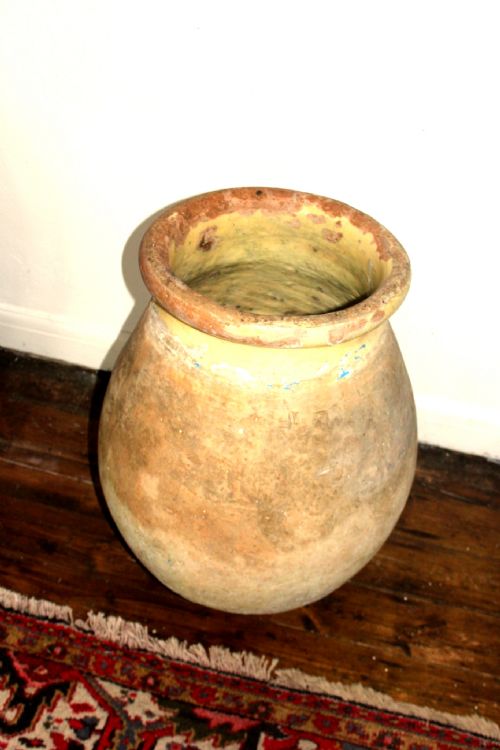
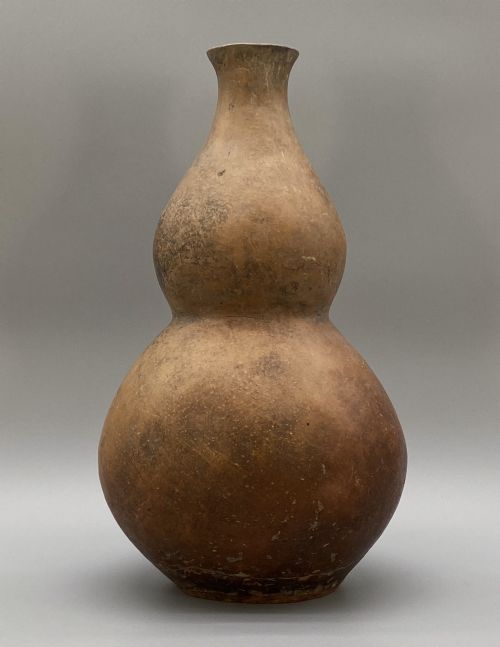
You meet heavy provincial oil jars from France and Italy alongside Grand Tour classical vases and Japanese red clay vessels. Functional utility vessels sit alongside ornamental jardinières and majolica display pieces.
The assortment reaches from early prehistoric pottery through to twentieth-century garden pottery and art pottery. Rural utility ware shares space with elaborate revival styles intended for nineteenth-century reception rooms and conservatories.
How they were made
Makers shaped these objects using local clays, earthenware, and terracotta, frequently applying tin glazes, salt glazes, or polychrome enamel. Potters shaped utilitarian olive jars and confit pots by hand or on wheel setups before firing them in traditional kilns.
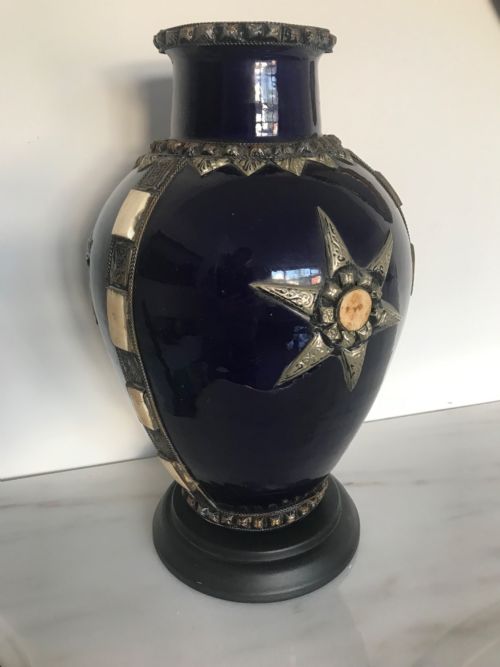
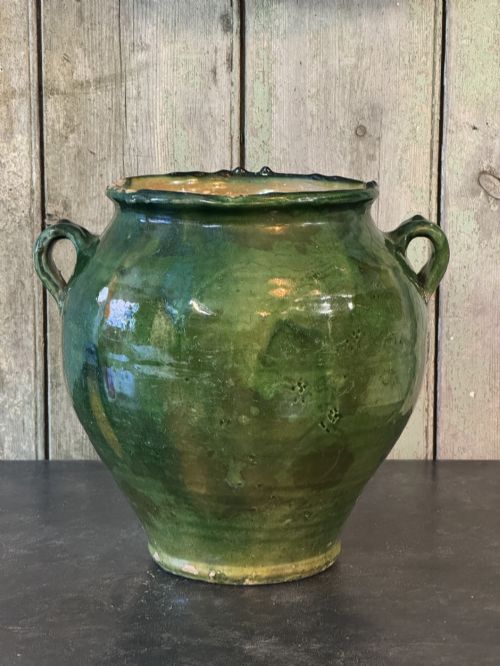
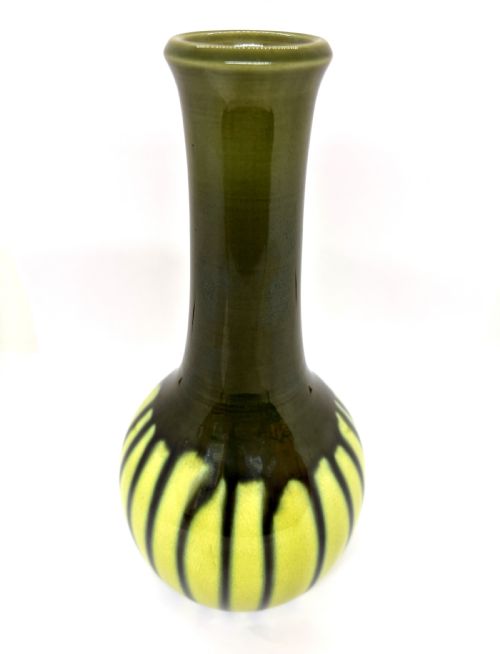
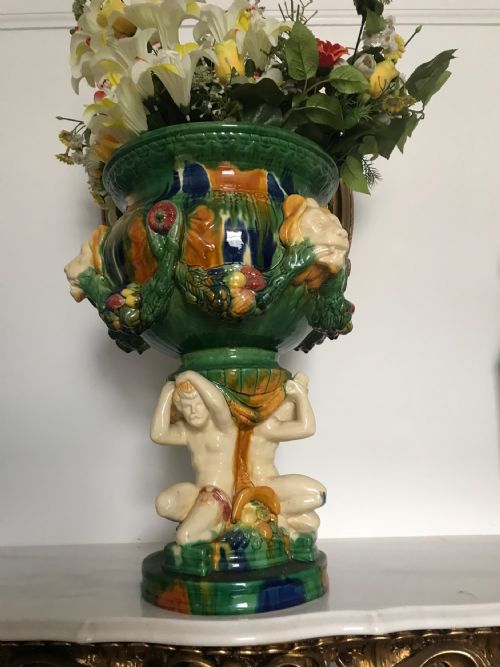
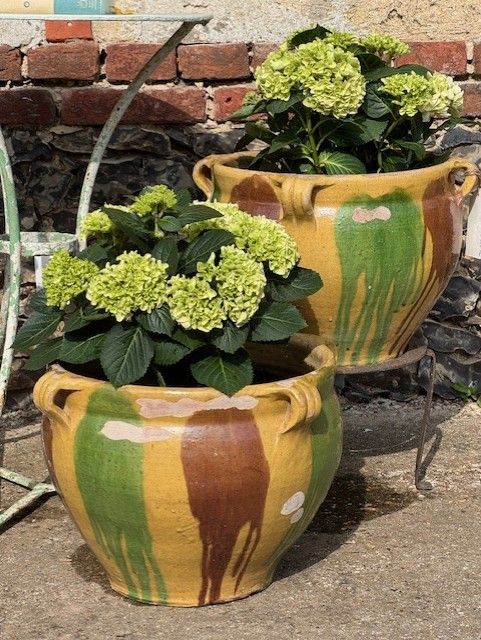
Surface treatment ranges from unglazed porous terracotta with aged patinas to fully glazed green and cobalt blue finishes. Some elaborate presentation pieces incorporate gold leaf, enamel decoration, or applied silver mounts onto the ceramic body.
One exceptional nineteenth-century piece depicts an angel sleeping soundly on a bisque vase after Thorvaldsen.
What varies in quality
The standard of the potting distinguishes the output, looking at the crispness of moulded relief details, the balance of thrown forms, and the stability of the clay body. Superior examples display intentional control over kiln temperature and glaze flow, whereas lesser utility pieces show rougher, purely functional construction.
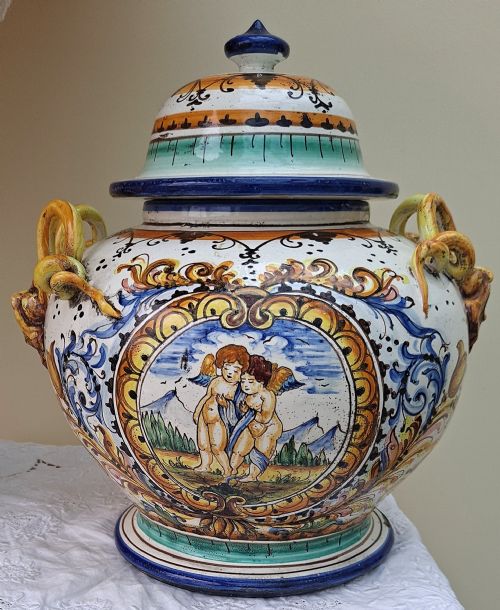
Artistic ambition sets individual studio and factory pieces apart from standard agrarian vessels. Hand-painted majolica decoration, figural bases, and signed studio marks elevate specific works above ordinary garden pottery.
Burmantoft's Pottery·P. Ipsens Enke·Bernhard Bloch·Compton Pottery
The Terracotta Ceramic Urns Glossary
- Terracotta
- A porous, unglazed or glazed fired earthenware based on iron-rich clay. It typically exhibits a reddish-brown colour.
- Confit pot
- A traditional French earthenware jar featuring handles, usually partially or fully glazed in green or yellow. Potters originally used them for preserving meat.
- Majolica
- Tin-glazed earthenware decorated with colourful metal oxide paints over an opaque white glaze. Italian workshops revived this technique elaborately in the nineteenth century.
- Amphora
- A two-handled ancient vessel with a narrow neck used for storing oil or wine. Mediterranean workshops replicated these classical shapes extensively during the nineteenth century.
- Faux bois
- A decorative technique mimicking wood grain on ceramic or concrete surfaces. Garden planters frequently utilised this rustic style.
Terracotta Ceramic Urns: Frequently Asked Questions
How were terracotta urns originally used?
Communities across the Mediterranean utilised these large jars for storing agricultural goods such as oil, wine, and grain. Their dense clay construction helped regulate internal temperatures to keep contents stable.
In domestic settings, smaller vessels served decorative functions or held water and plants. Garden planters and urns brought greenery onto terraces and into courtyards.
Can terracotta garden urns stay outside?
Porous earthenware absorbs moisture, which can freeze and expand during cold weather. Unglazed vessels require protection or indoor storage during heavy frosts to prevent cracking.
Glazed pieces offer better resistance to moisture absorption, though extreme temperature drops still demand caution. Placing pots on feet prevents them from sitting directly in freezing ground moisture.
How do I identify nineteenth century pieces?
Nineteenth-century works frequently reflect historical revivals such as Renaissance, Neoclassical, or Arts and Crafts movements. Examining the manufacturing marks, glaze characteristics, and tool marks helps determine the period.
Many European factories utilised specific impressed stamps or signatures during this era. Wear patterns and patination on the clay body also indicate age.
What is the difference between an oil jar and an amphora?
Oil jars typically feature wide bodies and sturdy handles designed for practical agricultural storage and transport. They prioritize robust utility over delicate ornamentation.
Amphorae follow classical Greek and Roman silhouettes with distinct pointed or rounded bases and slender necks. These forms often appear in decorative Grand Tour contexts rather than working farmyards.