



Terracotta and Blue Painting
When terracotta and blue painting catches the eye, you are looking at works where earthy warmth meets cool mineral tones across ceramics and canvases.
Terracotta and Blue Painting
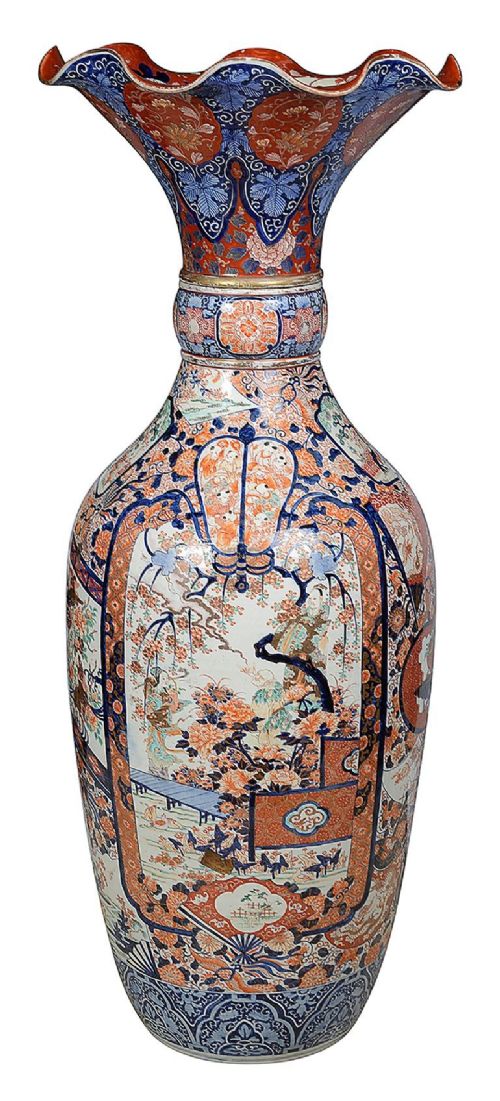
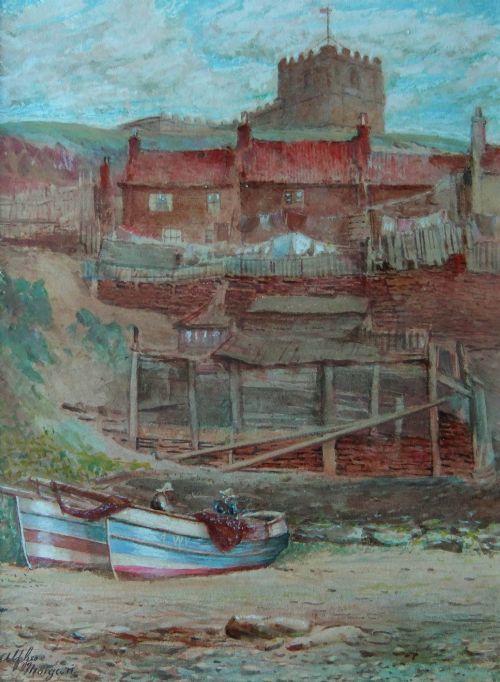
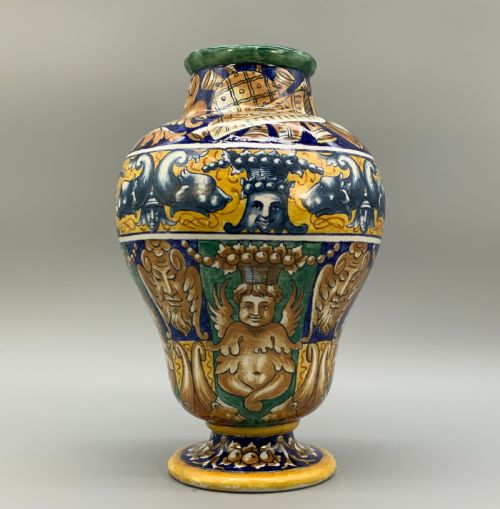
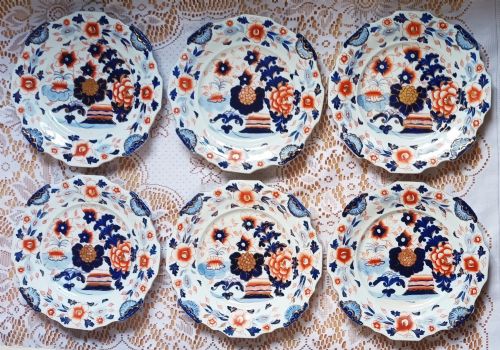
When you search for terracotta and blue painting, you encounter a mix of works on paper, canvas, and ceramic surfaces spanning several centuries. The selection ranges from 19th-century watercolours and oil paintings to hand-painted Imari porcelain plates, vases, and decorative bowls.
You are most likely to meet 19th-century watercolours depicting British and European landscapes, alongside Japanese Imari porcelain and earthenware featuring distinct cobalt blue and terracotta red motifs. These items unite pictorial art and decorative ceramics through a shared palette of warm clay hues and deep blues.
How they were made
The works rely on watercolour, oil paint, and mixed media applied to paper, canvas, and board by artists using traditional brushwork. Pigments capture coastal scenes, townscapes, and still-life subjects with varied layering and texture.
Ceramic pieces combine porcelain, ironstone, and earthenware bodies finished with glaze and hand-painted polychrome decoration. Underglaze blue and overglaze iron-red or terracotta pigments fuse during kiln firing to create durable patterns.
Several artists travelled considerable distances to paint coastal light, leaving behind precise watercolours of Whitby piers and Venetian lagoons.
What varies in quality
Quality rests in the precision of the brushwork and the confidence of the composition, whether on a painted landscape or a decorated ceramic vessel. Masterful handling of pigment brings depth to watercolours and oils, while sharp detailing distinguishes hand-painted porcelain.
The preservation of the surface layer matters greatly, as intact glazes and stable paint surfaces retain the original vibrancy of the terracotta and blue pigments. Finer pieces demonstrate superior control of tone and a more harmonious balance between the warm and cool elements of the palette.
Alfred G Morgan·Fred Lawson·James Thomas Watts·Will Anderson·Armand Guillaumin·Frank Dobson·Tschacbasov
The Terracotta and Blue Painting Glossary
- Imari
- A style of Japanese export porcelain decorated in underglaze blue, iron-red terracotta, and gilt. These wares were widely produced in the Arita kilns for international markets.
- Watercolour
- A painting method where fine pigment is suspended in a water-soluble binder on paper. It allows for translucent washes and delicate tonal gradations.
- Ironstone China
- A type of durable earthenware patented in the 19th century in England. It mimics porcelain and provides a sturdy base for polychrome transfer and hand-painted designs.
- Polychrome
- Decoration employing multiple distinct colours. In these pieces, the term typically describes the interplay of terracotta and blue pigments.
- Faience
- Tin-glazed earthenware produced in Europe, often mimicking the appearance of imported blue-and-white or polychrome Asian ceramics.
Terracotta and Blue Painting: Frequently Asked Questions
What subjects appear in these paintings?
The artworks encompass coastal views, harbour scenes, rural cottages, and cityscapes across Britain and continental Europe. Landscapes from Italy, France, and Spain also feature prominently alongside still-life compositions.
Artists captured these subjects using watercolour washes or oil paints on canvas, paper, and board, reflecting regional topographies and atmospheric light.
How do I display Imari plates?
Plates and decorative bowls with terracotta and blue patterns look striking mounted on walls using appropriate wire hangers or displayed on plate stands within cabinets. Their strong colour contrast draws the eye across a room.
Keep ceramic pieces away from direct, harsh sunlight to preserve the stability of the overglaze enamels and the integrity of the porcelain body.
How should I care for watercolours?
Watercolour paintings require framing behind glass with acid-free mounts to prevent paper degradation and pigment fading. Hang them in rooms with stable humidity and minimal direct light exposure.
Avoid placing paper works near heat sources or in damp environments, as moisture damages both the paper support and the delicate water-soluble pigments.
How do I distinguish 19th-century pieces?
Nineteenth-century watercolours and oil paintings often bear artist signatures, period framing techniques, and paper stocks characteristic of the era. Examining the reverse of canvases or panels frequently reveals period inscriptions or dealer labels.
Ceramic items from this period display specific potting techniques, paste density, and glaze characteristics typical of Japanese export kilns or European ironstone manufactories.