





1950s Original Oil Artwork
1950s original oil artwork brings post-war vision into a room through pigment laid directly onto canvas or board by hand.
1950s Original Oil Artwork
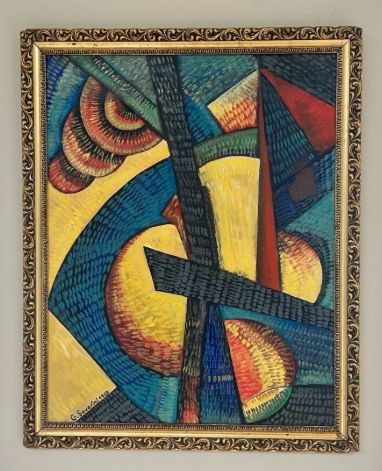
When you search for 1950s original oil artwork, you encounter paintings created during a decade defined by diverse modernist and traditional approaches. The pieces gathered here span British landscapes, maritime scenes, French modernist interiors, and striking abstract compositions.
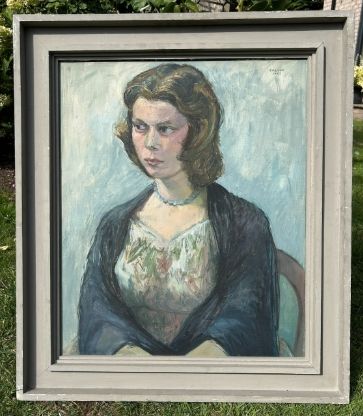
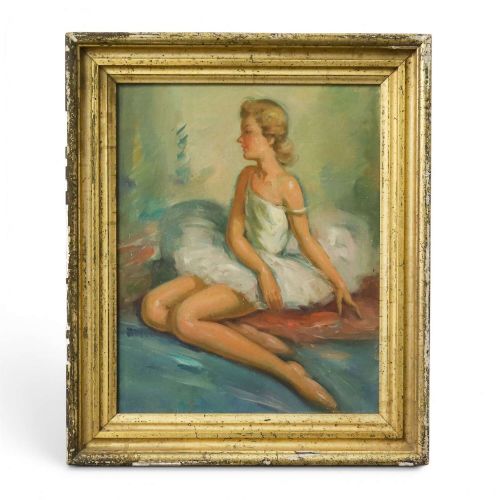
You are most likely to meet works executed on canvas or board, framed in wood or worn gilt. These paintings capture subjects ranging from industrial factories and rural farms to intimate portraits and surrealist musician landscapes.
Materials and technique
Artists of this period applied oil paint directly onto rigid wood boards or stretched canvas surfaces. Techniques varied from smooth realist brushwork and impasto texture to constructivist geometry and fluid colourist applications.
Completed paintings found their way into timber frames, sometimes finished with ebonised details or gilt surfaces that show the gentle wear of decades.
Distinguishing quality
The distinction between works rests upon the confidence of the brushwork and the clarity of the composition. Stronger pieces display a purposeful handling of oil paint, whether in the thick impasto of a harbour scene or the precise geometry of an abstract interior.
Condition of both the pigment and the support surface shapes the character of each piece. Retaining the original wooden or gilt frame intact adds context to how the painting has survived.
Kenneth Cozens·James Fry·David Shepherd·John Frederic Greenwood·Job de Vogel·Lillian M Harrison·Richards Rubin
The 1950s Original Oil Artwork Glossary
- Oil paint
- A slow-drying paint made by combining pigment particles with a drying oil, typically linseed. This medium allows for rich colour depth and varied surface textures.
- Canvas
- A heavy woven fabric stretched across a wooden frame to serve as a support for painting. It provides a flexible yet durable ground for oil pigments.
- Board
- A rigid wooden panel used as a flat surface for painting. Artists frequently utilised board during the mid-century period for both oils and mixed media.
- Impasto
- A technique where paint is laid onto a surface in thick layers that stand out visibly. This method introduces a tactile, three-dimensional quality to the artwork.
- Constructivism
- An artistic style originating in Russia that focuses on abstract geometric forms and industrial themes. Mid-century manifestations often incorporated factory scenes and structural compositions.
1950s Original Oil Artwork: Frequently Asked Questions
How do I identify a genuine 1950s oil painting?
Examine the materials and framing to establish the era. Works from this decade typically utilise canvas or board combined with mid-century framing styles.
Signatures, dates, and recorded artist biographies help anchor the creation period. Paint layers naturally show proper drying characteristics and age-appropriate handling over time.
Where should I hang these paintings at home?
Place these artworks away from direct sunlight and excessive moisture to protect the oil paint and canvas. Wall placement above neutral backgrounds allows the rich colours and textures to stand out.
Matching the frame type to your interior style helps integrate the piece smoothly into a room. Proper lighting enhances the brushwork without generating damaging heat.
What subjects are common in mid-century art?
The selections encompass diverse themes ranging from maritime views and farm landscapes to aviation and industrial factories. Portraiture and abstract compositions also feature prominently across the decade.
Artists drew inspiration from both natural surroundings and modern environments, resulting in realistic and experimental interpretations alike.
How do I care for vintage oil artwork?
Dust the surface gently using a soft, dry brush without applying pressure to the paint layer. Avoid using liquid cleaners or solvents on the canvas or the frame.
Maintain stable indoor humidity and temperature levels to prevent wood warping and canvas tension issues. Professional conservators should handle any structural repairs or deep cleaning.